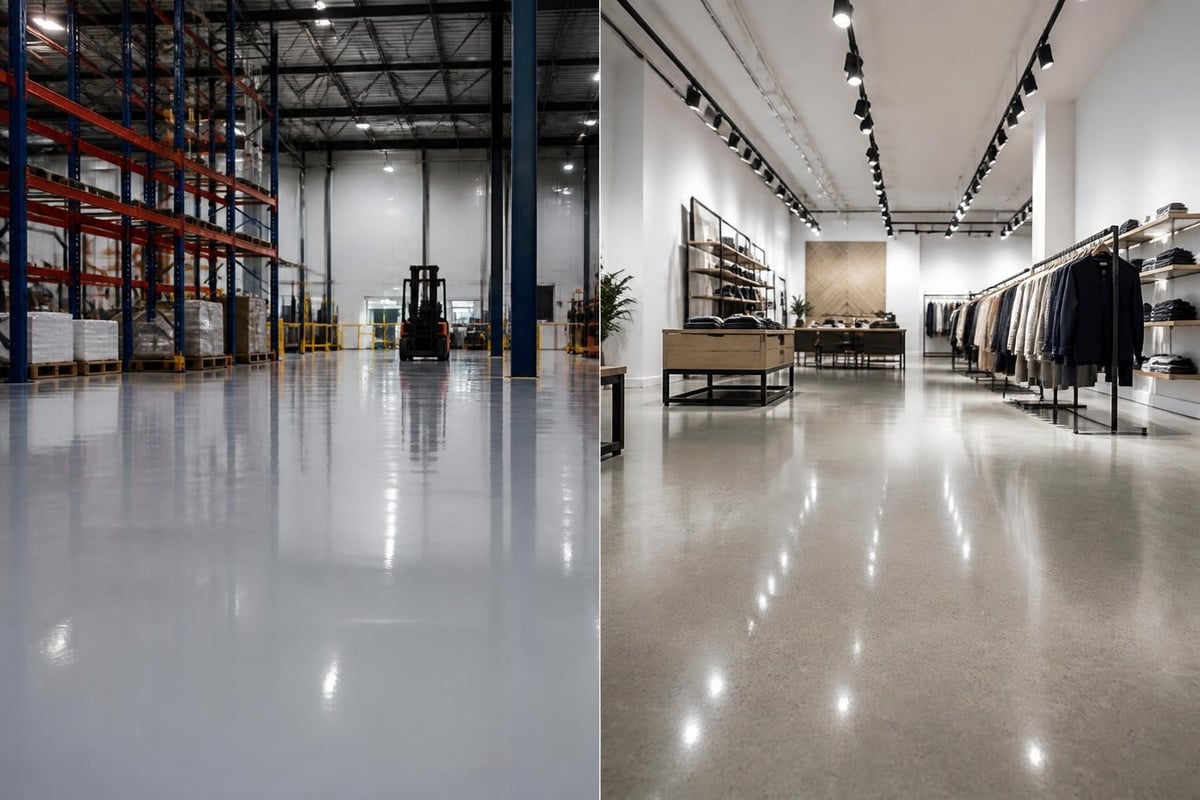
Selecting the right commercial and industrial flooring represents one of the most critical infrastructure decisions for any facility manager or business owner. The flooring beneath your operations bears the weight of equipment, endures constant foot traffic, withstands chemical exposure, and influences workplace safety standards. With dozens of flooring systems available and varying performance requirements across different industries, understanding the technical specifications, compliance standards, and long-term cost implications becomes essential for making informed decisions that protect your investment.
Understanding Commercial and Industrial Flooring Requirements
Commercial and industrial environments place extraordinary demands on flooring systems that residential applications never encounter. Heavy machinery, forklift traffic, chemical spills, thermal cycling, and moisture exposure create conditions where standard flooring solutions fail rapidly.
The National Flooring Authority provides comprehensive guidance on material categories and installation methods that meet commercial specifications. Industrial facilities require flooring capable of supporting loads exceeding 5,000 kilograms per square metre, while maintaining surface integrity under abrasion from metal wheels and pallet jacks.
Load-Bearing Capacity and Traffic Classifications
Different facilities demand specific load ratings based on operational requirements:
- Light commercial: Retail stores, offices (50-100 kg/m²)
- Medium industrial: Warehouses, distribution centres (500-2,000 kg/m²)
- Heavy industrial: Manufacturing plants, chemical facilities (2,000-10,000+ kg/m²)
Traffic patterns significantly influence flooring selection. High-traffic zones experience accelerated wear, particularly in turning areas where forklifts pivot or near loading docks where equipment transitions between surfaces.
Chemical Resistance and Environmental Factors
Industrial environments expose flooring to substances that rapidly degrade unsuitable materials. Commercial kitchens encounter oils, acids, and alkalis daily. Manufacturing facilities may process solvents, fuels, or corrosive chemicals that penetrate porous surfaces.
Temperature fluctuations also impact flooring performance. Facilities with ovens, freezers, or significant thermal cycling require materials that expand and contract without cracking or delaminating.
| Environmental Factor | Risk Level | Recommended Testing |
|---|---|---|
| Chemical exposure | High | ASTM D543 resistance |
| Thermal shock | Medium | EN 13813 stability |
| Moisture ingress | High | ASTM E96 permeability |
| Abrasion wear | Very high | ASTM D4060 Taber test |
Primary Commercial and Industrial Flooring Systems
The commercial flooring market offers several primary systems, each with distinct advantages for specific applications. Understanding these options enables facility managers to match performance characteristics with operational requirements.

Epoxy Resin Systems
Epoxy Flooring delivers exceptional durability for warehouses, workshops, factories, and undercover car parks. These systems combine resin and hardener components that cure into a hard, seamless surface resistant to chemicals, stains, and impact damage.
Epoxy systems excel in environments requiring hygiene and easy cleaning. Commercial kitchens benefit from the seamless, non-porous surface that prevents bacterial growth and withstands frequent washing with industrial cleaning agents.
The application process requires proper surface preparation, including grinding to expose concrete porosity and ensure mechanical bonding. Professional installation by qualified contractors ensures optimal adhesion and longevity. At Superior Concrete Finishes, our team holds QBCC licensing and follows strict application protocols for commercial and industrial installations across South East Queensland.

Installation typically occurs over multiple days:
- Surface preparation: Diamond grinding removes contaminants and creates profile
- Primer application: Seals concrete and enhances adhesion
- Base coat installation: Builds thickness and strength
- Top coat application: Provides final appearance and chemical resistance
- Curing period: Allows full strength development (typically 7 days)
Polished Concrete Solutions
Polished concrete transforms existing concrete slabs into reflective, low-maintenance surfaces through mechanical grinding and polishing processes. This approach works particularly well for commercial retail flooring and office environments where aesthetics matter alongside durability.
The grinding process uses progressively finer diamond abrasives to achieve desired gloss levels, from satin to high-gloss finishes. Densifiers penetrate the concrete surface, hardening and dust-proofing the floor while enhancing light reflectivity.
Polished concrete offers significant lifecycle cost advantages. Unlike coatings requiring periodic reapplication, properly maintained polished concrete lasts decades without replacement. The reflective surface reduces lighting requirements, lowering energy costs in large facilities.
Polyurethane and Hybrid Systems
Polyurethane systems provide enhanced flexibility compared to rigid epoxy, making them ideal for areas experiencing thermal shock or substrate movement. These polyurethane floor finishes resist scratching and maintain appearance in high-traffic zones.
Hybrid systems combine epoxy bases with polyurethane topcoats, leveraging the strengths of both materials. The epoxy provides robust adhesion and chemical resistance, while the polyurethane delivers superior abrasion resistance and UV stability.
Safety Standards and Slip Resistance
Workplace safety regulations mandate specific slip resistance performance for commercial and industrial flooring. Understanding these standards prevents liability issues and protects employees from injury.
The slip resistance measurement standards established by regulatory bodies define acceptable Coefficient of Friction (COF) and Dynamic Coefficient of Friction (DCOF) values for different environments.
Australian Standards Compliance
Australian workplaces must comply with AS 4586 standards for slip resistance testing. This standard classifies surfaces using both wet and dry pendulum testing, assigning ratings from P0 to P5.
- P4 rating: Suitable for wet, barefoot areas (commercial kitchens, wet production)
- P3 rating: General industrial and external applications
- P2 rating: Internal dry areas with minimal moisture exposure
Facilities can enhance slip resistance through surface profiling, aggregate broadcasting, or chemical etching. However, extremely rough surfaces may complicate cleaning in food production or pharmaceutical environments, requiring balanced solutions.
Anti-Slip Additives and Texturing
Modern flooring systems incorporate various methods to achieve required slip resistance:
Broadcast aggregates: Silica sand, aluminium oxide, or polymer particles scattered into wet coatings create textured surfaces. Particle size selection balances traction with cleanability.
Chemical etching: Acid treatments create micro-roughness on polished concrete, improving traction without visible texture changes.
Troweled patterns: Installation techniques produce subtle surface variations that enhance grip while maintaining professional appearance.
Installation Considerations and Project Planning
Successful commercial and industrial flooring installations require meticulous planning, proper surface preparation, and qualified contractors. Projects failing at any stage result in premature failure and expensive remediation.
Surface Preparation Requirements
Concrete substrates must meet specific criteria before flooring application. Moisture content exceeding 4% causes adhesion failure in most coating systems. Calcium chloride testing or relative humidity probes determine moisture levels before proceeding.
Surface profile affects mechanical bonding strength. Shot blasting, diamond grinding, or scarifying creates the necessary texture for coating adhesion. The International Concrete Repair Institute (ICRI) defines concrete surface profiles (CSP) from 1 to 10, with most commercial coatings requiring CSP 2-3.
Contamination from oils, curing compounds, or previous coatings prevents proper adhesion. Professional contractors test for contaminants using water droplet tests and employ appropriate removal methods.
Environmental Conditions During Installation
Temperature and humidity significantly influence curing chemistry. Most epoxy and polyurethane systems require ambient temperatures between 10°C and 30°C during application and initial cure.
Relative humidity affects cure rates and can cause surface defects. Humidity above 80% may produce blushing or poor gloss in some systems. Professional installers monitor conditions and adjust application schedules accordingly.
| Installation Phase | Temperature Range | Humidity Range | Cure Time |
|---|---|---|---|
| Surface prep | 5°C – 35°C | Any | N/A |
| Primer application | 10°C – 30°C | 40% – 80% | 4-8 hours |
| Base coat | 15°C – 25°C | 40% – 70% | 12-24 hours |
| Top coat | 15°C – 25°C | 40% – 70% | 24-48 hours |
| Full cure | 15°C – 25°C | Any | 7 days |
Maintenance and Lifecycle Management
Commercial and industrial flooring requires systematic maintenance to achieve designed service life. Neglecting routine care accelerates deterioration and increases replacement frequency.

Daily and Weekly Maintenance Protocols
High-traffic facilities benefit from daily dust mopping or autoscrubbing to remove abrasive particles that scratch surfaces. Weekly damp mopping with pH-neutral cleaners maintains appearance without degrading protective coatings.
Avoid using acidic or highly alkaline cleaners unless specifically recommended by the flooring manufacturer. These chemicals can etch polished concrete or degrade resinous coatings, reducing service life.
Entrance matting systems capture 80% of dirt and moisture within the first 3-4 metres of an entrance, significantly reducing contamination spread throughout facilities. This simple intervention extends flooring life considerably.
Periodic Maintenance and Restoration
Quarterly inspections identify damage requiring repair before it spreads. Small cracks or coating delamination expand rapidly under traffic and moisture exposure. Early intervention prevents minor issues from becoming major failures.
Annual polished concrete floor maintenance includes reapplication of topical guards that enhance stain resistance and appearance. These treatments cost a fraction of refinishing while maintaining protection.
Epoxy and polyurethane systems eventually require topcoat renewal as traffic wears the protective layer. Professional epoxy coating contractors can refresh surfaces through light abrading and recoating, extending system life by years.
Industry-Specific Applications and Case Studies
Different industries present unique flooring challenges requiring tailored solutions. Examining real-world applications demonstrates how proper system selection solves specific operational problems.
Food Processing and Commercial Kitchens
Food production facilities face stringent hygiene requirements alongside chemical exposure and thermal shock. The Coca-Cola industrial flooring case study demonstrates how properly specified systems withstand sugar solutions, acids, and frequent high-pressure washing.
Commercial kitchens require seamless, coved flooring that transitions up walls, eliminating harbourage points for bacteria. Slip resistance becomes critical in wet environments, necessitating P4-rated surfaces or higher.
Warehousing and Distribution Centers
Modern warehouses operate 24/7 with minimal downtime for maintenance. Flooring must withstand constant forklift traffic, impact from dropped pallets, and occasional chemical spills from damaged goods.
Joint-free flooring eliminates the failure points that occur when forklifts traverse traditional concrete control joints. Epoxy and polished concrete systems provide these seamless surfaces across thousands of square metres.
Reflectivity significantly impacts warehouse operations. Light reflectance values (LRV) above 40 reduce lighting requirements and improve worker safety. Polished concrete achieves LRV values of 60-70, while light-coloured epoxy systems reach 75-85.
Manufacturing and Heavy Industry
Manufacturing environments often combine multiple flooring challenges: heavy loads, chemical exposure, thermal cycling, and static control requirements. The Source by Spec industrial flooring guide references EN 13813 standards for mechanical strength and chemical resistance testing.
Electronics manufacturing requires static-dissipative flooring (ESD) to protect sensitive components. These specialized systems incorporate conductive elements that safely dissipate static charges, typically achieving surface resistivity between 2.5 x 10⁴ and 1.0 x 10⁶ ohms.
Automotive facilities require impact-resistant flooring capable of withstanding dropped tools and parts. Thick-build epoxy systems (5-8mm) absorb impact energy while maintaining surface integrity.
Cost Analysis and Return on Investment
Commercial and industrial flooring represents a significant capital investment requiring careful financial analysis. Initial costs vary substantially between systems, but lifecycle costs often reverse apparent economies.
Initial Installation Costs
Flooring costs comprise materials, surface preparation, labour, and facility downtime. Basic concrete sealing costs $15-25 per square metre, while premium epoxy systems range from $60-120 per square metre depending on thickness and finish requirements.
Polished concrete installation costs $40-80 per square metre, influenced by existing concrete condition, desired gloss level, and dyeing or decorative treatments. Complex grinding to expose aggregates increases costs but creates distinctive appearances.
Surface preparation represents 40-60% of total project costs. Heavily contaminated or damaged substrates require extensive remediation, sometimes doubling baseline estimates. Professional assessment prevents cost overruns through accurate upfront evaluation.
Lifecycle Cost Considerations
Flooring lifecycle costs include maintenance, periodic renewal, and eventual replacement. A comprehensive analysis over 20 years reveals true ownership costs:
| Flooring Type | Install Cost/m² | Annual Maintenance/m² | Years to Replacement | 20-Year Total/m² |
|---|---|---|---|---|
| Basic sealer | $20 | $3 | 5 | $140 |
| Epoxy coating | $80 | $2 | 10 | $140 |
| Polished concrete | $60 | $1.50 | 20+ | $90 |
| Premium epoxy | $110 | $1.50 | 15 | $170 |
Operational considerations influence ROI beyond direct costs. Facility downtime for flooring replacement costs businesses thousands of dollars daily. Durable systems requiring infrequent replacement minimize operational disruption.
Energy savings from reflective flooring reduce operating costs. Studies demonstrate that increasing floor LRV from 20 to 60 reduces lighting requirements by 15-25%, generating annual savings of $2-5 per square metre in large facilities.
Selecting Qualified Contractors and Ensuring Quality
Commercial and industrial flooring quality depends heavily on contractor expertise and project execution. Selecting qualified professionals and implementing quality assurance processes protects your investment.
Contractor Qualifications and Licensing
Australian commercial flooring contractors must hold appropriate Queensland Building and Construction Commission (QBCC) licensing for projects exceeding $3,300. Verify license status and ensure adequate public liability insurance coverage ($10-20 million for commercial projects).
Industry experience matters significantly. Contractors specializing in commercial and industrial applications understand the technical requirements, safety protocols, and project management demands that residential contractors may lack.
Request references from similar projects and conduct site visits to evaluate workmanship quality. Inspect edges, transitions, and high-traffic areas where inferior installation becomes apparent.
Quality Control and Testing
Reputable contractors implement quality control measures throughout installation. Pull tests verify coating adhesion strength, ensuring bonds exceed minimum specifications (typically 1.5 MPa for epoxy systems).
Surface profile testing confirms adequate texture for mechanical bonding. Digital microscopes or replica tape quantify surface roughness against ICRI standards.
Post-installation testing validates performance characteristics. Coefficient of friction testing ensures slip resistance meets specified requirements. Chemical resistance testing confirms suitability for intended exposure.
Warranty Considerations
Commercial flooring warranties typically cover materials and workmanship for 5-15 years depending on system specification. Understand warranty exclusions related to substrate failures, chemical exposure beyond specifications, or maintenance deficiencies.
Performance warranties guarantee specific characteristics like abrasion resistance or chemical resistance under defined conditions. These provide stronger protection than basic workmanship warranties.
Warranty claims require documented maintenance records demonstrating compliance with manufacturer recommendations. Establish maintenance protocols and record-keeping systems from project commencement.
Environmental Sustainability and Green Building
Modern commercial and industrial flooring increasingly emphasizes environmental sustainability, driven by green building certifications and corporate responsibility initiatives.
VOC Emissions and Indoor Air Quality
Volatile organic compound (VOC) emissions from flooring materials impact indoor air quality and worker health. Traditional solvent-based epoxy systems released significant VOCs during application and curing.
Contemporary water-based and 100% solids formulations minimize emissions while maintaining performance. Low-VOC products comply with Green Star and LEED requirements, supporting certification objectives.
Green building rating systems award points for materials with Environmental Product Declarations (EPDs) documenting lifecycle environmental impacts. Specifying EPD-certified products demonstrates measurable sustainability commitment.
Sustainable Material Choices
Polished concrete exemplifies sustainable flooring through material utilization. Rather than covering existing slabs with additional materials, polishing transforms structural concrete into finished flooring, eliminating waste.
Recycled content in flooring materials contributes to sustainability goals. Some epoxy systems incorporate post-industrial recycled content in aggregates or additives.
Durability represents the most significant sustainability factor. Flooring systems lasting 20-30 years eliminate the environmental impact of manufacturing, transporting, and installing replacement materials multiple times over building lifecycles.
Energy Efficiency and Reflectivity
Reflective flooring reduces artificial lighting requirements, lowering energy consumption and associated emissions. The Commercial Building Authority identifies this as a key sustainability consideration for warehouse and industrial facilities.
High-reflectivity flooring in 100,000 square metre warehouses can reduce lighting loads by 200-300 kilowatts, saving $40,000-60,000 annually while reducing carbon emissions by 400-600 tonnes.
Commercial and industrial flooring decisions impact operational efficiency, safety, and long-term costs for decades. Understanding system specifications, compliance requirements, and performance characteristics enables informed selections that protect your investment. For businesses across South East Queensland requiring expert epoxy flooring or polished concrete installations in warehouses, factories, retail stores, or commercial facilities, Superior Concrete Finishes delivers proven solutions backed by decades of commercial flooring expertise and full QBCC licensing.

Joshua Miller has over 15 years of experience in the commercial concrete flooring industry, specialising in epoxy flooring systems and polished concrete solutions for warehouses, factories, retail spaces and commercial developments. Joshua and his team work closely with builders, property owners and facility managers across South East Queensland to deliver durable, cost-effective commercial flooring systems for warehouses, industrial facilities, commercial kitchens, retail stores and large commercial developments.
Major builders and organisations Josh has led projects on include McNab, Hutchinson Builders, IKEA, Queensland Rail, University of Queensland, ADCO, Tomkins Commercial, Bunnings, OfficeWorks, Spotlight, and Anaconda.
If you're planning a project and need advice on the best commercial concrete flooring solution, contact Josh or one of the team at Superior Concrete Finishes.
-
 info@superiorconcretefinishes.com.au
-
1300 789 740
-
Connect with Josh on
LinkedIn


 Connect with Josh on