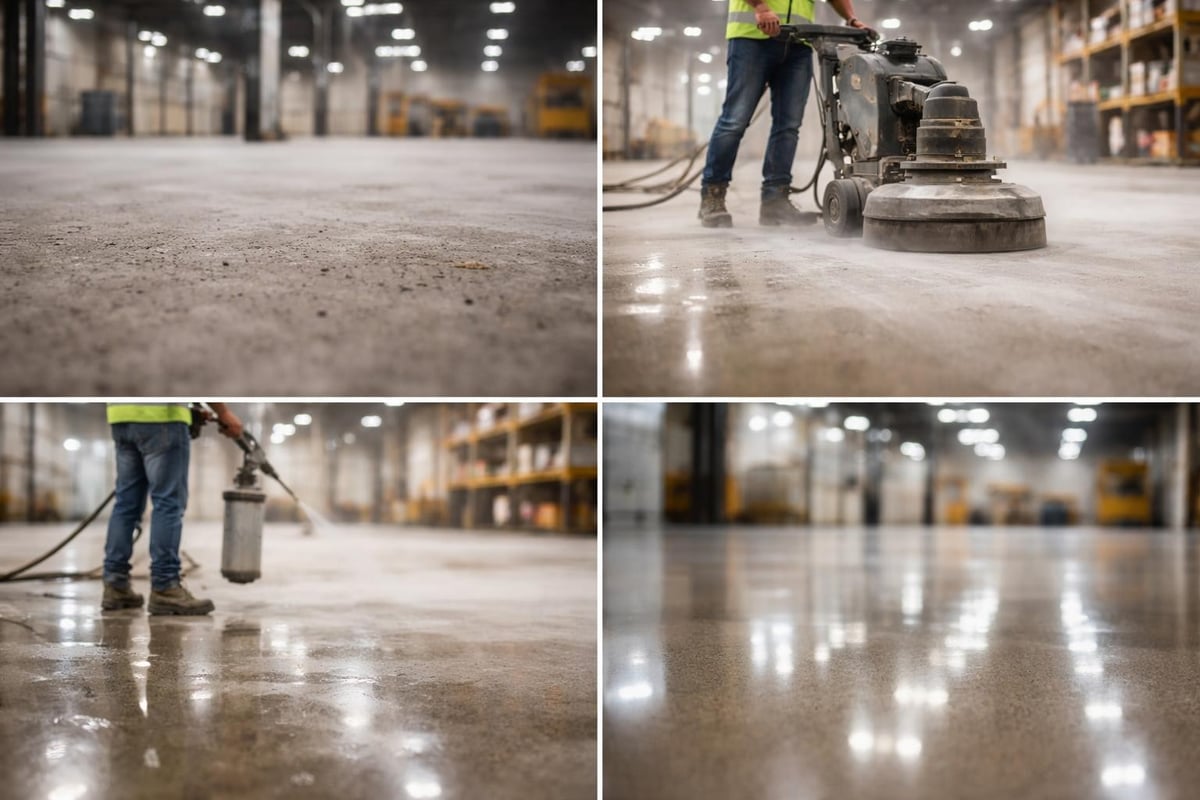
Commercial concrete polishing has transformed from a niche flooring solution into a mainstream choice for businesses across Australia. This advanced finishing technique delivers exceptional durability, minimal maintenance requirements, and a professional aesthetic that suits warehouses, retail spaces, factories, and commercial facilities. As property managers and business owners seek cost-effective flooring solutions that withstand heavy traffic and deliver long-term value, polished concrete continues to gain traction throughout South East Queensland and beyond. Understanding the process, benefits, and key considerations ensures you make informed decisions about your commercial flooring investment.
Understanding the Commercial Concrete Polishing Process
Commercial concrete polishing involves mechanically grinding and refining concrete surfaces using diamond-embedded abrasives. The process progressively smooths the concrete while increasing its density and reflectivity.
The journey begins with surface preparation, where contractors assess the existing concrete slab for damage, cracks, or structural issues. Any necessary repairs are completed before grinding commences.
Multi-Stage Grinding System
The grinding phase uses industrial equipment fitted with progressively finer diamond tools. Coarse diamonds remove surface imperfections, old coatings, and surface laitance. Each subsequent pass uses finer grits, typically progressing from 30-grit through to 3000-grit or higher.
Key grinding stages include:
- Initial coarse grinding (30-80 grit) to expose aggregate and remove surface defects
- Medium grinding (120-400 grit) to refine the surface texture
- Fine grinding (800-1500 grit) to develop initial sheen
- Ultra-fine polishing (3000 grit or higher) for mirror-like finish
The number of grinding stages depends on the desired finish level and existing concrete condition. Most commercial applications require between six and ten passes to achieve optimal results.
Densification and Hardening
Between grinding stages, concrete densifiers are applied to chemically harden the surface. These lithium or sodium silicate solutions penetrate the concrete pores, reacting with calcium hydroxide to form calcium silicate hydrate.
This chemical reaction increases surface hardness, reduces porosity, and enhances resistance to water penetration and staining. Densification is critical for achieving durable, long-lasting commercial concrete polishing results that adhere to industry standards.
Benefits for Commercial and Industrial Applications
Commercial concrete polishing delivers measurable advantages that impact operational costs, safety, and facility aesthetics. Understanding these benefits helps justify the investment and supports informed decision-making.
Durability ranks among the most significant advantages. Polished concrete floors withstand heavy machinery, forklift traffic, and constant foot traffic without degrading. Unlike coatings that can chip or peel, polished concrete becomes harder over time through continued use.
Maintenance and Lifecycle Cost Advantages
The cost-effectiveness of commercial polished concrete stems primarily from minimal maintenance requirements. Regular dust mopping and occasional damp cleaning maintain the surface indefinitely.
Unlike epoxy systems or vinyl flooring that require periodic replacement, properly installed polished concrete can last 20-30 years or more with basic care. This longevity translates into substantial lifecycle cost savings.
| Maintenance Factor | Polished Concrete | Traditional Coatings |
|---|---|---|
| Daily Cleaning | Dust mop only | Specialized cleaners required |
| Annual Resealing | Not required | Typically needed |
| Expected Lifespan | 20-30+ years | 5-15 years |
| Replacement Cost | Minimal | Full system replacement |
Light Reflectivity and Energy Savings
Polished concrete surfaces reflect up to 30% more light than untreated concrete. This increased reflectivity reduces artificial lighting requirements, particularly in warehouses and large commercial spaces.
Facilities can reduce lighting energy consumption by 10-15% through improved ambient light distribution. These savings accumulate significantly over decades of operation.

Key Considerations for Commercial Projects
Successful commercial concrete polishing projects require careful planning and consideration of facility-specific factors. Project outcomes depend heavily on existing concrete quality, operational requirements, and realistic expectations.
Concrete Slab Assessment
The condition and composition of existing concrete directly impacts polishing feasibility and final appearance. Age, mix design, aggregate type, and curing methods all influence results.
Critical assessment factors include:
- Slab age and curing quality
- Aggregate size and distribution
- Existing damage or deterioration
- Surface contamination or coatings
- Moisture levels and vapor transmission
Concrete slabs less than 28 days old typically require additional curing time before polishing. Older slabs may need extensive preparation if contaminated with oils, adhesives, or previous coating systems.
Determining Finish Level Requirements
Commercial concrete polishing offers various finish levels, from low-sheen matte to high-gloss mirror finishes. The appropriate level depends on facility type, aesthetic preferences, and functional requirements.
Retail environments typically prefer higher gloss levels for visual impact. Warehouses and industrial facilities often select mid-range sheens that balance appearance with practical slip resistance.
The Concrete Polishing Council defines standardized finish levels that help communicate expectations between contractors and clients. These standards provide clarity around final appearance and reflectivity.
Traffic Patterns and Operational Constraints
Commercial facilities rarely shut down completely for flooring projects. Coordinating polishing work around operational schedules requires strategic planning.
Contractors often work in phases, completing sections while maintaining access to critical areas. Night shifts and weekend work minimize disruption but may increase project costs.
Heavy traffic areas require additional consideration during and after installation. Proper curing time between grinding stages prevents surface damage and ensures optimal hardness development.
Commercial Concrete Polishing vs Alternative Flooring Systems
When evaluating flooring options for commercial applications, understanding how polished concrete compares to alternatives helps inform selection decisions. Each system offers distinct advantages depending on specific requirements.
For facilities requiring chemical resistance and impermeable surfaces, epoxy flooring systems provide superior protection. Commercial kitchens, food processing plants, and chemical storage facilities often select epoxy over polished concrete.

However, for general-purpose warehouses, retail stores, and office environments, polished concrete delivers comparable performance at lower lifecycle costs.
Performance Comparison Table
| Performance Factor | Polished Concrete | Epoxy Flooring | Vinyl/Tile |
|---|---|---|---|
| Initial Cost | Medium | Medium-High | Low-Medium |
| Lifespan | 20-30+ years | 10-15 years | 5-10 years |
| Chemical Resistance | Moderate | Excellent | Poor-Moderate |
| Impact Resistance | Excellent | Good | Poor |
| Maintenance Cost | Very Low | Low | Medium-High |
| Appearance Options | Natural variations | Unlimited colors | Wide variety |
The selection process should weigh these factors against facility-specific requirements, budget constraints, and long-term operational goals.
Industry Standards and Quality Assurance
Professional commercial concrete polishing adheres to established industry guidelines that ensure consistent quality and performance. The Concrete Polishing Council (CPC) provides standardized specifications that contractors and clients reference.
Gloss Level Classification
The CPC defines four distinct gloss levels based on reflectivity measurements using standardized equipment:
- Level 1 (Flat/Matte): Ground and densified but not polished, minimal reflection
- Level 2 (Satin): Moderate shine with some reflection, suitable for most warehouses
- Level 3 (Semi-Polish): Noticeable reflection and gloss, popular for retail spaces
- Level 4 (High-Polish): Maximum reflection creating mirror-like appearance
These classifications help establish clear expectations and provide measurable quality benchmarks. Contractors can demonstrate compliance through gloss meter readings upon project completion.
Exposure Level Options
Beyond gloss, key considerations in commercial concrete polishing include exposure level, which determines how much aggregate is revealed.
Standard exposure classifications:
- A (Cream/No Exposure): Surface remains closed, minimal aggregate visible
- B (Salt & Pepper): Fine aggregate partially exposed
- C (Partial Aggregate): Larger aggregate partially revealed
- D (Full Aggregate): Maximum aggregate exposure
Exposure level affects both aesthetics and surface texture. Higher exposure levels reveal more aggregate character but may increase surface roughness.
Cost Factors and Budget Planning
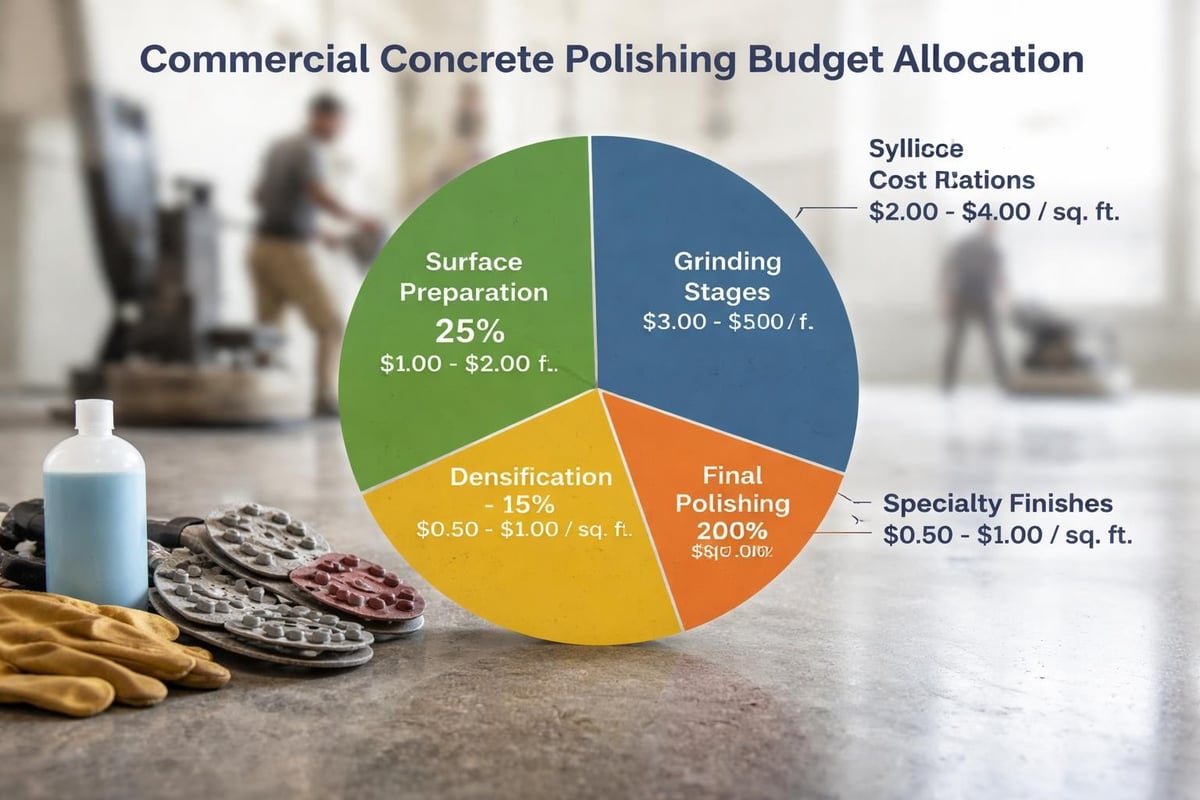
Commercial concrete polishing costs vary significantly based on project scope, existing conditions, and finish specifications. Understanding cost drivers helps develop realistic budgets and avoid unexpected expenses.
Base pricing typically ranges from $50-150 per square meter, though complex projects can exceed this range. Size, accessibility, and preparation requirements heavily influence final costs.
Primary Cost Drivers
Project variables affecting pricing include:
- Total square meterage (larger projects reduce per-square-meter costs)
- Existing surface condition and required preparation
- Desired finish level and aggregate exposure
- Site accessibility and working constraints
- Geographic location and contractor availability
Projects requiring extensive repairs, coating removal, or difficult access increase preparation time and costs. Conversely, new concrete slabs in good condition with open access minimize expenses.
Long-Term Value Assessment
While initial costs may appear higher than basic coatings, the benefits of polished concrete compound over time through reduced maintenance and extended lifespan.
A comprehensive cost analysis should include:
- Initial installation costs
- Annual maintenance expenses
- Expected lifespan before replacement
- Energy savings from improved reflectivity
- Downtime costs during installation
This lifecycle approach often reveals polished concrete as the most economical option over 15-20 year periods, particularly for high-traffic commercial facilities.
Maintenance Requirements for Longevity
Proper maintenance preserves the appearance and performance of polished concrete floors throughout their service life. Unlike complex coating systems, polished concrete requires straightforward care protocols.
Daily and Routine Maintenance
Daily maintenance involves dust mopping to remove loose debris and prevent scratching from tracked-in particles. Microfiber dust mops work exceptionally well for this purpose.
Weekly damp mopping with pH-neutral cleaners maintains surface cleanliness without degrading the polish. Harsh chemicals, acidic cleaners, and abrasive cleaning methods should be avoided.
Recommended maintenance schedule:
- Daily: Dust mop high-traffic areas
- Weekly: Damp mop entire floor with neutral cleaner
- Monthly: Inspect for damage or wear patterns
- Annually: Professional assessment and burnishing if needed
Periodic Restoration
Over years of service, high-traffic areas may develop wear patterns requiring restoration. Professional burnishing with fine diamonds restores gloss without full repolishing.
Most commercial facilities require minor restoration every 5-10 years depending on traffic intensity. This maintenance extends floor life indefinitely at minimal cost.
Facilities like warehouses and retail stores benefit from establishing maintenance schedules that address traffic patterns and operational demands.
Environmental and Sustainability Considerations
Commercial concrete polishing aligns with modern sustainability initiatives through several mechanisms. These environmental benefits increasingly influence facility management decisions across industries.
Polished concrete utilizes existing concrete slabs, eliminating the need for additional materials and reducing embodied carbon. This approach minimizes construction waste and resource consumption.
LEED and Green Building Contributions
The process contributes to LEED (Leadership in Energy and Environmental Design) certification through multiple credit categories:
- Materials and Resources: Uses existing materials without additional manufacturing
- Indoor Environmental Quality: Produces no VOCs and improves air quality
- Energy and Atmosphere: Reduces lighting energy through improved reflectivity
- Innovation: Demonstrates sustainable design practices
Many commercial surface polishing projects support broader organizational sustainability goals while delivering practical performance benefits.
Indoor Air Quality Benefits
Unlike some coating systems that emit volatile organic compounds (VOCs), polished concrete produces zero emissions during and after installation. This characteristic particularly benefits enclosed facilities and occupied spaces.
The sealed, dust-free surface prevents concrete dust generation that can compromise air quality in warehouses and industrial facilities. Improved air quality contributes to healthier work environments and reduced HVAC filter maintenance.
Selecting Qualified Contractors
Project success depends heavily on contractor expertise and equipment quality. Commercial concrete polishing requires specialized knowledge, industrial-grade machinery, and attention to detail.
Essential Contractor Qualifications
Evaluate potential contractors based on:
- Demonstrated commercial project experience
- Current licensing and insurance documentation
- Understanding of industry standards and specifications
- Quality of equipment and diamond tooling
- References from similar facility types
Contractors should provide detailed project proposals outlining grinding sequences, finish specifications, and realistic timelines. Vague proposals or reluctance to specify finish levels indicate potential quality issues.
Licensed contractors with comprehensive insurance protect clients from liability and ensure professional accountability. In Queensland, valid QBCC licensing demonstrates compliance with industry standards and regulations.
Portfolio Review and References
Reviewing completed projects similar to your facility type provides insight into contractor capabilities. Request references from commercial clients and follow up with direct conversations about project outcomes.
Visit completed installations when possible to assess finish quality, uniformity, and attention to detail. Portfolio examples showcase contractor workmanship and range of capabilities.
Application-Specific Considerations
Different commercial environments present unique requirements that influence polishing specifications and installation approaches. Tailoring the process to facility types optimizes performance and longevity.
Warehouse and Distribution Facilities
Warehouses require durable surfaces that withstand forklift traffic, pallet jacks, and constant material movement. Mid-level gloss finishes balance appearance with practical slip resistance.
Higher aggregate exposure provides additional traction and hides minor surface variations. Densification becomes critical for preventing surface dusting under heavy loads.
Retail and Showroom Spaces
Retail environments prioritize aesthetics alongside durability. Higher gloss levels create visual impact and enhance product displays through improved light reflection.
Uniform appearance matters significantly in retail applications. Contractors must carefully manage grinding sequences to minimize color variations and achieve consistent finish quality.
Industrial Manufacturing and Workshops
Manufacturing facilities often contend with oil spills, chemical exposure, and heavy machinery impacts. While polished concrete offers good resistance, facilities with severe chemical exposure might consider epoxy flooring alternatives for enhanced protection.
For general manufacturing without extreme chemical exposure, polished concrete delivers excellent durability and simplified maintenance protocols.
Future Trends in Commercial Concrete Polishing
The commercial concrete polishing industry continues evolving through technological advances, refined techniques, and expanding applications. Understanding emerging trends helps inform long-term facility planning.
Equipment and Technology Advances
Modern grinding equipment incorporates dust collection systems that capture 99% of particles, enabling work in occupied spaces with minimal disruption. Variable speed controls and planetary grinding heads improve efficiency and finish quality.
Robotic and automated grinding systems are emerging for large-scale projects, though manual equipment remains standard for most commercial applications. These technologies reduce labor requirements while maintaining consistent quality.
Decorative Enhancement Options
While traditional polished concrete showcases natural aggregate, decorative enhancements are gaining popularity. Dye application before polishing creates custom colors without compromising durability.
Saw-cut patterns, logos, and decorative borders integrate branding elements into flooring systems. These customizations particularly appeal to retail and corporate environments seeking distinctive aesthetics.
Integration with Smart Building Systems
Advanced facilities are incorporating floor sensors and monitoring systems into polished concrete installations. These technologies track traffic patterns, detect moisture intrusion, and monitor structural movement.
Integration with building management systems supports predictive maintenance and optimizes cleaning schedules based on actual usage patterns rather than arbitrary timelines.
Commercial concrete polishing delivers exceptional value for South East Queensland businesses seeking durable, low-maintenance flooring solutions. The combination of longevity, minimal upkeep, and professional aesthetics makes it ideal for warehouses, retail spaces, and industrial facilities. Whether you’re planning a new facility or upgrading existing concrete surfaces, Superior Concrete Finishes brings decades of commercial flooring expertise to every project across South East Queensland. Our fully licensed and insured team specializes in delivering high-quality polished concrete and epoxy flooring solutions tailored to commercial and industrial requirements.

Joshua Miller has over 15 years of experience in the commercial concrete flooring industry, specialising in epoxy flooring systems and polished concrete solutions for warehouses, factories, retail spaces and commercial developments. Joshua and his team work closely with builders, property owners and facility managers across South East Queensland to deliver durable, cost-effective commercial flooring systems for warehouses, industrial facilities, commercial kitchens, retail stores and large commercial developments.
Major builders and organisations Josh has led projects on include McNab, Hutchinson Builders, IKEA, Queensland Rail, University of Queensland, ADCO, Tomkins Commercial, Bunnings, OfficeWorks, Spotlight, and Anaconda.
If you're planning a project and need advice on the best commercial concrete flooring solution, contact Josh or one of the team at Superior Concrete Finishes.
-
 info@superiorconcretefinishes.com.au
-
1300 789 740
-
Connect with Josh on
LinkedIn


 Connect with Josh on