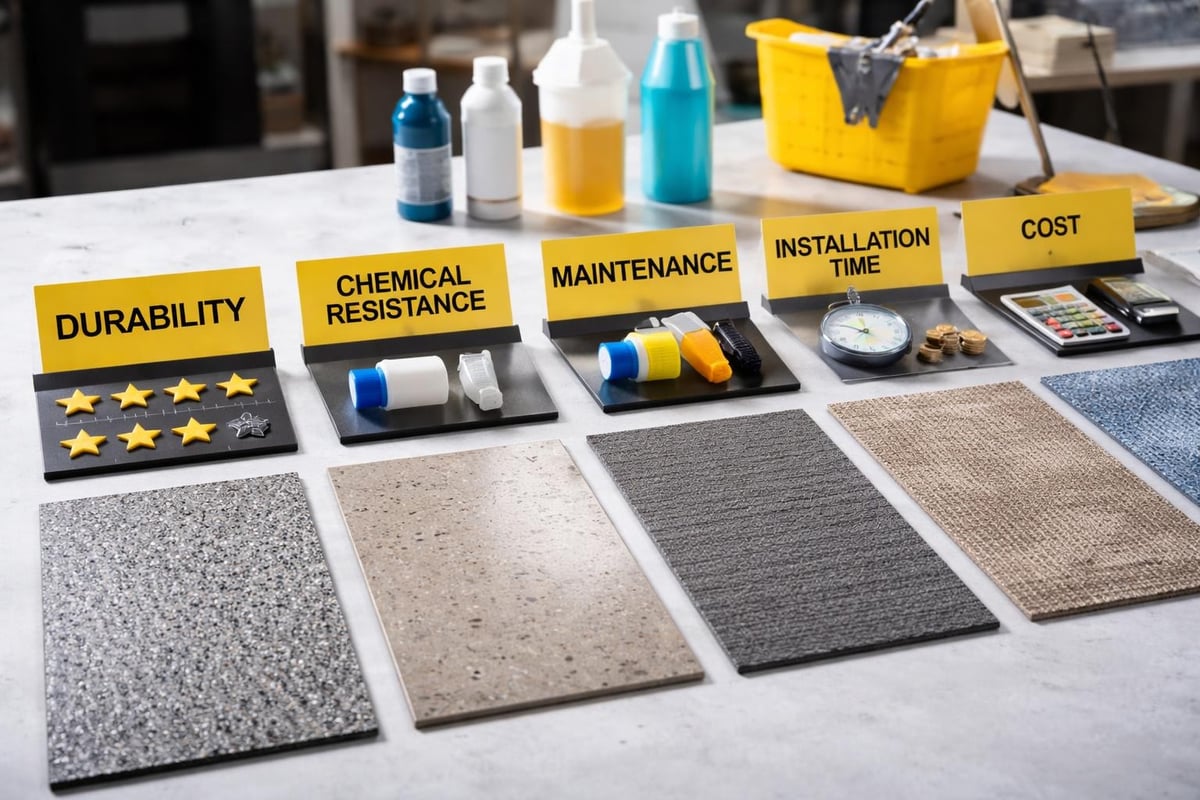
Selecting the right commercial floor covering represents one of the most critical decisions facility managers and business owners face when developing or renovating commercial and industrial spaces. Unlike residential flooring, commercial floor covering must withstand significantly higher traffic volumes, chemical exposure, heavy machinery, and rigorous cleaning protocols whilst maintaining safety standards and visual appeal. The wrong choice can lead to costly repairs, operational disruptions, and safety hazards that affect both productivity and your bottom line. Understanding the various options, performance characteristics, and application-specific requirements ensures your investment delivers long-term value and meets the demanding needs of your operation.
Understanding Commercial Floor Covering Requirements
Commercial floor covering serves fundamentally different purposes compared to residential applications. These systems must meet stringent performance standards whilst enduring conditions that would quickly destroy typical household flooring.
Performance Criteria for Industrial Environments
The selection process begins with understanding your specific operational demands. Warehouses handling heavy forklift traffic require different characteristics than retail stores prioritising aesthetics and foot traffic comfort. Chemical resistance becomes paramount in commercial kitchens and manufacturing facilities where spills are inevitable.
Key performance factors include:
- Load-bearing capacity for heavy machinery and pallet jacks
- Chemical resistance against oils, solvents, and cleaning agents
- Slip resistance meeting Australian safety standards
- Impact resistance for dropped tools and materials
- Thermal shock resistance for temperature fluctuations
- Hygiene compliance for food processing areas
When evaluating commercial floor covering options for warehouse flooring applications, the Australian Standards set minimum requirements for slip resistance, fire safety, and durability. Understanding these regulations ensures compliance and protects against liability.
Traffic Classification and Wear Patterns
Different facilities experience vastly different wear patterns. A retail store sees constant foot traffic concentrated around entry points and checkout areas, whilst a factory floor endures point loads from machinery and abrasion from material handling equipment.
| Facility Type | Primary Traffic | Wear Characteristics | Priority Requirements |
|---|---|---|---|
| Warehouses | Forklifts, pallet jacks | Concentrated point loads | Impact resistance, durability |
| Retail Stores | Foot traffic | Even distribution | Aesthetics, comfort |
| Factories | Machinery, carts | Abrasion, chemical exposure | Chemical resistance, cleanability |
| Commercial Kitchens | Foot traffic, carts | Thermal shock, moisture | Hygiene, slip resistance |
Understanding these patterns helps identify which commercial floor covering system will perform optimally in your environment. The Home Depot provides practical tips for commercial floor care tailored to different facility types.
Concrete-Based Commercial Floor Covering Systems
Concrete provides the foundation for many high-performance commercial floor covering solutions. Two primary approaches dominate the commercial and industrial sectors: coating systems and mechanical polishing.
Epoxy Coating Systems
Epoxy has become the gold standard for industrial and commercial applications requiring exceptional durability and chemical resistance. These systems bond directly to prepared concrete substrates, creating a seamless, impervious surface.
The application process involves mixing resin and hardener components that undergo a chemical curing process. This creates a cross-linked polymer structure significantly harder and more durable than the original concrete. For businesses requiring robust protection in demanding environments, epoxy flooring delivers unmatched performance across warehouses, workshops, and manufacturing facilities.
Epoxy system advantages:
- Excellent chemical resistance against oils, solvents, and acids
- Seamless surface preventing bacterial growth
- High impact resistance for heavy industrial use
- Available in various colours for zone demarcation
- Quick return-to-service times minimising downtime
Thickness options range from thin seal coats (0.3mm) to heavy-duty industrial systems (3-6mm) depending on operational requirements. Factory flooring applications typically specify thicker systems to withstand continuous heavy use.
Polished Concrete Solutions
Mechanical polishing transforms ordinary concrete into a sophisticated, low-maintenance commercial floor covering. This process uses progressively finer diamond abrasives to grind and refine the concrete surface, exposing aggregate and creating a durable, reflective finish.
The process densifies the concrete through chemical hardeners, filling pores and increasing surface hardness. The result is a floor that becomes more durable over time rather than wearing away.
Polished concrete excels in retail environments, showrooms, and commercial spaces where aesthetics matter alongside performance. The reflective surface enhances ambient lighting, reducing energy costs. Maintenance requirements are minimal compared to other commercial floor covering options, requiring only regular dust mopping and periodic cleaning.

Selecting the Right Commercial Floor Covering
Choosing between commercial floor covering options requires careful analysis of multiple factors beyond initial cost. The total cost of ownership includes installation, maintenance, lifespan, and operational impacts.
Cost-Benefit Analysis Framework
Initial installation costs represent only one component of the financial equation. A cheaper system requiring frequent repairs and replacement ultimately costs more than a premium solution lasting decades with minimal maintenance.
Total cost considerations:
- Material and installation costs including surface preparation
- Downtime costs during installation and curing
- Maintenance expenses including labour and materials
- Expected lifespan before replacement needed
- Repair costs for damage and wear
- Operational impacts on lighting, heating, and cleaning
For car park flooring applications, durability becomes paramount as replacement costs include not just materials but also significant disruption to building access. Similarly, when partnering with specialists like Texcore Construction for comprehensive facility upgrades, coordinating flooring with roofing work ensures minimal operational disruption across all building envelope improvements.
Substrate Condition Assessment
The existing concrete substrate dictates which commercial floor covering options are viable. Poor substrate conditions compromise any overlay system, leading to premature failure regardless of material quality.
Professional assessment examines moisture levels, structural integrity, surface contamination, and previous coating layers. Concrete moisture vapor emission rates must fall within acceptable limits to prevent delamination. Structural cracks require repair before overlay application.
| Substrate Issue | Impact on Flooring | Required Remediation |
|---|---|---|
| High moisture | Coating delamination | Moisture mitigation systems |
| Surface contamination | Poor adhesion | Grinding, chemical removal |
| Structural cracks | Crack telegraphing | Crack repair, isolation |
| Weak concrete | Coating failure | Overlay removal, strengthening |
| Previous coatings | Adhesion issues | Complete removal |
Buildings.com offers a comprehensive guide to commercial floor maintenance covering various flooring types and substrate considerations.
Industry-Specific Requirements
Different industries impose unique demands on commercial floor covering systems. Food processing facilities must meet stringent hygiene standards, whilst automotive workshops require oil and solvent resistance.
Food industry specifications:
Commercial kitchens and food processing areas require seamless, non-porous surfaces preventing bacterial growth. The commercial floor covering must withstand thermal shock from hot water washing, resist food acids and oils, and provide slip resistance when wet. Systems must comply with Australian food safety standards and facilitate easy cleaning protocols.
Automotive and mechanical workshops:
Mechanical workshop flooring must resist petroleum products, solvents, and hydraulic fluids. High impact resistance prevents damage from dropped tools and parts. The surface should facilitate easy cleanup of spills whilst maintaining traction even when contaminated.
Retail and commercial spaces:
Aesthetics drive decisions in customer-facing environments. The commercial floor covering must create the desired ambiance whilst handling foot traffic and shopping trolleys. Polished concrete and decorative systems dominate this sector, offering design flexibility alongside durability.
Installation and Surface Preparation
Proper installation separates successful long-term performance from premature failure. Surface preparation represents 80% of installation success, yet many contractors underestimate its importance.
Critical Preparation Steps
Every commercial floor covering system requires meticulous substrate preparation. Contamination, weak concrete, and improper profiling cause most coating failures within the first year.
Essential preparation procedures:
- Surface profiling using diamond grinding or shot blasting
- Moisture testing to verify acceptable vapor emission rates
- Crack and joint repair addressing structural movement
- Contamination removal eliminating oils, curing compounds, and previous coatings
- Substrate strength testing confirming adequate tensile strength
The concrete surface profile (CSP) must match coating manufacturer specifications. Too smooth and coatings won't bond properly. Too aggressive and coatings may not fill the profile adequately. Professional contractors use standardised CSP comparators ensuring correct preparation.
3M emphasizes best practices for clean facility floors beginning with proper preparation and continuing through installation.
Installation Timing and Conditions
Environmental conditions during installation critically affect commercial floor covering performance. Temperature, humidity, and substrate conditions must fall within acceptable ranges.
Most coating systems require temperatures between 10-30°C during application and curing. Humidity affects cure rates and can cause surface defects. Substrate temperature must exceed dew point by at least 3°C preventing condensation.
New concrete requires adequate curing before coating application. Rushing installation traps moisture, leading to delamination and blistering. Generally, concrete needs 28 days minimum curing, though this varies with slab thickness and environmental conditions.


Maintenance and Longevity
Even the most robust commercial floor covering requires proper maintenance to achieve its full lifespan potential. Neglect accelerates wear and necessitates premature replacement.
Preventive Maintenance Protocols
Establishing comprehensive maintenance protocols from day one protects your flooring investment. Different systems require different approaches, but all benefit from consistent care.
Daily maintenance tasks:
- Dust mopping to remove abrasive particles
- Spot cleaning spills immediately
- Inspecting high-traffic areas for damage
- Removing debris that could scratch surfaces
Periodic maintenance requirements:
- Deep cleaning using appropriate methods and chemicals
- Reapplication of protective sealers (for some systems)
- Repair of minor damage before it spreads
- Professional inspection annually
For retail flooring applications, appearance maintenance is critical for customer perception. Regular cleaning prevents soil buildup that dulls the finish. SOLID provides best practices for maintaining healthy flooring surfaces in commercial environments.
Common Damage and Repair
Understanding typical damage patterns allows proactive intervention before minor issues become major problems. Chemical spills, impact damage, and wear patterns require different repair approaches.
Repair strategies by damage type:
| Damage Type | Cause | Repair Method | Prevention |
|---|---|---|---|
| Delamination | Moisture, poor adhesion | Remove and recoat | Proper preparation |
| Chemical staining | Spills left untreated | Grinding, recoating | Immediate cleanup |
| Cracking | Substrate movement | Crack filling, recoat | Proper joint placement |
| Wear patterns | Heavy traffic | Localized recoat | Traffic distribution |
| Impact damage | Dropped objects | Patch repair | Load management |
Early intervention minimizes repair costs and extends overall commercial floor covering lifespan. Deferred maintenance compounds problems, eventually requiring complete system replacement rather than simple repairs.
Safety and Compliance Considerations
Commercial floor covering must meet Australian safety standards and industry-specific regulations. Compliance protects against liability whilst ensuring worker and customer safety.
Slip Resistance Standards
Slip resistance represents a critical safety parameter for all commercial environments. Australian Standards specify minimum coefficients of friction for different applications, with wet areas requiring higher values.
Testing methods include the pendulum test (AS 4586) measuring dynamic coefficient of friction. Results classify surfaces from R9 (lowest) to R13 (highest) slip resistance. Commercial kitchens typically require R11 or higher, whilst dry retail spaces may specify R10.
Surface texture, cleaning protocols, and contamination all affect slip resistance over time. Regular testing ensures continued compliance, particularly in high-liability environments like commercial kitchens.
Fire Resistance and Safety Ratings
Fire safety regulations govern commercial floor covering in many applications, particularly multi-story buildings and public spaces. Materials must meet flame spread and smoke development indices specified in the Building Code of Australia.
Testing follows ASTM D7470 protocols, which evaluate fire resistance of floor covering materials under standardized conditions. Concrete-based systems inherently provide excellent fire resistance, a significant advantage over combustible alternatives.
Chemical Exposure and VOC Regulations
Indoor air quality regulations limit volatile organic compound (VOC) emissions from commercial floor covering systems. Low-VOC and zero-VOC formulations meet increasingly stringent environmental standards whilst protecting occupant health.
For facilities storing or using hazardous materials, the flooring must provide appropriate chemical resistance preventing groundwater contamination. Seamless systems eliminate joints where chemicals might penetrate, providing superior environmental protection.
Environmental and Sustainability Factors
Sustainability considerations increasingly influence commercial floor covering decisions. Life cycle assessment, material sourcing, and operational impacts all contribute to environmental footprint.
Life Cycle Environmental Impact
Evaluating environmental impact requires examining the entire life cycle from raw material extraction through manufacturing, transportation, installation, use phase, and eventual disposal or recycling.
Sustainability metrics:
- Embodied carbon in materials and manufacturing
- Transportation distances and emissions
- Installation waste and disposal
- Energy consumption during use phase
- Maintenance chemical and water usage
- End-of-life recyclability or disposal impact
Concrete-based commercial floor covering systems generally perform well in life cycle assessments. Polished concrete requires no additional materials beyond the structural slab already present. Epoxy systems use the concrete substrate as their base, minimizing material consumption compared to overlay systems requiring complete surface coverage.
Energy Efficiency Contributions
Reflective commercial floor covering improves ambient lighting, reducing artificial lighting requirements. Polished concrete surfaces can achieve 60-70% light reflectivity, significantly enhancing natural and artificial light distribution.
Thermal mass properties of concrete moderate temperature fluctuations, reducing heating and cooling loads. This passive climate control reduces operational energy consumption over decades of service life.
For facilities requiring protection from weather elements, coordinating with building envelope specialists ensures comprehensive performance. Metal Structure Sales LLC offers durable metal carports that complement robust flooring systems for outdoor and semi-enclosed commercial applications.
Emerging Technologies and Innovations
The commercial floor covering industry continues evolving with new materials, application methods, and performance enhancements addressing traditional limitations.
Advanced Coating Formulations
Recent developments in polymer chemistry have produced coatings with enhanced performance characteristics. Polyurethane-modified epoxies combine epoxy's chemical resistance with polyurethane's flexibility and UV stability.
Fast-cure formulations reduce installation downtime to hours rather than days. This minimizes operational disruption, a critical factor for facilities that cannot afford extended closures. Some systems allow vehicle traffic within 8-12 hours and full chemical resistance within 24 hours.
Antimicrobial additives prevent bacterial growth on flooring surfaces, critical for healthcare, food processing, and pharmaceutical applications. These additives provide continuous protection without requiring additional cleaning chemicals.
Smart Flooring Integration
Emerging smart building technologies integrate sensors within commercial floor covering systems. These sensors monitor foot traffic patterns, detect moisture intrusion, and track temperature fluctuations providing facility managers with real-time data.
Conductive flooring systems dissipate static electricity, protecting sensitive electronics in manufacturing and laboratory environments. These specialized systems meet stringent grounding requirements whilst maintaining durability and chemical resistance.
Industry-Specific Application Strategies
Successfully implementing commercial floor covering requires understanding the unique challenges and priorities of different industrial sectors. Generic solutions rarely optimize performance across diverse operational environments.
Warehouse and Distribution Centers
Modern warehouses demand flooring that withstands intensive forklift traffic whilst maintaining levelness critical for high-reach equipment. Even minor surface irregularities affect racking systems and automated guided vehicles.
Joint-free installations minimize maintenance points and eliminate tripping hazards. Warehouse flooring systems must facilitate easy cleaning of spills whilst providing adequate traction for both foot traffic and material handling equipment.
Zone demarcation using different colours improves safety and operational efficiency. Loading zones, pedestrian pathways, and storage areas receive visual definition through integrated colour schemes within the commercial floor covering system.
Automotive and Transportation Facilities
Commercial car parks face unique challenges including oil drips, salt exposure from vehicles, and constant tire wear. Car park flooring must resist petroleum products whilst providing slip resistance and maintaining appearance despite constant exposure to the elements.
Drainage considerations become critical in car parks, requiring slight slopes and appropriate joint placement preventing water pooling. The commercial floor covering must integrate with drainage systems whilst maintaining continuous protection of the concrete substrate.
Selecting appropriate commercial floor covering requires balancing performance requirements, budget constraints, aesthetic preferences, and long-term operational considerations. The right system delivers decades of reliable service whilst minimizing maintenance costs and operational disruptions. Whether your facility demands the chemical resistance and durability of epoxy systems or the refined aesthetics of polished concrete, professional assessment and installation ensure optimal results. Superior Concrete Finishes brings decades of expertise to commercial and industrial flooring projects across South East Queensland, delivering tailored solutions for warehouses, factories, retail stores, commercial kitchens, and industrial workshops backed by full QBCC licensing and insurance.

Joshua Miller has over 15 years of experience in the commercial concrete flooring industry, specialising in epoxy flooring systems and polished concrete solutions for warehouses, factories, retail spaces and commercial developments. Joshua and his team work closely with builders, property owners and facility managers across South East Queensland to deliver durable, cost-effective commercial flooring systems for warehouses, industrial facilities, commercial kitchens, retail stores and large commercial developments.
Major builders and organisations Josh has led projects on include McNab, Hutchinson Builders, IKEA, Queensland Rail, University of Queensland, ADCO, Tomkins Commercial, Bunnings, OfficeWorks, Spotlight, and Anaconda.
If you're planning a project and need advice on the best commercial concrete flooring solution, contact Josh or one of the team at Superior Concrete Finishes.
-
 info@superiorconcretefinishes.com.au
-
1300 789 740
-
Connect with Josh on
LinkedIn


 Connect with Josh on