
Selecting the right commercial flooring installation companies for your project represents one of the most critical decisions facing facility managers, construction coordinators, and business owners in 2026. The commercial flooring industry continues to evolve rapidly, with market analysis indicating strong growth driven by renovations and increased demand for durable materials. As businesses across South East Queensland invest in warehouse upgrades, retail transformations, and industrial facility improvements, understanding how to evaluate and choose qualified contractors becomes paramount to project success. This comprehensive guide explores the essential factors, industry standards, and practical considerations that distinguish exceptional flooring contractors from the rest.
Understanding the Commercial Flooring Installation Landscape
The commercial flooring sector in Australia has experienced significant transformation over recent years. Commercial flooring installation companies now operate within a complex environment shaped by stringent building codes, workplace safety requirements, and evolving customer expectations.
Industry Standards and Regulatory Requirements
Professional commercial flooring contractors must maintain current licensing through the Queensland Building and Construction Commission (QBCC). This licensing framework ensures that companies possess the technical knowledge, financial stability, and insurance coverage necessary to undertake commercial projects safely and effectively.
Key regulatory compliance areas include:
- Valid QBCC licensing appropriate to the scope of work
- Comprehensive public liability insurance (minimum $20 million coverage recommended)
- Workers compensation insurance for all team members
- Adherence to Australian Standards for flooring installation
- Occupational health and safety certifications
- Environmental compliance for material disposal and application
The National Flooring Authority provides comprehensive guidance on commercial flooring systems, covering construction standards essential for industry professionals. These standards form the foundation upon which reputable commercial flooring installation companies build their service delivery.
Market Segments and Specialisation
Different commercial flooring installation companies often specialize in particular sectors or flooring types. Understanding these specializations helps ensure alignment between your project requirements and contractor expertise.
| Market Segment | Typical Flooring Needs | Key Performance Requirements |
|---|---|---|
| Warehouses | Heavy-duty, impact-resistant | Load-bearing capacity, durability |
| Retail Stores | Aesthetic appeal, foot traffic resistance | Visual appeal, maintenance ease |
| Factories | Chemical resistance, safety | Slip resistance, chemical tolerance |
| Commercial Kitchens | Hygiene compliance, moisture resistance | Food-safe materials, seamless surfaces |
| Carparks | Weather resistance, traffic durability | Waterproofing, UV stability |
| Workshops | Oil resistance, ease of cleaning | Stain resistance, long-term wear |
According to recent industry analysis, the commercial flooring market continues to find solid footing despite economic headwinds, with particular strength in industrial and healthcare sectors.
Essential Criteria for Evaluating Commercial Flooring Installation Companies
Selecting commercial flooring installation companies requires a systematic evaluation process. The following criteria provide a framework for making informed decisions that protect your investment and ensure project success.
Experience and Track Record
A contractor's history speaks volumes about their capability. When evaluating commercial flooring installation companies, examine their portfolio with specific attention to projects similar to yours in scope, scale, and application.
Request detailed information about:
- Years operating in the commercial flooring sector
- Number of projects completed in your specific facility type
- Client references from comparable installations
- Case studies demonstrating problem-solving capabilities
- Before and after documentation of previous work
Companies with decades of industry experience bring valuable knowledge about substrate preparation, environmental challenges, and application techniques that only develop through hands-on project delivery.

Technical Expertise and Training
The technical complexity of modern commercial flooring systems demands specialized knowledge. Superior commercial flooring installation companies invest continuously in team training and skill development.
Critical technical competencies include:
- Concrete substrate assessment and preparation techniques
- Moisture testing and mitigation strategies
- Product knowledge across multiple flooring systems
- Application methodology for varying environmental conditions
- Quality control processes and testing procedures
- Troubleshooting and remediation capabilities
For concrete flooring specifically, understanding the nuances of different types of concrete finishes ensures contractors can recommend and execute the most appropriate solution for your application.
Insurance and Financial Stability
Financial viability and comprehensive insurance coverage protect clients from project risks. Commercial flooring installation companies should demonstrate both operational stability and robust risk management.
| Insurance Type | Minimum Recommended Coverage | Why It Matters |
|---|---|---|
| Public Liability | $20 million | Protects against third-party claims |
| Professional Indemnity | $5 million | Covers design and specification errors |
| Workers Compensation | Statutory requirement | Protects employees and clients |
| Contract Works | Project value | Covers work in progress damage |
Request current certificates of currency for all insurance policies and verify coverage limits align with your project value and risk profile.
Key Questions to Ask Potential Contractors
Engaging commercial flooring installation companies in detailed discussions reveals their approach, professionalism, and suitability for your project. The following questions provide insight into contractor capabilities and project methodology.
Project Planning and Methodology
Understanding how contractors plan and execute projects illuminates their organizational capabilities and attention to detail.
- What is your process for site assessment and preparation?
- How do you handle substrate moisture testing and remediation?
- What is the typical project timeline for a facility similar to ours?
- How do you manage workflow to minimize disruption to operations?
- What quality control checkpoints do you implement throughout installation?
Material Selection and Application
Product knowledge and application expertise directly impact flooring performance and longevity. For facilities requiring industrial epoxy flooring, understanding product specifications and application techniques becomes particularly critical.
Ask contractors to explain:
- Which products they recommend for your specific application and why
- How they handle environmental factors like temperature and humidity
- What surface preparation techniques they employ for optimal adhesion
- How they ensure uniform coverage and finish consistency
- What curing protocols they follow to maximize performance
Warranty and Aftercare
Comprehensive warranty coverage and responsive aftercare separate exceptional commercial flooring installation companies from average providers.
Warranty considerations should cover:
- Duration of material and workmanship warranties
- Specific inclusions and exclusions
- Process for addressing warranty claims
- Maintenance requirements to preserve warranty validity
- Response timeframes for service requests
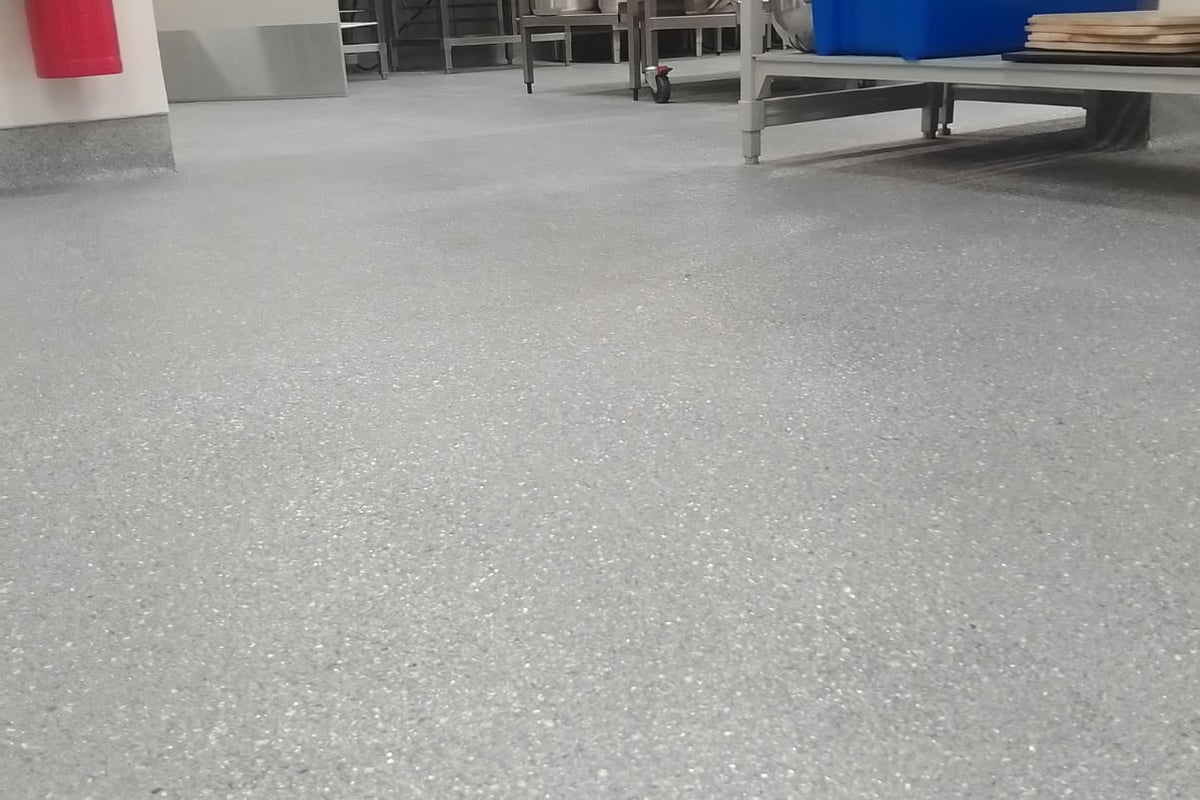
The right flooring solution depends entirely on your facility's operational demands. Epoxy flooring delivers exceptional durability and chemical resistance for warehouses, workshops, factories, and commercial kitchens, providing a hard-wearing surface designed specifically for industrial and commercial applications.
Evaluating Project Proposals and Quotations
Comparing proposals from multiple commercial flooring installation companies requires careful analysis beyond simple price comparison. A comprehensive evaluation considers value, scope, and risk allocation.
Proposal Components to Review
Detailed proposals should include specific information about every aspect of the project. Vague or incomplete quotations often signal potential issues during execution.
Essential proposal elements include:
- Detailed scope of work with square meterage calculations
- Specific product specifications and brands
- Surface preparation methodology and extent
- Labour allocation and project timeline
- Payment schedule tied to project milestones
- Variation procedures and pricing methodology
- Site access and operational impact management
Understanding Cost Structures
Commercial flooring projects involve multiple cost components. Understanding these elements helps evaluate whether quotations represent fair value or contain hidden risks.
| Cost Component | Typical Percentage | What It Covers |
|---|---|---|
| Materials | 35-45% | Flooring products, primers, sealers |
| Labour | 40-50% | Installation, supervision, quality control |
| Preparation | 10-15% | Surface grinding, crack repair, cleaning |
| Project Management | 5-10% | Coordination, documentation, testing |
Proposals significantly below market rates may indicate corners being cut in preparation, product quality, or insurance coverage. The commercial flooring market demonstrates resilience despite economic pressures, with quality contractors maintaining consistent pricing structures that reflect true project costs.
Red Flags in Contractor Selection
Certain warning signs should prompt additional scrutiny or reconsideration of commercial flooring installation companies.
Watch for these concerning indicators:
- Reluctance to provide detailed references or portfolio examples
- Inability to produce current insurance certificates
- Pressure tactics or unusually short quotation validity periods
- Vague or incomplete scope of work descriptions
- Unwillingness to commit to specific timelines or milestones
- Lack of QBCC licensing or appropriate trade qualifications
- No documented quality control or testing procedures
Industry Trends Shaping Commercial Flooring Selection
Staying informed about industry developments helps businesses make forward-thinking flooring decisions. The commercial flooring trends for 2026 emphasize sustainability, functionality, and integrated design approaches.
Sustainability and Environmental Considerations
Environmental responsibility increasingly influences commercial flooring decisions. Leading commercial flooring installation companies now offer eco-conscious options and sustainable installation practices.
Sustainability factors include:
- Low-VOC product formulations
- Minimal material waste through precise application
- Long service life reducing replacement frequency
- Energy-efficient installation processes
- Recyclable or renewable material content
For concrete flooring systems, the inherent sustainability of polished concrete and epoxy applications provides environmental advantages through material efficiency and extended durability.

Performance Requirements Evolution
Modern commercial operations demand increasingly sophisticated flooring performance. Understanding these requirements helps select commercial flooring installation companies with appropriate technical capabilities.
Performance expectations now commonly include:
- Enhanced chemical resistance for industrial environments
- Improved slip resistance for safety compliance
- Antimicrobial properties for hygiene-critical spaces
- Rapid cure formulations minimizing operational downtime
- Thermal shock resistance for temperature-variant environments
- Superior impact resistance for heavy equipment zones
The state of the commercial flooring industry in 2026 reflects these evolving demands, with contractors adapting their capabilities to meet increasingly specific performance criteria.
Making Your Final Selection
After thorough evaluation, the final selection of commercial flooring installation companies should balance multiple factors aligned with your project priorities and organizational requirements.
Weighted Decision Matrix Approach
A structured decision framework ensures consistent evaluation across all considerations. Assign weights to different criteria based on your project's specific priorities.
| Criteria | Weight | Contractor A Score | Contractor B Score | Contractor C Score |
|---|---|---|---|---|
| Experience & Track Record | 25% | |||
| Technical Expertise | 20% | |||
| Price Competitiveness | 15% | |||
| Insurance & Licensing | 15% | |||
| Project Timeline | 10% | |||
| Warranty Coverage | 10% | |||
| References & Reputation | 5% |
This systematic approach removes emotion from the decision-making process and provides defensible justification for your selection.
Pre-Contract Clarifications
Before finalising agreements with commercial flooring installation companies, ensure absolute clarity on all project parameters. Ambiguity at the contract stage creates disputes during execution.
Confirm and document:
- Exact scope boundaries and any exclusions
- Responsibility allocation for site preparation tasks
- Access requirements and operational coordination
- Material storage and site security arrangements
- Waste removal and site cleaning obligations
- Change order procedures and approval authorities
- Final acceptance criteria and testing protocols
Building Long-Term Partnerships
The best client relationships with commercial flooring installation companies extend beyond single projects. Establishing ongoing partnerships delivers multiple advantages including priority scheduling, preferential pricing, and institutional knowledge about your facilities.
Consider creating preferred contractor arrangements for organizations with multiple locations or ongoing maintenance requirements. These relationships provide consistency in quality, streamlined procurement, and simplified project coordination.
Ongoing Maintenance and Contractor Relationships
Flooring performance depends significantly on appropriate maintenance following installation. Commercial flooring installation companies should provide comprehensive care guidelines and support services.
Maintenance Program Development
Professional contractors deliver detailed maintenance protocols tailored to the specific flooring system installed. These programs maximize flooring lifespan and maintain appearance standards.
Typical maintenance guidance covers:
- Daily cleaning procedures and approved products
- Periodic maintenance schedules and techniques
- Traffic management recommendations
- Early intervention for damage or wear
- When to contact contractors for professional assessment
For durable epoxy floors, proper maintenance significantly extends service life while preserving the floor's protective properties and aesthetic appeal.
Performance Monitoring
Establish systems to monitor flooring performance and contractor responsiveness. Regular assessment ensures the flooring continues meeting operational requirements and identifies potential issues before they escalate.
Monitor these performance indicators:
- Visual appearance and finish consistency
- Wear patterns in high-traffic zones
- Chemical resistance in exposure areas
- Slip resistance maintenance
- Ease of cleaning and maintenance
- Contractor response times for queries or concerns
Periodic Professional Assessment
Schedule regular professional inspections with your chosen commercial flooring installation companies. These assessments identify maintenance opportunities, validate care protocols, and plan for eventual refinishing or replacement needs.
Professional assessments typically include:
- Comprehensive visual inspection of all flooring areas
- Testing of key performance characteristics
- Identification of areas requiring attention
- Recommendations for preventive maintenance
- Budget forecasting for future work requirements
This proactive approach maximizes return on flooring investment and maintains optimal facility presentation and functionality throughout the floor's service life.
Selecting the right commercial flooring installation companies requires careful evaluation of credentials, experience, technical capabilities, and alignment with your project requirements. For South East Queensland businesses seeking expert concrete flooring solutions, Superior Concrete Finishes brings decades of specialized experience in epoxy flooring and polished concrete for warehouses, retail stores, factories, commercial kitchens, carparks, and industrial workshops. Our fully insured, QBCC licensed team delivers professional installations backed by comprehensive expertise in commercial and industrial concrete flooring systems.

Joshua Miller has over 15 years of experience in the commercial concrete flooring industry, specialising in epoxy flooring systems and polished concrete solutions for warehouses, factories, retail spaces and commercial developments. Joshua and his team work closely with builders, property owners and facility managers across South East Queensland to deliver durable, cost-effective commercial flooring systems for warehouses, industrial facilities, commercial kitchens, retail stores and large commercial developments.
Major builders and organisations Josh has led projects on include McNab, Hutchinson Builders, IKEA, Queensland Rail, University of Queensland, ADCO, Tomkins Commercial, Bunnings, OfficeWorks, Spotlight, and Anaconda.
If you're planning a project and need advice on the best commercial concrete flooring solution, contact Josh or one of the team at Superior Concrete Finishes.
-
 info@superiorconcretefinishes.com.au
-
1300 789 740
-
Connect with Josh on
LinkedIn


 Connect with Josh on