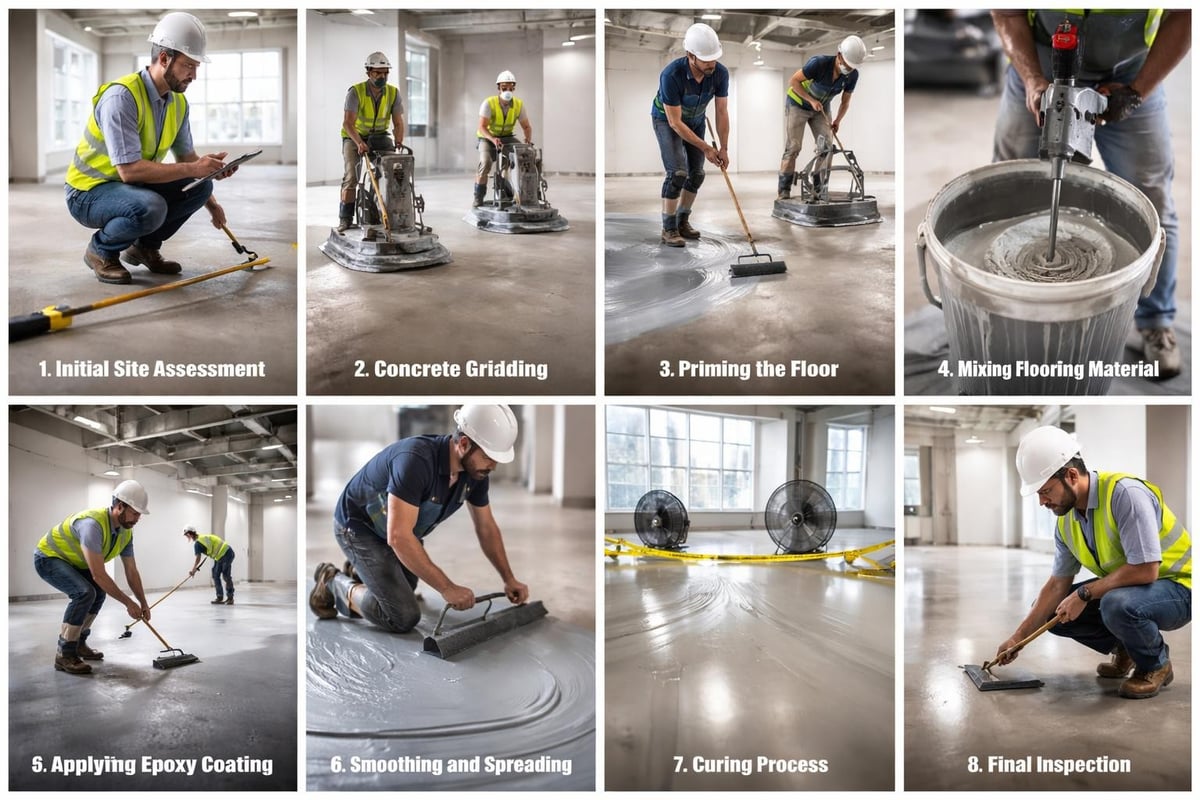
Selecting the right commercial flooring installers can make the difference between a flooring system that lasts decades and one that requires costly repairs within months. In 2026, the commercial flooring market continues to expand, driven by construction growth across industrial and retail sectors. However, not all installers bring the same level of expertise, particularly when it comes to specialised concrete flooring systems. Understanding what distinguishes professional installers from less experienced operators helps businesses make informed decisions that protect their investment and minimise operational disruption.
Essential Qualifications and Licensing Requirements
Professional commercial flooring installers must meet strict regulatory standards before they can legally operate on commercial projects. In Queensland, this means holding a valid QBCC (Queensland Building and Construction Commission) licence specific to flooring installation work.
Industry Certifications and Insurance Coverage
Beyond basic licensing, reputable installers carry comprehensive insurance policies that protect both their business and their clients. Public liability insurance and workers' compensation coverage are non-negotiable requirements for any commercial project.
Critical insurance and licensing elements include:
- QBCC licence verification and currency
- Public liability insurance (minimum $10 million coverage)
- Workers' compensation insurance for all team members
- Professional indemnity insurance for design-related work
- Compliance with Work Health and Safety regulations
The absence of proper licensing or insurance should immediately disqualify an installer from consideration, regardless of their quoted price. These protections exist to safeguard your business from liability should accidents occur during installation.
Experience in Commercial Environments
Commercial flooring installation differs significantly from residential work. The scale of projects, the performance requirements, and the complexity of substrate preparation demand specialised knowledge that only comes through years of commercial experience.
Installers with decades of industry experience understand how different flooring systems perform under varying conditions. They recognise potential substrate issues before they become problems and can recommend solutions tailored to specific operational requirements.
Material Expertise and System Knowledge
The best commercial flooring installers possess deep knowledge of multiple flooring systems and their appropriate applications. This expertise allows them to guide clients toward solutions that genuinely match their operational needs rather than simply selling whatever system they happen to install.
Concrete Flooring System Specialisation
For warehouses, factories, and industrial facilities, concrete flooring systems represent the gold standard in durability and longevity. However, these systems require installers with specific technical knowledge.
| Flooring System | Primary Applications | Key Installation Requirements |
|---|---|---|
| Epoxy Coatings | Warehouses, factories, commercial kitchens | Moisture testing, profile preparation, temperature control |
| Polished Concrete | Retail stores, offices, showrooms | Diamond grinding equipment, densifier application, multi-stage polishing |
| Polyurethane Systems | Food processing, breweries, cold storage | Rapid cure knowledge, thermal shock resistance |
Understanding substrate preparation requirements separates competent installers from exceptional ones. Inadequate preparation accounts for the majority of premature flooring failures, as highlighted in common installation mistakes.
Technical Assessment Capabilities
Professional commercial flooring installers conduct thorough site assessments before providing detailed quotations. This assessment process identifies potential challenges and ensures the proposed system suits the specific environment.
A comprehensive site assessment examines:
- Substrate condition and moisture levels
- Traffic patterns and load-bearing requirements
- Chemical exposure risks and temperature extremes
- Existing surface contamination or damage
- Drainage requirements and slope considerations
These assessments inform material selection and installation methodology, ensuring the finished floor performs as expected throughout its service life.
Installation Standards and Quality Control
Adherence to commercial flooring standards ensures installations meet performance, safety, and compliance requirements. Professional installers follow established industry protocols rather than improvising techniques.
Surface Preparation Protocols
Proper surface preparation forms the foundation of any successful flooring installation. This stage consumes significant time and resources but cannot be compromised without risking system failure.
Standard preparation steps for concrete substrates:
- Mechanical grinding or shot blasting to achieve proper profile
- Removal of all contaminants, laitance, and curing compounds
- Crack repair and joint filling as required
- Moisture testing using approved methods (calcium chloride or relative humidity probes)
- Profile verification to ensure adequate mechanical bond
Experienced installers understand that rushing preparation to meet tight deadlines inevitably leads to callbacks and warranty claims. They allocate sufficient time for proper substrate preparation regardless of project pressures.

Application Techniques and Equipment
The equipment and techniques used during application directly impact the finished product's performance and appearance. Commercial flooring installers invest in professional-grade tools that deliver consistent results across large surface areas.
Modern installation requires specialised equipment including diamond grinding systems, shot blasters, power trowels, and precision mixing equipment. The investment in quality tools reflects an installer's commitment to professional standards.
Project Management and Timeline Delivery
Commercial projects operate on tight schedules where delays carry significant financial consequences. Professional commercial flooring installers understand this reality and structure their operations to minimise disruption to business operations.
Coordination with Other Trades
Flooring installation typically occurs toward the end of construction or renovation projects. This timing requires careful coordination with other trades to prevent damage to newly installed floors and ensure all preparatory work completes before flooring commences.
Effective project management includes:
- Clear communication with project managers and other contractors
- Realistic timeline estimates based on actual site conditions
- Contingency planning for unexpected complications
- Staging work to allow partial facility operation during installation
- Protection protocols for completed areas
Commercial flooring installation processes demand this level of organisation to deliver successful outcomes.
Specialised Applications and Industry Sectors
Different commercial environments present unique challenges that require specialised knowledge and experience. Not all commercial flooring installers possess expertise across all industry sectors.
Industrial and Manufacturing Facilities
Warehouse flooring and factory floor systems must withstand heavy machinery, forklift traffic, impact loads, and often chemical exposure. These demanding conditions require robust flooring systems and installers who understand industrial operational requirements.
Key considerations for industrial installations:
- Load-bearing capacity for racking systems and machinery
- Chemical resistance appropriate to manufacturing processes
- Impact resistance in high-traffic zones
- Joint design to accommodate building movement
- Rapid installation to minimise production downtime
Installers specialising in industrial environments understand these factors and design systems accordingly.
Retail and Commercial Spaces
Retail environments prioritise aesthetics alongside durability. Polished concrete has gained popularity in retail settings due to its contemporary appearance and low maintenance requirements.
Retail flooring installations balance visual appeal with practical performance. The reflective finish of polished concrete enhances lighting efficiency while providing a durable surface for constant foot traffic.
Food Processing and Commercial Kitchens
Food industry applications demand flooring systems that meet strict hygiene standards while resisting thermal shock, moisture, and cleaning chemicals. These specialised requirements necessitate installers with specific food industry experience.
Epoxy flooring systems designed for commercial kitchens and food processing facilities incorporate antimicrobial additives and seamless construction to prevent bacterial growth and facilitate thorough cleaning.

Cost Considerations and Value Assessment
Price comparisons between commercial flooring installers require careful analysis beyond simple per-square-metre rates. The cheapest quote often signals compromises in materials, preparation standards, or installer experience.
Understanding Quote Components
Professional quotes itemise all project components, providing transparency about what's included and where costs arise. This detailed approach prevents surprise charges and allows meaningful comparison between installers.
| Cost Component | Professional Installer | Budget Installer |
|---|---|---|
| Site preparation | Comprehensive grinding, repairs | Minimal preparation only |
| Material quality | Premium-grade systems | Economy-grade products |
| Labour allocation | Experienced teams, adequate timeframes | Rushed installation, junior staff |
| Quality control | Testing and inspection protocols | Visual inspection only |
| Warranty coverage | Comprehensive, transferable warranty | Limited warranty terms |
The lowest quote frequently excludes essential preparation work or uses inferior materials that compromise long-term performance. According to technical buying guides, understanding these specifications proves crucial for informed decision-making.
Long-term Value and Life Cycle Costs
Evaluating commercial flooring installers based on life cycle costs rather than installation price alone provides a more accurate picture of true value. A properly installed premium system that lasts 20 years represents better value than a budget system requiring replacement after five years.
Safety Standards and Compliance
Commercial flooring installations must comply with workplace health and safety regulations and building codes. Professional installers maintain current knowledge of these requirements and implement appropriate safety measures throughout the installation process.
Slip Resistance and Performance Standards
Different commercial environments require specific slip resistance ratings to ensure occupant safety. Commercial flooring standards define these requirements, and installers must understand how to achieve them through proper system selection and application techniques.
Slip resistance classifications:
- R9-R10: Light commercial, dry conditions
- R11-R12: Wet areas, commercial kitchens, amenities
- R13: Extreme wet conditions, food processing
Professional installers select and apply systems that meet or exceed required slip resistance ratings for the intended environment.
Maintenance Support and Warranty Terms
The relationship with commercial flooring installers shouldn't end when installation completes. Reputable installers provide comprehensive maintenance guidance and stand behind their work with substantial warranties.
Warranty Coverage and Terms
Warranty terms vary significantly between installers. Comprehensive warranties cover both materials and labour, extend for meaningful periods, and remain transferable to new property owners.
Standard warranty periods for quality installations:
- Premium systems: 10-15 years comprehensive coverage
- Standard systems: 5-10 years material and labour
- Economy systems: 1-3 years limited warranty
Installers who offer extended warranties demonstrate confidence in their workmanship and the systems they install.
Ongoing Maintenance Programs
Professional commercial flooring installers educate clients about proper maintenance procedures that preserve flooring performance and appearance. Some offer ongoing maintenance programs that ensure floors receive appropriate care throughout their service life.
Regular maintenance requirements vary by system type but typically include routine cleaning protocols, periodic resealing for some systems, and prompt attention to any damage or wear. Commercial flooring services often extend beyond installation to include these ongoing support elements.
Regional Considerations and Local Expertise
Climate conditions, local building codes, and regional material availability influence flooring system performance and installation requirements. Commercial flooring installers with extensive regional experience understand these local factors.
South East Queensland Specific Factors
The subtropical climate in South East Queensland creates unique challenges for commercial flooring installations. High humidity levels, temperature fluctuations, and seasonal weather patterns all impact material selection and installation timing.
Experienced local installers account for:
- Moisture management in humid conditions
- Thermal expansion considerations for Queensland's temperature range
- Seasonal planning to avoid wet weather during critical curing periods
- Local authority approval processes and inspection requirements
- Availability of materials suited to subtropical conditions
This regional expertise ensures systems perform optimally within the local environment rather than failing due to climate-related factors.
Technology and Innovation in Installation
The commercial flooring industry continues to evolve with new materials, application techniques, and quality control technologies. Leading commercial flooring installers invest in ongoing training and adopt innovations that improve outcomes for their clients.
Advanced Testing and Monitoring
Modern moisture testing equipment, thermal imaging cameras, and laser-guided application tools enable more precise installations with predictable results. These technologies help installers identify potential issues before they compromise the installation.
As noted in industry analysis reports, technological advancement continues to drive improvements in installation efficiency and final product quality. Professional installers embrace these innovations rather than relying solely on traditional methods.
Choosing commercial flooring installers requires careful evaluation of qualifications, experience, and demonstrated expertise in your specific industry sector. The right installer brings technical knowledge, quality materials, and professional project management that delivers flooring systems performing reliably for decades. If you're planning a commercial flooring project across South East Queensland, Superior Concrete Finishes brings decades of experience in epoxy and polished concrete installations for warehouses, factories, retail stores, and industrial facilities. Our QBCC-licensed team delivers professional concrete flooring solutions backed by comprehensive warranties and unwavering commitment to quality.

Joshua Miller has over 15 years of experience in the commercial concrete flooring industry, specialising in epoxy flooring systems and polished concrete solutions for warehouses, factories, retail spaces and commercial developments. Joshua and his team work closely with builders, property owners and facility managers across South East Queensland to deliver durable, cost-effective commercial flooring systems for warehouses, industrial facilities, commercial kitchens, retail stores and large commercial developments.
Major builders and organisations Josh has led projects on include McNab, Hutchinson Builders, IKEA, Queensland Rail, University of Queensland, ADCO, Tomkins Commercial, Bunnings, OfficeWorks, Spotlight, and Anaconda.
If you're planning a project and need advice on the best commercial concrete flooring solution, contact Josh or one of the team at Superior Concrete Finishes.
-
 info@superiorconcretefinishes.com.au
-
1300 789 740
-
Connect with Josh on
LinkedIn


 Connect with Josh on