The commercial flooring industry in Australia relies heavily on skilled subcontractors who specialise in delivering high-quality floor finishes across warehouses, retail spaces, and industrial facilities. Choosing the right commercial flooring subcontractors directly impacts project timelines, budget management, and long-term performance outcomes. Understanding what separates exceptional subcontractors from average service providers helps general contractors, facility managers, and project developers make informed decisions that protect their investments and ensure successful project completion.
Understanding the Role of Commercial Flooring Subcontractors
Commercial flooring subcontractors serve as specialised trade partners within larger construction projects, bringing focused expertise in floor preparation, application, and finishing. Unlike general contractors who coordinate multiple trades, these specialists concentrate exclusively on delivering flooring solutions that meet commercial and industrial performance standards.
Specialisation vs General Contracting
The distinction between general contractors and commercial flooring subcontractors centres on depth of knowledge and equipment capabilities. Subcontractors invest in specialised machinery, maintain updated certifications, and develop expertise in specific flooring systems such as epoxy coatings, polished concrete, or polyurethane applications.
Key advantages of specialist subcontractors include:
- Advanced technical knowledge of substrate preparation requirements
- Industry-specific equipment for grinding, coating, and finishing
- Updated training on latest material formulations and application techniques
- Dedicated focus on flooring performance metrics
- Established relationships with material suppliers
This specialisation becomes particularly valuable in complex commercial environments where flooring must withstand heavy traffic, chemical exposure, or hygiene requirements. General contractors typically lack the specialised knowledge required to navigate these challenges effectively.

Licensing and Insurance Requirements
In Queensland, commercial flooring subcontractors must hold valid QBCC (Queensland Building and Construction Commission) licensing to legally operate on commercial projects. This licensing framework protects project owners and ensures contractors meet minimum competency standards.
| Requirement | Purpose | Verification Method |
|---|---|---|
| QBCC Licence | Legal compliance and competency | Check QBCC public register |
| Public Liability Insurance | Protection against property damage | Request certificate of currency |
| Workers Compensation | Employee injury coverage | Verify current policy |
| Professional Indemnity | Design and specification protection | Annual policy confirmation |
Beyond licensing, comprehensive insurance coverage demonstrates professional maturity and financial stability. Managing commercial construction projects requires contractors to maintain adequate coverage that protects all stakeholders throughout the project lifecycle.
Critical Selection Criteria for Commercial Projects
Selecting commercial flooring subcontractors involves evaluating capabilities beyond competitive pricing. Project success depends on matching subcontractor strengths with specific project requirements and performance expectations.
Experience and Track Record
A subcontractor’s portfolio reveals their capability to deliver on projects similar in scope, complexity, and performance requirements. Review completed projects across relevant sectors such as warehouse flooring, retail spaces, or industrial facilities.
Portfolio assessment should examine:
- Project scale and complexity matching your requirements
- Sector-specific experience in relevant industries
- Material system expertise for specified flooring types
- Timeline performance on comparable projects
- Problem-solving examples demonstrating adaptive capabilities
References from previous clients provide valuable insights into working relationships, communication effectiveness, and issue resolution approaches. Contact facility managers or project managers who have worked with potential subcontractors to understand their actual performance under pressure.
Technical Capabilities and Equipment
The quality of finished flooring depends significantly on equipment sophistication and maintenance standards. Modern commercial flooring requires precision machinery for surface preparation, material application, and finishing processes.
Evaluate technical capabilities through:
- Grinding equipment for concrete preparation and polishing
- Application systems for uniform coating distribution
- Moisture testing equipment for substrate evaluation
- Environmental controls for temperature and humidity management
- Quality control instruments for measuring finish specifications
Best practices for commercial flooring contractors emphasise the importance of maintaining current equipment and adopting new technologies that improve installation efficiency and finish quality. Subcontractors who invest in equipment upgrades typically deliver superior results with reduced project risks.
Project Management and Communication Standards
Effective project coordination separates professional commercial flooring subcontractors from those who create delays and complications. Communication protocols, scheduling adherence, and documentation practices directly influence project outcomes.
Coordination with General Contractors
Commercial flooring installation requires precise timing within the overall construction schedule. Subcontractors must coordinate with preceding trades (plumbing, electrical, HVAC) and prepare for subsequent work that depends on completed flooring.
Strong coordination practices include:
- Pre-installation meetings to review site conditions and schedule dependencies
- Regular progress updates aligned with general contractor reporting requirements
- Proactive issue identification before problems impact critical path timelines
- Flexible resource allocation to accommodate schedule adjustments
- Documentation of changes affecting scope, schedule, or cost
The importance of proper project management in flooring installations cannot be overstated, as coordinated execution prevents costly delays and rework scenarios that plague poorly managed projects.
Commercial flooring project phases showing substrate preparation, moisture testing, primer application, main coating installation, curing periods, and final inspection milestones
Documentation and Reporting Requirements
Professional commercial flooring subcontractors maintain comprehensive documentation throughout project execution. This includes pre-installation assessments, daily progress reports, material certifications, and warranty documentation.
| Document Type | Purpose | Retention Period |
|---|---|---|
| Site condition reports | Baseline documentation | Project duration + 7 years |
| Material data sheets | Product specifications | Warranty period |
| Installation records | Quality verification | Project duration + 7 years |
| Warranty certificates | Performance guarantees | Warranty period |
| As-built documentation | Maintenance reference | Facility lifetime |
Thorough documentation protects all parties by establishing clear records of work performed, materials used, and conditions encountered. This becomes particularly valuable when addressing warranty claims or planning future maintenance activities.
Quality Assurance and Performance Standards
Commercial flooring systems must meet rigorous performance criteria for durability, safety, and aesthetics. Quality assurance processes ensure installations achieve specified standards and deliver expected service life.
Material Selection and Compatibility
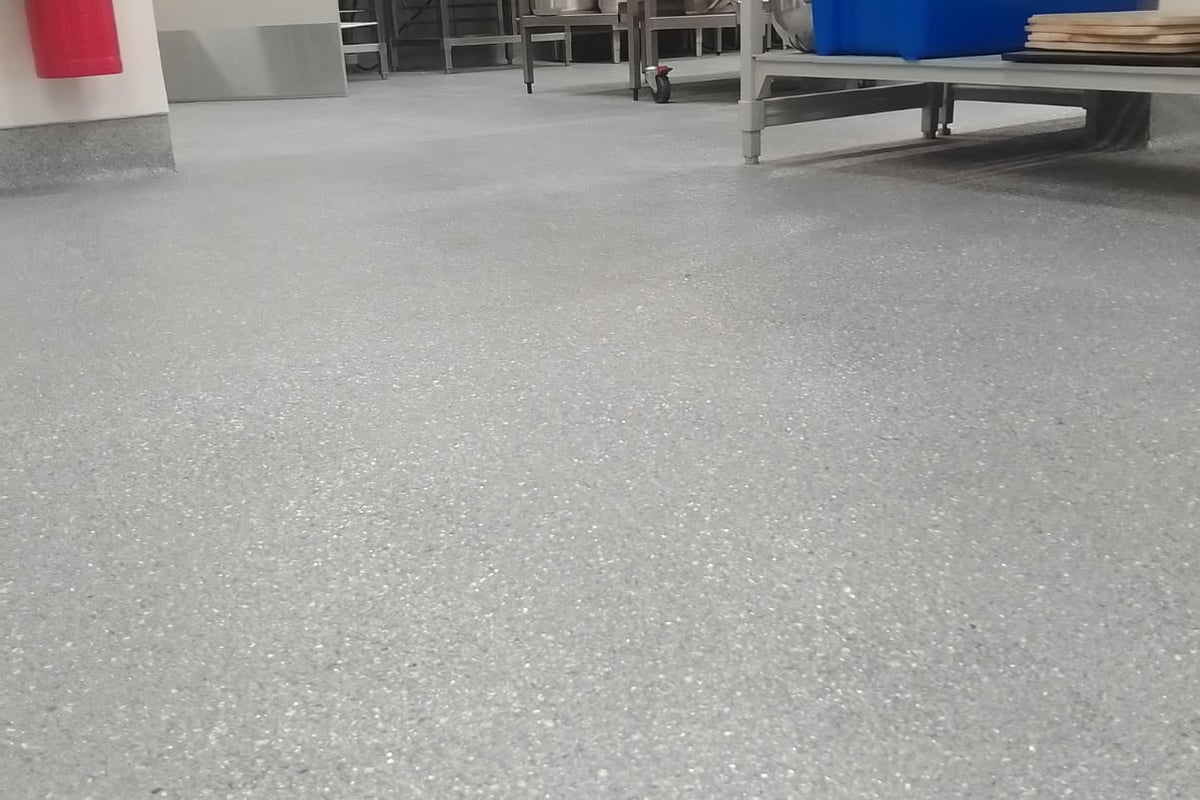
Selecting appropriate flooring systems requires understanding substrate conditions, environmental factors, and performance requirements. For example, epoxy flooring delivers exceptional chemical resistance and durability in warehouses, workshops, and commercial kitchens where heavy traffic and potential chemical exposure demand robust protection. This system’s proven performance makes it a preferred choice for industrial applications requiring long-term reliability.
Experienced subcontractors assess multiple factors:
- Substrate type and condition (new concrete vs existing floors)
- Environmental conditions (temperature fluctuations, moisture exposure)
- Traffic patterns (foot traffic, forklift operations, vehicle loads)
- Chemical exposure (oils, solvents, cleaning agents)
- Aesthetic requirements (colour, gloss level, texture)
Technical guides for commercial flooring selection provide detailed specifications that help match material systems to specific application requirements, ensuring optimal performance outcomes.
Testing and Inspection Protocols
Quality commercial flooring subcontractors implement systematic testing and inspection protocols at critical project stages. Pre-installation testing identifies potential issues before material application, while post-installation verification confirms specification compliance.
Essential testing procedures include:
- Moisture testing using calcium chloride or relative humidity methods
- Surface profile verification ensuring adequate mechanical bond
- Adhesion testing confirming coating bond strength
- Thickness measurements validating specified build
- Visual inspection identifying aesthetic defects
Regular inspections during installation catch problems early when corrections are simpler and less expensive. Final inspections before project handover document completion quality and identify any punch list items requiring attention.
Common Challenges and Solutions
Commercial flooring projects encounter predictable challenges that experienced subcontractors navigate through planning, communication, and adaptive problem-solving. Understanding these challenges helps set realistic expectations and establish appropriate risk mitigation strategies.
Schedule Coordination Issues
Flooring installation depends on preceding trades completing their work and achieving specified conditions. Delays in concrete curing, HVAC commissioning, or building enclosure can cascade into flooring schedule impacts.
Effective solutions include:
- Buffer time allocation in schedule planning for weather or coordination delays
- Alternative sequencing options to maintain productivity during delays
- Early coordination meetings identifying potential conflicts before they materialise
- Resource flexibility allowing crew reallocation across multiple projects
- Clear communication protocols ensuring all stakeholders understand schedule changes
Understanding common challenges faced by subcontractors helps establish proactive strategies that minimise disruptions and maintain project momentum even when unexpected issues arise.
Substrate Condition Problems
Concrete substrate issues represent the most common source of flooring installation problems. Moisture transmission, surface contamination, weak concrete, or improper curing can compromise coating adhesion and long-term performance.
| Problem | Detection Method | Solution Approach |
|---|---|---|
| Excessive moisture | RH testing or calcium chloride | Moisture mitigation systems |
| Surface contamination | Visual inspection, water drop test | Mechanical preparation, cleaning |
| Weak concrete | Pull-off testing | Surface densification, repairs |
| Cracks or joints | Visual survey | Routing, filling, crack bridging |
| Uneven surface | Straightedge measurement | Grinding, levelling compounds |
Experienced commercial flooring subcontractors conduct thorough substrate assessments before bidding projects, allowing accurate scope definition and appropriate preparation allowances. This prevents surprise conditions that impact schedule and budget.
Cost Factors and Value Considerations
Understanding cost drivers for commercial flooring helps project teams evaluate proposals and identify genuine value beyond simple price comparison. The lowest bid rarely delivers the best long-term value when total ownership costs are considered.
Labour vs Material Cost Balance
Commercial flooring costs typically split between materials (40-50%) and labour (50-60%), though this varies by system complexity and substrate conditions. High-quality materials applied poorly deliver inferior results compared to quality materials professionally installed.
Labour cost factors include:
- Crew skill and experience level affecting installation efficiency
- Surface preparation requirements based on substrate conditions
- Access and logistics challenges in occupied facilities
- Project size and continuity enabling crew efficiency
- Schedule constraints requiring premium-time work
Material cost considerations extend beyond unit pricing to include coverage rates, waste factors, and warranty terms. Premium materials with better coverage or durability may deliver lower total cost despite higher initial pricing.
Long-Term Performance Value
Evaluating commercial flooring investments requires considering lifecycle costs rather than installation costs alone. Factory flooring and other industrial applications particularly benefit from this perspective, as maintenance costs and downtime for repairs significantly exceed initial installation investments.
Lifecycle cost components include:
- Initial installation investment
- Maintenance material and labour costs
- Downtime costs for repairs or refinishing
- Replacement timing and associated costs
- Energy efficiency impacts (light reflectivity)
Quality subcontractors provide realistic service life projections based on specified use conditions, helping facility managers plan maintenance budgets and replacement cycles. This transparency builds trust and demonstrates professional maturity.

Working with Specialised Flooring Systems
Different commercial environments require specific flooring characteristics, driving material system selection and subcontractor expertise requirements. Understanding these specialisations helps match projects with appropriately experienced contractors.
Industrial and Warehouse Applications
Industrial facilities demand flooring systems that withstand heavy point loads, abrasive wear, and potential chemical exposure. Warehouse flooring applications typically prioritise durability and traffic capacity over aesthetics, though modern facilities increasingly expect both.
Specialist requirements include:
- Heavy equipment tolerance for forklifts and pallet jacks
- Impact resistance preventing chipping or cracking
- Chemical resistance protecting against oils and solvents
- Joint detailing expertise managing control joints and saw cuts
- Fast-track capabilities minimising facility downtime
Subcontractors serving industrial markets maintain equipment and expertise specific to these demanding applications, including heavy-duty grinding machines and high-build coating systems that deliver required performance characteristics.
Retail and Commercial Spaces
Retail environments prioritise aesthetics alongside durability, requiring subcontractors who understand design intent and deliver consistent visual quality. Polished concrete in retail stores demonstrates how functional flooring systems can create attractive, low-maintenance surfaces that enhance customer experience.
Retail-focused capabilities include:
- Colour consistency across large floor areas
- Gloss level control achieving specified sheen
- Joint minimisation creating seamless appearances
- Schedule flexibility accommodating occupied facility constraints
- Aesthetic problem-solving addressing substrate variations
These projects often require evening or weekend work to minimise business disruption, demanding subcontractors who maintain quality standards despite challenging work schedules.
Building Strong Contractor Relationships
Successful commercial projects depend on collaborative relationships between general contractors, subcontractors, and project owners. Establishing clear expectations and maintaining open communication prevents misunderstandings that derail projects.
Contract Clarity and Scope Definition
Well-defined contracts eliminate ambiguity about responsibilities, performance standards, and change management processes. Commercial flooring contracts should explicitly address substrate conditions, warranty terms, and acceptance criteria.
Essential contract elements include:
- Detailed scope descriptions with inclusion/exclusion clarity
- Substrate condition assumptions and preparation responsibilities
- Material specifications with approved equal provisions
- Schedule milestones and coordination requirements
- Payment terms tied to measurable completion stages
- Warranty coverage and exclusion definitions
Clear contracts protect all parties by establishing mutual understanding of expectations and obligations. Challenges in commercial construction often stem from vague specifications or poorly defined scopes that create disputes during execution.
Payment Terms and Financial Management
Fair payment terms support healthy subcontractor relationships while protecting project owners against incomplete work. Standard practice includes progress payments tied to completion milestones, with retention held until final acceptance.
| Payment Stage | Typical Percentage | Release Trigger |
|---|---|---|
| Mobilisation | 10-15% | Materials delivered to site |
| Surface preparation | 25-30% | Preparation complete, ready for coating |
| First coat application | 30-35% | Initial coating applied and cured |
| Final coat application | 20-25% | Final coating complete |
| Retention | 5-10% | Final inspection, warranty documentation |
Prompt payment for completed work maintains positive relationships and ensures subcontractors have cash flow to support ongoing operations. Delayed payments damage relationships and may impact subcontractor willingness to accommodate schedule changes or additional requests.
Industry Trends and Future Outlook
The commercial flooring industry continues evolving with new materials, application techniques, and performance expectations. Staying current with industry developments helps both contractors and clients make informed decisions that leverage latest innovations.
Sustainability and Environmental Considerations
Environmental consciousness increasingly influences material selection and installation practices. Low-VOC formulations, recycled content materials, and energy-efficient finishes respond to both regulatory requirements and client sustainability commitments.
Progressive commercial flooring subcontractors embrace:
- Low-emission products meeting Green Star or LEED requirements
- Waste reduction practices minimising jobsite disposal
- Energy-efficient finishes improving lighting efficiency through reflectivity
- Durable systems reducing replacement frequency and associated waste
- Local sourcing reducing transportation environmental impacts
These practices align with broader construction industry sustainability trends while delivering tangible benefits in indoor air quality and operational efficiency.
Technology Integration and Innovation
Digital tools transform how commercial flooring subcontractors estimate, plan, and execute projects. Building Information Modelling (BIM) integration, moisture mapping technology, and digital documentation systems improve accuracy and efficiency.
Emerging technology applications include:
- Laser scanning for accurate floor flatness measurement
- Digital moisture mapping identifying problem areas before coating
- Automated application equipment improving consistency and speed
- Mobile documentation apps streamlining quality records
- Project management platforms enhancing communication and coordination
Subcontractors who invest in technology adoption typically deliver more predictable outcomes with reduced rework and improved client satisfaction. Commercial flooring challenges increasingly require technological solutions that traditional approaches cannot adequately address.
Regional Considerations for South East Queensland
South East Queensland’s climate and construction market create specific considerations for commercial flooring projects. High humidity, temperature variations, and seasonal weather patterns influence material selection and installation timing.
Climate Impact on Installation
Queensland’s subtropical climate requires particular attention to humidity control during flooring installation. High moisture levels can compromise coating cures, extend project schedules, and impact long-term performance if not properly managed.
Climate-related best practices include:
- Monitoring ambient conditions during application and cure
- Using dehumidification equipment when necessary
- Timing installations during favourable weather windows
- Selecting materials appropriate for humid conditions
- Allowing extended cure times during high humidity periods
Experienced local subcontractors understand these regional requirements and plan projects accordingly, preventing weather-related complications that impact quality and schedule.
Local Market Dynamics
South East Queensland’s construction market includes diverse commercial and industrial sectors, from Gold Coast retail developments to Brisbane industrial estates. Understanding local market dynamics helps subcontractors align capabilities with regional demand.
The region’s growth in logistics facilities, retail centres, and food processing plants creates consistent demand for specialised flooring services. Subcontractors serving this market develop expertise in applications ranging from car park flooring to food-grade hygienic surfaces that meet sector-specific requirements.
Selecting the right commercial flooring subcontractors requires careful evaluation of technical capabilities, project management systems, and industry experience that align with your specific requirements. Quality installations that deliver long-term performance depend on partnering with specialists who understand substrate preparation, material systems, and coordination requirements essential for successful commercial projects. Superior Concrete Finishes brings decades of expertise in epoxy flooring and polished concrete installations across South East Queensland’s commercial and industrial sectors, from warehouses and factories to retail spaces and commercial car parks. Our QBCC-licensed team delivers professional concrete flooring solutions backed by comprehensive insurance and proven project management capabilities. Contact Superior Concrete Finishes today to discuss your commercial flooring requirements and experience the difference that specialist expertise makes.

Joshua Miller has over 15 years of experience in the commercial concrete flooring industry, specialising in epoxy flooring systems and polished concrete solutions for warehouses, factories, retail spaces and commercial developments. Joshua and his team work closely with builders, property owners and facility managers across South East Queensland to deliver durable, cost-effective commercial flooring systems for warehouses, industrial facilities, commercial kitchens, retail stores and large commercial developments.
Major builders and organisations Josh has led projects on include McNab, Hutchinson Builders, IKEA, Queensland Rail, University of Queensland, ADCO, Tomkins Commercial, Bunnings, OfficeWorks, Spotlight, and Anaconda.
If you're planning a project and need advice on the best commercial concrete flooring solution, contact Josh or one of the team at Superior Concrete Finishes.
-
 info@superiorconcretefinishes.com.au
-
1300 789 740
-
Connect with Josh on
LinkedIn


 Connect with Josh on