
Commercial polished concrete floors have emerged as the premier flooring solution for industrial and commercial facilities across Australia in 2026. This flooring system transforms ordinary concrete slabs into highly functional, aesthetically refined surfaces that withstand the demanding conditions of warehouses, retail environments, factories, and commercial kitchens. The process involves mechanically grinding, honing, and polishing concrete to achieve varying levels of sheen and exposure, creating a durable surface that requires minimal maintenance while delivering exceptional performance. As businesses increasingly prioritize long-term value and operational efficiency, understanding the technical aspects, financial implications, and practical benefits of commercial polished concrete floors becomes essential for making informed decisions about facility infrastructure.
Understanding the Polished Concrete Process
The creation of commercial polished concrete floors involves a systematic approach that progressively refines the concrete surface through multiple stages. Professional contractors utilise industrial grinding equipment fitted with diamond-impregnated abrasives, starting with coarse grits to remove surface imperfections and gradually advancing to finer grits that produce the desired level of polish.
Preparation and Surface Assessment
Before any grinding begins, the concrete slab must undergo thorough assessment and preparation. This initial phase determines the viability of the existing concrete and identifies any repairs required for optimal results.
- Slab inspection: Evaluating concrete strength, age, and existing coatings
- Surface repair: Filling cracks, holes, and damaged areas with compatible materials
- Contamination removal: Eliminating oils, adhesives, and previous sealers
- Moisture testing: Confirming the slab meets acceptable vapour emission levels
The condition of the substrate directly influences the final outcome, making this preparatory work non-negotiable for achieving professional results. Concrete slabs with significant structural issues may require additional remediation before polishing can commence.
Grinding and Refinement Stages
The grinding process transforms rough concrete into a refined surface through sequential stages, each using progressively finer abrasives. This methodical approach removes surface layers while exposing aggregate and creating the foundation for the final polish.
| Grinding Stage | Grit Range | Purpose | Result |
|---|---|---|---|
| Coarse | 16-40 | Remove coatings and level surface | Exposed aggregate |
| Medium | 80-120 | Refine surface and reduce scratches | Smooth texture |
| Fine | 200-400 | Pre-polish and prepare for densifier | Satin finish |
| Polish | 800-3000 | Create desired sheen level | Reflective surface |
Between grinding stages, contractors apply chemical densifiers that penetrate the concrete and react with free lime to create additional calcium silicate hydrate. This chemical reaction increases surface hardness and density, producing a floor that resists wear and dusting whilst accepting higher levels of polish. The benefits and limitations of polished concrete warrant careful consideration when planning commercial flooring projects.
Design Options and Aesthetic Considerations
Commercial polished concrete floors offer remarkable design flexibility that extends far beyond the standard grey concrete appearance. Modern techniques and finishing options enable businesses to achieve distinctive looks that align with brand identity and functional requirements.
Exposure Levels and Aggregate Reveal
The depth of grinding determines how much aggregate becomes visible in the finished floor, creating distinct visual effects. Cream polish removes minimal surface paste, exposing only fine sand particles and maintaining a uniform appearance. Salt-and-pepper finishes reveal small aggregate pieces, whilst full aggregate exposure showcases larger stones throughout the surface.
Each exposure level delivers different aesthetic qualities suited to specific environments. Retail flooring applications often favour medium exposure that balances visual interest with sophisticated appearance, whilst industrial facilities may prioritise functionality over decorative aggregate display.
Decorative Enhancements and Customisation
Beyond natural aggregate exposure, commercial polished concrete floors can incorporate various decorative elements that enhance visual appeal and functional zoning.
Dye and Stain Applications: Concrete accepts acid stains, water-based stains, and dyes that introduce colour variation and artistic effects. These treatments penetrate the surface rather than forming topical coatings, ensuring colour permanence and resistance to wear.
Saw Cuts and Patterns: Strategic scoring creates geometric patterns, logos, or demarcation lines within the floor surface. These cuts become integral design features that serve both aesthetic and wayfinding purposes.
Joint Details: Existing control joints can be filled, highlighted, or incorporated into the overall design scheme, transforming functional necessities into deliberate visual elements.
The growing popularity of polished concrete in commercial developments reflects increasing recognition of its aesthetic versatility alongside practical advantages.
Performance Benefits for Commercial Applications
The technical characteristics of commercial polished concrete floors deliver measurable operational advantages that translate into reduced costs and improved facility performance across various commercial and industrial settings.
Durability and Wear Resistance
Polished concrete creates one of the most durable flooring surfaces available for commercial use. The densification process increases surface hardness to Mohs 7-9, comparable to natural stone, whilst the continuous surface eliminates joints and seams that typically deteriorate under heavy traffic.
High-traffic warehouses, manufacturing facilities, and retail environments subject floors to constant stress from foot traffic, equipment movement, and material handling. Commercial polished concrete floors resist these demands without the surface degradation common to alternative flooring systems. The absence of coatings eliminates delamination concerns, whilst the integral nature of the polish prevents wear-through issues.
Load-bearing capacity: Properly installed polished concrete supports substantial point loads and distributed weight without surface damage or structural compromise. Factory flooring applications particularly benefit from this inherent strength.
Maintenance Requirements and Lifecycle Costs
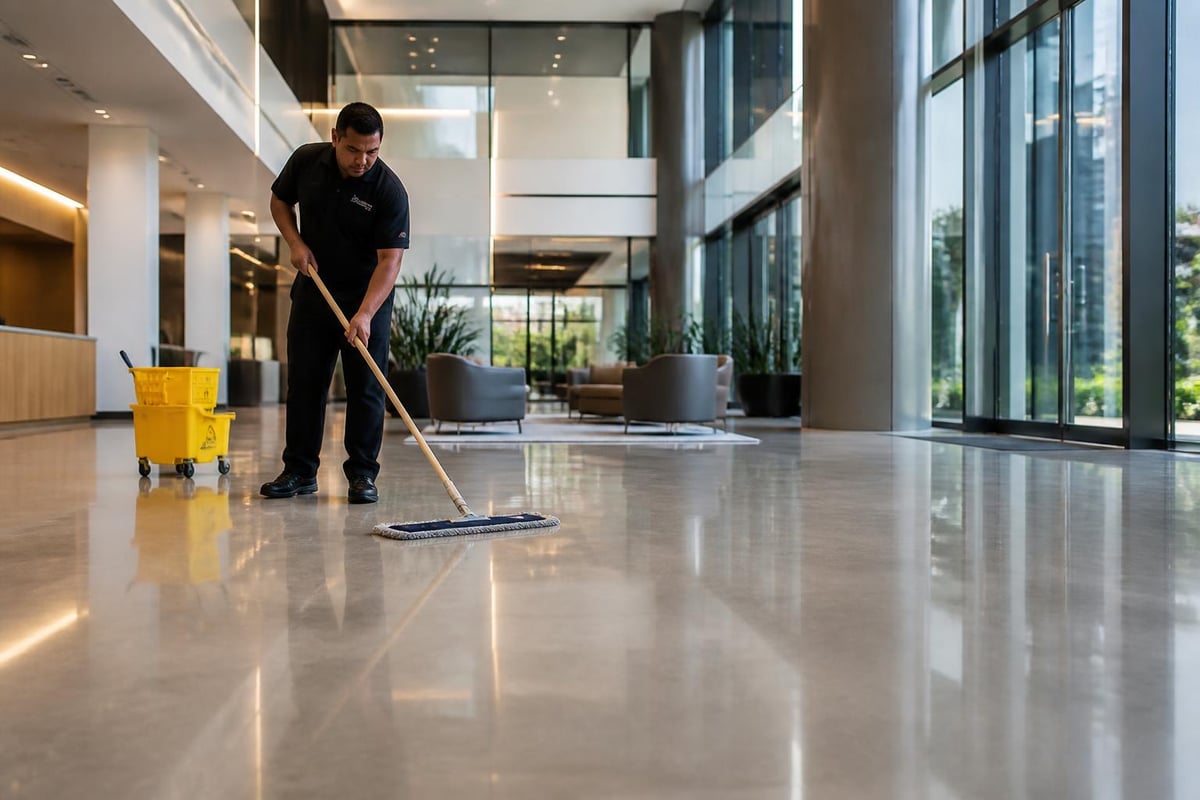
The maintenance profile of commercial polished concrete floors presents significant economic advantages compared to alternative flooring systems. Daily cleaning requires only dust mopping or auto-scrubbing with clean water or neutral pH cleaners, eliminating the need for harsh chemicals or specialized products.
- Reduced cleaning frequency and labour costs
- Elimination of waxing, stripping, and recoating procedures
- Minimal equipment requirements for routine maintenance
- Extended service life exceeding 20 years with proper care
- No replacement costs during typical facility lifecycles
Periodic repolishing every 5-10 years restores surface lustre and maintains performance characteristics, representing a fraction of the cost associated with replacing alternative flooring systems. This maintenance efficiency contributes to total cost of ownership calculations that consistently favour polished concrete over its competitors.
Environmental and Safety Performance
Modern commercial operations increasingly prioritize environmental responsibility and occupant safety, areas where commercial polished concrete floors deliver measurable benefits. The reflective surface enhances ambient lighting efficiency by up to 30 percent, reducing artificial lighting requirements and associated energy consumption.
Air quality improvements result from eliminating the off-gassing associated with vinyl, epoxy, and other synthetic flooring materials. The inert nature of polished concrete produces no volatile organic compounds, supporting healthier indoor environments and compliance with green building standards. Compliance with flooring safety standards ensures commercial installations meet regulatory requirements.
| Safety Feature | Benefit | Application |
|---|---|---|
| Slip resistance | Customizable texture levels | Kitchens, wet areas |
| Fire resistance | Non-combustible surface | All commercial spaces |
| Chemical resistance | Withstands spills and cleaners | Factories, workshops |
| Joint elimination | Reduced trip hazards | Warehouses, retail |
Industry-Specific Applications
Different commercial sectors impose unique demands on flooring systems, requiring tailored approaches to specification and installation. Commercial polished concrete floors adapt to these varying requirements through adjustments to finish levels, surface treatments, and performance enhancements.
Warehouse and Distribution Facilities
Warehouse flooring must withstand constant forklift traffic, pallet jack movement, and heavy material storage whilst maintaining a clean, safe surface. Polished concrete excels in these environments through superior abrasion resistance and the ability to support substantial loads without surface degradation.
The reflective surface improves visibility throughout large facilities, enhancing safety and operational efficiency. Forklift operators benefit from reduced eye strain, whilst inventory management becomes more efficient under improved lighting conditions. The seamless surface prevents damage to wheeled equipment and eliminates debris accumulation in joints.
Retail and Commercial Spaces
Retail environments demand flooring that balances aesthetic appeal with durability and maintenance efficiency. Polished concrete services transform commercial spaces with sophisticated finishes that complement contemporary design whilst handling continuous foot traffic.
The design flexibility inherent to polished concrete enables retailers to create distinctive environments that reinforce brand identity. Colour treatments, aggregate exposure levels, and custom scoring patterns provide endless creative possibilities whilst maintaining the practical benefits of a durable, low-maintenance surface. Current trends in commercial concrete floor designs showcase innovative approaches gaining traction across retail sectors.

Manufacturing and Industrial Workshops
Manufacturing facilities and mechanical workshops present demanding conditions that include chemical exposure, thermal cycling, and heavy equipment operation. Commercial polished concrete floors address these challenges through inherent chemical resistance and thermal stability that alternative flooring systems struggle to match.
The dust-free surface created through densification and polishing prevents concrete dust from contaminating products and equipment, critical in precision manufacturing and assembly operations. Compared to alternatives, polished concrete is outperforming epoxy in many commercial applications due to its superior durability and lower lifecycle costs.
Cost Analysis and Financial Considerations
Understanding the complete financial picture of commercial polished concrete floors requires examining both initial investment and long-term operational costs. This comprehensive approach reveals the true value proposition that drives increasing adoption across commercial sectors.
Installation Investment
The initial cost of commercial polished concrete floors varies based on several factors that influence both material requirements and labour intensity. Existing slab condition, desired finish level, decorative enhancements, and facility size all impact project pricing.
Cost variables include:
- Concrete condition and required repairs
- Exposure level and desired aggregate reveal
- Addition of dyes, stains, or decorative cuts
- Total square metres and project complexity
- Geographic location and contractor expertise
Whilst initial investment may exceed some alternative flooring systems, the absence of ongoing replacement costs fundamentally alters the financial equation. A comprehensive guide to polished concrete costs provides detailed breakdowns that inform budgeting decisions.
Return on Investment Analysis
Calculating the return on investment for commercial polished concrete floors must account for multiple value streams that accumulate over the floor's service life. Direct cost savings from reduced maintenance combine with operational benefits that improve facility performance and reduce ongoing expenses.
| Cost Category | Annual Savings | 20-Year Value |
|---|---|---|
| Maintenance labour | $2,500-5,000 | $50,000-100,000 |
| Cleaning products | $800-1,500 | $16,000-30,000 |
| Floor replacement | $0 | $80,000-150,000 |
| Energy costs | $1,200-2,400 | $24,000-48,000 |
These conservative estimates demonstrate how operational savings rapidly offset higher initial investment, typically achieving payback within 3-5 years. Beyond direct cost reductions, commercial polished concrete floors contribute to property value and tenant satisfaction, particularly relevant for facilities planning long-term occupation.
Specification and Contractor Selection
Successful commercial polished concrete installations require careful specification development and contractor selection. The technical nature of the work demands experienced professionals equipped with appropriate equipment and proven processes.
Defining Project Requirements
Clear specifications ensure all stakeholders understand project expectations and deliverables. Detailed documentation should address concrete preparation requirements, grinding progression, densifier application, final polish level, and acceptance criteria for completed work.
Working with experienced contractors during the specification phase identifies potential challenges and establishes realistic expectations. Factors such as existing slab condition, moisture levels, and operational constraints influence project approach and timeline. You can explore our portfolio to see examples of completed commercial installations across various sectors.
Evaluating Contractor Qualifications
The contractor selected for commercial polished concrete installation directly impacts project outcomes. Essential qualifications extend beyond basic licensing to encompass specialized experience, equipment capabilities, and quality assurance processes.
- Industry experience: Minimum 10 years specializing in commercial polished concrete
- Licensing and insurance: Current QBCC licence and comprehensive liability coverage
- Equipment inventory: Professional-grade planetary grinders and dust extraction systems
- Reference projects: Completed installations in similar commercial applications
- Quality processes: Documented procedures for surface preparation, grinding, and finishing
Requesting detailed project proposals from multiple qualified contractors enables comparison of approaches, timelines, and pricing. The lowest bid rarely represents the best value when considering the long-term performance implications of substandard installation. Understanding the complete scope of industrial floor coatings options helps inform decision-making.
Maintenance Protocols for Longevity
Whilst commercial polished concrete floors require minimal maintenance compared to alternative systems, establishing proper care protocols maximizes performance and extends service life. Systematic approaches to daily cleaning, periodic maintenance, and occasional restoration preserve the floor's aesthetic and functional qualities.
Daily and Weekly Cleaning
Routine cleaning prevents abrasive soil accumulation that gradually dulls the polished surface. Dust mopping or sweeping removes loose debris, whilst auto-scrubbing with neutral pH cleaners addresses tracked-in dirt and minor spills.
Recommended cleaning practices:
- Dust mop or sweep high-traffic areas daily
- Auto-scrub weekly with pH-neutral cleaner
- Address spills immediately to prevent staining
- Use walk-off mats at entrances to reduce soil tracking
- Avoid acidic or alkaline cleaners that etch the surface
The simplicity of these protocols reduces training requirements and cleaning labour whilst maintaining optimal floor appearance. Facilities can typically manage routine cleaning with existing equipment and staff, eliminating specialized maintenance contracts.
Periodic Restoration and Repolishing
Surface traffic gradually diminishes shine levels, particularly in high-traffic pathways and work areas. Periodic repolishing restores original lustre and resets the floor's performance characteristics, typically required every 5-10 years depending on traffic levels and operational conditions.
Repolishing involves running fine-grit diamonds over the surface to remove minor scratches and restore reflectivity. This process represents a fraction of the cost and disruption associated with replacing alternative flooring systems, contributing to the favorable lifecycle economics of commercial polished concrete floors.
Emerging Trends and Future Developments
The commercial flooring industry continues evolving, with polished concrete at the forefront of innovation in materials science, application techniques, and sustainable practices. Understanding these developments helps businesses make forward-looking decisions that align with emerging best practices.
Sustainable Concrete Technologies
Research into sustainable concrete mixes using advanced optimization contributes to reducing the environmental impact of commercial construction projects. These innovations enable specification of concrete with lower embodied carbon whilst maintaining the performance characteristics required for successful polishing.
The accelerated design of low-carbon concrete demonstrates how modern materials science addresses sustainability concerns without compromising structural or aesthetic performance. As these technologies mature, commercial polished concrete floors will deliver enhanced environmental credentials alongside their existing practical advantages.
Design Innovation and Aesthetic Evolution
The aesthetic possibilities for commercial polished concrete continue expanding as contractors develop new techniques and embrace creative approaches. Flooring trends for 2026 include vibrant colours, intricate patterns, and mixed-media installations that push beyond traditional concrete appearances.
Advanced staining techniques create marble-like effects and complex colour gradations that rival natural stone. Embedded materials such as brass inlays, glass aggregate, and recycled components introduce textural variation and sustainability narratives. These developments position polished concrete as a premium design material rather than merely a practical flooring solution.
Technology Integration
Smart building technologies increasingly integrate with flooring systems to enhance functionality and operational insights. Embedded sensors within commercial polished concrete floors can monitor traffic patterns, detect moisture intrusion, and track maintenance needs, supporting predictive facility management approaches.
These technological enhancements complement the inherent benefits of polished concrete whilst adding capabilities that align with modern facility management practices. As Internet of Things adoption accelerates across commercial real estate, the compatibility of polished concrete with sensor integration represents an additional advantage for forward-thinking facility managers.
Comparing Polished Concrete to Alternative Systems
Informed decision-making requires understanding how commercial polished concrete floors compare to alternative flooring systems across relevant performance criteria. Each flooring type presents distinct characteristics that suit different applications and priorities.
Polished Concrete versus Epoxy Coatings
Both systems serve commercial and industrial environments, yet differ fundamentally in construction and performance characteristics. Epoxy flooring creates a topical coating over concrete, whilst polishing works the concrete itself into the finished surface.
| Characteristic | Polished Concrete | Epoxy Coating |
|---|---|---|
| Durability | 20+ years | 7-12 years |
| Maintenance | Minimal | Moderate |
| Chemical resistance | Good | Excellent |
| Installation time | 3-7 days | 2-5 days |
| Substrate dependence | Works with existing slab | Requires sound substrate |
| Aesthetic options | Natural aggregate, stains | Unlimited colours, patterns |
Understanding these differences enables appropriate system selection based on facility requirements and operational priorities. Some environments benefit from the superior chemical resistance of epoxy, whilst others prioritize the longevity and low maintenance of polished concrete.
Tile, Vinyl, and Other Alternatives
Traditional flooring materials including ceramic tile, vinyl composition tile, and resinous systems each present limitations that polished concrete avoids. Tile installations require extensive grout lines that harbour bacteria and require constant maintenance. Vinyl products off-gas volatile organic compounds and require replacement every 10-15 years.
The monolithic nature of commercial polished concrete floors eliminates the joints, seams, and interfaces where alternative systems typically fail. This continuous surface prevents moisture intrusion, bacterial growth, and the progressive deterioration that necessitates premature replacement of segmented flooring systems.
Commercial polished concrete floors deliver unmatched combination of durability, aesthetic versatility, and lifecycle value that positions them as the optimal choice for modern commercial and industrial facilities. The technical advantages, financial benefits, and operational efficiencies outlined throughout this guide demonstrate why businesses across South East Queensland increasingly specify polished concrete for warehouses, retail stores, factories, and commercial kitchens. Superior Concrete Finishes brings decades of specialized experience to every project, ensuring professional installation that maximizes the performance and longevity of your commercial flooring investment. Contact Superior Concrete Finishes today to discuss how our polished concrete solutions can transform your facility.

Joshua Miller has over 15 years of experience in the commercial concrete flooring industry, specialising in epoxy flooring systems and polished concrete solutions for warehouses, factories, retail spaces and commercial developments. Joshua and his team work closely with builders, property owners and facility managers across South East Queensland to deliver durable, cost-effective commercial flooring systems for warehouses, industrial facilities, commercial kitchens, retail stores and large commercial developments.
Major builders and organisations Josh has led projects on include McNab, Hutchinson Builders, IKEA, Queensland Rail, University of Queensland, ADCO, Tomkins Commercial, Bunnings, OfficeWorks, Spotlight, and Anaconda.
If you're planning a project and need advice on the best commercial concrete flooring solution, contact Josh or one of the team at Superior Concrete Finishes.
-
 info@superiorconcretefinishes.com.au
-
1300 789 740
-
Connect with Josh on
LinkedIn


 Connect with Josh on