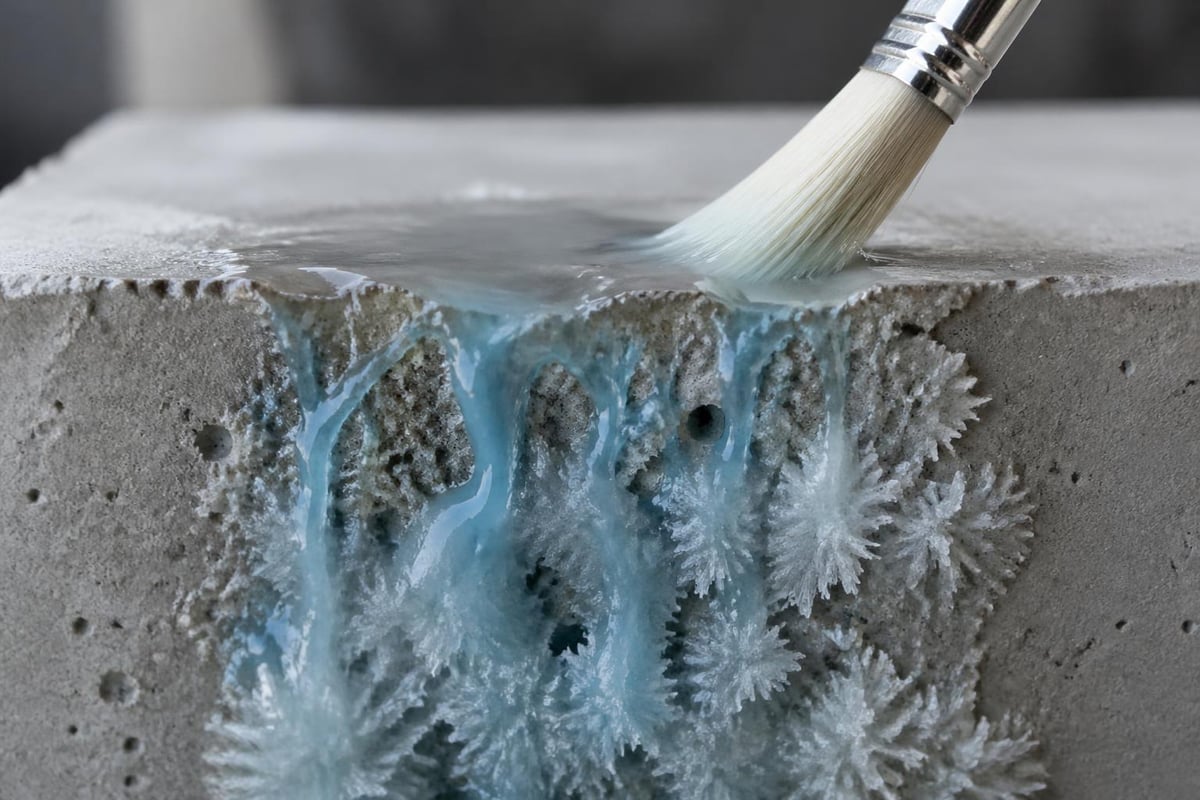
Concrete densification represents a critical process in commercial and industrial flooring applications, transforming porous concrete surfaces into hardened, durable substrates capable of withstanding heavy traffic and demanding operational environments. This chemical treatment penetrates the concrete surface and reacts with free lime to create a crystalline structure that fills capillary voids, increases surface hardness, and significantly reduces dusting. For facility managers, property owners, and contractors overseeing warehouses, factories, retail stores, and industrial workshops across South East Queensland, understanding concrete densification is essential to maximizing floor performance and longevity.
Understanding the Science Behind Concrete Densification
Concrete densification involves applying chemical solutions that penetrate the porous concrete surface and trigger a chemical reaction deep within the substrate. The most common densifiers contain lithium silicate or sodium silicate compounds that react with calcium hydroxide, a natural by-product of cement hydration.
This reaction produces calcium silicate hydrate (C-S-H) gel, the same compound that gives concrete its inherent strength. The newly formed C-S-H fills the microscopic voids and capillaries within the concrete matrix, creating a denser, harder surface.
Chemical Reactions at Work
The densification process relies on specific chemical interactions that occur below the concrete surface:
- Penetration Phase: Liquid densifier penetrates 3-9mm into the concrete substrate
- Reaction Phase: Silicate compounds react with free calcium hydroxide
- Crystallization Phase: Calcium silicate hydrate crystals form and expand within pores
- Hardening Phase: Crystal growth blocks capillaries and increases density
According to research on concrete densification chemistry, the transformation happens at a molecular level and continues for several months after application. The result is a permanent chemical change that cannot be reversed or worn away through normal use.
Key Benefits for Commercial and Industrial Facilities
Concrete densification delivers measurable performance improvements that directly impact operational efficiency and maintenance costs. These benefits make densification particularly valuable for high-traffic commercial environments.
Increased Surface Hardness
Densified concrete exhibits significantly higher surface hardness ratings compared to untreated concrete. Testing typically shows hardness improvements of 30-50% on the Mohs scale. This increased hardness translates to better resistance against impact damage, abrasion from foot traffic and equipment, and general wear patterns common in warehouse flooring applications.
Dust Reduction and Elimination
Untreated concrete naturally produces dust as the surface degrades through traffic and use. This concrete dusting creates maintenance challenges and can contaminate products in manufacturing or storage environments.
| Benefit Category | Impact on Operations | Maintenance Reduction |
|---|---|---|
| Dust Control | Eliminates airborne particles | 80-95% reduction in cleaning |
| Surface Hardness | Resists wear and impact | Extends floor lifespan 200-300% |
| Liquid Resistance | Prevents stain penetration | Reduces cleaning time by 60% |
Enhanced Chemical and Stain Resistance
The densification process reduces the porosity of concrete surfaces, making them less susceptible to liquid penetration. This characteristic proves essential in factory flooring where chemical spills occur regularly. While densification alone doesn't make concrete impervious, it significantly improves resistance to oils, mild acids, and common industrial chemicals.
Application Methods and Timing Considerations
Proper application technique directly affects densification results. The process requires careful surface preparation and precise product application to achieve optimal penetration and reaction.
Surface Preparation Requirements
Before densifier application, the concrete surface must be:
- Clean and free of contaminants: Remove oils, curing compounds, sealers, and coatings
- Profiled appropriately: Surface should be open enough for penetration (typically 100-200 grit equivalent)
- Dry or slightly damp: Moisture content affects penetration depth and reaction rate
- Free of laitance: Weak surface layer must be removed through grinding or mechanical preparation

Application Timing in New Construction
For new concrete slabs, timing densifier application correctly maximizes effectiveness. Many experts recommend applying densifiers after the concrete has cured for at least 14-28 days, allowing sufficient hydration while the concrete still contains adequate free lime for the chemical reaction to occur.
Multiple Application Strategy
Certain concrete conditions require multiple densifier applications to achieve optimal results:
- High porosity concrete absorbs the first application rapidly
- Extremely soft or chalky concrete may need 2-3 applications
- Environmental exposure variations create inconsistent porosity levels
- Large aggregate exposure in polished surfaces requires additional treatment
Each subsequent application should occur after the previous coat has fully reacted and dried, typically 24-48 hours between applications.
Integration with Polished Concrete Systems
Concrete densification forms an integral component of polished concrete flooring systems. The densification process occurs at specific stages during the grinding and polishing sequence to maximize surface hardness and achieve the desired aesthetic results.
Densification in the Polishing Sequence
Professional polished concrete installation typically includes densification at two critical points:
Initial Densification: Applied after removing surface coatings and profiling to 100-200 grit. This application hardens the surface before finer grinding steps and allows the densifier to penetrate deeply into the substrate.
Secondary Densification: Applied before final polishing grits (400-3000). This application closes remaining surface pores and enhances the reflective qualities of the finished floor.
The densification step is essential for achieving the durability and aesthetics that make polished concrete an attractive option for retail and commercial office environments. Without proper densification, polished concrete surfaces remain porous and susceptible to staining, which undermines their low-maintenance benefits.

Porosity Reduction Through Densification
Understanding how densification affects concrete porosity helps explain its protective qualities. Natural concrete porosity allows liquids and contaminants to penetrate the surface, leading to staining and degradation. The densification process reduces this natural porosity by filling capillary voids with crystalline structures, creating a surface that resists liquid absorption while maintaining the concrete's breathable properties.
Densifier Chemistry: Lithium vs Sodium vs Potassium
Different densifier formulations offer varying performance characteristics suited to specific applications and concrete conditions. Understanding these differences helps in selecting the appropriate product for each project.
Lithium Silicate Densifiers
Lithium-based densifiers have become the industry standard for most commercial applications due to several advantages:
- Faster reaction time compared to sodium alternatives
- No white residue (efflorescence) during application
- Better penetration in dense, hard concrete
- Lower environmental impact and easier disposal
- Compatible with dyes and stains used in decorative concrete
Sodium Silicate Densifiers
Traditional sodium silicate formulations remain cost-effective for large-scale industrial applications:
- Lower material cost for budget-conscious projects
- Effective in soft to medium-hardness concrete
- Proven track record spanning decades
- May produce white residue requiring additional cleaning
- Longer cure time before subsequent processes
Potassium Silicate Options
Potassium-based densifiers occupy a middle ground between lithium and sodium products, offering balanced performance characteristics suitable for general commercial use.
| Densifier Type | Reaction Speed | Residue Risk | Cost | Best Application |
|---|---|---|---|---|
| Lithium Silicate | Fast (2-4 hours) | Minimal | High | Polished concrete, retail |
| Sodium Silicate | Slow (24-48 hours) | Moderate-High | Low | Large industrial floors |
| Potassium Silicate | Moderate (8-12 hours) | Low | Medium | General commercial |
Longevity and Performance Expectations
Property owners and facility managers naturally question how long densification benefits last and what maintenance is required to preserve performance. The durability and lifespan of densified concrete depends on several factors.
Permanent Chemical Modification
Unlike topical sealers or coatings that wear away over time, concrete densification creates a permanent chemical change within the concrete substrate itself. The calcium silicate hydrate crystals formed during densification become an integral part of the concrete structure and cannot be removed through normal wear.
This permanence means that properly densified concrete maintains its increased hardness and reduced porosity indefinitely under normal conditions. However, surface performance can be affected by extreme conditions or improper maintenance practices.
Factors Affecting Long-Term Performance
- Traffic Intensity: Heavy forklift traffic may wear the surface faster than foot traffic
- Chemical Exposure: Regular contact with strong acids or bases can degrade the surface
- Maintenance Practices: Improper cleaning methods or harsh chemicals affect appearance
- Original Concrete Quality: Weak or poorly mixed concrete provides less stable foundation
For industrial polished concrete installations in demanding environments, periodic re-polishing may be required every 5-10 years to restore surface appearance, but re-densification is rarely necessary.
Common Applications Across Commercial Sectors
Concrete densification benefits diverse commercial and industrial environments, each with specific performance requirements and operational challenges.
Warehouse and Distribution Centers
High-traffic warehouses benefit from densification's ability to eliminate dusting and increase surface hardness. Forklifts, pallet jacks, and constant material movement create abrasive conditions that rapidly degrade untreated concrete. Densified surfaces withstand this punishment while maintaining clean environments essential for inventory management.
Manufacturing and Production Facilities
Factory flooring in production environments faces exposure to oils, coolants, and manufacturing by-products. Densification reduces concrete porosity, preventing these substances from penetrating and staining the surface. This protection simplifies cleaning and maintains safe working conditions.
Retail and Commercial Spaces
Modern retail design increasingly features exposed concrete flooring for its aesthetic appeal and durability. Densification is essential in these applications to prevent dusting, enable polishing to high gloss levels, and ensure the floor maintains its appearance under constant foot traffic. The process supports the clean, contemporary look favoured in commercial retail environments.
Food Processing and Commercial Kitchens
Food-grade facilities require flooring that meets strict hygiene standards while withstanding frequent cleaning and sanitisation. Densified concrete creates a surface that resists bacterial growth, simplifies cleaning, and tolerates the acids and cleaning agents used in food processing operations.
Integration with Other Floor Treatment Systems
Concrete densification often works in conjunction with other flooring systems to deliver comprehensive performance across various commercial applications. Understanding how densification complements these systems helps in planning complete flooring solutions.
Densification Before Epoxy Systems
Many professional installers apply densifiers before epoxy flooring systems to strengthen the substrate and improve adhesion. The densified surface provides a harder, more stable foundation that reduces the risk of bond failure and extends the lifespan of the epoxy coating.
This preliminary densification proves particularly valuable in industrial environments where substrate strength directly affects system performance under heavy loads and impact.
Combining with Dustproofing Treatments
While densification significantly reduces concrete dusting, some facilities benefit from combined treatments that include both densification and specialized dustproofing solutions. This layered approach ensures complete dust elimination in environments where even minimal particulate generation poses problems.
Professional Application Considerations
Achieving optimal concrete densification results requires professional expertise, appropriate equipment, and attention to application variables that affect penetration and reaction.
Equipment and Safety Requirements
Professional densification requires specific equipment:
- Pump sprayers or microfibre applicators for even distribution
- Autoscrubbers or floor machines for working densifier into surface
- Moisture meters to verify substrate conditions
- Personal protective equipment including gloves and eye protection
Quality Control Measures
Verifying densification success involves testing surface hardness before and after treatment. Professionals use Mohs hardness picks or rebound hammers to document improvement. Visual inspection should confirm even absorption without puddling or dry spots that indicate uneven application.
Environmental and Regulatory Compliance
Modern densifiers are generally low-VOC formulations that meet environmental regulations. However, proper disposal of excess material and rinse water requires understanding local regulations. Professional applicators maintain compliance with Queensland building codes and environmental standards.
The expertise required for proper application, surface preparation, and integration with other flooring systems makes professional installation the preferred approach for commercial projects. Working with experienced commercial flooring specialists ensures results that meet performance specifications and project timelines.
Troubleshooting Common Densification Issues
Even with proper application techniques, certain conditions can compromise densification results. Recognising and addressing these issues ensures optimal performance.
White Residue and Efflorescence
Excess densifier left on the surface can crystallise into white residue. This typically occurs with sodium silicate formulations or when application rates exceed the concrete's absorption capacity.
Resolution approaches include:
- Scrubbing with clean water while densifier is still wet
- Mechanical removal through light grinding or buffing
- Applying acidic neutralizers to dissolve residue (with caution)
- Preventing recurrence by reducing application rates
Uneven Hardness or Mottled Appearance
Inconsistent penetration creates variations in surface hardness and appearance. This often results from uneven concrete porosity, contamination, or application technique.
Addressing uneven results requires identifying the underlying cause. Porosity variations may necessitate additional densifier applications in soft areas. Contamination requires thorough cleaning and reapplication. Application technique improvements prevent future occurrences.
Insufficient Hardness Improvement
When densification fails to produce expected hardness gains, several factors may be responsible:
- Concrete age exceeding optimal densification window
- Insufficient free lime content in the concrete mix
- Previous sealer or coating preventing penetration
- Densifier formulation incompatible with concrete chemistry
Testing alternate densifier chemistries or applying multiple coats often resolves insufficient hardness improvement on challenging substrates.
Cost-Benefit Analysis for Commercial Properties
Evaluating concrete densification requires understanding both immediate costs and long-term value across the operational lifespan of commercial flooring.
Initial Investment Considerations
Densification costs vary based on:
- Concrete condition: Heavily contaminated or damaged surfaces require more preparation
- Project size: Larger areas benefit from economies of scale
- Densifier type: Lithium formulations cost more than sodium alternatives
- Application complexity: Multiple applications increase labour and material costs
Typical commercial densification projects range from $3-8 per square metre for materials and application, making it one of the most cost-effective concrete treatments available.
Long-Term Value Proposition
The return on densification investment becomes apparent through reduced maintenance and extended floor lifespan:
| Cost Category | Without Densification | With Densification | Annual Savings |
|---|---|---|---|
| Cleaning Labour | $2,500/year | $1,000/year | $1,500 |
| Dust Control | $800/year | $100/year | $700 |
| Surface Repairs | $1,200/year | $300/year | $900 |
| Replacement Cycle | 10 years | 25+ years | Deferred capital |
For a typical 2,000 square metre warehouse, annual savings of $3,000-5,000 provide payback on the initial densification investment within 1-2 years. Extended floor lifespan defers major capital expenditure for decades.
Concrete densification provides commercial and industrial facilities with a proven method to strengthen floors, eliminate dusting, and extend service life through permanent chemical modification of the concrete substrate. The process delivers measurable performance improvements that reduce maintenance costs while enhancing operational efficiency across warehouses, factories, retail spaces, and industrial workshops. If you're considering concrete densification for your South East Queensland commercial property, Superior Concrete Finishes brings decades of expertise in commercial flooring solutions including densification, polished concrete, and epoxy systems tailored to demanding industrial environments.

Joshua Miller has over 15 years of experience in the commercial concrete flooring industry, specialising in epoxy flooring systems and polished concrete solutions for warehouses, factories, retail spaces and commercial developments. Joshua and his team work closely with builders, property owners and facility managers across South East Queensland to deliver durable, cost-effective commercial flooring systems for warehouses, industrial facilities, commercial kitchens, retail stores and large commercial developments.
Major builders and organisations Josh has led projects on include McNab, Hutchinson Builders, IKEA, Queensland Rail, University of Queensland, ADCO, Tomkins Commercial, Bunnings, OfficeWorks, Spotlight, and Anaconda.
If you're planning a project and need advice on the best commercial concrete flooring solution, contact Josh or one of the team at Superior Concrete Finishes.
-
 info@superiorconcretefinishes.com.au
-
1300 789 740
-
Connect with Josh on
LinkedIn


 Connect with Josh on