Selecting the right concrete finishes for commercial and industrial facilities requires careful consideration of durability, functionality, and aesthetic appeal. In South East Queensland’s competitive business environment, facility managers and property owners must balance performance requirements with budget constraints whilst ensuring their flooring solutions meet Australian standards. The choice of finish directly impacts operational efficiency, maintenance costs, and workplace safety across warehouses, factories, retail stores, and commercial kitchens. Understanding the range of available concrete finishes enables informed decision-making that aligns with specific operational demands and long-term facility goals.
Understanding Commercial Concrete Finishes
Concrete finishes encompass the various treatments and processes applied to concrete surfaces to achieve specific functional and aesthetic outcomes. Unlike basic unfinished concrete, professionally finished surfaces provide enhanced durability, chemical resistance, and visual appeal tailored to commercial applications.
The concrete finishing process begins immediately after placement and continues through various stages of curing and treatment. Initial finishing involves screeding, floating, and trowelling to create the desired surface profile. Subsequent treatments may include grinding, polishing, coating, or sealing depending on the intended outcome.

Primary Finish Categories
Commercial concrete finishes fall into several distinct categories, each suited to specific operational requirements:
- Mechanical finishes: Created through grinding, polishing, or shot blasting
- Chemical treatments: Applied sealers, hardeners, and densifiers
- Coating systems: Epoxy, polyurethane, and other resinous applications
- Textured surfaces: Exposed aggregate, broom finish, or stamped patterns
- Smooth finishes: Power-trowelled or burnished surfaces
Industry standards guide the specification and application of these finishes. The Portland Cement Association provides comprehensive guidance on achieving color and texture in concrete finishes, which remains essential reading for specifiers and contractors alike.
Polished Concrete Systems
Polished concrete represents one of the most popular concrete finishes for commercial applications in 2026. This mechanical process transforms ordinary concrete into a refined, reflective surface through progressive grinding and polishing stages.
The polishing process typically involves between four and eight grinding stages using progressively finer diamond tooling. Initial cuts remove surface imperfections and expose the aggregate beneath. Subsequent passes refine the surface profile, creating increasingly smoother and more reflective finishes.
| Finish Level | Grit Range | Appearance | Common Applications |
|---|---|---|---|
| Ground | 50-100 | Matte, aggregate exposed | Warehouses, factories |
| Honed | 100-400 | Low sheen, minimal reflection | Industrial workshops |
| Polished | 400-800 | Medium gloss, some reflection | Retail stores, showrooms |
| Highly Polished | 800-3000 | High gloss, mirror-like | Premium retail, offices |
Chemical densifiers applied during the polishing process penetrate the concrete surface, creating a harder, more durable finish. These treatments fill microscopic voids within the concrete matrix, reducing porosity and enhancing stain resistance.
For commercial retail environments, polished concrete flooring delivers exceptional aesthetics whilst maintaining the durability required for high foot traffic. The reflective properties of polished surfaces also contribute to improved lighting efficiency, reducing operational energy costs.
Maintenance Advantages
Polished concrete finishes require minimal ongoing maintenance compared to traditional floor coverings:
- Daily dust mopping removes surface debris
- Weekly damp mopping with neutral cleaners maintains appearance
- Periodic repolishing (every 2-3 years) restores original lustre
- No waxing or coating replacement needed
The lifecycle cost savings become substantial over 15-20 year periods, making polished concrete an economically sound choice for budget-conscious facility managers.

Epoxy Coating Systems
Epoxy flooring systems rank among the most versatile concrete finishes for industrial and commercial applications. These multi-component coatings create seamless, impervious surfaces that withstand chemical exposure, mechanical abuse, and intensive cleaning protocols.
Modern epoxy systems consist of two primary components: epoxy resin and polyamine hardener. When mixed in precise ratios, these components undergo an exothermic curing reaction, forming a cross-linked polymer network with exceptional adhesion to properly prepared concrete substrates.
Application Process
Successful epoxy installation requires meticulous surface preparation and controlled application conditions. The concrete substrate must be clean, dry, and mechanically sound before coating application.
Surface preparation typically involves:
- Diamond grinding to expose aggregate and open pores
- Shot blasting for profile creation on smooth surfaces
- Crack and joint repair using compatible materials
- Moisture testing to confirm substrate readiness
- Application of primer coat to enhance adhesion
Ambient temperature and humidity significantly influence curing rates and final performance. Most epoxy systems require temperatures between 10°C and 30°C during application and cure periods, making climate control essential in enclosed facilities.
| System Type | Typical Thickness | Chemical Resistance | Impact Resistance | Typical Applications |
|---|---|---|---|---|
| Thin Film | 0.2-0.5mm | Moderate | Low | Light commercial, offices |
| Medium Build | 0.5-2mm | Good | Moderate | Warehouses, retail |
| High Build | 2-5mm | Excellent | High | Factories, mechanical workshops |
| Mortar System | 5-12mm | Excellent | Very High | Chemical plants, heavy industry |
The Architectural Precast Association’s guide discusses various concrete finishes including the relationship between substrate preparation and coating performance.
Colour and Aesthetic Options
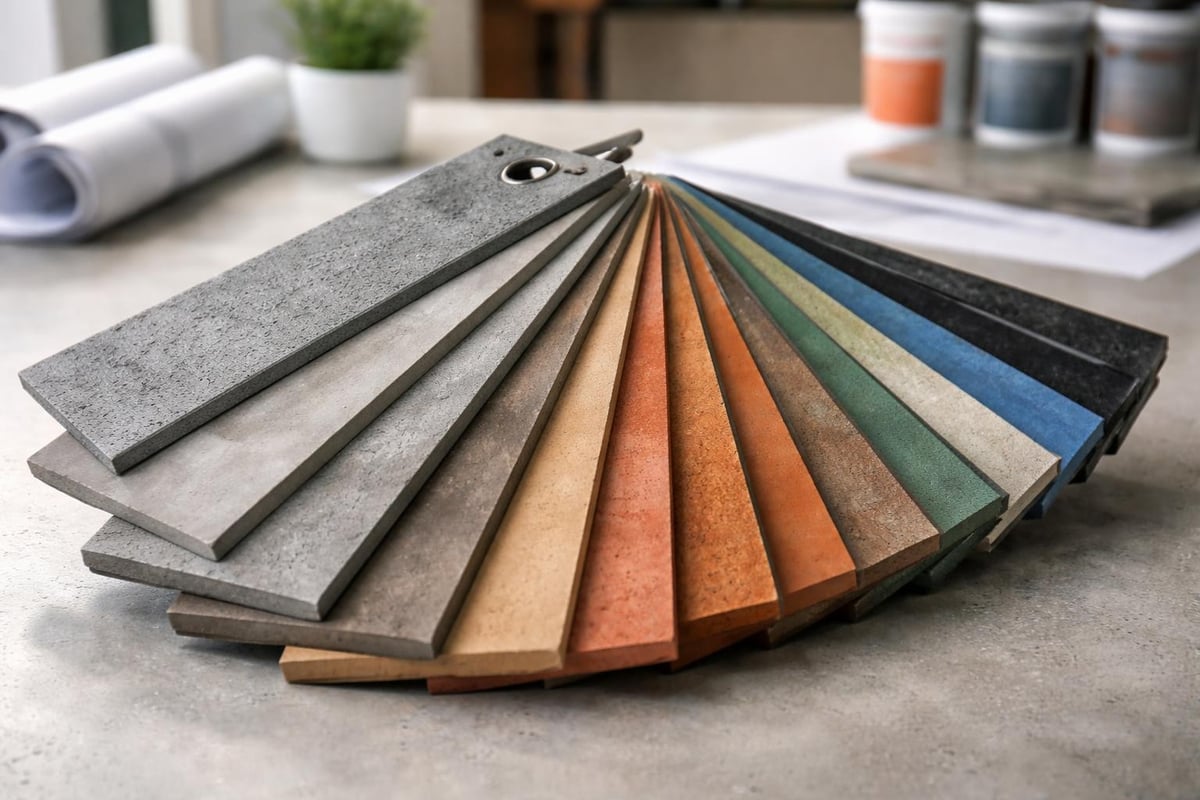
Contemporary concrete finishes extend far beyond basic grey tones, offering extensive colour palettes and decorative possibilities suited to corporate branding and design requirements.
Integral colour additives mixed during batching provide consistent, fade-resistant hues throughout the concrete matrix. This approach ensures colour permanence even with surface wear, making it ideal for high-traffic commercial environments.
Surface-applied colour treatments include:
- Acid stains creating variegated, translucent tones
- Concrete dyes offering vibrant, uniform colours
- Metallic epoxy coatings with distinctive visual effects
- Coloured sealers providing subtle tints
For businesses seeking unique floor aesthetics, epoxy flooring colours can be customised to match corporate colour schemes whilst maintaining the durability required for commercial operations.
Design Integration
Modern concrete finishes complement contemporary architectural design whilst supporting operational functionality. Retail environments benefit from polished finishes that enhance product displays through improved reflectivity and clean aesthetics.
Industrial facilities prioritise functionality, often selecting finishes based on chemical resistance, cleanability, and safety characteristics rather than pure aesthetics. However, even utilitarian spaces benefit from professional finishes that project corporate professionalism and operational excellence.
Texture and Slip Resistance
Surface texture profoundly affects both aesthetics and functionality of concrete finishes. Commercial applications demand careful consideration of slip resistance to ensure workplace safety whilst maintaining cleanability and visual appeal.
Smooth, highly polished surfaces deliver maximum reflectivity but may present slip hazards in wet conditions. Strategic texture incorporation addresses safety requirements without compromising other performance attributes.
Texture Creation Methods
Several techniques create controlled surface texture in commercial concrete finishes:
- Broom finishing: Dragging stiff bristles across fresh concrete creates linear grooves
- Exposed aggregate: Removing surface mortar reveals decorative aggregate beneath
- Anti-slip additives: Broadcast particles embedded in coatings enhance traction
- Mechanical texturing: Grooving or grinding creates specific patterns
For areas prone to moisture exposure such as commercial kitchens or car park flooring, anti-slip treatments become mandatory safety measures. Australian standards specify minimum slip resistance values (expressed as R-ratings) for various applications.
The American Concrete Institute offers detailed guidance on placing and finishing decorative concrete, including techniques for achieving consistent surface textures across large commercial installations.
Durability and Performance Characteristics
Long-term performance represents the most critical factor when selecting concrete finishes for commercial and industrial facilities. Initial installation costs must be weighed against expected service life, maintenance requirements, and replacement intervals.
High-quality concrete finishes properly installed on sound substrates routinely deliver 15-25 years of service in demanding commercial environments. Key performance indicators include:
- Abrasion resistance: Capacity to withstand foot and vehicle traffic
- Chemical resistance: Ability to tolerate spills, cleaning agents, and process fluids
- Impact resistance: Resilience against dropped tools, equipment, and materials
- UV stability: Colour and gloss retention under natural and artificial lighting
- Moisture tolerance: Performance in varying humidity conditions
Testing and Certification
Reputable concrete finishing contractors conduct pre-installation testing to verify substrate conditions and post-installation testing to confirm performance specifications. Common tests include:
| Test Type | Purpose | Acceptance Criteria |
|---|---|---|
| Moisture vapour emission | Verify substrate dryness | <3 lbs/1000 sq ft/24 hrs |
| Surface profile | Confirm adequate texture | CSP 2-5 depending on system |
| Pull-off adhesion | Validate coating bond | >300 psi minimum |
| Hardness testing | Measure surface density | Shore D 70+ for polished |
Australian Standard AS 6669 provides specifications for materials used in concrete work, ensuring quality outcomes across the industry. Compliance with these standards protects facility owners from substandard installations whilst providing contractors with clear performance benchmarks.
Specialised Industrial Finishes
Certain commercial and industrial operations demand highly specialised concrete finishes tailored to unique environmental challenges. Food processing facilities, chemical plants, pharmaceutical manufacturers, and cold storage operations each present distinct requirements.
Food processing flooring must satisfy stringent hygiene standards whilst withstanding thermal shock, aggressive cleaning protocols, and organic acid exposure. Seamless polyurethane systems over properly prepared concrete substrates deliver the required combination of sanitation, durability, and chemical resistance.
Heavy industrial settings including factory flooring applications benefit from high-build epoxy or polyurethane systems capable of absorbing impact loads from dropped tools, equipment vibration, and forklift traffic.
Chemical Resistance Considerations
Chemical exposure scenarios vary dramatically across industrial sectors:
- Manufacturing facilities: Cutting oils, hydraulic fluids, solvents
- Commercial kitchens: Cooking oils, acidic foods, cleaning chemicals
- Automotive workshops: Fuels, lubricants, brake fluids, battery acid
- Breweries and wineries: Sugars, alcohols, organic acids
Each chemical category attacks concrete finishes through different mechanisms. Organic solvents dissolve certain polymer coatings, acids etch calcium-based materials, and alkalis soften epoxy resins over time. Proper finish selection matched to specific chemical exposure profiles prevents premature failure and extends service life.
Application and Installation Best Practices
Professional installation distinguishes successful concrete finishes from problematic failures. Even premium materials underperform when improperly applied, making contractor selection crucial for commercial facility managers.
Qualified contractors follow systematic processes refined through years of experience:
- Site assessment: Evaluation of existing conditions, substrate quality, and environmental factors
- Specification development: Selection of appropriate systems matched to operational requirements
- Surface preparation: Mechanical preparation achieving specified profile and cleanliness
- Moisture mitigation: Testing and remediation of excessive substrate moisture
- Application: Controlled coating or polishing under suitable environmental conditions
- Quality assurance: Testing and verification of final performance characteristics
Licensed contractors operating under QBCC requirements maintain comprehensive insurance coverage protecting facility owners from installation defects and workmanship issues. This regulatory framework ensures accountability and professional standards across the Queensland commercial construction sector.

Timeline Considerations
Commercial projects demand efficient scheduling to minimise operational disruption. Understanding realistic timelines for various concrete finishes enables effective project planning:
- Surface preparation and repairs: 1-3 days depending on area size
- Moisture testing and remediation: 3-7 days if required
- Polishing process: 2-5 days for medium-sized facilities
- Epoxy coating application: 1-3 days plus cure time
- Curing and final inspection: 3-7 days before full service
Facilities requiring continuous operation benefit from phased installation approaches, completing work in sections to maintain partial functionality throughout the project.
Maintenance and Long-Term Care
Preserving concrete finishes requires appropriate maintenance protocols matched to specific finish types and operational demands. Well-maintained floors deliver their full expected service life whilst neglected surfaces deteriorate prematurely.
Polished Concrete Maintenance
Daily maintenance for polished concrete involves dust mopping or auto-scrubbing with neutral pH cleaners. Periodic deep cleaning using specialized concrete cleaners removes embedded soiling without damaging the polished surface.
Burnishing procedures performed annually or bi-annually restore lustre to polished floors experiencing dulling from wear. This process uses fine diamond pads and polishing compounds to revive surface reflectivity without requiring complete repolishing.
Coated Floor Maintenance
Epoxy and polyurethane coated floors tolerate more aggressive cleaning but still benefit from proper protocols:
- Daily sweeping removes abrasive particles preventing surface scratching
- Weekly wet mopping with appropriate cleaners maintains appearance
- Periodic degreasing in industrial areas prevents soil buildup
- Annual inspection identifies developing issues before major repairs needed
Avoiding harsh chemicals incompatible with specific coating chemistries prevents premature degradation. Floor coating manufacturers provide detailed maintenance guidelines specifying suitable cleaning products and prohibited substances.
For facilities across South East Queensland, establishing systematic maintenance programmes protects flooring investments whilst ensuring optimal appearance and performance throughout the service life. Professional warehouse flooring installations include maintenance training and documentation supporting long-term care.
Cost Analysis and Value Engineering
Commercial concrete finishes represent significant capital investments requiring careful financial analysis. Initial installation costs vary widely based on finish type, project complexity, and substrate conditions.
Comparative pricing for common commercial finishes (excluding substrate preparation):
| Finish Type | Typical Cost Range ($/m²) | Expected Life (years) | Maintenance Level |
|---|---|---|---|
| Basic sealer | $8-15 | 3-5 | Moderate |
| Polished concrete | $50-90 | 15-20 | Low |
| Standard epoxy | $60-100 | 10-15 | Low-Moderate |
| Heavy-duty epoxy | $100-180 | 15-25 | Low |
| Polyurethane system | $120-200 | 15-20 | Low |
Lifecycle cost analysis provides more meaningful comparison than initial pricing alone. Factors influencing total cost of ownership include:
- Maintenance requirements and associated labour costs
- Cleaning product expenses
- Downtime for repairs or replacement
- Energy costs (lighting efficiency with reflective floors)
- Safety incident reduction from appropriate slip resistance
A polished concrete floor costing $70/m² with 20-year service life and minimal maintenance may deliver superior value compared to a $40/m² coating requiring replacement after 10 years plus higher ongoing maintenance.
Environmental and Sustainability Factors
Sustainability considerations increasingly influence concrete finish selection as businesses pursue environmental performance targets and green building certifications. Concrete finishes contribute to sustainability through multiple pathways.
Polished concrete systems eliminate the need for additional floor coverings, reducing material consumption and associated manufacturing impacts. The thermal mass properties of exposed concrete slabs contribute to passive temperature regulation, potentially reducing HVAC energy consumption in properly designed facilities.
Low-VOC (volatile organic compound) coating systems minimize indoor air quality impacts during and after installation. Modern epoxy formulations increasingly utilize bio-based components derived from renewable resources rather than petroleum feedstocks.
Extended service life inherently supports sustainability by deferring replacement cycles and the associated environmental impacts of material production, transportation, and installation. A 20-year concrete finish avoids two or three replacement cycles compared to shorter-lived alternatives.
Selecting appropriate concrete finishes requires balancing performance requirements, aesthetic goals, budget constraints, and long-term value considerations specific to each commercial facility. The diversity of available systems ensures suitable solutions exist for virtually any operational environment, from retail showrooms to heavy industrial plants. If you’re planning a concrete flooring project for your commercial or industrial facility in South East Queensland, Superior Concrete Finishes brings decades of expertise in epoxy and polished concrete systems backed by full licensing and insurance. Our team works exclusively with commercial and industrial clients, delivering professional results for warehouses, factories, retail stores, and other demanding applications throughout the region.

Joshua Miller has over 15 years of experience in the commercial concrete flooring industry, specialising in epoxy flooring systems and polished concrete solutions for warehouses, factories, retail spaces and commercial developments. Joshua and his team work closely with builders, property owners and facility managers across South East Queensland to deliver durable, cost-effective commercial flooring systems for warehouses, industrial facilities, commercial kitchens, retail stores and large commercial developments.
Major builders and organisations Josh has led projects on include McNab, Hutchinson Builders, IKEA, Queensland Rail, University of Queensland, ADCO, Tomkins Commercial, Bunnings, OfficeWorks, Spotlight, and Anaconda.
If you're planning a project and need advice on the best commercial concrete flooring solution, contact Josh or one of the team at Superior Concrete Finishes.
-
 info@superiorconcretefinishes.com.au
-
1300 789 740
-
Connect with Josh on
LinkedIn


 Connect with Josh on