
Selecting the right flooring system for commercial and industrial facilities requires careful consideration of durability, maintenance requirements, and operational demands. Among the various options available, concrete floor finishes epoxy have emerged as a leading solution for warehouses, factories, commercial kitchens, and industrial workshops across South East Queensland. These high-performance coatings combine chemical resistance, impact durability, and ease of maintenance into a single system that protects concrete substrates while enhancing workplace safety and aesthetics. Understanding the technical specifications, application methods, and long-term performance characteristics of epoxy systems enables facility managers and business owners to make informed decisions that align with operational requirements and budget constraints.
Understanding Epoxy Concrete Floor Systems
Concrete floor finishes epoxy represent a category of thermosetting polymers that cure through chemical reaction rather than evaporation. The system consists of two primary components: epoxy resin and polyamine hardener. When mixed in precise ratios, these components undergo an exothermic reaction that transforms the liquid mixture into a solid, cross-linked polymer network bonded directly to the concrete substrate.
The chemistry behind epoxy systems provides distinct advantages over traditional coatings. Unlike surface-level paints or sealers, epoxy penetrates into the concrete pores before curing, creating a mechanical and chemical bond that resists delamination. This bonding mechanism makes epoxy particularly suitable for high-traffic environments where conventional coatings would quickly fail.
Types of Epoxy Floor Systems
Different formulations serve specific operational requirements:
- Self-leveling epoxy: Creates a smooth, level surface ideal for facilities requiring seamless hygiene standards
- High-build epoxy: Provides thicker coating layers for environments with significant impact or chemical exposure
- Mortar epoxy: Incorporates aggregate fillers for extreme-duty applications in heavy manufacturing
- Vapour-barrier epoxy: Addresses moisture transmission issues in ground-level concrete slabs
The selection process must account for substrate conditions, environmental factors, and intended use. Commercial kitchens, for instance, benefit from self-leveling systems that eliminate bacteria-harboring joints, whilst workshop flooring applications often require high-build formulations to withstand tool drops and equipment loads.
Performance Characteristics and Benefits
The popularity of concrete floor finishes epoxy in commercial settings stems from measurable performance advantages. These systems deliver superior protection against chemical spills, mechanical damage, and abrasion compared to untreated concrete or alternative coating technologies.
Chemical Resistance: Epoxy formulations resist acids, alkalis, solvents, and petroleum products commonly found in industrial environments. The ASTM C722 standard specifies requirements for chemical-resistant monolithic floor surfacings, including performance criteria for epoxy systems exposed to aggressive substances.
| Performance Metric | Epoxy Coating | Untreated Concrete | Paint Coating |
|---|---|---|---|
| Chemical Resistance | Excellent | Poor | Fair |
| Abrasion Resistance | High | Moderate | Low |
| Impact Resistance | Very Good | Good | Poor |
| Maintenance Requirements | Low | High | Moderate |
| Expected Lifespan | 10-20 years | N/A | 2-5 years |
Durability and Longevity: When properly installed on prepared substrates, epoxy systems provide decades of reliable service. The lifespan of epoxy flooring depends on traffic levels, maintenance protocols, and environmental conditions, but commercial installations regularly achieve fifteen to twenty years before requiring replacement.

Safety and Compliance Considerations
Modern epoxy formulations incorporate safety features essential for commercial operations. Slip-resistant additives can be broadcast into the final coat, creating traction without compromising cleanability. Light-reflective properties improve workplace illumination, reducing energy costs and enhancing visibility.
For businesses operating in regulated industries, epoxy systems help satisfy compliance requirements. Food processing facilities must meet stringent hygiene standards, whilst property compliance specialists conducting audits often evaluate flooring systems as part of comprehensive risk management assessments. The seamless nature of properly installed epoxy eliminates harbourage points for contaminants, supporting compliance with food safety regulations.
Application Process and Substrate Preparation
Success with concrete floor finishes epoxy begins long before mixing resin and hardener. Substrate preparation accounts for approximately seventy percent of installation success, making thorough evaluation and surface treatment critical steps in the application process.
Concrete Assessment and Preparation
- Moisture Testing: Conduct calcium chloride or relative humidity tests to verify moisture levels remain within acceptable limits
- Surface Profiling: Mechanical grinding or shot blasting creates the surface profile necessary for optimal adhesion
- Crack and Joint Treatment: Address structural defects, expansion joints, and control joints before coating application
- Contamination Removal: Eliminate oils, greases, curing compounds, and previous coatings that interfere with bonding
- pH Verification: Confirm substrate pH falls within manufacturer specifications, typically between 6 and 10
Research from the National Research Council Canada examines factors affecting concrete floor finish quality, emphasising proper surface preparation as the primary determinant of long-term coating performance.
The condition of existing concrete significantly impacts preparation requirements. Newly poured slabs require adequate curing time before epoxy application, whilst older concrete may need extensive remediation to address deterioration, contamination, or previous coating failures.
Installation Methodology
Professional installation of epoxy systems follows precise protocols to ensure proper curing and bonding. Environmental conditions during application affect outcome quality, with temperature and humidity levels requiring careful monitoring throughout the process.
Prime Coat Application: The initial primer coat penetrates concrete pores, sealing the substrate and providing a bonding layer for subsequent coats. Primer selection depends on substrate porosity, moisture conditions, and the chosen topcoat system.
Build Coats: Intermediate layers build thickness and fill minor surface imperfections. The number of build coats varies based on specified system thickness and intended use. Factory flooring applications often require multiple build coats to achieve adequate chemical and impact resistance.
For commercial and industrial facilities requiring proven expertise, Epoxy Flooring installation demands precision application techniques and thorough understanding of substrate conditions. Professional contractors coordinate timing between coats, manage environmental controls, and ensure proper cure schedules to maximise system performance.
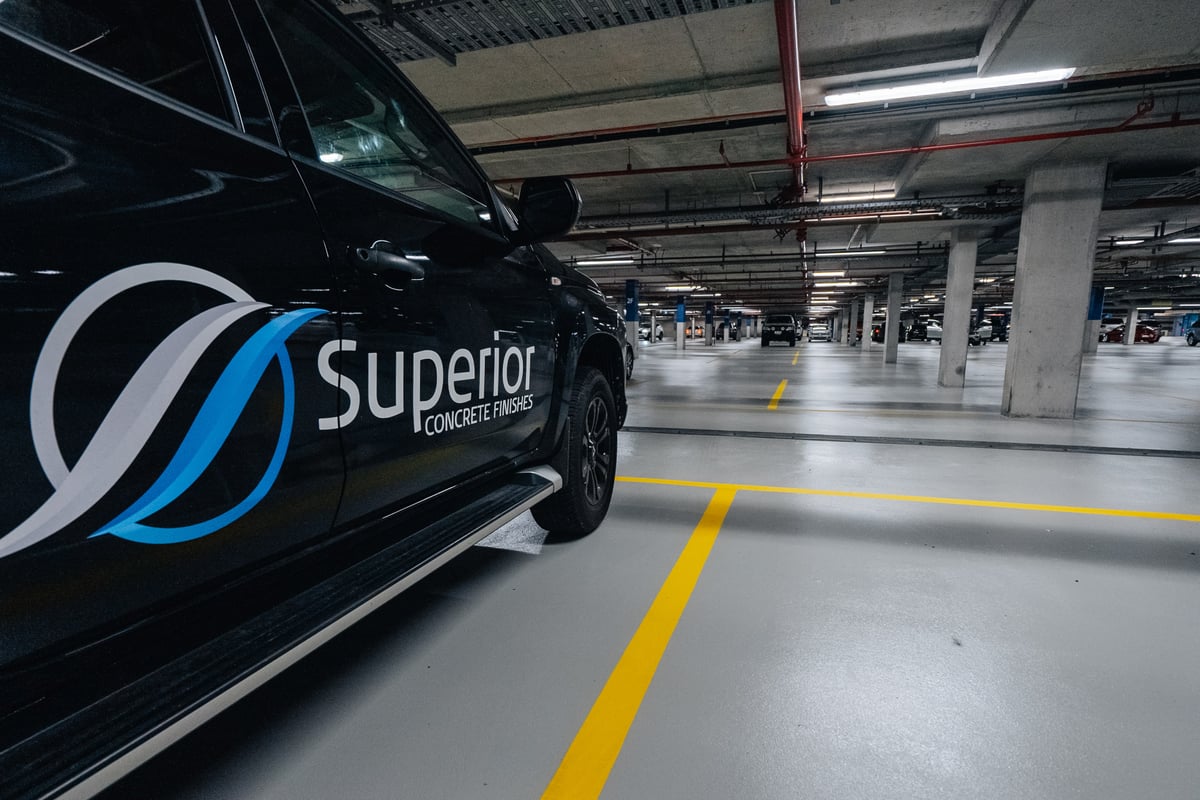
Topcoat Finishing: The final coat determines surface characteristics including gloss level, colour, and slip resistance. Decisions between gloss and semi-gloss finishes affect both aesthetics and practical considerations such as light reflection and visible wear patterns.
System Design for Specific Applications
Different commercial environments demand tailored approaches to concrete floor finishes epoxy. Warehouse operations prioritise durability and traffic resistance, whilst commercial kitchens emphasise hygiene and chemical resistance against cleaning agents and food acids.
Warehouse and Distribution Centres
High-traffic warehouse environments subject floors to continuous forklift traffic, pallet impacts, and substantial point loads. Epoxy systems for warehouse flooring applications typically incorporate:
- High-build formulations providing 3-6mm thickness
- Aggregate additions enhancing impact resistance
- Light-reflective topcoats reducing artificial lighting requirements
- Defined traffic lanes through colour coding systems
Commercial Kitchens and Food Processing
Facilities handling food products require seamless, impervious surfaces resistant to thermal shock, aggressive cleaning chemicals, and organic acids. Concrete floor finishes epoxy for commercial kitchens utilise self-leveling systems that eliminate joints and crevices whilst providing thermal shock resistance for environments experiencing temperature fluctuations.
Retail and Office Spaces
Retail flooring applications balance aesthetics with performance, often incorporating decorative elements whilst maintaining durability standards. Epoxy systems for customer-facing areas may include:
- Custom colour matching to brand specifications
- Subtle texture for slip resistance without compromising appearance
- Enhanced gloss levels creating upscale visual presentation
- Integration with existing design elements

Maintenance and Long-Term Performance
Whilst concrete floor finishes epoxy require minimal maintenance compared to alternative flooring systems, establishing proper cleaning protocols maximises lifespan and preserves appearance. Regular maintenance prevents contaminant accumulation that can compromise surface properties over time.
Daily Maintenance: Routine cleaning involves dust mopping or sweeping to remove abrasive particles, followed by damp mopping with pH-neutral cleaners. Harsh alkaline or acidic cleaners should be avoided unless specifically formulated for epoxy surfaces.
Periodic Deep Cleaning: Quarterly or semi-annual deep cleaning addresses embedded soiling and restores surface gloss. Auto-scrubbers with soft brushes effectively clean epoxy floors without causing surface damage, making them ideal for large commercial installations.
Inspection and Damage Management
Regular inspections identify minor damage before it progresses into costly repairs. Common issues requiring attention include:
- Delamination: Typically indicates substrate preparation deficiencies or moisture-related problems
- Cracking: May reflect substrate movement, improper joint treatment, or inadequate system flexibility
- Chemical Staining: Suggests exposure to substances outside the system's resistance profile
- Surface Wear: Normal in high-traffic zones but accelerated wear indicates inadequate system specification
Understanding epoxy finishes and their maintenance requirements enables facility managers to implement preventive strategies that extend system life and maintain performance standards.
Cost Considerations and Return on Investment
Initial installation costs for concrete floor finishes epoxy exceed basic concrete sealing or paint coatings, but life-cycle cost analysis demonstrates superior value over time. When evaluating flooring investments, commercial decision-makers must consider total cost of ownership rather than upfront expenditure alone.
| Cost Factor | Year 1 | Years 2-5 | Years 6-10 | Years 11-20 |
|---|---|---|---|---|
| Initial Installation | High | None | None | None |
| Maintenance | Low | Low | Low | Moderate |
| Repairs | Minimal | Minimal | Minor | Moderate |
| Replacement | None | None | None | Possible |
The durability and low maintenance requirements of properly installed epoxy systems deliver measurable operational savings. Reduced cleaning time, eliminated dust generation, and decreased equipment wear contribute to ongoing cost benefits that accumulate throughout the system's service life.
Value Engineering Considerations
Budget-conscious projects sometimes attempt to reduce costs through thinner systems or abbreviated preparation procedures. Such approaches invariably compromise performance and longevity, resulting in premature failure and replacement expenses that far exceed initial savings. Comprehensive guides on epoxy flooring types detail the relationship between system specification and expected performance outcomes.
Professional specification development considers actual use conditions, budget constraints, and performance expectations to design systems delivering optimal value. Experienced contractors provide detailed quotations that account for substrate conditions, preparation requirements, and appropriate system thickness for intended applications.
Environmental and Health Considerations
Modern epoxy formulations have evolved significantly from earlier generations, with manufacturers developing low-VOC and solvent-free options addressing environmental and occupational health concerns. Commercial installations increasingly specify these advanced formulations to minimise environmental impact whilst protecting worker health during installation.
Installation Phase Considerations: Application of epoxy systems requires adequate ventilation and may necessitate temporary facility closure or sectional installation to manage exposure risks. Professional contractors implement appropriate controls and coordinate installation timing to minimise operational disruption.
In-Service Performance: Cured epoxy surfaces release negligible emissions and contribute to improved indoor air quality by eliminating concrete dusting. The seamless nature of epoxy floors also simplifies cleaning protocols, potentially reducing chemical cleaner consumption compared to other flooring types.
Selection Criteria and Specification Development
Choosing appropriate concrete floor finishes epoxy requires systematic evaluation of multiple factors. The detailed comparison of epoxy floor finishes with other concrete treatments provides framework for decision-making based on performance requirements, budget parameters, and operational constraints.
Critical Selection Factors
Professional specification development addresses these key considerations:
- Traffic Type and Volume: Pedestrian, vehicular, or mixed-use patterns determine system robustness requirements
- Chemical Exposure: Specific substances encountered in operations dictate resin chemistry selection
- Thermal Conditions: Temperature ranges and thermal cycling influence formulation and installation methods
- Moisture Conditions: Ground moisture, process water, or wet operations affect primer and system selection
- Aesthetic Requirements: Colour, gloss, and decorative elements balance appearance with performance needs
Understanding Sherwin-Williams’ guide to epoxy flooring chemistry helps specify appropriate resin types and formulation characteristics matching operational demands.
Working with Specialised Contractors
The complexity of epoxy floor installation makes contractor selection crucial to project success. Qualified applicators possess comprehensive knowledge of substrate preparation, environmental controls, material handling, and application techniques essential for durable installations. QBCC licensing requirements in Queensland ensure contractors maintain minimum competency standards and appropriate insurance coverage.
Experienced contractors provide value beyond installation services, offering consultation on system selection, maintenance protocols, and long-term performance optimisation. The extensive portfolio of commercial installations demonstrates proven capability across diverse applications and facility types.
Future Developments in Epoxy Technology
Ongoing research continues advancing epoxy flooring technology, with developments focused on enhanced performance characteristics, sustainability improvements, and expanded application possibilities. Academic research into multifunctional epoxy nanocomposites explores incorporating advanced materials that provide additional functionality beyond traditional epoxy properties.
Emerging trends in concrete floor finishes epoxy include:
- Antimicrobial formulations: Incorporating agents that inhibit bacterial growth on floor surfaces
- Enhanced sustainability: Bio-based resins reducing petroleum dependence and environmental footprint
- Improved low-temperature cure: Expanding installation windows and reducing heating requirements
- Smart coatings: Integrating sensors or indicators providing condition monitoring capabilities
These developments promise to expand epoxy applications whilst addressing evolving performance requirements and environmental regulations. Commercial facilities planning long-term flooring strategies should monitor technological advances that may influence future specification decisions.
Concrete floor finishes epoxy deliver proven performance for commercial and industrial facilities requiring durable, low-maintenance flooring solutions. The combination of chemical resistance, mechanical strength, and ease of cleaning makes epoxy systems ideal for demanding environments across South East Queensland. Superior Concrete Finishes brings decades of specialised experience to every commercial flooring project, from initial consultation through professional installation and ongoing support. Contact our team today to discuss how epoxy flooring systems can enhance your facility's performance and operational efficiency.

Joshua Miller has over 15 years of experience in the commercial concrete flooring industry, specialising in epoxy flooring systems and polished concrete solutions for warehouses, factories, retail spaces and commercial developments. Joshua and his team work closely with builders, property owners and facility managers across South East Queensland to deliver durable, cost-effective commercial flooring systems for warehouses, industrial facilities, commercial kitchens, retail stores and large commercial developments.
Major builders and organisations Josh has led projects on include McNab, Hutchinson Builders, IKEA, Queensland Rail, University of Queensland, ADCO, Tomkins Commercial, Bunnings, OfficeWorks, Spotlight, and Anaconda.
If you're planning a project and need advice on the best commercial concrete flooring solution, contact Josh or one of the team at Superior Concrete Finishes.
-
 info@superiorconcretefinishes.com.au
-
1300 789 740
-
Connect with Josh on
LinkedIn


 Connect with Josh on