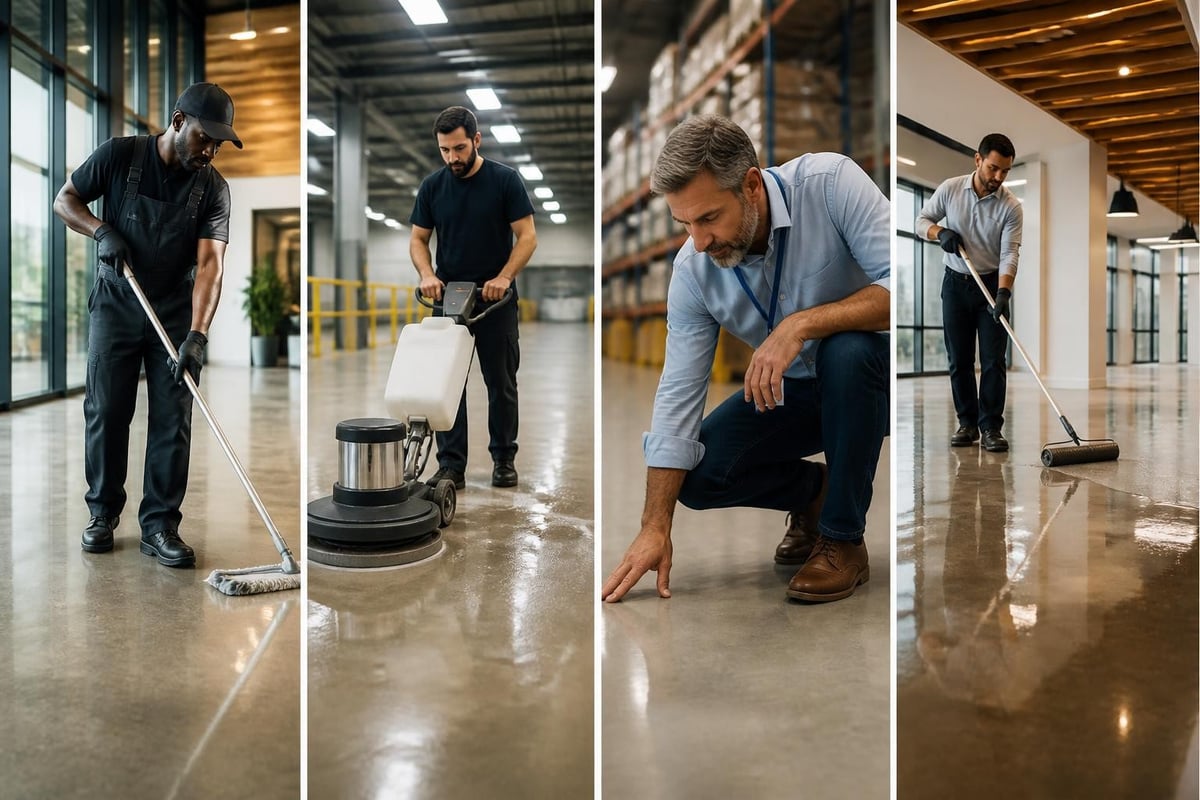
Concrete floors represent a significant investment for commercial and industrial facilities across South East Queensland. Whilst these surfaces are renowned for their durability and longevity, they require strategic maintenance to preserve their functionality and appearance. Without proper care, even the most robust concrete flooring systems can deteriorate prematurely, leading to costly repairs and operational disruptions. Understanding the fundamentals of concrete floor maintenance enables facility managers and business owners to protect their investment whilst maximising the lifespan of their flooring systems.
Understanding Your Concrete Floor Type
Different concrete finishes require tailored maintenance approaches. The maintenance strategy for a polished concrete floor in a retail environment differs substantially from the requirements of an epoxy-coated warehouse floor.
Sealed Versus Unsealed Concrete
Unsealed concrete remains porous and vulnerable to staining, moisture penetration, and surface degradation. These floors absorb liquids rapidly, making spill management particularly challenging in industrial settings.
Sealed concrete features a protective layer that blocks moisture and contaminants from penetrating the surface. This barrier simplifies cleaning and extends the floor's functional lifespan considerably.
Key differences include:
- Absorption rates that affect cleaning methods
- Resistance to chemical damage and staining
- Required cleaning product pH levels
- Frequency of resealing procedures
Identifying whether your floor is sealed or unsealed determines your entire maintenance protocol. A simple water droplet test reveals the answer: if water beads on the surface, your floor is sealed; if it absorbs within minutes, it's unsealed.
Coated Concrete Systems
Epoxy flooring and polyurethane coatings create a distinct surface layer over the concrete substrate. These systems demand specific maintenance protocols that differ from bare concrete care.
The protective coating resists chemicals and impacts whilst providing a seamless, easy-to-clean surface. However, improper cleaning agents or abrasive techniques can compromise the coating's integrity.
Daily Concrete Floor Maintenance Protocols
Consistent daily maintenance prevents the accumulation of contaminants that accelerate floor deterioration. Small particles of dirt, sand, and debris act as abrasives, grinding away at the floor surface with every footfall or vehicle movement.
Dust Mopping and Dry Cleaning
Daily dust mopping removes:
- Fine particulate matter that causes surface scratching
- Debris before it becomes embedded in the floor
- Contaminants that could react with floor coatings
- Material that reduces floor slip resistance
Microfibre dust mops prove most effective for commercial concrete floor maintenance, capturing fine particles without requiring chemical treatments. Push these mops in overlapping passes to ensure complete coverage across large warehouse or factory floors.

In facilities with heavy forklift traffic or material handling, consider dust mopping twice daily during operational hours. This frequency prevents particle buildup in high-traffic pathways.
Spot Cleaning Immediate Spills
Spill response time directly impacts stain prevention and floor longevity. Even sealed concrete can suffer damage from prolonged exposure to certain chemicals or liquids.
| Spill Type | Response Time | Cleaning Method |
|---|---|---|
| Water-based liquids | Within 15 minutes | Absorbent materials, neutral cleaner |
| Oils and greases | Immediate | Degreaser, absorbent pads |
| Chemicals | Immediate | Appropriate neutraliser, containment |
| Food/beverage | Within 30 minutes | pH-neutral cleaner, warm water |
Commercial kitchens and food processing facilities require heightened vigilance regarding spills. Acidic substances from food preparation can etch sealed surfaces if left unaddressed.
Weekly and Monthly Maintenance Procedures
Beyond daily upkeep, concrete floor maintenance demands regular deep cleaning sessions to address accumulated grime and maintain surface integrity.
Wet Mopping Techniques
Weekly wet mopping with appropriate cleaning solutions removes residues that dry mopping cannot eliminate. Using pH-neutral cleaners protects floor finishes whilst effectively removing soil and contaminants.
Proper wet mopping procedure:
- Remove all dry debris with dust mopping first
- Mix cleaning solution according to manufacturer specifications
- Apply solution with clean mop or autoscrubber
- Allow appropriate dwell time for soil breakdown
- Remove dirty solution with wet vacuum or clean mop
- Rinse with clean water if required
- Allow floor to dry completely before traffic resumes
Avoid excessive water application, which can penetrate joints and cracks in the concrete substrate. For polished concrete flooring, excess moisture may create temporary hazing until fully dried.
Autoscrubber Operations
Large commercial facilities benefit significantly from mechanical cleaning equipment. Autoscrubbers combine cleaning solution application, agitation, and recovery in a single pass.
These machines ensure consistent cleaning quality across extensive floor areas whilst reducing labour requirements. However, operators must select appropriate brush or pad types to avoid damaging floor finishes.
Protecting Against Common Damage Factors
Proactive protection strategies prevent damage more effectively than reactive repairs. Understanding the threats facing your concrete floors enables targeted preventative measures.
Traffic and Load Management
Heavy equipment, forklifts, and pallet jacks concentrate enormous loads onto small contact points. This stress can crack, chip, or abrade concrete surfaces over time.
Protection strategies include:
- Installing wheel guides in high-traffic corridors
- Maintaining proper tyre pressure on equipment
- Using protective mats in loading zones
- Restricting traffic patterns to designated areas
- Regular inspection of equipment wheels for damage
In warehouse environments, strategic floor marking creates visual guidance that distributes wear patterns more evenly across the surface.
Chemical Exposure Management
Industrial and commercial facilities frequently encounter chemicals that threaten concrete integrity. Even sealed and coated floors have limitations regarding chemical resistance.
| Chemical Category | Risk Level | Protection Method |
|---|---|---|
| Strong acids | High | Immediate cleanup, containment |
| Alkalis | Moderate | Regular cleaning, sealing |
| Petroleum products | Moderate | Absorbent materials, degreasing |
| Solvents | Variable | Check coating compatibility |
Maintaining floor coatings through proper chemical management extends system longevity significantly. Facilities handling aggressive chemicals should maintain neutralising agents and spill kits in strategic locations.
Climate Control Considerations
Temperature and humidity fluctuations affect concrete floors in ways many facility managers overlook. Moisture migration through concrete slabs can compromise coatings and finishes.
Queensland's subtropical climate creates specific challenges. High humidity periods increase moisture vapour transmission through concrete, potentially causing coating delamination or surface hazing.
Adequate ventilation and climate control reduce these risks whilst creating more comfortable working environments. Dehumidification may prove necessary in enclosed spaces during wet seasons.
Professional Maintenance Interventions
Whilst daily and weekly maintenance falls within in-house capabilities, certain procedures require professional expertise and specialised equipment.
Periodic Deep Cleaning
Annual or semi-annual professional deep cleaning removes accumulated residues that standard maintenance cannot address. Professional contractors employ high-powered equipment and specialised chemicals for thorough restoration.
These services particularly benefit high-traffic retail environments where appearance directly impacts customer perception. Best practices for concrete floor longevity include scheduled professional interventions as part of comprehensive maintenance programmes.
Resealing and Recoating
Protective sealers and coatings gradually wear away under traffic and cleaning. Resealing schedules depend on traffic levels, floor use, and environmental conditions.
Typical resealing frequencies:
- Light traffic areas: Every 3-5 years
- Moderate traffic: Every 2-3 years
- Heavy industrial: Every 1-2 years
- Extreme conditions: Annually
Epoxy flooring systems in warehouses and factories may require topcoat renewal before full system replacement becomes necessary. This cost-effective approach extends floor life whilst maintaining performance characteristics.

Professional assessment identifies when resealing becomes necessary before floor damage occurs. Waiting too long compromises the substrate and increases eventual repair costs.
Repair and Restoration Services
Cracks, spalling, and surface damage require prompt professional attention. Small defects expand rapidly under continued traffic, transforming minor repairs into major restoration projects.
Early intervention preserves the surrounding floor and prevents contamination from penetrating damaged areas. Professional concrete contractors possess the materials and expertise to execute durable repairs that blend seamlessly with existing surfaces.
Selecting Appropriate Cleaning Products
Product selection represents a critical component of effective concrete floor maintenance. Inappropriate cleaners damage floors whilst failing to clean effectively.
pH Considerations
Concrete and most concrete coatings perform best with neutral pH cleaners (pH 7-9). Avoiding acidic products protects polished surfaces and prevents chemical etching of sealers.
Acidic cleaners (pH below 7) strip protective sealers and etch concrete surfaces. Alkaline cleaners (pH above 10) can also damage certain floor finishes whilst leaving residues that attract dirt.
Product categories to avoid:
- Citrus-based cleaners containing acids
- Vinegar or acidic home remedies
- Highly alkaline degreasers on sealed floors
- Ammonia-based solutions
- Abrasive powdered cleansers
Instead, specify cleaners formulated explicitly for concrete floor maintenance. These products balance cleaning effectiveness with surface protection.
Specialty Cleaning Situations
Certain contaminants demand targeted cleaning approaches beyond standard maintenance protocols.
Tyre marks from forklifts and vehicles require mild solvents or specialty removers. Test these products in inconspicuous areas first to ensure coating compatibility.
Grease and oil deposits benefit from enzymatic cleaners that break down organic compounds without harsh chemicals. These biological cleaners prove particularly effective in mechanical workshop settings.
Efflorescence, the white crystalline deposit that appears on concrete surfaces, requires specific treatment. This natural occurrence results from moisture migration and dissolved salts. Removing efflorescence demands both mechanical and chemical interventions, often best handled by professionals.
Equipment and Tool Selection
Proper equipment amplifies maintenance effectiveness whilst reducing labour requirements and improving results consistency.
Manual Cleaning Tools
Essential equipment includes:
- Microfibre dust mops with washable heads
- Wet mops with absorbent, non-abrasive heads
- pH-neutral cleaning solutions
- Soft-bristle brushes for spot cleaning
- Wet/dry vacuum for spill recovery
- Absorbent materials for immediate spill response
Quality matters significantly in commercial applications. Professional-grade equipment withstands daily use whilst delivering consistent performance across large floor areas.
Mechanical Cleaning Systems
Larger facilities require mechanical cleaning to maintain efficiency. Walk-behind or ride-on autoscrubbers transform hours of manual labour into minutes of mechanised cleaning.
When selecting mechanical equipment, consider:
- Floor area and layout configuration
- Required cleaning frequency
- Budget for equipment and maintenance
- Operator training requirements
- Parts and service availability
Leasing options provide access to professional equipment without capital investment, particularly beneficial for facilities with seasonal variation in cleaning demands.
Documentation and Maintenance Scheduling
Systematic documentation transforms reactive maintenance into proactive management. Tracking cleaning activities, product usage, and floor condition creates valuable data for optimising maintenance programmes.
Creating Maintenance Logs
Essential documentation includes:
- Daily cleaning completion records
- Weekly deep cleaning verification
- Monthly inspection findings
- Chemical and product usage tracking
- Repair and restoration history
- Professional service dates and scope
Digital maintenance management systems streamline this documentation whilst enabling trend analysis. Identifying patterns in wear or damage guides strategic improvements to protection measures.
Scheduling Optimisation
Aligning maintenance activities with operational schedules minimises disruption. Many facilities conduct deep cleaning during off-hours or scheduled shutdowns.
Common mistakes in concrete floor care include inconsistent scheduling that allows damage to accumulate. Establishing non-negotiable maintenance windows ensures critical procedures occur as required.

Seasonal variations affect maintenance requirements. Queensland's wet season demands increased attention to moisture management and slip resistance, whilst dry periods may require adjusted cleaning frequencies.
Training and Staff Responsibilities
Even the most comprehensive maintenance programme fails without proper staff training and clear responsibility assignment.
Operator Training Requirements
Staff members performing concrete floor maintenance require training in:
- Proper equipment operation and safety protocols
- Chemical handling and dilution procedures
- Spill response and containment techniques
- Damage recognition and reporting procedures
- Quality standards and inspection criteria
Regular refresher training maintains competency whilst introducing improved techniques and new products. Document training completion to demonstrate due diligence in floor care.
Accountability Systems
Assigning specific maintenance responsibilities prevents the diffusion of accountability that leads to neglected tasks. Designate individuals or teams for daily, weekly, and monthly procedures.
Supervisor verification ensures maintenance completion to acceptable standards. Random quality inspections identify training gaps or procedural deficiencies requiring correction.
Cost-Benefit Analysis of Proper Maintenance
Investing in comprehensive concrete floor maintenance delivers substantial returns through extended floor life, reduced repair costs, and maintained facility appearance.
Neglected floors deteriorate exponentially rather than linearly. Minor surface damage expands into substrate compromise, transforming simple resealing projects into complete floor replacement requirements.
| Maintenance Level | Annual Cost | Floor Lifespan | Total Cost of Ownership |
|---|---|---|---|
| Minimal | $500 | 5-7 years | Very High |
| Basic | $2,000 | 10-12 years | High |
| Comprehensive | $4,000 | 15-20 years | Moderate |
| Professional | $6,000 | 20-25+ years | Low |
These figures illustrate relative relationships rather than absolute costs, which vary based on facility size, floor type, and usage intensity. However, the principle remains consistent: proper maintenance extends flooring lifespan substantially.
Beyond financial considerations, well-maintained floors enhance workplace safety, improve facility appearance, and demonstrate professional standards to clients and visitors. In retail environments, floor condition directly influences customer perception and brand image.
Industry-Specific Maintenance Considerations
Different commercial sectors face unique concrete floor maintenance challenges requiring tailored approaches.
Warehouse and Distribution Facilities
High forklift traffic, heavy loads, and 24/7 operations characterise these environments. Maintenance must occur during brief operational pauses without disrupting logistics flows.
Focused attention on high-traffic aisles and loading areas prevents accelerated wear. Strategic placement of floor protection in dock areas reduces impact damage from pallet jacks and equipment.
Retail and Commercial Spaces
Customer-facing environments demand immaculate appearance alongside functional durability. Polished concrete retail applications require frequent maintenance to preserve the reflective finish and professional appearance.
Foot traffic distributes wear more evenly than vehicle traffic, but retail floors face challenges from spills, tracked-in debris, and constant visual scrutiny. Evening maintenance scheduling prevents customer disruption whilst ensuring floors present optimally during business hours.
Food Processing and Commercial Kitchens
Hygiene requirements dominate maintenance priorities in food-related facilities. Floors must withstand frequent washing, chemical sanitisers, and acidic food products whilst maintaining slip resistance.
Food processing flooring systems often incorporate antimicrobial properties and seamless construction. Maintenance protocols must preserve these characteristics whilst meeting regulatory compliance standards.
Manufacturing and Industrial Workshops
Chemical exposure, metal shavings, and thermal stresses challenge floors in manufacturing environments. Maintenance programmes must address these aggressive conditions whilst accommodating production schedules.
Regular inspection identifies chemical damage early, enabling targeted repairs before substrate compromise occurs. Debris removal becomes critical as metal particles can damage equipment wheels whilst abrading floor surfaces.
Environmental and Sustainability Considerations
Modern concrete floor maintenance increasingly incorporates environmental responsibility alongside performance requirements.
Green Cleaning Products
Environmentally responsible cleaning products reduce chemical exposure for workers whilst minimising environmental discharge. Many pH-neutral cleaners now feature biodegradable formulations without sacrificing cleaning effectiveness.
Concentrated products reduce packaging waste and transportation impacts. Proper dilution ensures effective cleaning whilst avoiding product waste and environmental contamination.
Water Conservation
Traditional mopping consumes substantial water, particularly across large commercial facilities. Modern cleaning technologies reduce water usage through efficient application and recovery systems.
Autoscrubbers recirculate cleaning solution, dramatically reducing consumption compared to manual mopping. This efficiency provides environmental benefits alongside operational cost savings.
Waste Management
Proper disposal of cleaning chemicals, contaminated water, and worn floor materials ensures environmental compliance. Many jurisdictions regulate commercial cleaning waste discharge, particularly for facilities handling chemicals or food products.
Establishing waste handling protocols prevents compliance violations whilst demonstrating environmental stewardship. Document disposal activities to verify regulatory compliance during inspections.
Effective concrete floor maintenance protects your substantial flooring investment whilst ensuring optimal performance throughout the floor's service life. By implementing systematic daily cleaning, scheduled deep maintenance, and professional interventions when required, commercial facilities across South East Queensland can maximise floor longevity whilst minimising total ownership costs. Whether your facility features polished concrete or epoxy systems, Superior Concrete Finishes brings decades of commercial flooring expertise to help you develop and execute comprehensive maintenance strategies tailored to your specific operational requirements.

Joshua Miller has over 15 years of experience in the commercial concrete flooring industry, specialising in epoxy flooring systems and polished concrete solutions for warehouses, factories, retail spaces and commercial developments. Joshua and his team work closely with builders, property owners and facility managers across South East Queensland to deliver durable, cost-effective commercial flooring systems for warehouses, industrial facilities, commercial kitchens, retail stores and large commercial developments.
Major builders and organisations Josh has led projects on include McNab, Hutchinson Builders, IKEA, Queensland Rail, University of Queensland, ADCO, Tomkins Commercial, Bunnings, OfficeWorks, Spotlight, and Anaconda.
If you're planning a project and need advice on the best commercial concrete flooring solution, contact Josh or one of the team at Superior Concrete Finishes.
-
 info@superiorconcretefinishes.com.au
-
1300 789 740
-
Connect with Josh on
LinkedIn


 Connect with Josh on