
Selecting the right concrete floor polishing company represents a critical decision for commercial and industrial facility managers across Australia. The quality of workmanship directly impacts floor longevity, maintenance costs, and operational safety. With polished concrete becoming increasingly popular in warehouses, retail stores, and factories throughout South East Queensland, understanding what distinguishes exceptional contractors from mediocre ones saves both time and money. This comprehensive guide explores the essential factors businesses must consider when evaluating concrete floor polishing companies for their commercial projects.
Understanding What a Concrete Floor Polishing Company Does
A professional concrete floor polishing company specializes in transforming ordinary concrete surfaces into durable, aesthetically pleasing floors through mechanical grinding and chemical treatment. The concrete polishing process involves multiple stages that progressively refine the concrete surface.
The Multi-Stage Polishing Process
The transformation begins with thorough surface assessment and preparation. Professional contractors evaluate existing concrete conditions, identifying cracks, uneven areas, and contamination that require attention before polishing commences.
Key process stages include:
- Initial grinding to remove surface coatings and imperfections
- Progressive grinding with increasingly fine abrasives
- Chemical densification to harden the concrete matrix
- Polishing with diamond-embedded pads
- Application of protective sealers or guards
Each stage requires specialized equipment and technical expertise. The grinding phase alone typically involves four to eight passes with different grit levels, gradually achieving the desired smoothness and reflectivity.
Commercial vs. Residential Applications
Commercial concrete floor polishing differs substantially from residential work. Industrial facilities require floors that withstand heavy machinery, forklift traffic, and chemical exposure. Warehouse flooring demands exceptional durability and often incorporates specific slip resistance ratings for workplace safety.
Retail environments prioritize aesthetic appeal alongside durability. Polished concrete in retail flooring applications must maintain visual appeal under constant foot traffic while remaining easy to clean and maintain.
Evaluating Industry Experience and Credentials
Experience matters significantly when selecting a concrete floor polishing company. Contractors with decades in the commercial flooring sector understand nuances that newer operators might miss.
| Credential Type | Why It Matters | Verification Method |
|---|---|---|
| QBCC Licence | Legal requirement in Queensland | Check QBCC website |
| Public Liability Insurance | Protects against project damage | Request certificate of currency |
| Workers Compensation | Covers onsite injuries | Verify policy details |
| Industry Certifications | Demonstrates technical training | Ask for documentation |
Specialist Focus Areas
A concrete floor polishing company focused exclusively on commercial and industrial projects brings distinct advantages. These specialists understand compliance requirements, safety regulations, and the operational constraints of working in active facilities.
Companies working across factory flooring and commercial carparks develop expertise managing large-scale projects with minimal disruption to business operations. This specialization proves invaluable when coordinating work schedules around production demands or trading hours.

Portfolio and Past Projects
Reviewing completed projects provides insight into a company's capabilities. Request examples demonstrating work in facilities similar to yours. A contractor experienced with commercial kitchens understands food safety requirements, while one specializing in workshops knows the demands of oil and chemical resistance.
The portfolio should showcase variety in project scope, from small retail spaces to expansive warehouse floors exceeding several thousand square meters.
Technical Capabilities and Equipment Quality
Modern concrete polishing requires sophisticated machinery and diamond tooling. The quality of equipment directly influences the finished floor's appearance and durability.
Essential Equipment Standards
Professional concrete floor polishing companies invest in industrial-grade grinding machines with variable speed controls and dust extraction systems. Planetary grinders handle large commercial spaces efficiently, while smaller edge grinders address perimeter areas and columns.
Critical equipment includes:
- High-performance planetary grinders (multiple head configurations)
- Diamond tooling in various grit progressions
- Industrial dust collection systems meeting environmental standards
- Densification and sealing application equipment
- Moisture testing devices and concrete hardness testers
Equipment maintenance schedules indicate professionalism. Well-maintained machinery produces consistent results and minimizes project delays from mechanical breakdowns.
Understanding Finish Options
Different commercial applications require specific finish levels. Polished concrete achieves various gloss levels from satin to high-gloss, determined by the final diamond grit used during polishing.
For facilities prioritizing both aesthetics and functionality, understanding the relationship between polish level and slip resistance proves essential. Higher gloss finishes may require additional treatments for optimal traction in certain environments.
Assessing Concrete Suitability and Preparation
Not all concrete slabs make ideal candidates for polishing. A reputable concrete floor polishing company conducts thorough assessments before committing to project timelines or costs.
Pre-Project Evaluation Factors
Assessing concrete for polish involves multiple technical considerations. Concrete age, mix design, and existing conditions all influence feasibility and final outcomes.
- Concrete hardness testing determines appropriate diamond tooling progression
- Moisture content evaluation prevents future delamination issues
- Surface contamination assessment identifies oils, coatings, or sealers requiring removal
- Structural integrity inspection reveals cracks or damage needing repair
- Aggregate exposure preferences guide grinding depth decisions
Experienced contractors recognize when existing slabs require remediation before polishing proceeds. This honest assessment prevents disappointing results and additional costs down the track.
Surface Preparation Requirements
Preparation represents the foundation of successful polishing projects. Professional contractors remove existing coatings, repair damaged areas, and address moisture issues before grinding commences. This groundwork ensures polished surfaces bond properly and perform as expected throughout their service life.
Project Management and Operational Considerations
Commercial concrete polishing projects require meticulous planning to minimize business disruption. A professional concrete floor polishing company develops detailed project schedules accounting for operational constraints.
Scheduling and Workflow Coordination
Working in active commercial warehouses or retail environments demands flexibility and precision. Contractors must coordinate grinding phases during off-hours or work in sections to maintain partial facility access.
| Project Phase | Typical Duration | Noise Level | Access Restrictions |
|---|---|---|---|
| Surface Preparation | 1-2 days | High | Full area closure |
| Initial Grinding | 2-3 days | Very High | Full area closure |
| Fine Grinding | 2-3 days | High | Partial access possible |
| Polishing | 1-2 days | Moderate | Partial access possible |
| Sealing & Curing | 1 day | Low | No foot traffic |
Effective communication throughout the project keeps stakeholders informed about progress and any scheduling adjustments.
Dust Management and Environmental Controls
Modern polishing equipment incorporates dust extraction technology, but controlling airborne particles remains critical in occupied facilities. Professional contractors employ multiple containment strategies, including negative air pressure systems and physical barriers separating work areas from operational spaces.
Environmental compliance extends beyond dust control. Proper disposal of grinding slurry and adherence to water usage regulations demonstrate contractor responsibility and professionalism.
Cost Structures and Investment Considerations
Understanding pricing models helps businesses budget appropriately for concrete polishing projects. A concrete floor polishing company typically prices work based on multiple factors rather than simple per-square-meter rates.
Pricing Variables
Several elements influence project costs. Floor area represents just one consideration among many technical and logistical factors.
Primary cost drivers include:
- Total floor area and project complexity
- Existing concrete condition and preparation requirements
- Desired finish level and aggregate exposure
- Site accessibility and operational constraints
- Coating or sealer specifications
- Project timeline and scheduling restrictions
Requesting detailed quotations from multiple contractors enables accurate comparison. Ensure quotes itemize preparation work, grinding stages, densification, polishing, and sealing separately.
Long-Term Value Assessment
While initial installation costs factor into decision-making, polished concrete delivers substantial lifecycle savings. Reduced maintenance requirements, exceptional durability, and extended service life offset higher upfront investment compared to alternative flooring systems.
Industrial polished concrete in warehouses and factories often achieves 20-plus years of service with minimal maintenance, eliminating replacement costs associated with coatings or tiles during that period.
Quality Assurance and Warranties
Reputable concrete floor polishing companies stand behind their work with comprehensive warranties and quality guarantees.
Warranty Coverage
Standard warranty periods vary, but professional contractors typically offer multi-year coverage addressing workmanship defects and premature wear. Understanding warranty terms, exclusions, and maintenance requirements protects your investment.
Quality assurance extends beyond paperwork. Contractors should demonstrate measurable quality metrics, such as gloss readings and surface profile measurements, documenting that finished floors meet specified standards.
Post-Installation Support
Ongoing support differentiates exceptional contractors from average ones. Professional companies provide detailed maintenance guidance and remain available to address questions or concerns arising after project completion.
This support proves particularly valuable for facilities new to polished concrete. Understanding proper cleaning procedures and recognizing when professional maintenance becomes necessary preserves floor appearance and extends service life.
Maintenance Requirements and Long-Term Care
Polished concrete's low maintenance reputation holds true, but understanding proper care protocols maximizes floor performance and longevity.
Daily and Periodic Maintenance
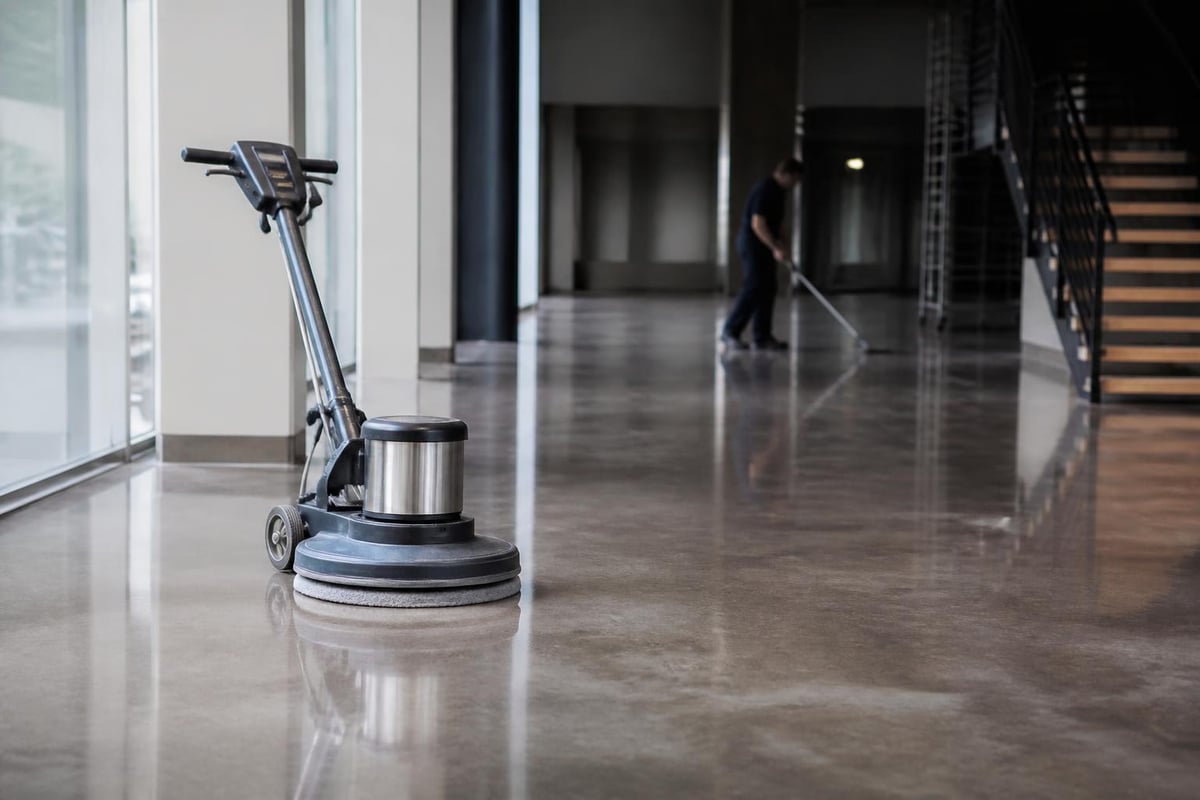
Professional cleaning and care techniques maintain polished concrete's aesthetic appeal and functional properties. Daily dust mopping removes abrasive particles that might scratch the surface, while periodic damp mopping with pH-neutral cleaners addresses deeper soiling.
Recommended maintenance schedule:
- Daily: Dust mopping or sweeping
- Weekly: Damp mopping with approved cleaners
- Monthly: Scrubbing with automatic equipment (high-traffic areas)
- Annually: Professional deep cleaning and sealer reapplication
- Every 3-5 years: Re-polishing or burnishing as needed
Avoid harsh chemicals, acidic cleaners, or abrasive scrubbing pads that compromise the polished surface. Your concrete floor polishing company should provide specific product recommendations aligned with the sealer system used.
Addressing Wear and Damage
Even durable polished concrete eventually shows wear in high-traffic zones. Professional contractors can restore appearance through localized re-polishing or densifier reapplication without complete floor replacement. This targeted maintenance approach controls costs while maintaining consistent appearance across the entire floor.
Safety and Compliance Standards
Commercial facilities must prioritize workplace safety, and flooring plays a crucial role in preventing accidents and meeting regulatory requirements.
Slip Resistance Considerations
Polished concrete's slip resistance varies with finish level and sealer type. Flooring safety standards require specific coefficients of friction for different applications, particularly in commercial kitchens or wet environments.
Professional concrete floor polishing companies conduct slip testing and recommend appropriate finishes balancing aesthetic preferences with safety requirements. Some applications benefit from specialized treatments enhancing traction without compromising visual appeal.
Building Code Compliance
Queensland building codes stipulate specific requirements for commercial flooring systems. Licensed contractors understand these regulations and ensure completed work complies with all applicable standards. This compliance protects building owners from liability and eliminates costly remediation after project completion.
Selecting the Right Contractor for Your Project
Armed with comprehensive knowledge about concrete polishing, businesses can confidently evaluate potential contractors.
Questions to Ask Prospective Companies
Interviewing multiple concrete floor polishing companies reveals critical differences in expertise, approach, and professionalism.
- What percentage of your work involves commercial and industrial projects?
- Can you provide references from similar facilities in our industry?
- What specific equipment and diamond tooling systems do you use?
- How do you manage dust and minimize operational disruption?
- What warranty coverage do you offer on workmanship and materials?
- Are you fully insured with current QBCC licensing?
- What maintenance support do you provide after project completion?
Responses to these questions illuminate contractor capabilities and commitment to quality outcomes.
Red Flags to Avoid
Certain warning signs indicate potential problems with contractors. Avoid companies unable to provide current insurance certificates, those lacking relevant commercial experience, or operators unwilling to provide detailed written quotations.
Pressure tactics suggesting immediate commitment without proper assessment should raise concerns. Professional contractors welcome thorough evaluation and comparison shopping, confident their expertise and quality speak for themselves.
Regional Considerations for South East Queensland
Local market conditions influence concrete polishing projects throughout South East Queensland.
Climate Impacts
Queensland's subtropical climate affects concrete curing, moisture management, and seasonal scheduling. Experienced local contractors understand these factors and plan projects accordingly, avoiding problematic conditions that might compromise results.
Humidity levels influence densifier penetration and sealer curing times. Professional concrete floor polishing companies adjust application techniques and schedules based on environmental conditions, ensuring optimal product performance.
Industry-Specific Applications
South East Queensland's diverse commercial and industrial sectors each present unique flooring challenges. Logistics facilities require exceptional durability for constant forklift traffic. Retail environments prioritize aesthetic appeal alongside functionality. Food processing plants demand hygiene-compliant surfaces meeting stringent regulations.
Contractors specializing in commercial flooring understand these varied requirements and recommend appropriate specifications for each application. This specialized knowledge ensures finished floors meet operational demands while delivering expected longevity.
Emerging Technologies and Industry Innovations
Concrete polishing continues evolving with new technologies enhancing efficiency and results.
Advanced Diamond Tooling
Modern diamond technology enables faster grinding with superior surface finishes. Hybrid bond systems combine resin and metal matrices, optimizing performance across varying concrete hardness levels. These advancements reduce project timelines while improving consistency.
Environmentally Conscious Approaches
Sustainability considerations increasingly influence commercial flooring decisions. Polished concrete inherently supports green building standards by eliminating additional materials and reducing lifecycle environmental impacts.
Water reclamation systems minimize consumption during grinding processes. Low-VOC sealers and guards improve indoor air quality. Professional contractors embrace these sustainable practices, aligning project delivery with environmental responsibility.
Choosing the right concrete floor polishing company significantly impacts your facility's flooring performance, appearance, and operational costs for years to come. By thoroughly evaluating credentials, technical capabilities, and project management expertise, commercial and industrial facility managers make informed decisions aligned with their specific requirements. Superior Concrete Finishes brings decades of specialized experience serving South East Queensland's commercial and industrial sectors, delivering exceptional polished concrete and epoxy flooring solutions backed by full licensing, comprehensive insurance, and unwavering commitment to quality craftsmanship.

Joshua Miller has over 15 years of experience in the commercial concrete flooring industry, specialising in epoxy flooring systems and polished concrete solutions for warehouses, factories, retail spaces and commercial developments. Joshua and his team work closely with builders, property owners and facility managers across South East Queensland to deliver durable, cost-effective commercial flooring systems for warehouses, industrial facilities, commercial kitchens, retail stores and large commercial developments.
Major builders and organisations Josh has led projects on include McNab, Hutchinson Builders, IKEA, Queensland Rail, University of Queensland, ADCO, Tomkins Commercial, Bunnings, OfficeWorks, Spotlight, and Anaconda.
If you're planning a project and need advice on the best commercial concrete flooring solution, contact Josh or one of the team at Superior Concrete Finishes.
-
 info@superiorconcretefinishes.com.au
-
1300 789 740
-
Connect with Josh on
LinkedIn


 Connect with Josh on