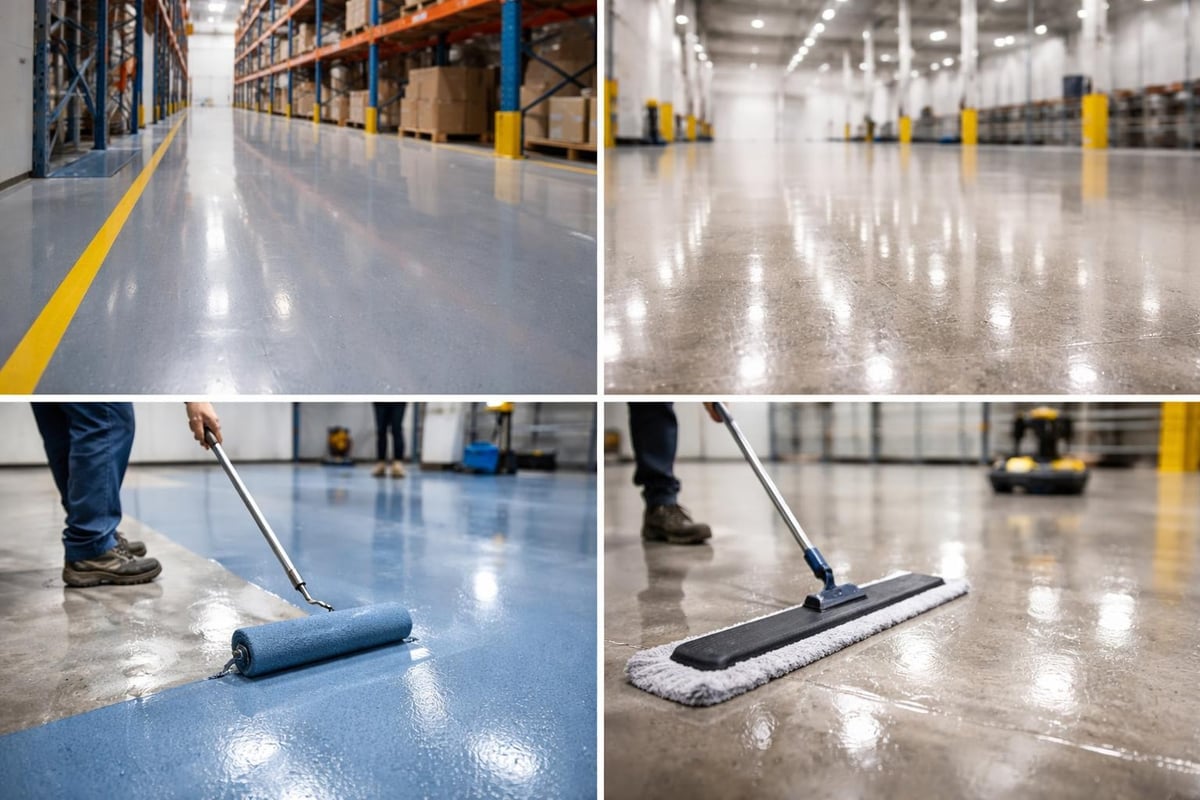
Selecting the right flooring solution for commercial and industrial facilities requires careful consideration of durability, maintenance requirements, and operational demands. Concrete flooring systems have become the preferred choice across South East Queensland's commercial sector, offering robust performance in environments ranging from high-traffic warehouses to pristine retail spaces. These systems combine the inherent strength of concrete with specialized treatments and coatings that enhance performance, extend service life, and meet the specific demands of different industries. Understanding the various types of concrete flooring systems available helps facility managers, business owners, and project planners make informed decisions that protect their investment whilst maintaining operational efficiency.
Understanding Concrete Flooring Systems
Concrete flooring systems encompass a range of treatments, coatings, and finishes applied to concrete substrates to enhance their performance characteristics. Unlike bare concrete, which remains porous and susceptible to damage, these systems create protective barriers whilst improving aesthetic appeal.
The foundation of any successful commercial flooring installation starts with proper substrate preparation. The concrete slab must be structurally sound, properly cured, and free from contaminants. According to The Concrete Society, achieving satisfactory performance requires attention to design, production, and construction stages.
Primary System Categories
Concrete flooring systems generally fall into several distinct categories:
- Epoxy coating systems provide chemical resistance and durability
- Polished concrete systems create reflective, low-maintenance surfaces
- Polyurethane systems offer flexibility and thermal shock resistance
- Densifier and hardener systems strengthen the concrete matrix
- Hybrid systems combine multiple technologies for specialized applications
Each category serves specific operational requirements. Factories handling chemicals benefit from epoxy's resistance properties, whilst retail environments often prefer the aesthetic qualities of polished concrete.
Epoxy Coating Systems for Industrial Applications
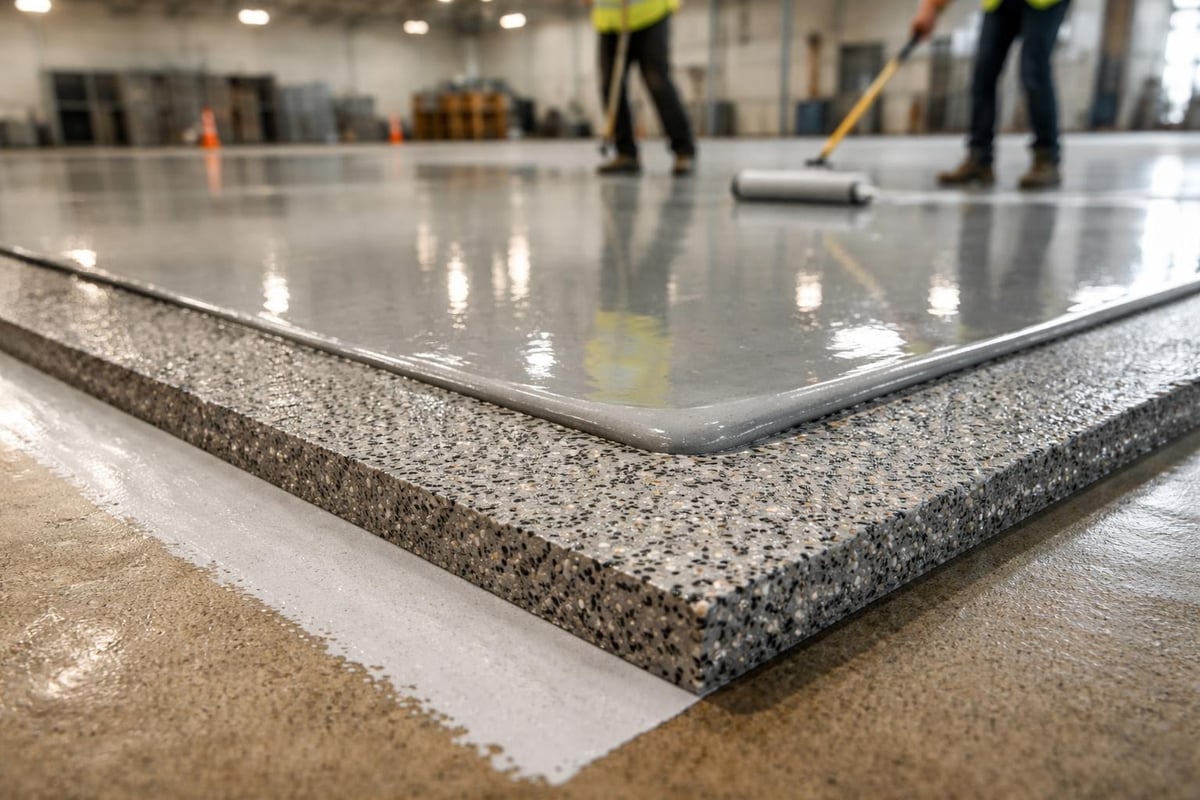
Epoxy concrete flooring represents one of the most versatile solutions for demanding industrial environments. These systems consist of resin and hardener components that, when mixed, create a chemical reaction forming an exceptionally durable surface.
Performance Characteristics:
The cured epoxy surface provides resistance to oils, solvents, acids, and alkalis commonly found in warehouse flooring applications. Impact resistance protects against dropped tools and equipment, whilst the seamless finish prevents contamination accumulation in commercial kitchens and food processing facilities.
Application Specifications
Installing epoxy systems requires precise environmental controls and surface preparation. PROSOCO’s system specifications outline critical parameters including temperature ranges, humidity levels, and substrate moisture content.
| System Type | Thickness | Cure Time | Primary Use |
|---|---|---|---|
| Self-leveling epoxy | 2-4mm | 24-48 hours | Warehouses, factories |
| Mortar epoxy | 6-12mm | 3-5 days | Heavy industrial, workshops |
| Thin-film epoxy | 0.3-0.5mm | 12-24 hours | Light commercial, car parks |
The thickness selection depends on anticipated traffic loads and operational requirements. Heavy machinery operations demand thicker mortar systems, whilst undercover car parks function effectively with thin-film applications.
Moisture management remains critical for epoxy success. Epoxy moisture control systems prevent failures caused by hydrostatic pressure and moisture vapor transmission through concrete slabs.
For commercial and industrial facilities requiring robust chemical resistance and long-term durability, epoxy flooring delivers proven performance across diverse applications. This system particularly excels in environments where spills, heavy equipment traffic, and rigorous cleaning protocols demand superior surface protection.
Polished Concrete Systems
Polished concrete systems transform ordinary concrete into sophisticated, reflective surfaces through mechanical grinding and polishing processes. This approach reveals the concrete's natural beauty whilst creating surfaces that rival traditional flooring materials in appearance.
Processing Stages
The polishing process involves progressive refinement using diamond-embedded tooling:
- Coarse grinding removes surface imperfections and existing coatings
- Intermediate grinding refines the surface to desired exposure level
- Densification applies chemical hardeners to strengthen the matrix
- Fine polishing achieves the specified gloss level
- Protective treatment optional sealers enhance stain resistance
Exposure levels determine the aggregate visibility. Cream finishes show minimal aggregate, salt-and-pepper finishes reveal small aggregates, and full exposure showcases larger decorative aggregates.
Benefits for Commercial Retail:
Retail stores increasingly specify polished concrete for its combination of durability and aesthetic appeal. The reflective surface enhances ambient lighting, reducing energy costs whilst creating an upscale atmosphere. Unlike coated systems, polished concrete requires no reapplication, significantly reducing lifecycle maintenance costs.
The environmental advantages align with sustainable building practices. Polished concrete eliminates the need for additional floor coverings, reducing material consumption and associated installation waste.
Protective Treatment Systems
Beyond complete coating systems, protective treatments enhance concrete performance through chemical modification or surface densification. These systems suit applications where budget constraints or specific operational requirements preclude full coating installations.
Dustproofing Solutions
Warehouses and industrial facilities often struggle with concrete dusting, where surface degradation creates airborne particles. Dustproofing warehouse floors addresses this through penetrating sealers or hardener applications that densify the concrete surface.
Lithium silicate hardeners react with calcium hydroxide in concrete, forming calcium silicate hydrate that fills pores and strengthens the surface matrix. This chemical process provides:
- Reduced dust generation
- Increased abrasion resistance
- Enhanced chemical resistance
- Improved cleanability
The treatment penetrates rather than coating, eliminating delamination concerns whilst maintaining the concrete's natural appearance.
Comparison of Treatment Options
| Treatment Type | Penetration Depth | Lifespan | Best Application |
|---|---|---|---|
| Acrylic sealers | Surface only | 1-3 years | Light traffic areas |
| Silicate densifiers | 3-5mm | 10+ years | Warehouses, factories |
| Siliconate sealers | 1-3mm | 5-7 years | Car parks, exterior |
| Hybrid systems | Varies | 7-10 years | Mixed-use facilities |
Selection depends on traffic intensity, exposure conditions, and budget parameters. High-traffic distribution centers warrant densifier investments, whilst occasional-use storage areas function adequately with basic acrylic protection.
Specialized Systems for Specific Industries
Different industries impose unique demands on concrete flooring systems. Understanding these requirements ensures appropriate system selection and long-term performance.
Commercial Kitchen Requirements
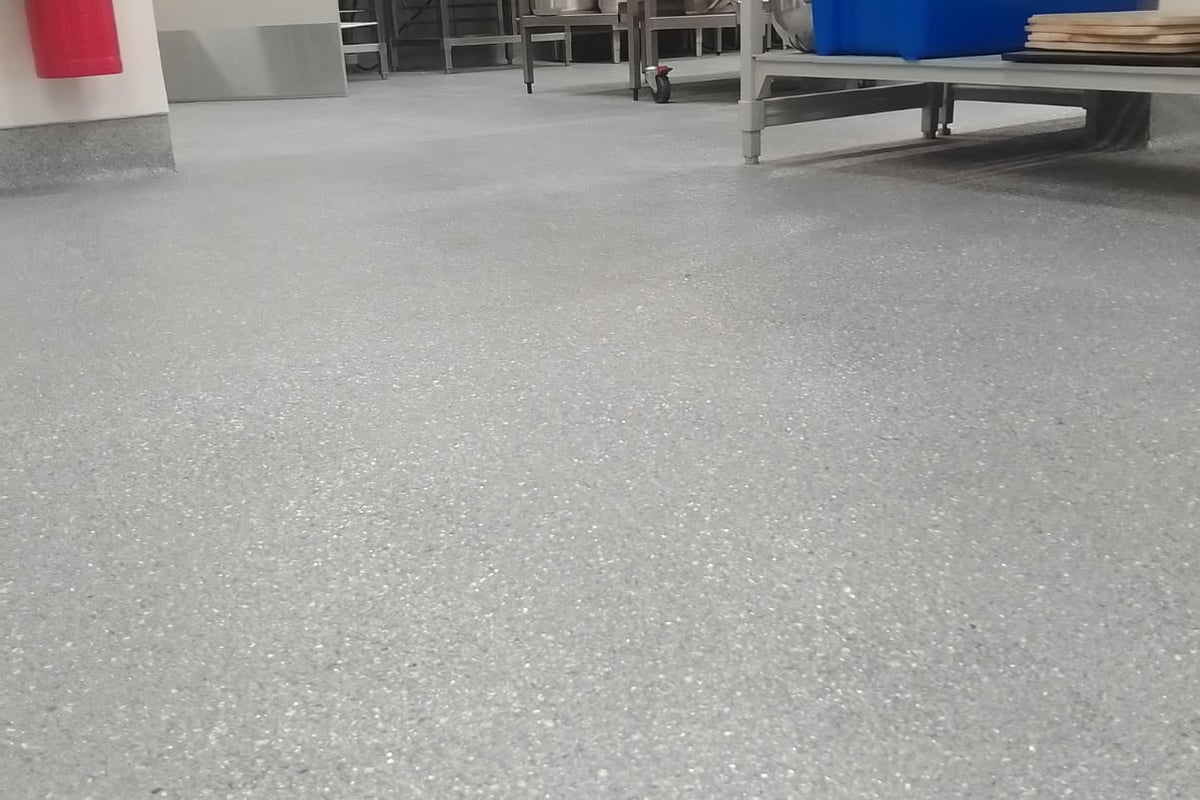
Food process flooring must withstand thermal cycling, aggressive cleaning chemicals, and constant moisture exposure. Polyurethane systems offer advantages over epoxy in these environments through superior thermal shock resistance and flexibility that accommodates substrate movement.
The seamless, coved installations prevent bacterial harboring whilst facilitating thorough cleaning protocols required by food safety regulations. Slip resistance becomes critical in wet environments, necessitating textured finishes or broadcast aggregates.
Automotive Workshop Floors
Mechanical workshop flooring faces constant exposure to petroleum products, hydraulic fluids, and battery acids. Epoxy systems formulated with enhanced chemical resistance protect against these aggressive substances whilst maintaining the impact resistance necessary in tool-drop environments.
The bright, reflective surfaces improve workspace lighting and create professional appearances that enhance customer confidence. Easy maintenance allows rapid cleaning between jobs, maintaining productivity.
Car Park Applications
Undercover car park flooring requires systems that resist vehicle traffic, petroleum drips, and de-icing salt exposure. Thin-film epoxy or polyurethane systems provide cost-effective protection whilst line marking and safety markings integrate seamlessly.
UV stability becomes important in partially exposed areas where sunlight penetrates. Certain epoxy formulations yellow under UV exposure, making polyurethane preferable for these locations.
Installation Considerations
Successful concrete flooring system installation requires meticulous planning and execution. Rushed installations frequently result in premature failures that necessitate costly remediation.
Substrate Preparation Requirements
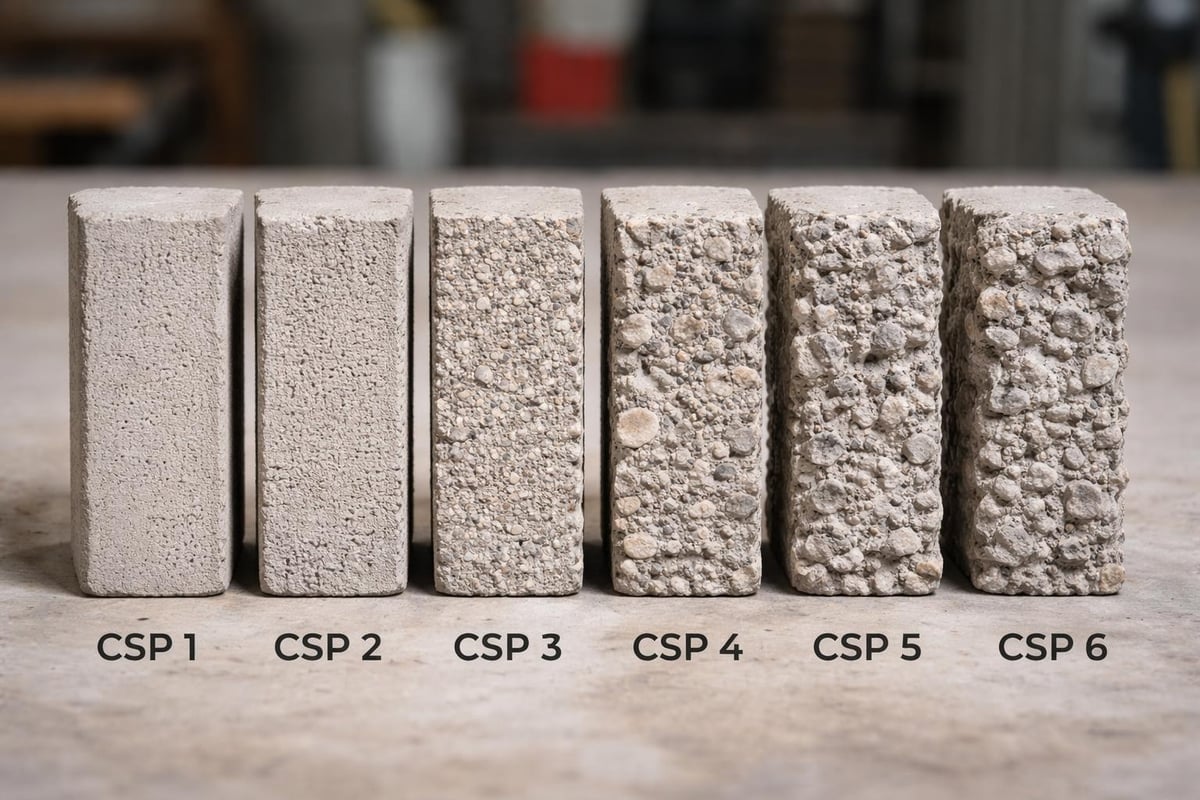
Proper substrate preparation determines system longevity. The concrete surface must achieve the appropriate profile for mechanical bonding:
- CSP 1-2 suits thin coatings and sealers
- CSP 3-4 accommodates standard epoxy systems
- CSP 5-6 necessary for thick mortar applications
Diamond grinding, shot blasting, or scarifying achieve these profiles. The method selection depends on surface hardness, existing coatings, and required production rates.
Moisture Testing Protocols:
Moisture-related failures constitute the primary cause of coating delamination. Comprehensive testing protocols assess moisture conditions before installation:
- Calcium chloride testing measures moisture vapor emission rates
- Relative humidity testing evaluates internal moisture conditions
- pH testing identifies alkalinity issues
These tests identify problematic conditions requiring remediation before coating application. Ignoring moisture issues guarantees eventual system failure regardless of product quality.
Environmental Controls
Temperature and humidity during installation significantly impact system performance. Most epoxy systems require substrate temperatures between 10°C and 30°C with relative humidity below 85%. Deviating from these parameters affects cure rates, adhesion, and final properties.
Winter installations in South East Queensland generally proceed without difficulty, but summer heat requires early morning or evening work schedules. Adequate ventilation prevents solvent accumulation whilst promoting proper curing.
Maintenance and Lifecycle Management
Even the most robust concrete flooring systems require ongoing maintenance to achieve their full service life potential. Establishing systematic maintenance protocols protects the initial investment whilst maintaining operational efficiency.
Routine Maintenance Protocols
Daily maintenance prevents abrasive particle accumulation that accelerates wear. Dust mopping or auto-scrubbing removes contaminants before they embed in the surface. For factory flooring applications, industrial scrubbers with neutral pH cleaners maintain appearance without degrading the protective system.
Recommended Maintenance Schedule:
- Daily: Sweep or dust mop high-traffic areas
- Weekly: Auto-scrub entire floor with neutral cleaner
- Monthly: Inspect for damage, address minor repairs
- Annually: Professional assessment and restoration as needed
Addressing minor damage immediately prevents progression. Small chips or scratches easily repair with matching materials, whilst ignored damage expands and eventually requires extensive remediation.
Long-term Performance Optimization
Polished concrete systems benefit from periodic re-polishing that restores gloss levels and maintains the densified surface. This maintenance typically occurs every 5-7 years depending on traffic intensity. The process proves far less disruptive and expensive than replacing coated systems.
Epoxy systems eventually require recoating as surface wear accumulates. Proper maintenance extends recoating intervals from 7-10 years to 12-15 years in many commercial applications. The existing epoxy provides an excellent substrate for new coatings, simplifying the restoration process.
For facilities considering alternative flooring solutions in specific areas, modular systems like those offered by Elite Modular Flooring provide complementary options for showrooms or specialty zones requiring different performance characteristics than primary operational areas.
System Selection Criteria
Choosing the appropriate concrete flooring system requires balancing multiple factors including performance requirements, budget constraints, and aesthetic preferences. A systematic evaluation process ensures optimal selection.
Performance Priority Matrix
Different facilities prioritize various performance characteristics:
Warehouses and Distribution Centers:
- Abrasion resistance (high priority)
- Impact resistance (high priority)
- Chemical resistance (medium priority)
- Aesthetics (low priority)
Retail Stores:
- Aesthetics (high priority)
- Cleanability (high priority)
- Durability (medium priority)
- Chemical resistance (low priority)
Commercial Kitchens:
- Thermal shock resistance (high priority)
- Chemical resistance (high priority)
- Slip resistance (high priority)
- Hygiene (high priority)
This prioritization guides system selection toward solutions that excel in critical performance areas whilst maintaining acceptable characteristics in secondary considerations.
Cost Analysis Framework
Initial installation costs represent only one component of total ownership expenses. Comprehensive analysis includes:
| Cost Component | Epoxy System | Polished Concrete | Basic Sealer |
|---|---|---|---|
| Installation | $85-$150/m² | $70-$120/m² | $15-$30/m² |
| Annual maintenance | $2-$4/m² | $1-$2/m² | $3-$5/m² |
| Expected lifespan | 10-15 years | 20+ years | 3-5 years |
| Total 15-year cost | $115-$210/m² | $85-$150/m² | $75-$120/m² |
These figures demonstrate how higher initial investments often produce lower lifecycle costs through reduced maintenance and extended service life. The specific context determines optimal selection-temporary facilities warrant different approaches than permanent installations.
Quality Assurance and Compliance
Professional concrete flooring system installation requires adherence to industry standards and regulatory requirements. Quality assurance protocols verify compliance whilst protecting project stakeholders.
Licensing and Insurance Requirements
In Queensland, flooring contractors must hold appropriate QBCC licensing for the scope of work undertaken. This licensing ensures technical competency and provides consumer protection mechanisms. Comprehensive insurance coverage protects building owners from liability associated with installation activities.
Verifying contractor credentials before project commencement prevents complications. Resources from industry organizations provide guidance on quality standards and best practices.
Testing and Verification
Post-installation testing confirms system performance:
- Pull-off adhesion testing verifies bonding strength
- Hardness testing assesses cure completion
- Visual inspection identifies defects requiring correction
Documentation of these tests provides baseline data for warranty administration and future reference. Thorough documentation proves particularly valuable when addressing performance concerns during the warranty period.
Professional installation teams understand the critical parameters affecting system performance. Decades of experience working across commercial surface polishing and coating applications develops the expertise necessary to navigate complex projects successfully.
Emerging Technologies and Innovations
The concrete flooring industry continues evolving through material science advances and application technique improvements. Staying current with these developments helps facilities optimize their flooring investments.
Advanced Material Formulations
Recent epoxy formulations incorporate nanotechnology additives that enhance mechanical properties and chemical resistance. These materials achieve superior performance with thinner application profiles, reducing material costs and installation time.
Bio-based epoxy resins derived from renewable resources address environmental concerns whilst maintaining performance characteristics. Although currently commanding premium pricing, these sustainable alternatives align with corporate environmental initiatives and green building certifications.
Application Technology Improvements
Automated application systems improve consistency whilst reducing labor requirements. Computer-controlled dispensing equipment ensures precise mixing ratios, eliminating human error that compromises system performance. Robotic application equipment maintains consistent thickness and coverage in large-format installations.
These technological advances particularly benefit large projects where manual application variability historically created performance inconsistencies. The initial equipment investment proves worthwhile for contractors specializing in substantial commercial installations.
Concrete flooring systems provide commercial and industrial facilities with durable, versatile solutions tailored to specific operational requirements. From chemical-resistant epoxy installations in factories to polished surfaces in retail environments, proper system selection and professional installation deliver decades of reliable performance. For South East Queensland commercial and industrial facilities requiring expert concrete flooring solutions, Superior Concrete Finishes brings the experience, licensing, and technical expertise necessary to transform your facility's floors into lasting assets that support your operational success.

Joshua Miller has over 15 years of experience in the commercial concrete flooring industry, specialising in epoxy flooring systems and polished concrete solutions for warehouses, factories, retail spaces and commercial developments. Joshua and his team work closely with builders, property owners and facility managers across South East Queensland to deliver durable, cost-effective commercial flooring systems for warehouses, industrial facilities, commercial kitchens, retail stores and large commercial developments.
Major builders and organisations Josh has led projects on include McNab, Hutchinson Builders, IKEA, Queensland Rail, University of Queensland, ADCO, Tomkins Commercial, Bunnings, OfficeWorks, Spotlight, and Anaconda.
If you're planning a project and need advice on the best commercial concrete flooring solution, contact Josh or one of the team at Superior Concrete Finishes.
-
 info@superiorconcretefinishes.com.au
-
1300 789 740
-
Connect with Josh on
LinkedIn


 Connect with Josh on