Selecting the right concrete polish solutions for your commercial or industrial facility requires understanding not just the process itself, but how different techniques, products, and approaches deliver specific outcomes. Whether you’re managing a warehouse, retail store, factory, or commercial car park, polished concrete offers a combination of durability, aesthetics, and low maintenance that few other flooring options can match. This comprehensive guide explores the technical aspects, decision-making factors, and implementation considerations that facility managers and property owners need to navigate when specifying concrete polish solutions for their South East Queensland operations.
Understanding Concrete Polish Solutions
Concrete polish solutions encompass the complete spectrum of mechanical grinding and polishing processes that transform standard concrete slabs into high-performance, aesthetically pleasing surfaces. Unlike coatings that sit on top of the concrete, the polishing process actually densifies and refines the concrete itself.
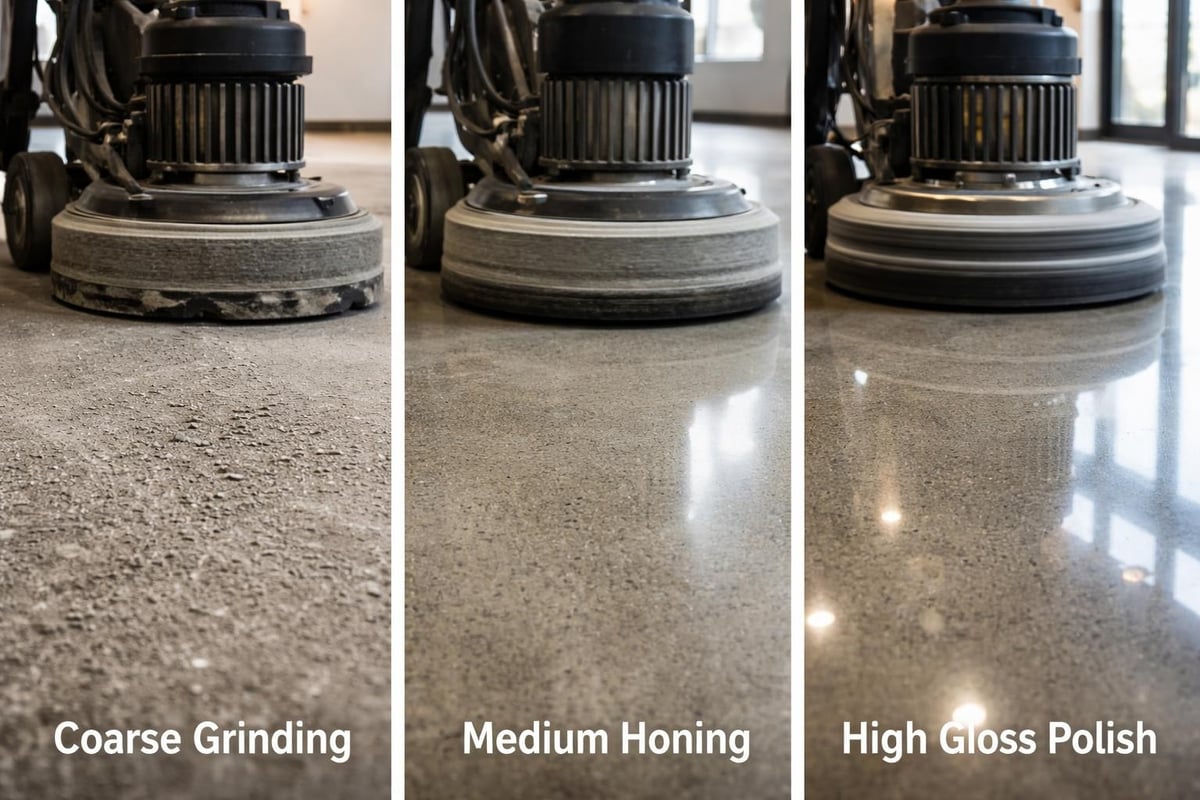
The process involves progressively finer diamond abrasives that grind down the concrete surface, exposing aggregate and creating increasingly smooth finishes. Different levels of polish create different appearances and performance characteristics, from subtle matte finishes to mirror-like reflectivity.
The Science Behind Surface Transformation
When concrete is poured and cured, the surface contains micro-pores, weak paste, and irregularities that compromise both appearance and durability. Professional concrete polish solutions address these issues through mechanical refinement and chemical densification.
Key transformation mechanisms include:
- Removal of weak surface laitance and contamination
- Progressive exposure of aggregate particles
- Densification of the concrete matrix through chemical hardeners
- Closure of surface pores to reduce permeability
- Creation of a scratch-resistant, polished surface layer
The densification process involves lithium silicate or sodium silicate solutions that react with calcium hydroxide in the concrete, forming calcium silicate hydrate. This chemical reaction significantly increases surface hardness and abrasion resistance.
Selecting the Right Polish Level
Different commercial environments require different levels of polish, measured in grit levels that correspond to the fineness of the final diamond tooling used. Understanding these distinctions helps you specify concrete polish solutions appropriate for your facility’s functional requirements and aesthetic goals.
| Grit Level | Finish Type | Appearance | Best Applications |
|---|---|---|---|
| 100-400 | Ground | Flat, minimal shine | Workshops, utility areas |
| 400-800 | Honed | Satin, low sheen | Warehouses, factories |
| 800-1500 | Semi-Polished | Moderate reflectivity | Retail stores, showrooms |
| 1500-3000+ | High-Polish | Mirror-like shine | High-end retail, offices |
The selection process involves balancing aesthetic preferences against practical considerations like maintenance requirements, slip resistance, and budget constraints. Higher polish levels generally cost more but deliver enhanced light reflectivity and easier cleaning.
Aggregate Exposure Considerations
Beyond grit level, concrete polish solutions can be specified based on aggregate exposure, which dramatically affects the final appearance. This specification determines how much of the concrete you grind away to reveal decorative stones within the mix.
Three standard exposure levels:
- Cream finish – Minimal grinding, exposing only fine sand particles
- Salt and pepper – Medium grinding, revealing small aggregate
- Full aggregate exposure – Deep grinding, showcasing larger decorative stones
For commercial applications in South East Queensland, salt and pepper finishes represent the most popular specification, offering visual interest without the additional cost of full aggregate exposure. Commercial flooring decisions should consider how the exposure level impacts both appearance and the practical aspects of maintaining the surface over time.
Technical Process Requirements
Implementing professional concrete polish solutions requires specialized equipment, skilled operators, and systematic execution. The multi-stage process cannot be rushed, as each grinding phase must be completed properly before advancing to finer grits.
Equipment and Tooling
Professional concrete polishing demands heavy-duty planetary grinders equipped with diamond-segmented tooling. These machines typically weigh between 150-400 kilograms, providing the downward pressure necessary to effectively grind and refine concrete surfaces.
Essential equipment includes:
- Planetary grinding machines with variable speed control
- Complete sets of diamond grinding tools (metal-bond and resin-bond)
- Edge grinders for perimeter work and detail areas
- Industrial vacuums with HEPA filtration for dust control
- Chemical dispensing equipment for densifier application
The quality of diamond tooling significantly impacts results. Professional-grade diamonds cut faster, last longer, and produce superior finishes compared to economy options. For large commercial projects, equipment selection directly influences project timelines and final quality.
Surface Preparation Fundamentals
Before any grinding begins, proper surface assessment and preparation determine whether concrete polish solutions will succeed or fail. Existing conditions must be thoroughly evaluated and addressed.
Understanding concrete finishing techniques provides context for how different preparation approaches affect final outcomes. The concrete must be structurally sound, properly cured, and free from contamination that would interfere with the polishing process.
Pre-Polish Assessment Checklist
| Assessment Area | Critical Factors | Remediation Options |
|---|---|---|
| Surface Hardness | Minimum 3000 PSI | Chemical hardeners, overlays |
| Moisture Content | Below 4% RH | Moisture barriers, dehumidification |
| Existing Coatings | Complete removal required | Mechanical stripping, shot blasting |
| Cracks/Damage | Stability and width | Epoxy injection, routing and filling |
| Flatness | FF/FL specifications | Grinding, patching compounds |
Concrete that fails to meet minimum hardness requirements can still receive concrete polish solutions, but may require additional hardening treatments or modified grinding approaches. Testing before starting prevents costly mid-project surprises.

The Multi-Stage Grinding Process
Professional concrete polish solutions follow a systematic progression through increasingly fine diamond grits. Skipping steps or rushing through phases compromises the final finish and long-term performance.
The initial grinding phases use metal-bond diamonds ranging from 16 to 120 grit, removing surface imperfections, exposing aggregate to the desired level, and creating a uniformly flat surface. This stage generates the most dust and requires the longest processing time.
Transitional and Polishing Phases
After metal-bond grinding establishes the foundation, the process transitions to resin-bond diamonds. These finer tools, starting around 100-200 grit and progressing to 3000 grit or higher, progressively refine the surface texture and build the polished appearance.
Between grit progressions, thorough cleaning removes residual grinding dust that would otherwise interfere with subsequent passes. Each grit level should remove the scratches from the previous stage while introducing finer scratches that will be eliminated by the next progression.
Standard progression sequence:
- Coarse metal-bond (16-30 grit) – Remove coatings, level surface
- Medium metal-bond (60-80 grit) – Refine surface, expose aggregate
- Fine metal-bond (100-120 grit) – Prepare for densification
- Densifier application – Chemical hardening treatment
- Transitional resin (100-200 grit) – Begin polishing phase
- Progressive resin polishing (400-3000+ grit) – Build reflectivity
Best practices for concrete polishing emphasize patience during transitions between phases, ensuring each stage achieves its intended result before advancing.
Densification and Chemical Hardening
The application of chemical densifiers represents a critical step in professional concrete polish solutions. These lithium or sodium silicate solutions penetrate the concrete surface, reacting with free lime to create additional calcium silicate hydrate within the concrete matrix.
This chemical reaction increases surface hardness by approximately 40-50%, dramatically improving abrasion resistance and reducing porosity. The densified surface accepts higher levels of polish and maintains that polish longer under traffic conditions.
Application Timing and Techniques
Densifier application typically occurs after grinding to 100-120 grit metal-bond, though some contractors apply multiple treatments at different stages. The concrete surface must be clean and slightly open to allow proper penetration.
Professional application involves flooding the surface, allowing penetration time, removing excess material, and allowing proper cure time before resuming grinding. Under-application leaves insufficient hardener, while over-application can create surface residues that interfere with subsequent polishing.
For warehouse flooring applications, proper densification becomes particularly important due to heavy traffic loads and abrasion from material handling equipment. The enhanced hardness extends floor life and reduces ongoing maintenance requirements.
Achieving Specific Finish Characteristics
Different commercial environments benefit from specific concrete polish solutions tailored to their operational requirements. A high-gloss mirror finish suitable for retail showrooms would create excessive glare in a warehouse, while the matte finish appropriate for workshops lacks the aesthetic appeal retail environments demand.
Customizing Reflectivity and Slip Resistance
The final polishing phases determine surface reflectivity, which ranges from subtle sheen to mirror-like clarity. Higher polish levels reflect more light, improving ambient lighting efficiency but potentially creating glare in certain applications.
Slip resistance decreases as polish levels increase, creating important safety considerations for environments where spills occur or wet conditions exist. Commercial surface polishing specifications must balance aesthetic goals against safety requirements and operational conditions.
Finish selection guidelines:
- Warehouses and factories – 400-800 grit honed finish balances durability and maintenance
- Retail stores – 1500-3000 grit semi-polish to high-polish enhances visual appeal
- Commercial kitchens – Lower polish levels maintain slip resistance despite grease exposure
- Car parks – Medium honed finishes resist tyre marking while maintaining traction
Maintenance and Long-Term Performance
One of the primary advantages of concrete polish solutions involves dramatically reduced maintenance requirements compared to coated floors. Polished concrete contains no coating to wear through or delaminate, eliminating the need for periodic recoating cycles.
Routine maintenance consists primarily of dust mopping or auto-scrubbing with neutral cleaners. The dense, sealed surface resists staining and doesn’t harbour bacteria or contaminants, making polished concrete particularly suitable for food processing facilities and commercial kitchens.

Periodic Refinishing Strategies
While properly installed concrete polish solutions can last decades, high-traffic areas eventually show wear patterns that require attention. Rather than complete repolishing, these areas typically need only localized refinishing with finer grits to restore appearance.
| Traffic Level | Refinishing Frequency | Typical Process |
|---|---|---|
| Light (offices) | 10-15 years | Spot treatment only |
| Medium (retail) | 5-8 years | High-traffic paths |
| Heavy (warehouses) | 3-5 years | Drive lanes, work zones |
| Extreme (industrial) | 1-3 years | Loading areas, process zones |
Understanding the polishing process helps facility managers plan appropriate maintenance intervals and budget accordingly. Proactive refinishing maintains appearance and prevents more extensive restoration work.
Cost Considerations and Value Analysis
Concrete polish solutions represent significant upfront investment compared to basic coatings, but the total cost of ownership typically proves favourable when evaluated over the floor’s service life. Initial costs vary based on existing conditions, specified finish level, and project size.
Projects requiring extensive surface preparation, crack repair, or correction of existing problems increase costs substantially. Conversely, new concrete in good condition with minimal prep requirements delivers the best value proposition.
Comparative Cost Analysis
When evaluating concrete polish solutions against alternative flooring systems, the analysis must extend beyond initial installation costs to include ongoing maintenance, periodic replacement, and operational factors like lighting efficiency.
Typical cost ranges per square metre (South East Queensland, 2026):
- Basic honed finish (400-800 grit): $50-$75
- Semi-polished finish (800-1500 grit): $65-$90
- High-polish finish (1500-3000 grit): $75-$110
- Complex preparation requirements: Add $20-$50
These figures assume reasonable surface conditions and project sizes exceeding 500 square metres. Smaller projects, difficult access, or extensive repairs increase unit costs significantly.
Environmental and Sustainability Benefits
Modern concrete polish solutions align well with environmental sustainability goals that many commercial operations now prioritize. The process uses no volatile organic compounds, creates minimal waste, and produces a floor that requires no chemical-intensive maintenance products.
The enhanced light reflectivity of polished concrete reduces artificial lighting requirements by 20-30% in many facilities, delivering measurable energy savings over the floor’s lifetime. For facilities pursuing green building certifications, polished concrete contributes positive credits across multiple categories.
LEED and Green Star Contributions
Polished concrete floors contribute to Leadership in Energy and Environmental Design (LEED) certification and Green Star ratings through multiple pathways including materials reuse, reduced material consumption, improved indoor air quality, and energy efficiency.
By utilizing the existing concrete slab rather than covering it with additional materials, concrete polish solutions reduce embodiment energy and material consumption. The absence of coatings eliminates VOC emissions and reduces the frequency of maintenance-related chemical use.
Quality Assurance and Contractor Selection
The success of concrete polish solutions depends heavily on contractor expertise and execution quality. The process requires specialized knowledge, appropriate equipment, and systematic attention to detail that separates professional results from disappointing outcomes.
When selecting a concrete polishing contractor for commercial projects in South East Queensland, verification of credentials, insurance, and licensing becomes essential. The Queensland Building and Construction Commission (QBCC) requires appropriate licensing for commercial flooring work, protecting clients from unqualified operators.
Evaluation Criteria for Contractors
Essential qualifications include:
- Valid QBCC licence for commercial flooring work
- Comprehensive insurance coverage including public liability and workers compensation
- Demonstrated experience with similar-scale commercial projects
- Professional-grade equipment ownership (not rentals)
- Systematic quality control processes and testing protocols
- Clear specification documents and project timelines
References from previous commercial clients provide valuable insight into contractor reliability, problem-solving capability, and final quality. Site visits to completed projects reveal the actual finish quality and long-term performance of the contractor’s work.
Industry-Specific Applications
Different commercial sectors require tailored concrete polish solutions addressing their unique operational requirements, regulatory compliance needs, and aesthetic expectations. Understanding these sector-specific considerations ensures appropriate specification and execution.
Retail and Showroom Environments
Retail spaces prioritize aesthetic appeal and brand image, typically specifying higher polish levels that create impressive visual impact. The reflective surface enhances lighting, making spaces feel larger and more inviting while showcasing products effectively.
Polished concrete floors in retail applications often incorporate decorative elements like sawcut patterns, staining, or scoring to create visual interest and complement brand aesthetics. The durable surface withstands heavy foot traffic while maintaining appearance with minimal maintenance.
Manufacturing and Industrial Facilities
Factories and industrial workshops require concrete polish solutions optimized for durability under extreme conditions including heavy equipment traffic, chemical exposure, and impact loading. These environments typically specify medium polish levels balancing performance against practical considerations.
The difference between grinding, honing, and polishing becomes particularly relevant in industrial settings where excessive polish creates slip hazards or glare issues. A properly honed finish delivers excellent durability while maintaining safety.
For facilities requiring chemical resistance beyond what polished concrete alone provides, combining concrete polish solutions with appropriate sealers creates hybrid systems optimizing both appearance and performance. Commercial concrete sealing options enhance stain resistance in processing environments.
Regional Considerations for South East Queensland
Climate and environmental conditions in South East Queensland influence both the execution of concrete polish solutions and long-term performance characteristics. High humidity levels, temperature variations, and seasonal weather patterns create specific challenges contractors must address.
Moisture-related issues pose particular challenges, as concrete continues releasing moisture long after initial curing. Projects must account for moisture testing and potentially extended drying times before commencing polishing work. Queensland’s building codes and Australian Standards provide minimum requirements, but best practices often exceed these minimums.
Climate-Specific Challenges
The subtropical climate creates elevated moisture levels that can interfere with densifier penetration and curing. Professional contractors schedule work considering weather forecasts, avoiding periods of extreme humidity or temperature that compromise results.
Seasonal planning becomes important for larger projects, with cooler, drier months (June through September) generally providing optimal conditions for concrete polish solutions. Emergency or time-critical projects completed during summer months require additional moisture management and environmental control.
Technical Troubleshooting and Problem Resolution
Even properly executed concrete polish solutions occasionally encounter challenges requiring corrective action. Understanding common issues and their solutions helps project managers navigate problems efficiently.
Common challenges and resolutions:
- Inconsistent appearance – Typically indicates substrate variations requiring adjusted grinding approaches
- Insufficient shine – May result from inadequate densifier application or premature grit progression
- Surface hazing – Usually caused by incomplete residue removal between grinding stages
- Spalling or delamination – Indicates underlying concrete problems requiring repair before continuing
- Picture framing – Edge differences resulting from inadequate edge grinder technique
Professional contractors maintain detailed process documentation and conduct regular quality checks throughout the grinding progression, identifying potential issues before they become serious problems. The concrete polishing process requires adaptability and problem-solving as conditions vary across even single projects.
Future-Proofing Commercial Floors
Specifying concrete polish solutions involves considering not just current requirements but also how the facility might evolve over time. Polished concrete offers exceptional flexibility for future modifications, additions, or operational changes.
Unlike rigid flooring systems that require complete removal when modifications occur, polished concrete accommodates sawcutting, coring, and patching for utilities or equipment installation. Damaged areas can be repaired and repolished to match surrounding surfaces, maintaining appearance and performance.
The durability of properly installed concrete polish solutions means the floor likely outlasts multiple generations of equipment, storage configurations, and operational processes. This longevity provides excellent return on investment for owner-occupied facilities and enhances property value for commercial real estate.
Professional concrete polish solutions deliver exceptional performance when specified appropriately and executed by experienced contractors. Understanding the technical process, selection criteria, and application considerations ensures commercial facilities achieve durable, attractive floors meeting their operational requirements. At Superior Concrete Finishes, our decades of experience in commercial concrete flooring across South East Queensland enables us to deliver polished concrete and epoxy flooring solutions for warehouses, retail stores, factories, and industrial facilities. Contact our fully licensed and insured team to discuss how we can transform your commercial floor into a high-performance asset.

Joshua Miller has over 15 years of experience in the commercial concrete flooring industry, specialising in epoxy flooring systems and polished concrete solutions for warehouses, factories, retail spaces and commercial developments. Joshua and his team work closely with builders, property owners and facility managers across South East Queensland to deliver durable, cost-effective commercial flooring systems for warehouses, industrial facilities, commercial kitchens, retail stores and large commercial developments.
Major builders and organisations Josh has led projects on include McNab, Hutchinson Builders, IKEA, Queensland Rail, University of Queensland, ADCO, Tomkins Commercial, Bunnings, OfficeWorks, Spotlight, and Anaconda.
If you're planning a project and need advice on the best commercial concrete flooring solution, contact Josh or one of the team at Superior Concrete Finishes.
-
 info@superiorconcretefinishes.com.au
-
1300 789 740
-
Connect with Josh on
LinkedIn


 Connect with Josh on