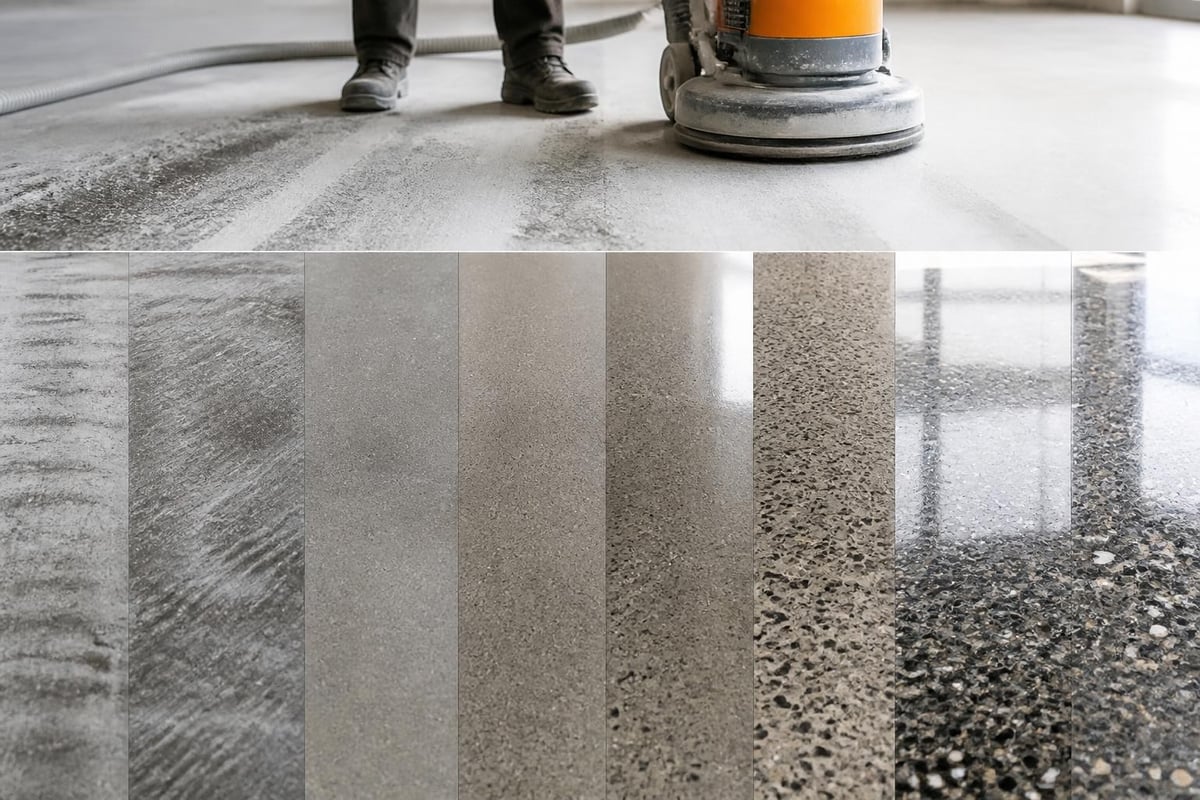
Concrete polishing has become the preferred flooring solution for commercial and industrial facilities across South East Queensland, offering unmatched durability and aesthetic appeal. This mechanical grinding and densifying process transforms ordinary concrete slabs into high-performance floors that withstand heavy traffic, resist stains, and require minimal maintenance. For warehouse operators, retail store managers, and factory owners, understanding the nuances of concrete polishing is essential when making informed flooring decisions that impact both operational efficiency and long-term costs.
Understanding the Concrete Polishing Process
The concrete polishing process involves multiple stages of grinding and refining concrete surfaces using progressively finer diamond abrasives. This systematic approach removes surface imperfections, exposes aggregate, and creates increasingly reflective finishes.
Initial surface preparation begins with assessing the concrete slab for cracks, spalling, or existing coatings. Any repairs must be completed before polishing commences, as defects will become more visible as the surface is refined. Existing coatings, adhesives, or sealers require removal through aggressive grinding with coarse-grit diamond tooling.
Metal-Bond Diamond Grinding
The first grinding stage employs metal-bond diamonds in grits ranging from 16 to 120. These aggressive abrasives cut through the concrete surface, removing approximately 1-3mm of material depending on the desired aggregate exposure level. For commercial applications, this stage is critical for achieving proper surface flatness.
Key grinding objectives include:
- Removing surface laitance and weak concrete layers
- Exposing aggregate to the specified depth
- Correcting minor surface irregularities
- Creating a uniform surface profile for subsequent steps
The grinding process generates significant dust and debris, requiring proper containment systems and dust extraction equipment. Professional contractors use planetary grinders equipped with vacuum systems to maintain clean working environments, particularly important in occupied facilities.
Densification and Hardening
After initial grinding, liquid chemical densifiers penetrate the concrete surface to react with calcium hydroxide, forming calcium silicate hydrate crystals. This chemical reaction permanently hardens the concrete matrix, increasing surface density and abrasion resistance.
Densifiers serve multiple critical functions in the polishing sequence. They fill microscopic pores within the concrete, reducing porosity and preventing future penetration of liquids, oils, and stains. The hardened surface accepts finer polishing stages more effectively, enabling higher levels of clarity and reflection.
Application timing varies based on concrete age, porosity, and environmental conditions. Newly placed concrete typically requires 28 days of curing before densification, whilst older slabs may need multiple densifier applications to achieve optimal results.
Polishing Levels and Finish Options
The different levels of concrete polishing are categorised by the degree of sheen and aggregate exposure, creating distinct aesthetic outcomes for various commercial applications.
| Finish Level | Grit Range | Sheen Description | Typical Applications |
|---|---|---|---|
| Level 1 (Flat) | 100-400 | Matte, low reflection | Industrial workshops, factories |
| Level 2 (Satin) | 400-800 | Moderate sheen | Warehouses, service areas |
| Level 3 (Semi-Polished) | 800-1500 | Noticeable gloss | Retail stores, showrooms |
| Level 4 (Highly Polished) | 1500-3000 | Mirror-like reflection | Premium retail, offices |
Aggregate exposure depth represents another critical specification decision. Cream finishes expose minimal aggregate, showing primarily the cement paste surface. Salt-and-pepper finishes reveal fine aggregate particles across the entire surface. Full aggregate exposure showcases larger stones and creates distinctive terrazzo-like appearances.
Resin-Bond Polishing Stages
Following densification, resin-bond diamond pads in progressively finer grits refine the surface to the specified polish level. This sequence typically progresses through 100, 200, 400, 800, 1500, and 3000 grit stages, though the exact sequence depends on desired outcomes.
Each polishing pass removes scratches from the previous grit level whilst creating finer scratches that reflect light more uniformly. The transition between grit levels follows a critical rule: never skip more than one grit level, as this creates visible scratching that subsequent passes cannot eliminate. Polished concrete flooring delivers exceptional results when proper grit progressions are followed throughout the entire process.


Critical Specifications for Commercial Applications
Floor flatness and levelness requirements significantly impact polished concrete performance in commercial settings. FF/FL numbers measure surface variations that affect equipment operation, particularly in warehouses with narrow-aisle forklifts and automated storage systems.
Standard FF/FL specifications for commercial floors:
- FF35/FL25 – Minimum standard for conventional foot traffic and general storage
- FF45/FL35 – Recommended for standard warehouse operations with forklifts
- FF60/FL50 – Required for narrow-aisle racking systems and precision equipment
- FF80/FL60 – Specified for high-tech facilities and specialised material handling
Existing concrete slabs rarely meet higher flatness standards without correction. Grinding removes high spots but cannot fill low areas, meaning severely uneven floors may require overlayment systems before polishing becomes viable.
Substrate Condition Requirements
Concrete age, strength, and composition directly affect polishing outcomes. Slabs must achieve minimum compressive strength of 20 MPa before polishing, though 25-30 MPa provides better results. Newly placed concrete requires adequate curing time to develop sufficient surface hardness.
Hard aggregate content influences polishing characteristics substantially. Concrete with high-quality hard aggregates like granite or quartz polishes more effectively than mixes containing soft limestone or recycled aggregates. The aggregate hardness affects grinding speed, tooling wear, and final surface clarity.
Surface moisture content must remain below 4% by weight for successful densifier penetration and proper chemical reactions. Excessive moisture prevents densifiers from entering the concrete matrix, resulting in inadequate hardening and poor polish retention.
Maintenance and Performance Characteristics
Polished concrete floors require significantly less maintenance than alternative commercial flooring systems, though proper care extends service life and maintains appearance. Daily dust mopping or auto-scrubbing with neutral pH cleaners removes dirt and debris without damaging the polished surface.
The hardened, densified surface resists chemical spills, tyre marks, and abrasion from heavy traffic better than untreated concrete. However, periodic repolishing with high-speed burnishing equipment restores clarity as surfaces accumulate micro-scratches from normal use. Burnishing frequencies range from quarterly for high-traffic retail areas to annually for moderate-use warehouses.
Comparing Performance Metrics
Polished concrete delivers distinct advantages over coated flooring systems in specific commercial applications. The permanent nature of polished surfaces eliminates concerns about coating failures, delamination, or periodic recoating requirements that affect epoxy flooring lifespan in demanding environments.
| Performance Factor | Polished Concrete | Coated Systems |
|---|---|---|
| Expected Lifespan | 20+ years | 5-15 years |
| Re-coating Required | No (periodic burnishing) | Yes (complete recoat) |
| Chemical Resistance | Good to Excellent | Excellent |
| Light Reflectivity | Up to 90% | 60-80% |
| Slip Resistance (Dry) | Moderate | Varies by coating |
| Installation Time | 3-5 days per 1000m² | 2-4 days per 1000m² |
Light reflectivity improvements reduce artificial lighting requirements in warehouses and industrial facilities by 20-30%, contributing to measurable energy savings. The reflective surface distributes natural and artificial light more effectively throughout the space, improving visibility and workplace safety.
Cost Considerations and Return on Investment
Initial concrete polishing costs vary based on surface conditions, specified finish levels, and project size. Smaller projects under 500m² typically cost more per square metre due to mobilisation expenses and equipment setup requirements. Larger warehouse floors exceeding 5,000m² achieve better pricing through economies of scale.

Surface preparation represents the most variable cost component. Heavily damaged concrete with extensive cracking, spalling, or uneven surfaces requires additional grinding passes, crack repairs, and possible patching, increasing overall project costs by 30-50%. Conversely, new construction slabs in good condition with proper specifications enable efficient polishing at standard rates.
Calculating Total Cost of Ownership
Life-cycle cost analysis reveals polished concrete's financial advantages over 15-20 year periods. The commercial surface polishing approach eliminates recurring recoating expenses that accumulate substantially with coated flooring systems.
Long-term cost components include:
- Initial installation investment
- Annual maintenance supplies (cleaners, buffing pads)
- Periodic burnishing labour (quarterly to annually)
- Energy savings from improved light reflectivity
- Extended floor replacement timeline
Warehouses and industrial facilities typically recover polished concrete premium costs within 5-7 years through reduced maintenance expenses and extended service life. Retail environments benefit from enhanced aesthetics that contribute to improved customer perception and brand value, though these advantages resist precise quantification.
Industry Standards and Professional Requirements
The Construction Industry Training Board standards outline professional competencies required for concrete polishing specialists. Proper training ensures contractors understand equipment operation, diamond tooling selection, densifier chemistry, and safety protocols.
Professional concrete polishing demands specialised equipment investments including planetary grinders, dust extraction systems, and comprehensive diamond tooling inventories. Entry-level equipment packages cost $50,000-$80,000, whilst professional contractors operating multiple crews invest substantially more in high-performance machinery and backup equipment.
Quality Assurance and Testing
Gloss meter testing provides objective measurements of surface reflectivity, confirming specified finish levels have been achieved. These digital instruments measure light reflection at specific angles, generating numerical values that correspond to industry-standard polish classifications. Testing should occur at multiple locations across the floor to verify consistency.
Surface hardness testing using Mohs picks or rebound hammers verifies proper densification has occurred. Adequately densified concrete typically measures 7-8 on the Mohs scale, compared to 3-4 for untreated concrete surfaces. This hardness increase directly correlates with improved abrasion resistance and extended service life.
Moisture testing remains critical even after polishing completion. Relative humidity testing using in-situ probes confirms moisture levels remain within acceptable ranges, preventing future problems with topical treatments or subsequent flooring installations in adjacent areas.
Environmental and Sustainability Benefits
Polished concrete aligns with green building initiatives by utilising existing concrete slabs rather than adding new flooring materials. This approach reduces embodied carbon, eliminates adhesive emissions, and prevents flooring materials from entering waste streams at end-of-life.
The extended service life of polished concrete significantly reduces environmental impact compared to flooring systems requiring replacement every 5-10 years. Each replacement cycle involves manufacturing new materials, transportation emissions, installation energy, and disposal of removed flooring, creating cumulative environmental costs that polished concrete avoids.
Sustainability advantages include:
- Zero VOC emissions during installation and service life
- Reduced lighting energy consumption from improved reflectivity
- Elimination of chemical strippers and floor finishes
- Extended surface life minimising resource consumption
- Compatibility with radiant heating systems for energy efficiency
Indoor air quality improvements result from eliminating ongoing floor finish applications and the off-gassing associated with coated systems. This benefit proves particularly valuable in food process flooring applications where chemical contamination risks must be minimised.
Application-Specific Considerations
Different commercial environments demand specific polishing approaches optimised for operational requirements. Warehouse flooring prioritises durability and forklift traffic resistance over high-gloss finishes, typically specifying Level 2 satin finishes that balance performance with cost-effectiveness.
Retail applications emphasise aesthetic outcomes, often requesting Level 3 or Level 4 highly polished finishes with decorative saw-cutting patterns or exposed aggregate features. These installations require additional precision and finishing time, increasing project costs whilst delivering distinctive visual appeal that enhances brand presentation.
Industrial workshops and manufacturing facilities benefit from polished concrete's resistance to oil, chemicals, and impact damage. The densified surface prevents petroleum products from penetrating the concrete, enabling easy cleanup of spills that would permanently stain untreated floors. This characteristic makes polished concrete ideal for mechanical workshop flooring applications.
Common Challenges and Solutions
Existing coating removal presents the most time-consuming challenge in concrete polishing projects. Thick epoxy coatings, urethanes, or multiple layers of accumulated floor finishes require aggressive grinding that extends project timelines and increases tooling costs. Contractors must evaluate coating thickness and adhesion strength during initial assessments to provide accurate quotations and schedules.
Crack repair strategies vary based on crack width and structural significance. Hairline shrinkage cracks under 1mm width often integrate visually into polished surfaces, particularly in aggregate-exposed finishes. Larger structural cracks require routing, cleaning, and filling with polyurea or epoxy repair mortars before polishing commences, creating visible repair lines that remain apparent in the finished floor.
Joint deterioration in older concrete slabs requires reconstruction before polishing. Spalled or damaged control joints and construction joints need removal of deteriorated concrete, cleaning, and filling with semi-rigid polyurea joint fillers that accommodate movement whilst providing a stable polishing surface. Proper joint treatment prevents future problems whilst maintaining the floor's structural integrity.
Managing Client Expectations
Surface appearance variations are inherent characteristics of polished concrete that distinguish it from homogeneous coated systems. Concrete colour variations, aggregate distribution differences, and repair visibility should be discussed during project planning to establish realistic expectations. Sample panels demonstrating proposed finishes help clients visualise outcomes before full-scale work begins.
Polish level maintenance requirements must be clearly communicated based on specified finish levels. Higher gloss finishes show scratches and wear patterns more readily than lower sheen options, potentially requiring more frequent burnishing to maintain appearance. Commercial clients should understand that Level 4 highly polished floors demand greater maintenance commitment than Level 2 satin finishes.
Concrete polishing delivers unmatched performance for commercial and industrial facilities, combining exceptional durability with low maintenance requirements and sustainable credentials. The process demands professional expertise, proper equipment, and meticulous attention to substrate conditions and specification requirements. Superior Concrete Finishes brings decades of commercial flooring experience to warehouse, retail, factory, and industrial projects across South East Queensland, delivering professionally polished concrete and epoxy flooring solutions backed by full QBCC licensing and insurance coverage.

Joshua Miller has over 15 years of experience in the commercial concrete flooring industry, specialising in epoxy flooring systems and polished concrete solutions for warehouses, factories, retail spaces and commercial developments. Joshua and his team work closely with builders, property owners and facility managers across South East Queensland to deliver durable, cost-effective commercial flooring systems for warehouses, industrial facilities, commercial kitchens, retail stores and large commercial developments.
Major builders and organisations Josh has led projects on include McNab, Hutchinson Builders, IKEA, Queensland Rail, University of Queensland, ADCO, Tomkins Commercial, Bunnings, OfficeWorks, Spotlight, and Anaconda.
If you're planning a project and need advice on the best commercial concrete flooring solution, contact Josh or one of the team at Superior Concrete Finishes.
-
 info@superiorconcretefinishes.com.au
-
1300 789 740
-
Connect with Josh on
LinkedIn


 Connect with Josh on