Concrete sealing remains one of the most critical maintenance procedures for commercial and industrial facilities across South East Queensland. Whether you’re managing a warehouse, factory, retail store, or commercial car park, understanding concrete sealing how to properly protect your concrete surfaces can extend their lifespan by decades whilst reducing maintenance costs significantly. This comprehensive guide walks through the professional approach to sealing concrete, covering everything from surface preparation to final application techniques that deliver lasting results in demanding commercial environments.
1. Understanding Why Concrete Sealing Matters: A Guide on Concrete Sealing How To
Unsealed concrete in commercial settings faces constant challenges. Heavy foot traffic, vehicle movement, chemical exposure, and Queensland’s variable weather conditions all contribute to concrete deterioration over time.
Concrete sealing how to starts with recognising that proper sealing provides multiple protective benefits:
- Prevention of moisture penetration that causes cracking and spalling
- Resistance to oil, chemicals, and stains common in industrial environments
- Reduced surface dusting that affects air quality and cleanliness
- Enhanced surface durability under heavy equipment and traffic
- Simplified cleaning and maintenance for facility managers
According to comprehensive industry guidelines, properly sealed concrete can last 30-40 years longer than unsealed surfaces. The investment in quality sealing pays dividends through reduced repair costs and extended surface life.
a. Types of Concrete Sealers for Commercial Applications
Selecting the right sealer depends on your facility’s specific requirements. Learn concrete sealing how to choose the best option, as different sealer types offer varying benefits for commercial concrete flooring applications.
| Sealer Type | Best For | Key Benefits | Typical Lifespan |
|---|---|---|---|
| Penetrating Sealers | Warehouses, car parks | Deep protection, breathable, natural finish | 5-10 years |
| Acrylic Sealers | Retail spaces, light commercial | Enhances appearance, affordable, easy application | 1-3 years |
| Epoxy Sealers | Heavy industrial, factories | Maximum durability, chemical resistance | 5-7 years |
| Polyurethane Sealers | Commercial kitchens, workshops | Abrasion resistance, flexibility | 5-10 years |
Penetrating sealers work by soaking into the concrete pores and creating a chemical barrier within the substrate. These are ideal for warehouse flooring applications where breathability matters.

2. Surface Preparation: The Foundation of Success
The most critical aspect of concrete sealing how to achieve professional results lies in thorough surface preparation. Inadequate preparation accounts for approximately 80% of sealer failures in commercial environments.
a. Initial Assessment and Cleaning
Begin by assessing your concrete surface condition for concrete sealing how to. Look for existing sealers, coatings, oil stains, cracks, or surface damage that requires attention before sealing.
Complete these preparation steps systematically:
- Remove all existing coatings, sealers, or contaminants
- Repair cracks, spalls, and surface defects
- Degrease oil stained areas thoroughly
- Pressure wash or mechanically clean the entire surface
- Allow complete drying (minimum 24-48 hours depending on conditions)
Professional surface preparation techniques emphasise that moisture content must be below 4% before sealer application. In Queensland’s humid climate, this may require extended drying periods or mechanical dehumidification in enclosed spaces.
b. Mechanical Surface Profiling
For commercial applications, mechanical profiling creates the optimal surface texture for sealer penetration and adhesion. This step is particularly important for factory flooring subjected to heavy loads.
- Diamond grinding removes surface laitance and opens concrete pores
- Shot blasting creates uniform surface profile quickly
- Acid etching (chemical profiling) suits smaller areas or specific applications
The concrete surface should feel slightly rough to the touch, similar to 120 grit sandpaper. This texture ensures maximum sealer penetration whilst maintaining a workable surface.
3. Selecting the Right Environmental Conditions
Concrete sealing how to timing significantly impacts results. Environmental factors during application directly affect sealer performance and longevity.
a. Temperature and Humidity Requirements
Most commercial grade sealers require specific application conditions for optimal curing and performance:
b. Ideal application parameters include:
- Ambient temperature between 10°C and 30°C
- Relative humidity below 85%
- Concrete surface temperature between 15°C and 27°C
- No rain forecast for 24-48 hours post application
- Adequate ventilation in enclosed spaces
Queensland’s subtropical climate presents unique challenges. Summer applications in South East QLD may require early morning or late afternoon scheduling to avoid excessive temperatures that cause rapid solvent evaporation and poor sealer penetration.

d. Moisture Testing Protocols
Moisture testing prevents the most common sealing failures. Even apparently dry concrete may contain excessive subsurface moisture that compromises sealer adhesion.
Standard testing methods include calcium chloride tests, relative humidity probes, or plastic sheet tests. For large commercial projects, electronic moisture meters provide rapid, reliable readings across extensive floor areas. Industry standards recommend testing multiple locations, particularly in areas with drainage or potential moisture sources.
4. Step by Step Application Process
Professional concrete sealing how to application requires systematic execution and attention to detail at every stage. Rushed or improper application wastes materials and produces substandard results.
a. Material Preparation and Equipment Setup
Before starting application, prepare all materials and equipment to ensure efficient workflow and consistent results across large commercial areas.
Essential application equipment:
- Low pressure sprayers or roller systems designed for sealers
- Edging tools for perimeter and detail work
- Measuring containers for accurate mixing
- Protective equipment (respirators, gloves, safety glasses)
- Adequate ventilation equipment for enclosed spaces
Mix only the sealer quantity you can apply within the manufacturer’s pot life. For commercial flooring projects spanning thousands of square metres, staged application prevents material waste and ensures consistent results.
b. First Coat Application Technique
Apply the first coat using consistent technique and coverage rates specified by the manufacturer. Most commercial sealers require application rates between 3-5 square metres per litre, though this varies significantly by sealer type and concrete porosity.
- Spray application offers the fastest coverage for large warehouse or car park areas. Maintain consistent spray patterns with 50% overlap between passes to prevent streaking or thin spots.
- Roller application provides better control for smaller areas or when working around equipment and fixtures. Use lint free rollers designed specifically for sealer application to avoid texture issues in the finished surface.
The detailed application guidance emphasises maintaining a wet edge throughout the application process. This prevents lap marks where dried and wet sealer overlap, creating visible lines in the finished surface.
c. Second Coat Application and Timing
Most commercial sealing specifications require two coats for adequate protection and longevity. The timing between coats critically affects final performance.
| Sealer Type | First Coat Dry Time | Second Coat Window | Full Cure Time |
|---|---|---|---|
| Penetrating | 2-4 hours | 4-24 hours | 24-72 hours |
| Acrylic | 1-2 hours | 2-4 hours | 24-48 hours |
| Epoxy | 4-8 hours | 6-24 hours | 5-7 days |
| Polyurethane | 2-4 hours | 4-12 hours | 3-7 days |
Apply the second coat perpendicular to the first coat direction. This cross pattern application ensures complete coverage and eliminates any thin spots or missed areas from the initial coat. For high traffic areas like mechanical workshop flooring, some specifications may call for a third coat in heavy use zones.
5. Quality Control and Inspection
Professional concrete sealing how to verification ensures the finished surface meets performance standards and project specifications.
a. Visual Inspection Criteria
Conduct thorough visual inspection under proper lighting conditions. Look for these quality indicators:
- Uniform sheen across the entire surface
- No pooling, streaking, or thin spots in the sealer film
- Complete coverage at edges, corners, and around fixtures
- No bubbling, blistering, or whitening indicating moisture issues
- Consistent colour (for tinted or coloured sealers)
Any deficiencies identified during inspection require correction before the sealer fully cures. Small areas can be spot-treated, whilst larger issues may necessitate additional coats or surface re-preparation.
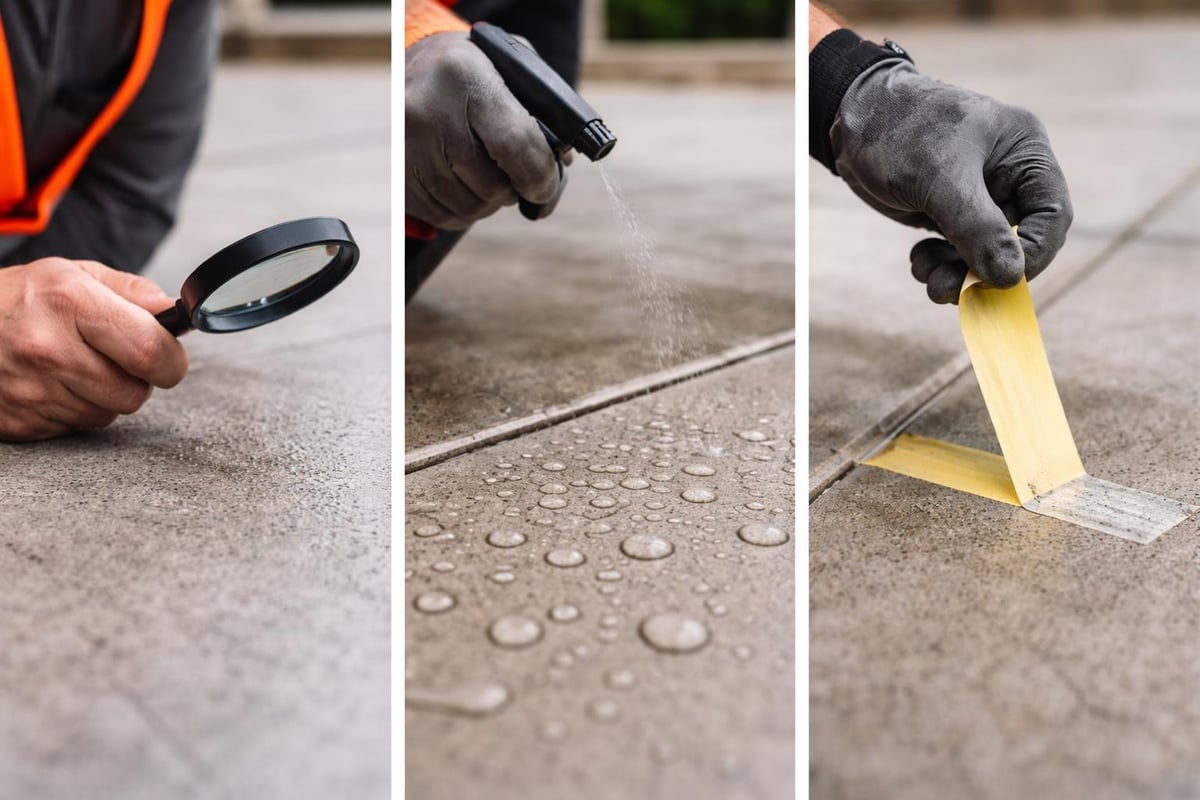
b. Performance Testing Methods
For critical commercial applications, simple field tests verify sealer performance before reopening the facility to full operations.
- Water beading test: Apply water droplets to several locations across the sealed surface. Properly sealed concrete should cause water to bead rather than soak into the surface within 5-10 minutes.
- Gloss measurement: Use a gloss meter to verify consistent finish across the surface, particularly important for retail or customer-facing areas where appearance matters.
- Adhesion testing: After full cure, perform simple tape tests in inconspicuous areas to verify proper sealer adhesion to the substrate.
6. Common Mistakes and How to Avoid Them
Even experienced contractors can encounter problems when concrete sealing how to procedures aren’t followed precisely. Understanding common pitfalls helps ensure successful outcomes.
a. Application Errors and Solutions
- Over application wastes material and can create a thick, soft film that wears poorly under traffic. Some contractors mistakenly believe heavier application provides better protection, but this actually reduces durability and can lead to delamination.
- Under application leaves the concrete inadequately protected and shortens sealer lifespan. Use measuring containers to track coverage rates and ensure specification compliance across the entire project area.
- Inadequate surface preparation remains the most frequent cause of sealer failure. Never skip preparation steps to save time or costs. The ultimate guide to sealing concrete identifies preparation as the single most important factor in long-term sealer performance.
b. Environmental Condition Mistakes
Applying sealer in unsuitable conditions guarantees problems. Cold temperatures slow curing and can cause cloudiness or blushing in the finished surface. Excessive heat causes rapid solvent evaporation, preventing proper penetration and adhesion.
High humidity creates moisture-related issues including blushing, whitening, and reduced adhesion. In Queensland’s coastal areas, monitor weather forecasts carefully and postpone application when conditions fall outside specifications.
7. Maintenance and Longevity Considerations
Proper maintenance extends sealed concrete performance and delays the need for resealing. Commercial facilities require systematic maintenance protocols to protect their flooring investment.
a. Routine Cleaning Protocols
- Daily or weekly cleaning should use pH-neutral cleaners specifically formulated for sealed concrete. Harsh chemicals, particularly acidic or high-alkaline products, can degrade sealers prematurely and compromise protection.
- Equipment selection matters significantly in commercial environments. Auto-scrubbers used in warehouses and retail spaces should use soft or medium brushes rather than aggressive pads that can abrade the sealer surface.
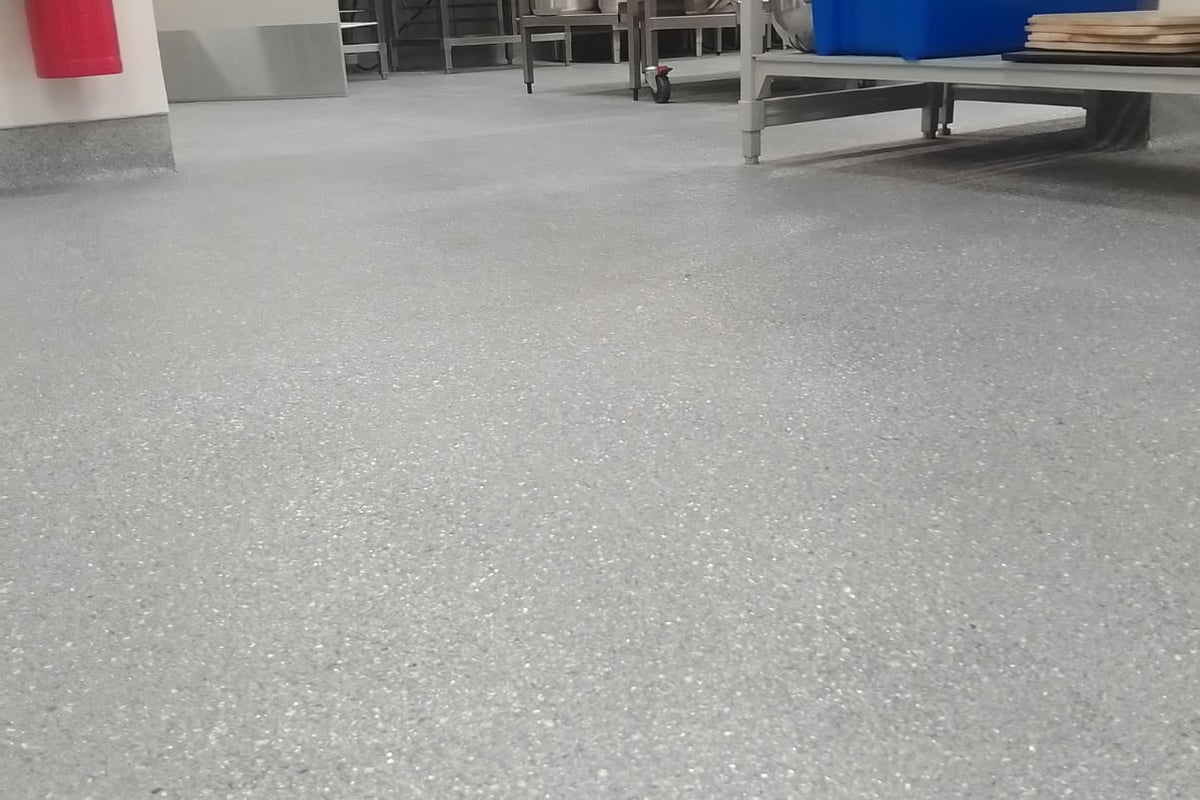
For facilities with epoxy flooring, regular cleaning maintains both appearance and performance. Epoxy systems provide exceptional durability whilst simplifying maintenance requirements compared to traditional sealed concrete.
b. Resealing Schedules and Indicators
Monitor sealed surfaces for wear indicators that signal the need for maintenance resealing:
- Increased water absorption (loss of water beading)
- Surface dusting or powder formation
- Colour fading or loss of sheen
- Increased staining susceptibility
- Visible wear patterns in high-traffic areas
Resealing frequency varies by traffic intensity, sealer type, and maintenance quality. Light commercial applications may require resealing every 3-5 years, whilst heavy industrial environments might need attention every 1-2 years.
The comprehensive resealing guidelines recommend scheduling maintenance before complete sealer breakdown occurs. Proactive resealing over existing sealer film requires minimal surface preparation compared to complete sealer removal and reapplication.
8. Advanced Techniques for Large Commercial Projects
Concrete sealing how to manage extensive commercial projects requires additional planning and specialised approaches beyond standard residential or small-scale applications.
a. Project Planning and Logistics
Large warehouse, factory, or car park flooring projects demand careful coordination to minimise operational disruption whilst maintaining quality standards.
- Staged application divides the project into manageable sections that can be completed sequentially. This approach allows partial facility operation during the sealing process and ensures consistent quality control across large areas.
- Material logistics become critical on projects requiring hundreds of litres of sealer. Verify product batch consistency, arrange adequate storage, and maintain proper environmental conditions for material staging.
- Access coordination with facility operations prevents conflicts and ensures safety. Many commercial facilities require overnight or weekend scheduling to avoid production downtime, necessitating adequate lighting and climate control equipment.
b. Quality Assurance Systems
Professional contractors implement systematic quality control throughout large projects:
- Pre-application substrate testing at regular intervals across the work area
- Coverage rate monitoring through measured material consumption
- Environmental data logging to document compliant application conditions
- Photographic documentation showing progression and quality verification
- Performance testing upon project completion
These systems provide accountability and documentation that protects both the contractor and facility owner whilst ensuring specification compliance throughout the project.
9. Specialised Applications and Considerations
Different commercial environments require adapted concrete sealing how to approaches based on specific performance requirements and exposure conditions.
a. Chemical Resistance Requirements
Facilities handling chemicals, fuels, or aggressive substances require sealers specifically formulated for chemical resistance. Commercial kitchens, automotive workshops, and manufacturing plants each present unique exposure challenges.
Chemical compatibility testing should be conducted before sealer selection. Request technical data sheets specifying resistance to the specific chemicals present in your facility. Generic sealers may fail quickly under chemical exposure, whilst specialised products provide long-term protection.
b. Temperature Extremes and Thermal Cycling
Queensland facilities experience significant temperature variations, particularly in unconditioned warehouses and outdoor car parks. Sealers must accommodate thermal expansion and contraction without cracking or delaminating.
Flexible sealer formulations perform better under thermal cycling than rigid systems. Polyurethane based sealers typically offer superior flexibility compared to epoxies or acrylics, making them ideal for environments with significant temperature fluctuations.
10. Safety Protocols and Regulatory Compliance
Professional concrete sealing how to operations must comply with workplace health and safety requirements whilst protecting both applicators and facility occupants.
a. Personal Protective Equipment Requirements
Sealer application involves exposure to volatile organic compounds (VOCs) and chemical components requiring appropriate protection:
- Respiratory protection using organic vapour cartridges or supplied air systems
- Skin protection including chemical-resistant gloves and protective clothing
- Eye protection with chemical splash goggles or face shields
- Ventilation equipment ensuring adequate air changes in enclosed spaces
Queensland workplace safety regulations mandate proper training, documented safety procedures, and availability of safety data sheets for all products used on commercial jobsites, including guidance on concrete sealing how to.
b. VOC Regulations and Environmental Considerations
Low-VOC and water-based sealers have become increasingly popular for indoor commercial applications. These formulations reduce environmental impact and improve indoor air quality whilst providing comparable performance to solvent-based products.
Verify sealer compliance with current environmental regulations and building occupancy standards. Some facilities, particularly retail stores and food processing areas, may have specific requirements limiting VOC content or requiring particular certifications.
Understanding concrete sealing how to properly protect commercial concrete surfaces ensures your facility maintains optimal performance and appearance for decades. From thorough surface preparation through systematic application and ongoing maintenance, each step contributes to long-term durability and reduced lifecycle costs. If you’re managing commercial or industrial facilities across South East Queensland and need expert concrete flooring solutions, Superior Concrete Finishes brings decades of specialised experience in epoxy flooring and polished concrete applications for warehouses, factories, retail stores, and industrial facilities throughout the region.

Joshua Miller has over 15 years of experience in the commercial concrete flooring industry, specialising in epoxy flooring systems and polished concrete solutions for warehouses, factories, retail spaces and commercial developments. Joshua and his team work closely with builders, property owners and facility managers across South East Queensland to deliver durable, cost-effective commercial flooring systems for warehouses, industrial facilities, commercial kitchens, retail stores and large commercial developments.
Major builders and organisations Josh has led projects on include McNab, Hutchinson Builders, IKEA, Queensland Rail, University of Queensland, ADCO, Tomkins Commercial, Bunnings, OfficeWorks, Spotlight, and Anaconda.
If you're planning a project and need advice on the best commercial concrete flooring solution, contact Josh or one of the team at Superior Concrete Finishes.
-
 info@superiorconcretefinishes.com.au
-
1300 789 740
-
Connect with Josh on
LinkedIn


 Connect with Josh on