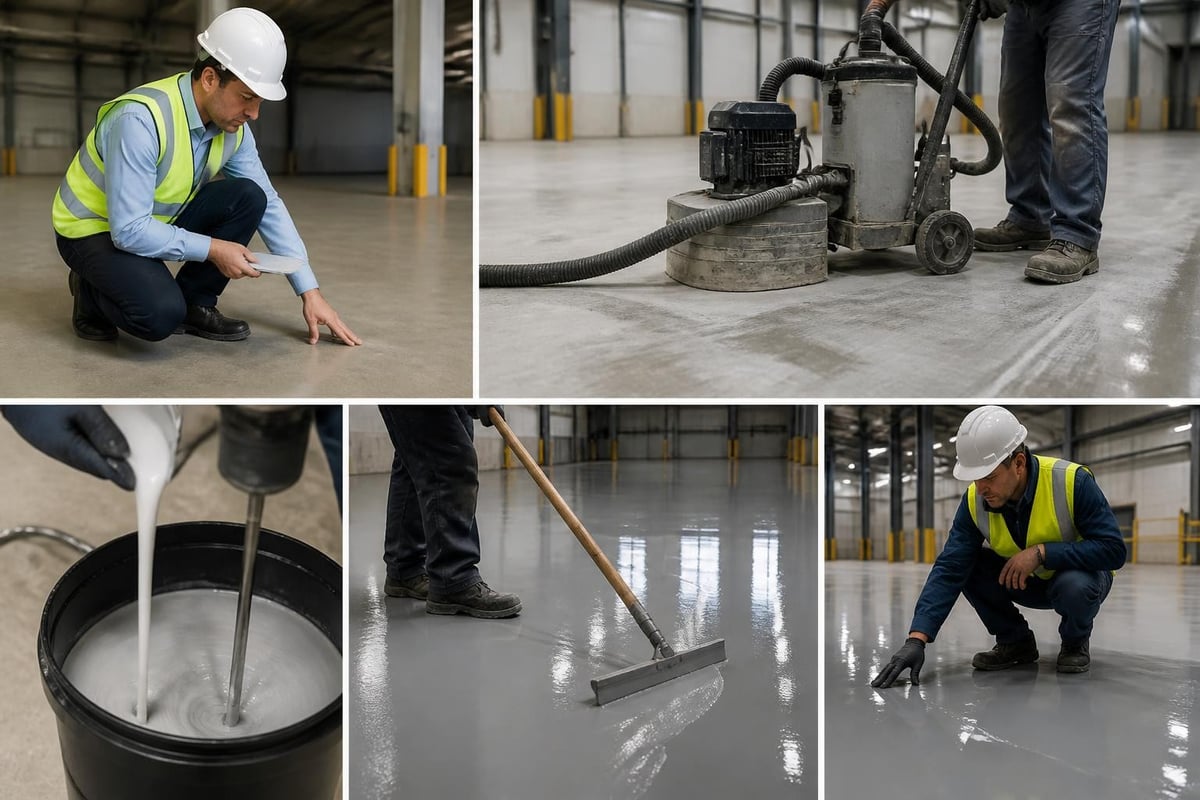
Choosing the right epoxy coating company can make the difference between a flooring system that lasts decades and one that fails within months. For commercial and industrial facilities across South East Queensland, epoxy flooring represents a significant investment in both operational efficiency and workplace safety. The expertise, equipment, and processes employed by your selected contractor directly impact the performance, durability, and long-term value of your concrete flooring system. Understanding what separates professional epoxy coating companies from inexperienced operators helps facility managers, property developers, and business owners make informed decisions that protect their investment and minimize downtime.
What Defines a Professional Epoxy Coating Company
A legitimate epoxy coating company operates with proper licensing, comprehensive insurance coverage, and demonstrated expertise in commercial applications. In Queensland, contractors working on commercial projects must hold a valid QBCC licence, which ensures they meet minimum standards for technical competence and financial accountability.
Professional companies specialise in specific market segments rather than attempting to serve all sectors. Commercial and industrial epoxy applications differ substantially from residential work in terms of:
- Substrate preparation requirements that account for heavy traffic and industrial loads
- Product selection criteria based on chemical resistance and operational demands
- Application techniques suited to large-scale commercial environments
- Quality control processes that ensure consistent results across thousands of square metres
The equipment inventory maintained by a reputable epoxy coating company reflects their commitment to professional standards. Industrial grinders, shot blasters, moisture meters, and climate control systems represent significant capital investments that separate serious contractors from weekend operators.
Industry Experience and Project Portfolio
Decades of experience within the commercial flooring sector provides contractors with invaluable knowledge about substrate conditions, product performance, and application challenges specific to different facility types. An established epoxy coating company accumulates expertise through exposure to diverse project scenarios including warehouses, factories, retail stores, commercial kitchens, and carparks.
When evaluating potential contractors, request detailed information about their completed projects within your specific industry segment. A company with extensive warehouse flooring experience understands the unique requirements of logistics facilities, while those specializing in commercial kitchens recognize the importance of antimicrobial properties and thermal shock resistance.
| Facility Type | Key Performance Requirements | Typical System Thickness |
|---|---|---|
| Warehouses | Impact resistance, forklift traffic durability | 3-6mm |
| Factories | Chemical resistance, oil rejection | 2-5mm |
| Commercial Kitchens | Thermal shock resistance, antimicrobial properties | 4-9mm |
| Retail Stores | Aesthetic finish, foot traffic durability | 2-3mm |
| Carparks | UV stability, slip resistance | 2-4mm |
Surface Preparation Standards and Concrete Assessment
The foundation of any successful epoxy system begins with thorough concrete preparation, an area where professional epoxy coating companies distinguish themselves through systematic assessment protocols. Before any resin touches the substrate, comprehensive testing determines moisture levels, surface porosity, contamination presence, and structural integrity.
Professional contractors employ multiple testing methodologies to establish baseline conditions:
- Calcium chloride tests measure moisture vapor emission rates
- Concrete pull-off tests verify substrate tensile strength
- pH testing identifies alkalinity levels that affect adhesion
- Visual inspection documents cracks, spalling, and existing coatings
Understanding applying protective epoxy coating requirements begins with recognizing that concrete preparation accounts for approximately 70% of project success. An experienced epoxy coating company allocates appropriate time and resources to this critical phase rather than rushing toward application.

Mechanical Preparation Techniques
Shot blasting, diamond grinding, and scarification represent the primary mechanical preparation methods employed by professional contractors. Each technique serves specific purposes based on substrate condition, contamination type, and desired surface profile.
Shot blasting removes surface laitance while creating an ideal anchor profile for epoxy adhesion. This method excels in warehouse and factory environments where efficiency matters across large surface areas. Diamond grinding provides more precise control over surface preparation, making it suitable for retail spaces and areas requiring specific profile depths.
The surface profile achieved through mechanical preparation directly influences epoxy performance. Professional epoxy coating companies understand that different resin systems require specific substrate profiles, typically measured using replica tape or surface profile gauges. This attention to detail ensures optimal mechanical bond between concrete and coating.
Resin Selection and System Design
Product specification represents another area where expertise separates professional epoxy coating companies from general contractors. Commercial applications demand specific performance characteristics based on operational requirements, chemical exposure, traffic patterns, and environmental conditions.
Epoxy systems vary significantly in formulation, with key differentiators including:
- Solids content (100% solids versus water-based or solvent-based)
- Cure mechanisms (ambient cure versus heat-accelerated)
- Chemical resistance (specific to acids, alkalis, solvents, or oils)
- Mechanical properties (compressive strength, flexural strength, impact resistance)
For Epoxy Flooring applications in industrial environments, 100% solids epoxy systems provide superior durability and chemical resistance compared to water-based alternatives. These high-performance systems create a harder, more durable surface capable of withstanding forklift traffic, heavy machinery, and aggressive cleaning protocols.

The thickness requirements for commercial epoxy systems depend entirely on operational demands and substrate conditions. As detailed in resources about epoxy floor thickness, broadcast systems typically range from 2-6mm while troweled applications can exceed 9mm in high-impact zones or areas requiring chemical containment.
Climate Control and Application Timing
Professional epoxy coating companies maintain strict environmental controls during application phases. Temperature and humidity directly affect cure rates, adhesion, and final surface quality. Most commercial epoxy systems require ambient temperatures between 10-30°C and relative humidity below 85% for optimal performance.
Projects in commercial facilities often require coordination with operational schedules to minimize business disruption. An experienced epoxy coating company develops detailed application schedules that account for cure times, ventilation requirements, and staged access protocols. This planning ensures facilities can resume operations as quickly as possible while maintaining system integrity.
Quality Assurance and Testing Protocols
Reputable epoxy coating companies implement comprehensive quality control measures throughout every project phase. These protocols protect both the contractor and client by documenting compliance with specifications and identifying potential issues before they compromise system performance.
Standard quality assurance practices include:
- Pre-application documentation (moisture readings, substrate testing, environmental conditions)
- Mix ratio verification (using calibrated scales and documented batching procedures)
- Application thickness monitoring (wet film gauges and dry film measurements)
- Adhesion testing (pull-off tests on cured samples)
- Final inspection (documenting coverage, finish quality, and defect remediation)
The importance of mixing and applying epoxy best practices cannot be overstated in commercial applications. Improper mix ratios, inadequate blending, or contamination during application leads to premature failure regardless of product quality or substrate preparation.
Documentation and Warranty Support
Professional contractors provide comprehensive project documentation including material data sheets, application records, environmental monitoring logs, and photographic evidence of completed work. This documentation proves invaluable for facility maintenance planning and warranty claims if issues arise.
Warranty terms vary significantly among epoxy coating companies, with coverage periods ranging from one to ten years depending on system type and application conditions. Understanding warranty limitations, exclusion clauses, and maintenance requirements helps facility managers establish realistic performance expectations.
Commercial Applications and Industry-Specific Requirements
Different commercial sectors impose unique demands on epoxy flooring systems, requiring specialized knowledge from contractors serving these markets. A professional epoxy coating company tailors product selection, system design, and application techniques to match specific industry requirements.
Warehouse and logistics facilities require maximum durability against forklift traffic, pallet jack movement, and impact from dropped materials. These environments benefit from high-compressive-strength epoxy systems with enhanced impact resistance, often incorporating aggregate broadcast layers for additional mechanical strength and slip resistance.
Manufacturing and factory environments demand chemical resistance tailored to specific production processes. An epoxy coating company working in these sectors maintains extensive knowledge of chemical compatibility, selecting resin formulations that resist degradation from oils, solvents, acids, or caustic cleaning agents. Resources about using epoxy coatings on concrete provide detailed guidance on matching systems to chemical exposure scenarios.
| Industry Sector | Primary Challenges | Recommended System Features |
|---|---|---|
| Food Processing | Thermal shock, bacteria resistance, frequent washdowns | Antimicrobial additives, thermal stability, seamless construction |
| Automotive Workshops | Oil and solvent resistance, tire marks, hot tire pickup | Chemical resistance, high gloss for visibility, stain rejection |
| Pharmaceutical | Cleanliness standards, static control, contamination prevention | Electrostatic discharge properties, seamless surfaces, easy cleaning |
| Retail | Aesthetic appeal, foot traffic durability, maintenance | Decorative options, scratch resistance, low maintenance |
Traffic Volume and Loading Considerations
Commercial facilities experience vastly different traffic patterns compared to residential applications, requiring epoxy coating companies to design systems that accommodate specific load profiles. Point loading from machinery, dynamic loading from vehicles, and abrasion from pedestrian traffic each stress coating systems differently.
Professional contractors calculate loading requirements based on facility operations, incorporating safety factors that account for unexpected impacts or future operational changes. This engineering approach to system design prevents premature failure and extends service life, ultimately providing better value than generic coating applications.
For facilities requiring durable epoxy floors capable of withstanding extreme conditions, enhanced systems incorporating aggregate broadcasting, multiple resin layers, and protective topcoats deliver the necessary performance characteristics.
Project Management and Commercial Coordination
Large-scale commercial projects require sophisticated project management capabilities that extend beyond technical application skills. An experienced epoxy coating company coordinates with multiple stakeholders including property managers, builders, architects, and operational staff to ensure seamless project delivery.
Key project management competencies include:
- Scheduling flexibility that accommodates operational requirements and seasonal constraints
- Safety compliance meeting WorkSafe Queensland standards and site-specific protocols
- Communication systems providing regular updates and addressing concerns promptly
- Resource allocation ensuring adequate personnel and equipment for timely completion
- Risk management identifying potential complications and developing mitigation strategies
The logistical complexity of commercial projects often requires night or weekend work to minimize business disruption. Professional epoxy coating companies maintain crews capable of working extended hours while maintaining quality standards and safety protocols. This operational flexibility proves essential for facilities that cannot afford extended downtime.
Insurance and Liability Protection
Comprehensive insurance coverage represents a non-negotiable requirement for any epoxy coating company working on commercial projects. Public liability insurance protects clients against property damage or injury claims arising from contractor activities, while professional indemnity insurance covers design errors or specification failures.
Queensland commercial projects typically require minimum public liability coverage of $10-20 million depending on project scope and client requirements. Contractors working in specialized environments like commercial kitchens or pharmaceutical facilities may need additional coverage for contamination risks or business interruption.
Maintenance Planning and Long-Term Performance
The relationship between a professional epoxy coating company and their clients extends beyond project completion. Proper maintenance significantly impacts system longevity, and experienced contractors provide detailed care instructions tailored to specific facility operations.
Standard maintenance protocols for commercial epoxy floors include:
- Regular cleaning using pH-neutral detergents and appropriate equipment
- Periodic recoating of high-traffic areas to maintain protective layer
- Damage repair addressing chips, cracks, or delamination promptly
- Traffic management implementing protocols that minimize unnecessary wear
Professional contractors offer maintenance programs that include periodic inspections, minor repairs, and recoating services. These programs help facility managers budget predictably for flooring maintenance while ensuring systems perform optimally throughout their service life.
Understanding realistic service life expectations helps clients make informed decisions about system selection and budgeting. While basic epoxy coatings in light-duty environments may last 5-7 years, properly specified and maintained systems in well-managed facilities routinely exceed 15-20 years of service life.
Performance Monitoring and Remediation
Proactive monitoring identifies potential issues before they compromise system integrity or facility operations. An attentive epoxy coating company educates clients about warning signs including surface dulling, increased porosity, edge lifting, or chemical staining that indicate maintenance requirements.
When remediation becomes necessary, professional contractors assess underlying causes rather than simply addressing surface symptoms. This diagnostic approach identifies whether issues stem from substrate moisture, chemical attack, mechanical damage, or application defects, enabling appropriate corrective measures.
Cost Factors and Value Considerations
Pricing structures among epoxy coating companies vary based on project scope, system specification, site conditions, and contractor expertise. Understanding cost components helps clients evaluate quotes objectively and identify true value rather than simply selecting the lowest price.
Primary cost drivers include:
- Surface preparation intensity (basic grinding versus extensive repair and leveling)
- System thickness and complexity (single coat versus multi-layer systems)
- Product quality (commodity-grade versus premium industrial formulations)
- Project logistics (access restrictions, working hours, site conditions)
- Warranty and support (basic completion versus extended performance guarantees)
Experienced epoxy coating companies provide detailed, itemized quotes that clearly explain cost components and system specifications. This transparency enables meaningful comparison between proposals and prevents misunderstandings about scope or deliverables.
The initial cost difference between basic and premium epoxy systems often appears significant in absolute terms but modest when calculated as cost per square metre per year of service life. Premium systems that last twice as long while requiring less maintenance deliver superior value despite higher upfront investment.
Selecting the right epoxy coating company determines whether your commercial flooring investment delivers decades of reliable service or requires premature replacement. By focusing on proven expertise, proper licensing, comprehensive preparation protocols, and industry-specific experience, facility managers ensure their concrete floors meet operational demands while providing lasting value. Superior Concrete Finishes brings decades of commercial flooring expertise to warehouses, factories, retail stores, and industrial facilities throughout South East Queensland, combining technical knowledge with professional project delivery to create epoxy and polished concrete systems that protect your investment and support your operations.

Joshua Miller has over 15 years of experience in the commercial concrete flooring industry, specialising in epoxy flooring systems and polished concrete solutions for warehouses, factories, retail spaces and commercial developments. Joshua and his team work closely with builders, property owners and facility managers across South East Queensland to deliver durable, cost-effective commercial flooring systems for warehouses, industrial facilities, commercial kitchens, retail stores and large commercial developments.
Major builders and organisations Josh has led projects on include McNab, Hutchinson Builders, IKEA, Queensland Rail, University of Queensland, ADCO, Tomkins Commercial, Bunnings, OfficeWorks, Spotlight, and Anaconda.
If you're planning a project and need advice on the best commercial concrete flooring solution, contact Josh or one of the team at Superior Concrete Finishes.
-
 info@superiorconcretefinishes.com.au
-
1300 789 740
-
Connect with Josh on
LinkedIn


 Connect with Josh on