
Selecting the right epoxy floor coating company represents a critical decision for commercial and industrial facility managers across Australia. The quality of your flooring contractor directly impacts project outcomes, from surface preparation and material selection to long-term durability and maintenance requirements. With commercial spaces such as warehouses, factories, retail stores, and commercial kitchens requiring specialised flooring solutions, partnering with an experienced contractor ensures your investment delivers lasting value. This comprehensive guide explores the essential factors to consider when evaluating flooring contractors, helping you make informed decisions that align with your operational requirements and budget constraints.
Understanding Epoxy Floor Coating Services
An epoxy floor coating company specialises in applying resinous systems to concrete surfaces, creating durable, chemical-resistant floors suitable for demanding commercial and industrial environments. These contractors possess the technical knowledge and equipment necessary to properly prepare substrates, mix epoxy formulations, and apply coatings that meet specific performance standards.
Professional epoxy contractors work across various sectors, including manufacturing facilities, automotive workshops, food processing plants, and logistics centres. Each application requires careful assessment of factors such as traffic loads, chemical exposure, slip resistance requirements, and aesthetic preferences.
Core Service Components
Reputable contractors offer comprehensive services that extend beyond simple coating application:
- Surface preparation: Grinding, shot blasting, or diamond polishing to create optimal substrate adhesion
- Moisture testing: Evaluating concrete moisture levels to prevent coating failure
- Crack repair: Addressing structural defects before application
- System selection: Recommending appropriate epoxy formulations based on usage patterns
- Quality assurance: Testing and inspection protocols throughout the installation process
The preparation phase often consumes more time than the actual coating application, yet it determines the longevity and performance of the finished floor. Contractors who rush this critical stage compromise the entire project.
Licensing and Insurance Requirements
QBCC Licensing Standards
In Queensland, any epoxy floor coating company performing commercial work must hold appropriate Queensland Building and Construction Commission (QBCC) licensing. This regulatory requirement protects clients by ensuring contractors meet minimum competency standards and financial capacity thresholds.
Licensed contractors demonstrate their commitment to industry standards and professional accountability. Before engaging any flooring contractor, verify their QBCC license status and confirm it remains current. This simple step prevents potential legal complications and ensures access to consumer protection mechanisms.
Insurance Coverage Essentials
Comprehensive insurance coverage represents another non-negotiable requirement when selecting contractors:
| Insurance Type | Coverage Purpose | Why It Matters |
|---|---|---|
| Public Liability | Property damage and injury claims | Protects your business from third-party claims |
| Professional Indemnity | Design and specification errors | Covers mistakes in technical recommendations |
| Workers Compensation | Employee injuries on-site | Ensures injured workers receive support |
| Contract Works | Damage to works in progress | Protects the project investment |
Request current certificates of currency for all insurance policies before project commencement. Contractors unwilling to provide this documentation should raise immediate concerns about their professional standing.
Evaluating Technical Expertise
Industry Experience Indicators
Experience in commercial and industrial flooring separates competent contractors from those still developing their capabilities. An established epoxy floor coating company brings decades of collective knowledge to each project, having encountered and solved diverse challenges across multiple sectors.
When assessing experience, consider these specific factors:
- Years in business: Longevity suggests consistent quality and customer satisfaction
- Project portfolio diversity: Experience across various industries demonstrates adaptability
- Team qualifications: Individual technician certifications and training credentials
- Equipment quality: Investment in professional-grade preparation and application tools
- Material partnerships: Relationships with reputable epoxy manufacturers
Request references from recent commercial projects similar to your requirements. Speaking directly with previous clients provides valuable insights into contractor reliability, communication quality, and problem-solving abilities.

Understanding Material Specifications
Professional contractors understand specifications and performance requirements for resinous flooring systems and can explain material choices in practical terms. They should articulate why specific epoxy formulations suit your application better than alternatives.
The conversation should cover system thickness, chemical resistance properties, expected service life, and maintenance protocols. Contractors who cannot clearly explain these technical aspects may lack the depth of knowledge required for complex commercial installations.
Project Assessment and Quotation Process
Comprehensive Site Evaluation
A thorough site assessment forms the foundation of accurate project quotations. Professional contractors conduct detailed inspections that examine:
- Existing concrete condition and structural integrity
- Current surface contamination or previous coatings
- Drainage patterns and moisture concerns
- Ambient environmental conditions
- Access limitations and logistical constraints
- Operational downtime requirements
This evaluation process typically requires one to two hours for standard commercial spaces. Contractors offering quotes without visiting your site cannot accurately assess project complexity or potential challenges.
Transparent Pricing Structures
Professional quotations break down costs across material, labour, surface preparation, and project management components. This transparency enables informed comparisons between contractors and helps identify unusually low quotes that may indicate corner-cutting or hidden fees.
Be cautious of quotes significantly below market rates. Quality epoxy materials, proper surface preparation equipment, and experienced labour command fair market prices. Substantial discounts often signal compromised quality or inexperienced contractors.
Service Scope and Specialisation
Commercial and Industrial Focus
Not all epoxy contractors possess equal capabilities across different market segments. Companies specialising in commercial flooring understand the unique demands of business environments, including tight project timelines, minimal operational disruption, and compliance with workplace safety regulations.
Commercial specialists typically offer:
- After-hours installation: Minimising business interruption by working during closed hours
- Staged implementation: Phasing projects to maintain partial facility operations
- Rapid cure systems: Using fast-setting epoxy formulations to reduce downtime
- Safety compliance: Meeting Australian workplace safety standards throughout installation
- Warranty programs: Standing behind their work with comprehensive guarantees
These capabilities prove particularly valuable for warehouse flooring projects where operational continuity remains paramount. Contractors experienced in industrial settings understand how to coordinate around active operations without compromising safety or quality.
Industry-Specific Applications
Different industries impose unique requirements on flooring systems. An epoxy floor coating company with diverse experience can tailor solutions to specific sectors:
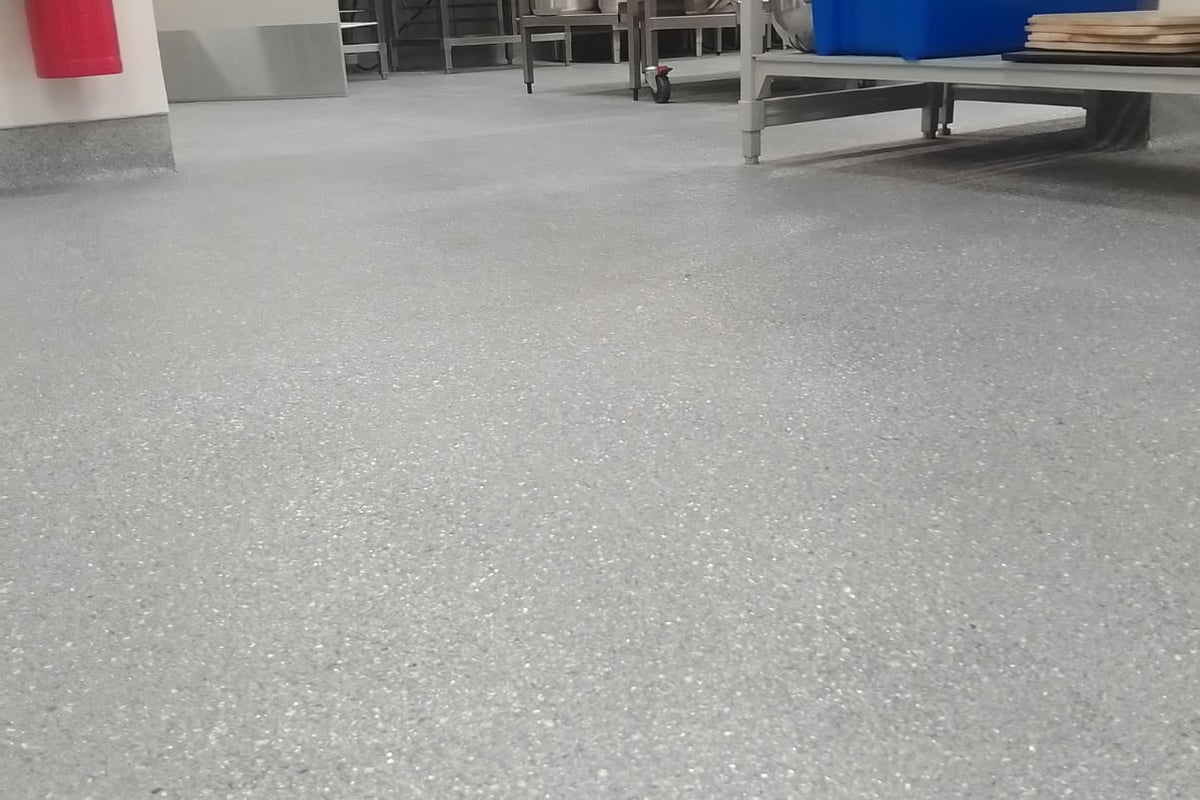
Food processing and commercial kitchens: These environments require seamless, easy-to-clean surfaces that resist microbial growth and withstand frequent wash-downs with harsh cleaning chemicals. Epoxy systems for food process flooring must meet stringent hygiene standards.
Automotive workshops: Mechanical workshops benefit from chemical-resistant surfaces that handle oil spills, brake fluid, and automotive fluids without staining or deterioration. The flooring must also resist impact from dropped tools and rolling loads from vehicle lifts.
Retail environments: Stores prioritise aesthetic appeal alongside durability, often selecting polished concrete or decorative epoxy systems that enhance brand identity while managing foot traffic.
Manufacturing facilities: Factory flooring requires heavy-duty systems capable of withstanding forklift traffic, point loads from machinery, and potential chemical exposure from production processes.
Understanding these sector-specific requirements demonstrates contractor sophistication and increases the likelihood of successful project outcomes.
Project Timeline and Scheduling
Realistic Time Estimates
Professional contractors provide realistic project timelines based on actual site conditions and proven installation methodologies. Standard commercial epoxy installations typically follow this sequence:
- Surface preparation (1-2 days): Grinding, crack repair, cleaning
- Moisture barrier application (if required): 1 day plus cure time
- Prime coat application: 1 day plus cure time
- Build coat application: 1-2 days depending on system thickness
- Topcoat application: 1 day plus cure time
- Curing period: 3-7 days before light traffic, 7-14 days before full loading
Total project duration ranges from one to three weeks for typical commercial spaces, excluding cure times. Contractors promising unrealistic timelines may compromise preparation quality or use inferior fast-cure products.
Managing Operational Disruption
Minimising business interruption requires careful planning and coordination. Discuss these scheduling considerations with potential contractors:
- Availability for weekend or evening work
- Phased installation approaches for large facilities
- Temporary access routes during installation
- Ventilation requirements during application and curing
- Post-installation cleaning and debris removal
Contractors experienced in commercial projects understand these operational concerns and proactively address them in project planning discussions.
Quality Assurance and Warranties
Installation Standards
Quality-focused contractors implement formal quality control processes throughout installation. These protocols should include:
Pre-installation testing: Concrete moisture testing using calcium chloride tests or relative humidity probes, surface profile verification to ensure adequate adhesion, and substrate strength assessment.
During application: Mixing ratio verification for two-component epoxy systems, ambient temperature and humidity monitoring, and wet film thickness measurements to ensure proper coverage.
Post-installation inspection: Hardness testing after cure completion, adhesion testing on representative samples, and visual inspection for defects or irregularities.
Request documentation of these quality checks as part of project deliverables. Professional contractors maintain detailed records demonstrating compliance with manufacturer specifications and industry best practices.

Warranty Coverage
Comprehensive warranties demonstrate contractor confidence in their workmanship and materials. Standard commercial epoxy warranties typically cover:
| Warranty Component | Typical Duration | Coverage Details |
|---|---|---|
| Material defects | 5-10 years | Manufacturing defects in epoxy products |
| Installation workmanship | 2-5 years | Application errors and adhesion failures |
| Wear performance | 1-3 years | Premature surface degradation under normal use |
Review warranty terms carefully, noting exclusions and maintenance requirements. Most warranties require regular cleaning protocols and prohibit specific chemical exposures that could compromise the coating system. Understanding these obligations prevents inadvertent warranty voidance.
Communication and Project Management
Professional Interaction Standards
The quality of contractor communication during the quotation phase typically reflects their approach throughout the project. Professional contractors respond promptly to enquiries, provide detailed written proposals, and demonstrate genuine interest in understanding your requirements.
Evaluate communication effectiveness across these dimensions:
- Response time to initial contact and follow-up questions
- Clarity and completeness of written quotations
- Willingness to explain technical concepts in accessible language
- Proactive identification of potential challenges or alternatives
- Professional presentation and documentation quality
Poor communication during pre-contract phases rarely improves after project commencement. Trust your instincts about contractor professionalism and responsiveness.
On-Site Management Capabilities
Larger commercial projects require dedicated project management to coordinate trades, manage timelines, and address emerging issues. Discuss the contractor's approach to on-site supervision:
- Will a dedicated project manager oversee the installation?
- How do they handle unexpected challenges or scope changes?
- What communication protocols exist for progress updates?
- How do they manage safety compliance and site cleanliness?
- What documentation do they provide upon project completion?
An epoxy floor coating company with strong project management capabilities delivers smoother installations and better outcomes, particularly for complex multi-stage projects.
Cost Considerations and Value Assessment
Understanding Pricing Variables
Epoxy flooring costs vary significantly based on numerous factors beyond simple square meterage. When comparing quotes, consider these cost drivers:
Surface condition: Poorly maintained concrete requiring extensive preparation increases labour costs substantially. Existing coatings requiring removal add complexity and expense.
System specification: Thickness and performance requirements directly impact material costs. Heavy-duty industrial systems cost more than light commercial applications due to higher build thickness and specialised formulations.
Site accessibility: Difficult access requiring manual material handling, limited parking, or multi-story locations without service lifts increase labour requirements.
Project timing: Rush installations or after-hours work typically command premium pricing due to scheduling constraints and overtime labour costs.
Additional requirements: Special features like slip-resistant textures, custom colours, or decorative elements add to base system costs.
Understanding epoxy floor cost factors helps contextualise pricing variations between contractors and identify whether quotes reflect comprehensive project scopes.
Long-Term Value Analysis
The lowest initial quote rarely represents the best long-term value. Consider total cost of ownership across the expected service life:
Installation quality: Proper surface preparation and application technique extend system life from five to fifteen years or more. A budget installation requiring replacement in three years costs significantly more than a premium system lasting fifteen years.
Maintenance requirements: High-quality epoxy systems resist staining and cleaning chemicals, reducing ongoing maintenance labour and material costs. Understanding emerging epoxy flooring trends helps identify systems offering improved performance characteristics.
Operational disruption: Failed coatings requiring premature replacement create business interruption costs far exceeding the savings from cheaper initial installations.
Premium contractors charging fair market rates typically deliver superior value through better materials, thorough preparation, and skilled application techniques. The decision to invest in durable epoxy floors pays dividends through extended service life and reduced lifecycle costs.
Contractor Credentials and Professional Development
Industry Certifications
Beyond basic licensing requirements, professional development and manufacturer certifications indicate contractor commitment to technical excellence. Leading epoxy manufacturers offer training and certification programs covering product knowledge, application techniques, and troubleshooting.
Certified applicators demonstrate proficiency in specific product systems and maintain current knowledge of evolving formulations and application methodologies. Ask potential contractors about:
- Manufacturer certification credentials
- Ongoing training participation
- Industry association memberships
- Equipment and technology investments
These indicators separate contractors who view flooring as a career from those treating it as a casual trade.
Safety Training and Compliance
Commercial projects demand rigorous safety protocols protecting both contractor personnel and your employees. Professional contractors implement comprehensive safety management systems including:
- Site-specific safety plans: Hazard identification and risk mitigation strategies
- Personal protective equipment: Appropriate respiratory, eye, and skin protection
- Confined space protocols: For work in enclosed or poorly ventilated areas
- Chemical handling procedures: Safe storage, mixing, and disposal practices
- Traffic management: Controlling movement around active work areas
Request safety documentation during the selection process. Contractors taking safety seriously reduce accident risks and project liability exposure.
Making the Final Selection
Comparative Evaluation Framework
After gathering information from multiple contractors, systematic comparison enables objective decision-making. Create a scoring matrix evaluating each contractor across critical criteria:
- QBCC licensing and insurance compliance
- Years of commercial flooring experience
- Project portfolio relevance to your industry
- Technical expertise and material knowledge
- Communication quality and responsiveness
- Quotation completeness and transparency
- Project timeline realism
- Warranty coverage and terms
- Professional references and testimonials
- Overall value proposition
Weight criteria according to your priorities. For mission-critical facilities, technical expertise and warranty coverage may outweigh cost considerations. For straightforward projects, competitive pricing and scheduling flexibility might take precedence.
Reference Verification
Never skip reference checks when selecting an epoxy floor coating company. Contact at least three recent clients with projects similar in scope and complexity to yours. Ask specific questions:
- Did the project complete on schedule and within budget?
- How did the contractor handle unexpected challenges?
- What was the quality of communication throughout the project?
- How has the flooring performed since installation?
- Would you hire this contractor again for future projects?
- Were there any aspects of the project that disappointed you?
Consistent positive feedback across multiple references provides confidence in contractor selection. Concerning patterns in reference responses warrant serious reconsideration.
Regional Considerations for South East Queensland
Climate and Environmental Factors
South East Queensland's subtropical climate creates specific considerations for epoxy floor installations. High humidity and temperature fluctuations require contractors to carefully manage application timing and environmental conditions.
Professional contractors in the region understand:
- Optimal seasonal timing for installations
- Humidity control measures during application
- Temperature-appropriate epoxy formulations
- Moisture mitigation strategies for Queensland's climate
- UV stability requirements for partially exposed areas
Contractors lacking regional experience may not adequately account for these environmental factors, potentially compromising installation quality and long-term performance. Epoxy Flooring specialists operating in Brisbane and surrounding areas bring this essential local knowledge to every project.
Local Industry Requirements
Commercial and industrial facilities across South East Queensland operate in diverse sectors from logistics and manufacturing to retail and food production. Each sector imposes specific regulatory requirements affecting flooring specifications.
An experienced local contractor navigates these requirements efficiently, ensuring installations meet relevant Australian Standards and industry-specific regulations without requiring extensive client research or specification development.
Selecting an epoxy floor coating company requires careful evaluation of licensing, experience, technical capabilities, and value proposition. The right contractor delivers not merely a coating application but a comprehensive flooring solution tailored to your operational requirements and budget constraints. For commercial and industrial facilities across South East Queensland seeking expert epoxy flooring and polished concrete solutions backed by decades of experience, QBCC licensing, and comprehensive insurance coverage, Superior Concrete Finishes provides the professional expertise and quality workmanship your project demands.

Joshua Miller has over 15 years of experience in the commercial concrete flooring industry, specialising in epoxy flooring systems and polished concrete solutions for warehouses, factories, retail spaces and commercial developments. Joshua and his team work closely with builders, property owners and facility managers across South East Queensland to deliver durable, cost-effective commercial flooring systems for warehouses, industrial facilities, commercial kitchens, retail stores and large commercial developments.
Major builders and organisations Josh has led projects on include McNab, Hutchinson Builders, IKEA, Queensland Rail, University of Queensland, ADCO, Tomkins Commercial, Bunnings, OfficeWorks, Spotlight, and Anaconda.
If you're planning a project and need advice on the best commercial concrete flooring solution, contact Josh or one of the team at Superior Concrete Finishes.
-
 info@superiorconcretefinishes.com.au
-
1300 789 740
-
Connect with Josh on
LinkedIn


 Connect with Josh on