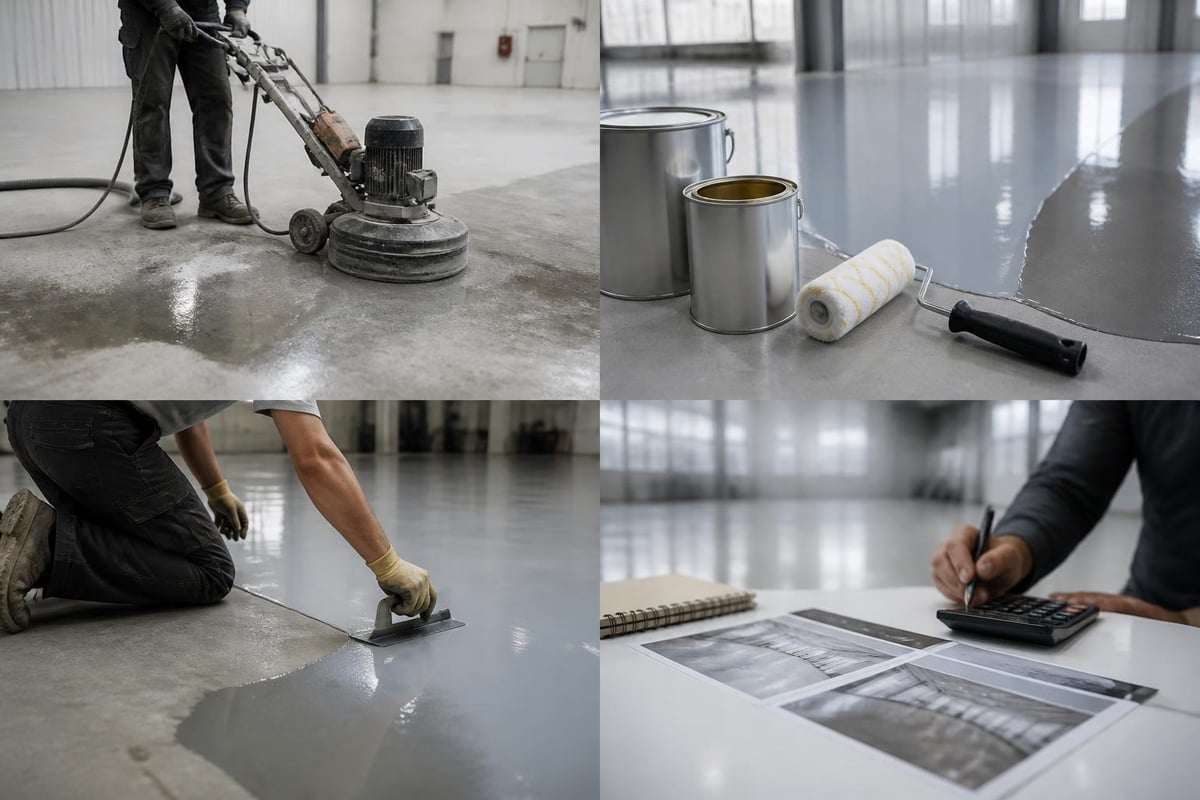
Understanding epoxy floor coating cost is essential for commercial and industrial facility managers planning flooring upgrades. Whether you're managing a warehouse, factory, retail store, or commercial kitchen, knowing what drives pricing helps you budget accurately and make informed decisions. The investment in quality epoxy flooring delivers long-term value through durability, chemical resistance, and minimal maintenance requirements. In South East Queensland's commercial sector, pricing varies significantly based on multiple factors that affect both material selection and installation complexity. This comprehensive guide examines the key cost drivers, typical price ranges, and considerations specific to commercial applications.
Understanding Base Pricing for Commercial Epoxy Systems
The epoxy floor coating cost for commercial projects typically ranges from $60 to $150 per square metre in Australia, though prices can exceed this range for specialised applications. This broad spectrum reflects the significant differences between basic warehouse floors and high-specification food processing facilities.
Standard Commercial Grade Systems
Basic commercial epoxy systems generally fall within the lower end of the pricing spectrum. These systems work well for:
- Light industrial warehouses with minimal chemical exposure
- Retail back-of-house areas requiring basic protection
- Storage facilities without heavy machinery traffic
- Standard workshop environments with moderate use
A typical 500 square metre warehouse installation using standard epoxy might cost between $30,000 and $45,000, including surface preparation and basic colour options.
Premium Industrial Applications
Higher-specification projects demand more robust systems. This Old House provides a comprehensive overview of various epoxy flooring costs, though Australian commercial pricing tends to be higher due to stricter compliance requirements.
Premium installations include:
- Heavy-duty industrial coatings for manufacturing facilities
- Chemical-resistant systems for laboratories and processing plants
- Multi-layer applications with enhanced durability
- Specialist finishes meeting specific industry standards
| Application Type | Price Range (per m²) | Typical System Thickness |
|---|---|---|
| Light Commercial | $60-$80 | 2-3mm |
| Standard Industrial | $80-$110 | 3-5mm |
| Heavy Industrial | $110-$150 | 5-8mm |
| Food Grade/Specialist | $150-$200+ | Variable |
Major Cost Drivers in Commercial Projects
Several factors significantly influence the final epoxy floor coating cost. Understanding these elements helps facility managers anticipate expenses and identify potential cost-saving opportunities without compromising quality.
Surface Preparation Requirements
Concrete preparation represents 30-40% of total project costs. The existing floor condition determines preparation complexity.
New concrete slabs require minimal preparation, typically limited to diamond grinding and acid etching. However, older floors may need extensive repair work, including crack filling, spall repair, and moisture barrier installation.

Consider these preparation scenarios:
- Minimal preparation (new or well-maintained floors): $15-$25 per square metre
- Moderate preparation (minor repairs needed): $25-$40 per square metre
- Extensive preparation (significant damage): $40-$70 per square metre
- Complete remediation (structural issues): $70+ per square metre
Our team at Superior Concrete Finishes conducts thorough floor assessments to identify preparation requirements accurately, preventing unexpected costs during installation.
System Specification and Performance Requirements
The epoxy system specification directly impacts material costs. Commercial epoxy flooring systems vary widely in formulation, with each designed for specific performance criteria.
Material quality matters significantly. Premium commercial-grade epoxies cost more but deliver superior longevity and performance. Cheaper alternatives may seem attractive initially but often require replacement within 3-5 years, whereas quality systems last 15-20 years in commercial environments.
Industry-specific requirements add complexity and cost:
- Food processing facilities need antimicrobial properties and seamless finishes
- Chemical plants require specific chemical resistance ratings
- Cold storage facilities need thermal shock resistance
- High-traffic retail areas demand rapid cure times to minimise downtime
Project Size and Economies of Scale
Larger projects benefit from economies of scale, reducing the per-square-metre epoxy floor coating cost. A 100 square metre installation might cost $120 per square metre, while a 2,000 square metre warehouse could drop to $75 per square metre.
Fixed costs spread across larger areas include:
- Equipment mobilisation and demobilisation
- Initial site setup and safety measures
- Project management and administration
- QBCC compliance and insurance overhead
Small commercial projects (under 200m²) often carry premium pricing due to these fixed costs representing a larger proportion of the total investment.
Labour Costs and Installation Timeframes
Professional installation labour significantly influences the total epoxy floor coating cost. In South East Queensland, experienced commercial flooring contractors charge between $45 and $85 per hour, depending on project complexity and system specification.
Installation Team Requirements
Commercial epoxy installation requires qualified teams holding appropriate licences and insurance. Workshop flooring projects, for instance, demand experienced applicators who understand industrial requirements.
A standard commercial project requires:
- Lead installer with QBCC licence
- Supporting technicians (typically 2-3 per crew)
- Surface preparation specialists
- Quality control personnel for larger projects
Timeline Considerations
Installation speed affects both labour costs and business disruption. Most commercial projects take 3-7 days to complete, depending on system complexity and cure time requirements.
| Project Type | Typical Duration | Downtime Required |
|---|---|---|
| Basic Warehouse (500m²) | 3-4 days | 4-5 days total |
| Retail Store (200m²) | 2-3 days | 3-4 days total |
| Food Processing (1000m²) | 5-7 days | 7-10 days total |
| Multi-level Car Park | 7-14 days | Staged access |
Fast-cure systems reduce downtime but increase material costs by 20-30%. For businesses where operational downtime costs exceed additional material expenses, these systems deliver excellent value despite the higher upfront epoxy floor coating cost.
Hidden Costs and Budget Considerations
Experienced facility managers account for additional expenses beyond the basic installation quote. These hidden costs can add 10-25% to the initial budget estimate.
Moisture Testing and Remediation
Concrete moisture issues cause 60% of epoxy failures. Professional moisture testing costs $500-$1,500 but prevents catastrophic system failures.
If testing reveals excessive moisture, remediation options include:
- Moisture barrier primers: Add $15-$30 per square metre
- Complete moisture mitigation systems: Add $40-$80 per square metre
- Extended cure times: Indirect costs through delayed completion
Industrial floor coatings in older buildings often require moisture remediation, particularly in facilities with concrete slabs over 10 years old.
Access and Logistics Challenges
Site-specific factors increase installation complexity. Multi-storey buildings, restricted access areas, and operational facilities working around business hours all add costs.
Additional charges may apply for:
- After-hours installation (premium of 20-40%)
- Equipment lifting to upper floors ($2,000-$5,000)
- Staged installation to maintain partial operations (adds 15-30% to duration)
- Special ventilation requirements in enclosed spaces
Compliance and Certification
Commercial facilities must meet specific regulatory standards. Factory flooring in food-grade facilities requires HACCP compliance, adding certification costs of $1,000-$3,000 to the project.
Other compliance considerations include:
- Slip-resistance testing and certification
- VOC emissions documentation
- Fire rating certifications
- Workplace health and safety documentation
Comparing Epoxy Systems and Alternatives
Understanding different flooring options helps contextualise epoxy floor coating cost within the broader commercial flooring market. BidMaker’s 2026 pricing guide offers detailed comparisons across various coating types.
Epoxy vs Polyurethane Systems
Polyurethane coatings typically cost 20-40% more than standard epoxy but offer superior flexibility and UV resistance. For facilities requiring both properties, hybrid systems combine epoxy base coats with polyurethane topcoats.
Performance comparison:
| Feature | Epoxy | Polyurethane | Hybrid System |
|---|---|---|---|
| Chemical Resistance | Excellent | Good | Excellent |
| Abrasion Resistance | Excellent | Very Good | Excellent |
| UV Stability | Fair | Excellent | Very Good |
| Flexibility | Limited | High | Good |
| Cost per m² | $80-$120 | $110-$160 | $95-$140 |
Long-Term Value Analysis
Evaluating total cost of ownership provides better perspective than initial installation costs. A quality epoxy system costing $90 per square metre lasting 18 years delivers better value than a $65 system requiring replacement after 8 years.
Calculate lifecycle costs including:
- Initial installation investment
- Annual maintenance expenses (typically 1-2% of installation cost)
- Cleaning and upkeep requirements
- Expected lifespan before replacement
- Productivity impacts from floor-related downtime
Regional Pricing Variations in South East Queensland
Geographic location within South East Queensland affects the epoxy floor coating cost through labour availability, material transport, and market competition. Brisbane metro projects generally experience the most competitive pricing due to contractor density.
Metropolitan vs Regional Differences
Brisbane and Gold Coast installations benefit from:
- Multiple contractor options driving competitive pricing
- Reduced travel costs for suppliers and installers
- Easier access to specialised equipment
- Shorter material delivery times
Regional areas (Sunshine Coast, Ipswich, Toowoomba) may see pricing premiums of 5-15% due to:
- Limited contractor availability
- Increased mobilisation costs
- Extended material delivery timeframes
- Reduced competition
Seasonal Pricing Fluctuations
Queensland's climate creates distinct busy and slow periods. Late autumn through early spring (April to September) represents peak installation season when dry weather and moderate temperatures optimise curing conditions.
Expect pricing variations:
- Peak season (May-August): Standard market rates
- Shoulder periods (April, September): Potential 5-10% discounts
- Summer months (December-February): Larger discounts (10-15%) but weather-related delays
Planning installations during quieter periods can reduce the epoxy floor coating cost while maintaining quality standards. However, businesses must balance savings against operational requirements and the risks of weather-related delays.
Getting Accurate Quotes for Commercial Projects
Obtaining detailed, comparable quotes requires providing comprehensive project information to contractors. CostSignals’ calculator offers preliminary estimates, but professional assessment remains essential for commercial applications.
Information Required for Accurate Quoting
Professional contractors need specific details to provide meaningful estimates:
- Facility specifications: Total floor area, current surface condition, age of concrete
- Performance requirements: Chemical exposure, traffic levels, temperature ranges
- Timeline expectations: Project deadlines, acceptable downtime periods
- Access considerations: Operating hours, equipment restrictions, safety requirements
- Compliance needs: Industry-specific certifications, slip-resistance ratings
Vague or incomplete information leads to qualified quotes with extensive exclusions, making cost comparison difficult.
Quote Evaluation Criteria
The lowest epoxy floor coating cost doesn't guarantee the best value. Evaluate quotes based on:
- Scope of work completeness (preparation, materials, application, cleanup)
- Warranty terms and conditions (typically 5-10 years for commercial installations)
- Contractor credentials (QBCC licence, insurance coverage, industry experience)
- Material specifications (brand names, technical data sheets, performance ratings)
- Project timeline and milestones
Questions to ask potential contractors include details about their portfolio, previous similar projects, and references from commercial clients with comparable applications.

Understanding Payment Structures
Commercial epoxy installations typically follow staged payment schedules rather than full upfront payment. Standard structures include:
- Deposit (20-30%): Due upon contract signing
- Progress payment (40-50%): After surface preparation completion
- Final payment (20-30%): Upon project completion and inspection
Be wary of contractors demanding full payment upfront or offering unusually low prices requiring immediate commitment. These red flags often indicate inadequate business practices or potential quality compromises.
Maximising Return on Your Flooring Investment
Strategic planning optimises the value received from epoxy flooring investments beyond simply minimising the epoxy floor coating cost.
Specification Optimisation
Matching system specification to actual requirements prevents over-engineering and unnecessary expense. A warehouse storing packaged goods doesn't need the same chemical resistance as a manufacturing facility using aggressive solvents.
Work with experienced contractors to:
- Identify genuine performance requirements
- Eliminate unnecessary specification elements
- Select appropriate system thickness
- Determine optimal colour and finish options
Our team has decades of experience helping commercial clients in South East Queensland specify flooring systems that meet requirements without excess cost. Epoxy flooring solutions tailored to specific applications deliver superior long-term value.

Timing Installations Strategically
Coordinating flooring installations with other facility work reduces total project disruption and costs. Installing epoxy during planned shutdowns, renovations, or new construction eliminates the premium costs associated with working around operations.
Consider combining flooring with:
- Annual maintenance shutdowns
- Equipment upgrades requiring floor access
- Building expansions or modifications
- Racking system installations or relocations
Maintenance Planning
Proper maintenance extends epoxy system lifespan significantly, reducing long-term costs. Warehouse flooring maintenance programmes should include:
- Regular cleaning with pH-neutral products
- Immediate spill cleanup to prevent chemical damage
- Periodic inspections identifying minor issues early
- Professional recoating every 7-10 years
A well-maintained commercial epoxy floor can last 20+ years, while neglected systems may fail within 10 years despite identical initial quality.
Industry-Specific Cost Considerations
Different commercial sectors face unique flooring requirements affecting the epoxy floor coating cost. Yelp’s real-world pricing data shows significant variation across application types.
Food Processing and Commercial Kitchens
Food-grade facilities require the highest specification systems, typically costing $120-$200 per square metre. These installations must meet stringent hygiene standards with seamless finishes, antimicrobial properties, and thermal shock resistance.
Additional requirements include:
- HACCP compliance documentation
- Coved edges to wall junctions
- Enhanced chemical resistance to cleaning agents
- Rapid installation to minimise production downtime
Retail Environments
Retail flooring balances aesthetics with performance, requiring decorative finishes that withstand customer traffic. Costs range from $75-$130 per square metre depending on design complexity.
Retail-specific considerations include:
- Custom colour matching to brand guidelines
- Decorative flake or metallic systems
- Rapid cure times for overnight installation
- High-gloss finishes requiring additional maintenance
Manufacturing and Heavy Industrial
Heavy industrial applications demand maximum durability, with costs reaching $130-$180 per square metre for premium systems. These facilities subject floors to severe mechanical stress, chemical exposure, and thermal cycling.
Factory floor coatings must accommodate:
- Forklift traffic and point loading
- Hot tyre pickup resistance
- Aggressive chemical resistance
- Impact resistance from dropped materials
Cost Management Strategies for Multi-Site Operations
Organisations managing multiple facilities can leverage their scale to optimise epoxy floor coating cost across their property portfolio.
Volume Pricing Advantages
Contractors offer preferential pricing for multi-site contracts, typically reducing per-square-metre costs by 10-20% compared to individual projects. Benefits include:
- Consolidated mobilisation across multiple locations
- Bulk material purchasing at contractor level
- Streamlined project management and administration
- Standardised specifications reducing design time
Phased Implementation Approaches
Spreading installations across multiple financial periods helps manage budget constraints. Prioritise facilities based on:
- Floor condition and failure risk
- Operational impact of current flooring issues
- Facility strategic importance
- Budget availability and timing
This approach maintains continuous improvement while avoiding large single-year capital expenditures.
Standardisation Benefits
Developing standard specifications across similar facility types simplifies procurement and reduces costs. Benefits include:
- Faster quote turnaround from familiar specifications
- Reduced design and engineering costs
- Simplified maintenance across facilities
- Easier contractor selection and qualification
Future-Proofing Your Flooring Investment
Anticipating future needs during initial installation prevents costly modifications and ensures the epoxy floor coating cost delivers maximum long-term value.
Designing for Flexibility
Commercial facilities evolve over time. Installing slightly more robust systems than currently required accommodates:
- Process changes introducing new chemicals
- Equipment upgrades increasing floor loading
- Operational intensity increases
- Future compliance requirements
The marginal cost increase (typically 10-15%) proves far more economical than premature replacement.
Sustainable Flooring Choices
Sustainability considerations increasingly influence commercial flooring decisions. Low-VOC epoxy systems may cost 5-10% more initially but deliver benefits including:
- Reduced health and safety concerns
- Faster facility re-occupation
- Enhanced corporate sustainability credentials
- Potential green building certification contributions
Documentation and Asset Management
Comprehensive installation documentation facilitates future maintenance and modifications. Request contractors provide:
- Detailed specifications and material data sheets
- Application records including thickness and cure times
- Warranty documentation
- Maintenance recommendations
This information proves invaluable when planning future work, selecting compatible repair materials, or specifying expansions matching existing installations.
Understanding the factors influencing epoxy floor coating cost empowers commercial facility managers to make informed decisions balancing budget constraints with performance requirements. Quality installations from experienced contractors deliver decades of reliable service, making them sound long-term investments for warehouses, factories, retail stores, and industrial facilities across South East Queensland. Superior Concrete Finishes brings decades of commercial flooring expertise to every project, from initial assessment through final handover. Contact our team today to discuss your specific requirements and receive a detailed, transparent quote for your commercial epoxy flooring project.

Joshua Miller has over 15 years of experience in the commercial concrete flooring industry, specialising in epoxy flooring systems and polished concrete solutions for warehouses, factories, retail spaces and commercial developments. Joshua and his team work closely with builders, property owners and facility managers across South East Queensland to deliver durable, cost-effective commercial flooring systems for warehouses, industrial facilities, commercial kitchens, retail stores and large commercial developments.
Major builders and organisations Josh has led projects on include McNab, Hutchinson Builders, IKEA, Queensland Rail, University of Queensland, ADCO, Tomkins Commercial, Bunnings, OfficeWorks, Spotlight, and Anaconda.
If you're planning a project and need advice on the best commercial concrete flooring solution, contact Josh or one of the team at Superior Concrete Finishes.
-
 info@superiorconcretefinishes.com.au
-
1300 789 740
-
Connect with Josh on
LinkedIn


 Connect with Josh on