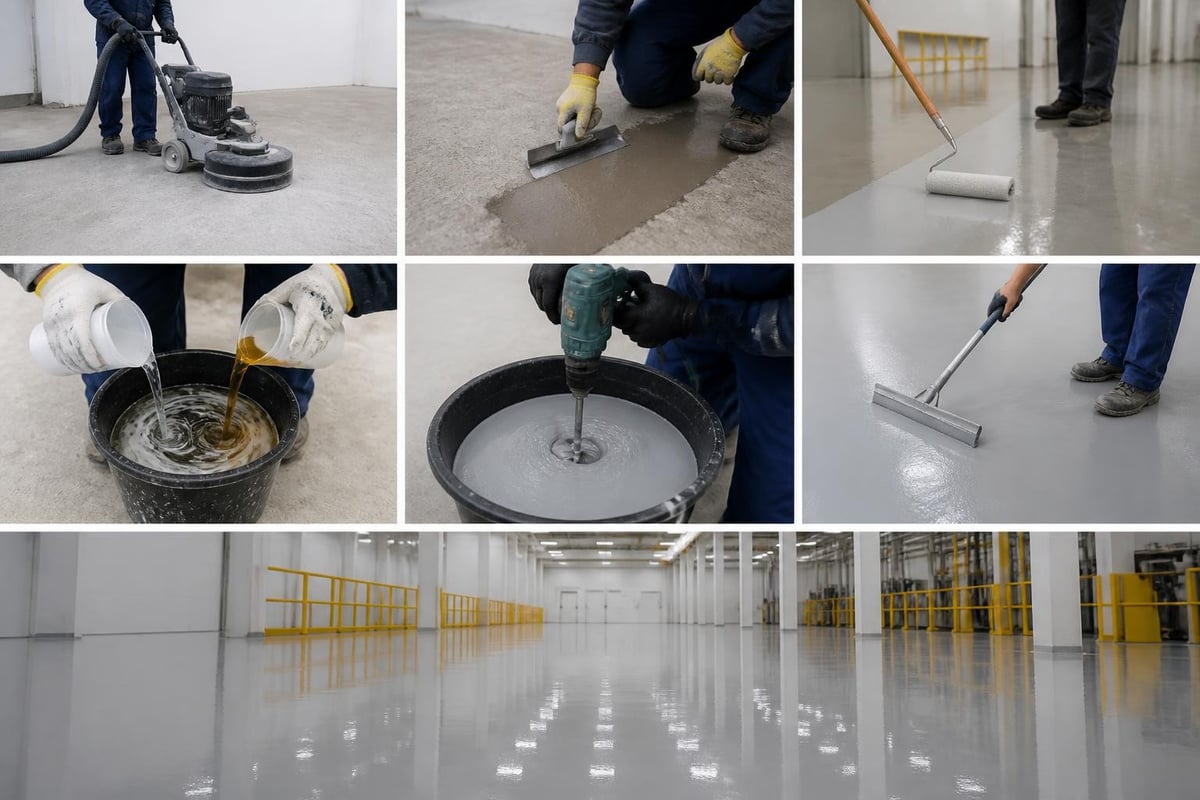
Commercial and industrial facilities across South East Queensland face unique flooring challenges that demand robust, long-lasting solutions. Epoxy floor coating has emerged as the premier choice for warehouses, factories, commercial kitchens, and industrial workshops, delivering exceptional durability, chemical resistance, and seamless protection. Understanding the composition, application process, and performance characteristics of epoxy systems enables facility managers and business owners to make informed decisions about their flooring investments. This comprehensive guide examines the technical aspects, benefits, and practical considerations that make epoxy floor coating an essential component of modern commercial operations.
Understanding Epoxy Floor Coating Composition
Epoxy floor coating consists of two primary components that undergo a chemical reaction to form a rigid, protective surface. The resin and hardener combine in precise ratios to create a thermoset polymer that bonds directly to concrete substrates.
The chemical composition of epoxy resin influences its mechanical properties and thermal characteristics, which directly impact performance in commercial environments. Modern epoxy formulations incorporate various additives to enhance specific attributes such as UV resistance, flexibility, or chemical tolerance.
Key Components and Their Functions
Understanding the individual elements within epoxy systems helps clarify why these coatings perform exceptionally well in demanding environments:
- Epoxy resin: Provides the primary structural matrix and adhesive properties
- Hardener (curing agent): Initiates the cross-linking reaction that creates durability
- Fillers: Add thickness, improve abrasion resistance, and reduce material costs
- Pigments: Deliver colour consistency and UV stability
- Additives: Enhance specific properties like non-slip characteristics or chemical resistance
The degree of cross-linking during the curing process determines the final mechanical strength and chemical resistance. Higher cross-link density typically results in greater hardness and chemical impermeability, though it may reduce flexibility.
Performance Characteristics
Different epoxy formulations deliver varying performance profiles suited to specific commercial applications. Water-based epoxies offer lower volatile organic compound emissions, whilst solvent-based systems provide superior adhesion in certain conditions.
| Property | Standard Epoxy | High-Performance Epoxy | Polyurethane Topcoat |
|---|---|---|---|
| Abrasion Resistance | Excellent | Outstanding | Outstanding |
| Chemical Resistance | Very Good | Excellent | Good |
| UV Stability | Moderate | Moderate | Excellent |
| Cure Time | 24-48 hours | 48-72 hours | 12-24 hours |
The selection of appropriate epoxy systems requires careful consideration of operational requirements, environmental conditions, and long-term maintenance expectations.
Application Requirements for Commercial Facilities
Proper installation of epoxy floor coating demands meticulous surface preparation and environmental control. The concrete substrate must achieve specific standards before coating application to ensure optimal adhesion and longevity.
Concrete moisture levels must remain below 4% for most epoxy systems, though some moisture-tolerant formulations accommodate slightly higher readings. Temperature and humidity during application significantly affect cure rates and final properties.
Surface Preparation Methods
The foundation of successful epoxy floor coating lies in thorough substrate preparation. Commercial facilities typically require mechanical preparation methods due to the scale and condition of existing concrete floors.
Diamond grinding removes surface laitance, opens the concrete pore structure, and creates the ideal profile for mechanical bonding. Shot blasting provides aggressive preparation for heavily contaminated or coated surfaces, whilst scarifying tackles severely damaged concrete.

Proper preparation of concrete surfaces directly influences the performance and lifespan of the finished floor system. Any shortcuts in this phase compromise the entire installation.
- Remove all existing coatings, adhesives, and contaminants
- Repair cracks, spalls, and structural defects
- Achieve appropriate concrete surface profile (CSP 2-3 for most applications)
- Vacuum thoroughly to remove all dust and debris
- Test moisture levels and pH values
Installation Process Steps
Professional installation follows a systematic approach that ensures consistent quality across large commercial areas:
- Initial assessment: Evaluate substrate condition, moisture levels, and environmental factors
- Surface preparation: Execute mechanical preparation to specification
- Primer application: Apply penetrating primer to seal and strengthen the substrate
- Base coat installation: Apply the main epoxy layer at specified thickness
- Topcoat application: Install final protective layer for enhanced durability
Timing between coats proves critical, as the recoat window varies by product and environmental conditions. Missing this window may require additional surface preparation to achieve proper intercoat adhesion.
Benefits for Industrial and Commercial Operations
Epoxy floor coating delivers measurable advantages that directly impact operational efficiency and cost management in commercial facilities. These benefits extend beyond surface aesthetics to fundamental performance characteristics that support business operations.
The seamless nature of epoxy systems eliminates joints and crevices where contaminants accumulate, which proves particularly valuable in food-grade environments and pharmaceutical facilities. This characteristic also simplifies cleaning protocols and reduces labour requirements for maintenance staff.
Durability and Longevity Considerations
Commercial epoxy floor coating systems routinely deliver 10-15 years of service life when properly installed and maintained. Heavy industrial applications may require recoating every 5-7 years, whilst light commercial environments can exceed 20 years with appropriate care.
The resistance to impact, abrasion, and chemical exposure makes epoxy ideal for warehouses handling heavy machinery and materials. Understanding epoxy flooring lifespan helps facility managers plan maintenance budgets and minimise operational disruptions.
| Application Environment | Expected Lifespan | Key Degradation Factors |
|---|---|---|
| Warehouse (forklift traffic) | 10-12 years | Abrasion, impact |
| Commercial kitchen | 8-10 years | Thermal shock, chemicals |
| Manufacturing facility | 12-15 years | Chemical exposure, abrasion |
| Car park (undercover) | 15-20 years | Tyre marks, oil exposure |
Economic Advantages
The total cost of ownership for epoxy floor coating typically proves lower than alternative flooring systems when calculated over the lifecycle. Initial installation costs represent a higher investment compared to basic coatings, but reduced maintenance requirements and extended service life deliver superior value.
Epoxy systems require minimal maintenance beyond regular cleaning, eliminating the need for waxing, polishing, or periodic refinishing required by other flooring types. The advantages of epoxy flooring become apparent through reduced downtime and lower maintenance labour costs.
Energy efficiency improvements arise from the reflective surface properties of epoxy coatings, which enhance ambient lighting and potentially reduce electrical consumption. This benefit proves particularly valuable in large warehouses and distribution centres where lighting costs constitute significant operational expenses.
Selecting Appropriate Systems for Specific Applications
Different commercial environments demand specific epoxy floor coating formulations tailored to their unique operational requirements. Understanding these distinctions ensures optimal performance and cost-effectiveness.
Commercial epoxy flooring solutions vary significantly in composition, thickness, and performance characteristics. A commercial kitchen requires thermal shock resistance and sanitisation capabilities, whilst a manufacturing facility prioritises chemical resistance and mechanical durability.
Industry-Specific Requirements
Warehouses and distribution centres benefit from high-build epoxy systems that withstand constant forklift traffic and impact from dropped pallets. These facilities often specify coatings with enhanced abrasion resistance and rapid cure formulations that minimise downtime.
Commercial kitchens require epoxy floor coating systems that meet food safety standards and resist hot water, oils, and cleaning chemicals. Many jurisdictions mandate specific flooring performance criteria for food preparation areas, making compliance a critical selection factor.
- Warehouses: High abrasion resistance, rapid cure, dust suppression
- Factories: Chemical resistance, thermal stability, easy decontamination
- Commercial kitchens: Food-grade certification, thermal shock resistance, antimicrobial properties
- Car parks: Moisture tolerance, skid resistance, UV stability (for entrance areas)
- Workshops: Oil resistance, weldability, ease of repair
Comparison with Alternative Flooring Systems
Epoxy floor coating competes with several alternative commercial flooring solutions, each offering distinct advantages and limitations. Commercial floor coatings encompass a range of technologies including polyurethane, polyaspartic, and polished concrete systems.
Polished concrete offers exceptional longevity and sustainability benefits, though it lacks the chemical resistance and seamless characteristics of epoxy systems. The choice between polished concrete floor finishes and epoxy coatings depends on specific operational requirements and aesthetic preferences.

Polyurethane topcoats provide superior UV resistance and flexibility compared to epoxy, making them ideal for environments with direct sunlight exposure or thermal cycling. Many high-performance installations utilise epoxy base coats with polyurethane topcoats to combine the strengths of both technologies.
Maintenance and Long-Term Care
Proper maintenance protocols extend the service life of epoxy floor coating and preserve its protective and aesthetic properties. Commercial facilities should implement structured cleaning and inspection schedules to identify potential issues before they escalate.
Regular cleaning prevents the accumulation of contaminants that can degrade the coating surface or create safety hazards. Most epoxy systems tolerate aggressive cleaning methods, though specific procedures should align with manufacturer recommendations and facility requirements.
Cleaning Protocols and Best Practices
Daily maintenance typically involves sweeping or dust mopping to remove loose debris, followed by damp mopping with appropriate cleaning solutions. High-traffic areas may require scrubbing machines for thorough cleaning.
The selection of cleaning chemicals significantly impacts epoxy floor coating longevity. Strongly acidic or highly alkaline solutions can damage certain epoxy formulations, particularly at elevated temperatures. Neutral pH cleaners provide effective cleaning without compromising coating integrity.
- Remove loose debris through sweeping or vacuuming
- Apply cleaning solution at manufacturer-recommended dilution
- Agitate with mop or scrubbing machine
- Remove soiled solution with wet vacuum or mop
- Rinse with clean water if required by cleaning product
- Allow surface to dry before resuming operations
Inspection and Repair Strategies
Routine inspections identify wear patterns, coating degradation, or substrate issues requiring attention. Early intervention prevents minor issues from developing into costly failures that necessitate complete coating replacement.
Common issues include delamination at expansion joints, chemical staining in spill zones, and mechanical damage from dropped objects or forklift impacts. Small damaged areas typically allow spot repairs without full recoating, though colour matching may present challenges in aged installations.
The concrete-epoxy interface represents a critical zone where adhesion failures most commonly occur. Understanding the mechanisms of bond degradation helps prevent installation defects and enables effective repair strategies.
| Issue Type | Typical Cause | Repair Approach |
|---|---|---|
| Delamination | Moisture, poor preparation | Remove affected area, reprep, recoat |
| Chemical staining | Inadequate chemical resistance | Clean, assess coating integrity, possibly recoat |
| Mechanical damage | Impact, abrasion | Grind smooth, patch with compatible epoxy |
| Discoloration | UV exposure, chemical reaction | Topcoat with UV-stable finish |
Safety and Compliance Considerations
Epoxy floor coating installation and performance must align with relevant workplace health and safety regulations governing commercial and industrial facilities. These requirements vary by jurisdiction and specific industry sector.
Non-slip characteristics prove essential in many commercial environments, particularly where water, oils, or other liquids may contact the floor surface. Broadcast aggregates or textured finishes provide slip resistance whilst maintaining the benefits of seamless epoxy systems.
Installation Safety Requirements
The application process involves chemical handling, respiratory hazards, and confined space considerations that demand appropriate safety protocols. Professional contractors maintain comprehensive safety management systems and hold relevant licences and insurance coverage.
Ventilation requirements during installation vary based on epoxy formulation, with solvent-based systems requiring more extensive air exchange than water-based alternatives. Occupied facilities may necessitate after-hours installation or staged implementation to minimise exposure to building occupants.
Working with experienced commercial flooring specialists ensures compliance with all relevant regulations whilst delivering superior installation quality. Contractors should hold appropriate Queensland Building and Construction Commission licences and maintain current insurance policies.
Performance Standards and Testing
Many commercial applications require epoxy floor coating systems to meet specific performance standards for fire resistance, slip resistance, or chemical exposure. Testing protocols verify compliance and provide documentation for regulatory authorities.
Australian standards govern various aspects of flooring safety standards including slip resistance classification, fire hazard properties, and chemical resistance ratings. Specifying appropriate standards during the design phase ensures the installed system meets operational requirements.
The National Concrete Coating Authority provides detailed guidance on epoxy floor coating standards and best practices for commercial installations. Industry associations offer resources that help facility managers understand performance expectations and specification requirements.
Cost Factors and Project Planning
Budgeting for epoxy floor coating projects requires consideration of multiple cost components beyond the basic material and labour rates. Project scale, substrate condition, operational constraints, and performance requirements all influence total investment.
Material costs vary significantly based on epoxy system specification, with basic coating systems starting around forty to sixty dollars per square metre, whilst high-performance industrial systems may exceed one hundred twenty dollars per square metre. These figures include materials only and exclude surface preparation, repairs, and labour.
Budget Components and Variables
A comprehensive project budget accounts for all phases from initial assessment through final completion:
- Assessment and specification: Site evaluation, moisture testing, specification development
- Preparation: Mechanical grinding or blasting, repairs, cleaning
- Materials: Primer, base coat, topcoat, aggregate (if specified)
- Labour: Installation crew, supervision, quality control
- Downtime costs: Lost productivity during installation and cure periods
- Ongoing maintenance: Cleaning equipment, products, labour
Substrate condition significantly affects total project cost, as heavily damaged or contaminated concrete requires extensive preparation before coating application. Industrial concrete flooring projects often encounter challenging conditions that increase preparation requirements.
Scheduling and Operational Impact
Installation timeline planning must account for cure times, environmental conditions, and operational requirements. Most epoxy floor coating systems require 48 to 72 hours before resuming normal operations, though rapid-cure formulations reduce this period to 12 to 24 hours in temperature-controlled environments.
Large commercial facilities often implement staged installation to maintain partial operations during the project. This approach extends the total project duration but minimises business disruption and revenue loss.
Temperature and humidity constraints may limit installation to specific seasons in some locations. South East Queensland's subtropical climate generally permits year-round installation, though summer humidity can extend cure times and require additional moisture mitigation measures.
Superior Concrete Finishes brings decades of commercial flooring expertise to epoxy flooring installations throughout the region, ensuring projects meet technical specifications whilst minimising operational disruption.

Environmental and Sustainability Aspects
Modern epoxy floor coating formulations increasingly incorporate sustainable practices and reduced environmental impact. Low-VOC and zero-VOC products minimise air quality impacts during and after installation, improving worker safety and environmental performance.
The longevity of properly installed epoxy systems contributes to sustainability by reducing replacement frequency and associated resource consumption. A single epoxy installation may replace multiple applications of alternative flooring materials over the same timespan.
Product Selection for Reduced Impact
Water-based epoxy formulations significantly reduce volatile organic compound emissions compared to traditional solvent-based systems. These products meet stringent indoor air quality standards whilst delivering comparable performance in many applications.
Recycled content in some epoxy products diverts waste from landfills whilst maintaining performance characteristics. Specifiers should evaluate environmental product declarations and third-party certifications when sustainability represents a project priority.
The benefits of epoxy flooring extend to energy efficiency through enhanced light reflectivity, which reduces artificial lighting requirements in commercial facilities. This characteristic proves particularly valuable in warehouse and manufacturing environments with high ceilings and significant lighting loads.
End-of-Life Considerations
Unlike modular flooring systems that generate substantial waste during replacement, epoxy floor coating removal and replacement produces relatively minimal debris. Mechanical removal methods recycle the majority of material along with the concrete substrate.
Recoating existing epoxy systems rather than complete removal extends service life whilst minimising resource consumption and waste generation. Many facilities successfully recoat floors multiple times before substrate condition necessitates complete removal and reinstallation.
Technical Innovations and Future Developments
Epoxy floor coating technology continues to evolve through advances in polymer chemistry, application methods, and performance enhancement additives. Recent developments focus on rapid cure formulations, enhanced chemical resistance, and improved sustainability profiles.
Nanotechnology incorporation improves scratch resistance, chemical impermeability, and mechanical strength at lower coating thicknesses. These advances reduce material consumption whilst maintaining or enhancing performance characteristics.
Emerging Formulation Technologies
Self-levelling epoxy systems simplify installation on irregular substrates whilst achieving uniform thickness and superior aesthetics. These formulations prove particularly valuable in retrofit applications where existing concrete exhibits minor surface irregularities.
Moisture-tolerant epoxies expand application possibilities by accommodating higher substrate moisture levels that would preclude traditional epoxy systems. This technology enables installation in challenging environments or on newer concrete with elevated moisture content.
The application of epoxy in industrial settings benefits from ongoing research into improved chemical resistance, particularly for exposure to aggressive solvents and concentrated acids encountered in chemical processing facilities.
Application Method Advancements
Plural component spray equipment improves installation efficiency whilst ensuring accurate material ratios and thorough mixing. Large commercial projects particularly benefit from spray application, which dramatically reduces installation time compared to roller or squeegee methods.
Robotic application systems under development promise consistent thickness control and reduced labour requirements, though current technology limits deployment to specific geometric configurations and controlled environments.
Epoxy floor coating delivers unmatched performance for commercial and industrial facilities requiring durable, chemical-resistant, and low-maintenance flooring solutions. The combination of proper system selection, professional installation, and routine maintenance ensures decades of reliable service across warehouses, factories, commercial kitchens, and industrial workshops. Superior Concrete Finishes provides expert epoxy flooring and polished concrete services throughout South East Queensland, backed by decades of industry experience, full insurance coverage, and QBCC licensing to deliver superior results for your commercial flooring project.

Joshua Miller has over 15 years of experience in the commercial concrete flooring industry, specialising in epoxy flooring systems and polished concrete solutions for warehouses, factories, retail spaces and commercial developments. Joshua and his team work closely with builders, property owners and facility managers across South East Queensland to deliver durable, cost-effective commercial flooring systems for warehouses, industrial facilities, commercial kitchens, retail stores and large commercial developments.
Major builders and organisations Josh has led projects on include McNab, Hutchinson Builders, IKEA, Queensland Rail, University of Queensland, ADCO, Tomkins Commercial, Bunnings, OfficeWorks, Spotlight, and Anaconda.
If you're planning a project and need advice on the best commercial concrete flooring solution, contact Josh or one of the team at Superior Concrete Finishes.
-
 info@superiorconcretefinishes.com.au
-
1300 789 740
-
Connect with Josh on
LinkedIn


 Connect with Josh on