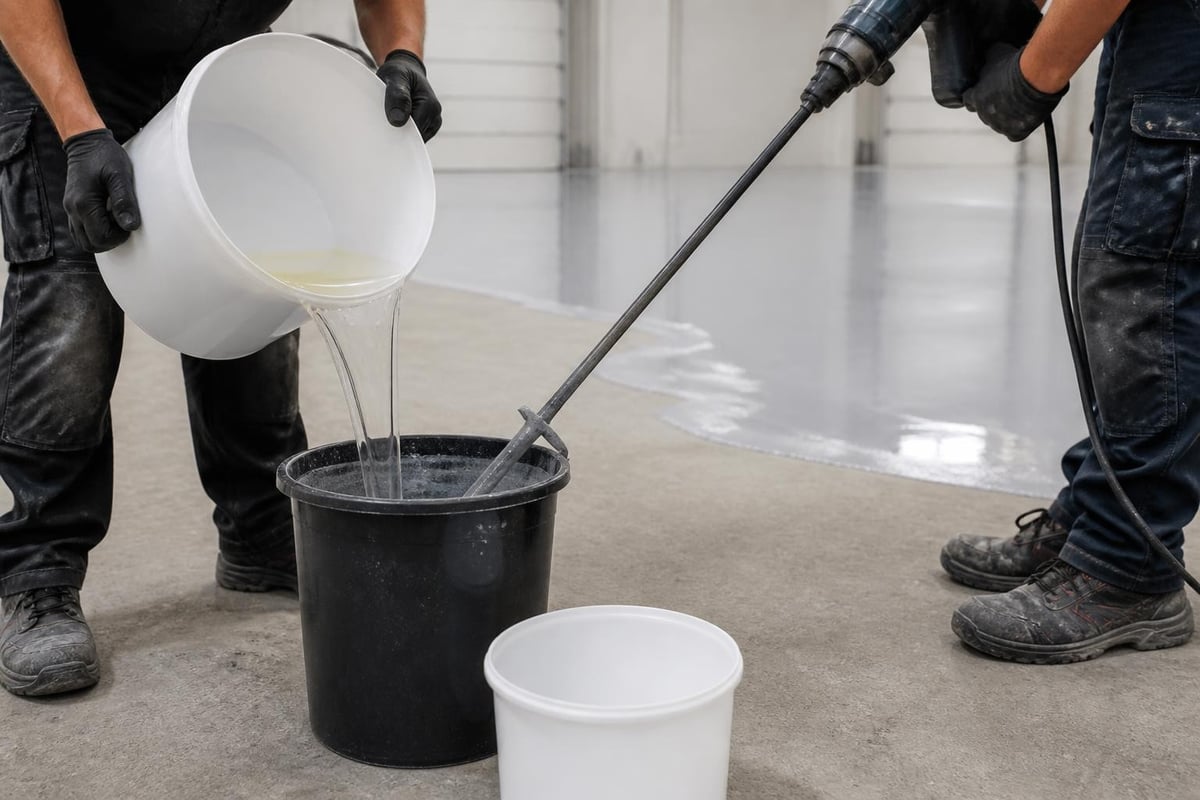
Epoxy floor coverings have become the preferred solution for commercial and industrial facilities across Australia, offering unmatched durability and performance in demanding environments. These high-performance systems combine resin and hardener components to create seamless, chemical-resistant surfaces that withstand heavy traffic, impact, and harsh operating conditions. From warehouses and factories to commercial kitchens and carparks, epoxy floor coverings deliver measurable value through extended service life, reduced maintenance requirements, and enhanced workplace safety. Understanding the characteristics, applications, and installation requirements of these systems enables facility managers and business owners to make informed decisions about flooring investments.
Understanding Epoxy Floor Covering Systems
Epoxy floor coverings consist of thermosetting polymers created through a chemical reaction between epoxide resins and polyamine hardeners. This exothermic curing process transforms liquid components into a rigid, cross-linked plastic material that bonds directly to concrete substrates.
The resulting surface provides exceptional adhesion strength, typically exceeding the tensile strength of the concrete itself. This molecular bond ensures the coating remains intact under mechanical stress and thermal cycling.
Chemical Composition and Performance Characteristics
Modern epoxy systems utilise various resin formulations to achieve specific performance objectives:
- Solvent-based epoxies: Traditional formulations offering deep penetration and excellent adhesion
- Water-based epoxies: Lower VOC emissions suitable for occupied facilities
- 100% solids epoxies: Zero-emission systems providing maximum film thickness per coat
- Modified epoxy systems: Blended formulations incorporating polyurethane or polyaspartic components
Each formulation delivers distinct advantages depending on application requirements, environmental conditions, and performance expectations. Epoxy flooring systems have evolved considerably over recent decades, with manufacturers developing specialised products for specific industrial applications.
The mechanical properties of cured epoxy floor coverings include compressive strength exceeding 10,000 psi, tensile strength above 5,000 psi, and flexural strength suitable for dynamic loading conditions. These characteristics make epoxy ideal for facilities operating forklifts, heavy machinery, and constant vehicular traffic.
Applications Across Commercial and Industrial Environments
Epoxy floor coverings serve diverse commercial applications where conventional flooring materials fail to meet performance requirements. The versatility of these systems allows customisation for specific operational demands.
Warehouse and Distribution Facilities
Warehouse environments subject floors to extreme mechanical stress from pallet jacks, forklifts, and impact loading. Epoxy systems protect concrete substrates whilst providing the following benefits:
- Abrasion resistance: Withstanding constant traffic without surface degradation
- Impact tolerance: Absorbing dropped loads without cracking or delamination
- Dust suppression: Sealing concrete pores to eliminate dust generation
- Enhanced visibility: Light-reflective surfaces reducing lighting requirements by up to 30%
Our experience with warehouse flooring projects demonstrates how properly specified epoxy systems extend floor service life whilst reducing total cost of ownership.
Manufacturing and Factory Floors
Production facilities require flooring that tolerates chemical exposure, thermal shock, and heavy equipment. Factory flooring applications benefit from epoxy's resistance to oils, solvents, acids, and alkaline substances.
The seamless nature of epoxy floor coverings eliminates joints where contaminants accumulate, simplifying cleaning protocols and supporting hygiene requirements. This characteristic proves essential in food processing, pharmaceutical manufacturing, and quality-controlled production environments.

Installation Requirements and Surface Preparation
Successful epoxy floor covering installations depend primarily on thorough surface preparation. Inadequate preparation accounts for the majority of premature failures in commercial applications.
Concrete Substrate Assessment
Prior to installation, contractors must evaluate substrate conditions including:
| Assessment Factor | Acceptance Criteria | Testing Method |
|---|---|---|
| Moisture content | Below 3% RH 75% | Calcium chloride test |
| Surface porosity | CSP 2-3 profile | Visual comparison |
| Compressive strength | Minimum 3,000 psi | Core sampling |
| pH level | 7-9 range | pH indicator paper |
Moisture-related failures represent a significant concern for epoxy installations. Epoxy moisture control systems provide solutions for substrates exhibiting elevated moisture vapour transmission rates, though proper substrate preparation remains the primary defence.
Surface Preparation Techniques
Mechanical preparation methods include:
- Diamond grinding: Creates optimal surface profile whilst removing contamination
- Shot blasting: Aggressive profiling for heavily contaminated or sealed surfaces
- Scarifying: Removes existing coatings and surface defects
- Acid etching: Chemical preparation for small areas or tight spaces
Professional contractors select preparation methods based on substrate condition, contamination type, and project timeline. The International Organization for Standardization provides standardized testing procedures for evaluating surface preparation quality and coating performance.
Multi-Layer System Architecture
Commercial epoxy installations typically incorporate multiple layers to achieve specified performance:
- Primer coat: Penetrating sealer ensuring substrate adhesion
- Base coat: High-build epoxy providing thickness and strength
- Top coat: Wear-resistant finish delivering chemical resistance and aesthetics
System thickness ranges from 2mm for light-duty applications to 6mm or greater for heavy industrial environments. Proper curing between coats ensures optimal inter-layer bonding and system integrity.
Performance Advantages for Commercial Operations
Epoxy floor coverings deliver quantifiable operational benefits that justify initial investment costs through reduced lifecycle expenses and improved facility performance.
Chemical Resistance and Cleanability
The impermeable nature of cured epoxy prevents chemical penetration, protecting concrete substrates from degradation. ASTM C722 specifications establish performance criteria for chemical-resistant floor surfacings, providing benchmarks for product selection.
Common industrial chemicals resisted by epoxy systems include:
- Petroleum products (oils, fuels, solvents)
- Organic acids (acetic, citric, lactic)
- Inorganic acids (phosphoric, sulphuric at lower concentrations)
- Alkaline cleaning solutions
- Food processing byproducts
This chemical resistance extends floor service life whilst simplifying maintenance protocols. Spills wipe clean without staining or substrate damage, reducing cleaning time and labour costs.
Safety and Compliance Features
Workplace safety regulations mandate slip-resistant surfaces in many commercial environments. Epoxy floor coverings accommodate various anti-slip aggregates and texturing methods to achieve required coefficient of friction values.
Our work on brewery flooring projects highlights how properly textured epoxy surfaces maintain safety standards in consistently wet environments. The National Flooring Authority provides detailed guidance on epoxy applications in construction projects, addressing safety and performance specifications.
| Safety Feature | Implementation Method | Application |
|---|---|---|
| Slip resistance | Broadcast aggregate | Wet process areas |
| Line marking | Integral colour zones | Traffic management |
| Static dissipation | Conductive additives | Electronics manufacturing |
| Impact absorption | Flexible base layers | Workshop areas |
System Selection for Specific Applications
Matching epoxy formulations to application requirements ensures optimal performance and value. Incorrect product selection leads to premature failure and costly replacements.
Light to Medium Duty Applications
Retail environments, offices, and showrooms require aesthetically pleasing surfaces with moderate durability. These applications typically utilise:
Water-based epoxy systems offering:
- Lower odour during installation
- Faster return-to-service times
- Adequate durability for foot traffic
- Cost-effective coverage rates
Our retail flooring installations demonstrate how water-based systems deliver professional appearance whilst meeting budget constraints.
Heavy-Duty Industrial Applications
Facilities operating heavy equipment, processing chemicals, or maintaining extreme cleanliness standards require robust epoxy floor coverings. These demanding environments necessitate 100% solids epoxy systems providing:
- Maximum film thickness: Building substantial protective layers
- Superior chemical resistance: Withstanding aggressive substance exposure
- Enhanced mechanical properties: Supporting extreme loading conditions
- Extended service life: Minimising disruption from premature replacement
Workshop flooring installations benefit from these high-performance characteristics, particularly in automotive, aerospace, and precision manufacturing facilities.

Specialised Commercial Kitchen Systems
Food processing and commercial kitchen environments demand epoxy systems meeting stringent hygiene and safety regulations. These installations require:
- Thermal shock resistance (withstanding hot water washdowns)
- HACCP compliance for food safety
- Anti-microbial properties preventing bacterial growth
- Chemical resistance to cleaning agents and organic acids
The seamless, non-porous surface prevents bacterial harbourage whilst withstanding rigorous sanitation protocols. Food-grade epoxy formulations contain no harmful substances that might contaminate products.
Maintenance and Lifecycle Considerations
Properly maintained epoxy floor coverings deliver 10-15 years of service in commercial applications, with heavy industrial environments achieving 7-10 years before requiring replacement. Maintenance requirements remain minimal compared to alternative flooring systems.
Daily and Periodic Maintenance Protocols
Routine maintenance preserves appearance and extends service life:
- Daily sweeping: Removes abrasive debris preventing surface scratching
- Weekly mopping: Cleans surface contamination using neutral pH cleaners
- Monthly inspection: Identifies damage requiring prompt repair
- Annual assessment: Evaluates coating condition and plans maintenance
Avoiding harsh chemical cleaners, particularly those containing strong acids or alkalis, prevents premature coating degradation. Manufacturers provide specific cleaning product recommendations for their epoxy systems.
Repair and Restoration Options
Minor damage requires prompt attention preventing moisture ingress and substrate deterioration. Repair procedures include:
Scratch and gouge repair: Epoxy patching compounds matching original coating
Delamination correction: Removal and replacement of affected areas
Chemical etching: Recoating damaged zones after surface preparation
Complete resurfacing: Installing new coating over existing system
For facilities requiring minimal downtime, fast-cure epoxy formulations enable repairs during operational breaks. Our experience installing commercial epoxy floors includes developing maintenance schedules that preserve performance whilst accommodating business operations.
Cost Analysis and Investment Returns
Epoxy floor covering costs vary significantly based on system type, substrate condition, and project complexity. Understanding total lifecycle costs rather than initial installation expenses provides accurate value assessment.
Installation Cost Components
Commercial epoxy installations include these cost elements:
| Cost Element | Percentage of Total | Variables Affecting Cost |
|---|---|---|
| Surface preparation | 30-40% | Substrate condition, contamination |
| Materials | 25-35% | System type, thickness, additives |
| Labour | 30-40% | Project size, access, timeline |
| Ancillary costs | 5-10% | Joint filling, repairs, protection |
Projects requiring extensive substrate repair, moisture mitigation, or complex surface preparation increase total installation costs. However, these investments ensure long-term performance and prevent premature failures.
Return on Investment Calculations
Facility managers evaluate epoxy floor coverings against alternative flooring through lifecycle cost analysis. Benefits quantified in ROI calculations include:
- Reduced maintenance labour: Simplified cleaning procedures saving 2-3 hours weekly
- Extended replacement intervals: 3-4 times longer service life than painted floors
- Energy savings: Improved light reflectivity reducing electricity costs 15-25%
- Reduced downtime: Minimised production interruptions from floor failures
South East Queensland facilities operating 24/7 achieve payback periods of 3-5 years through operational savings and avoided replacement costs. The National Institute of Standards and Technology has documented floor covering performance specifications that support informed cost-benefit analysis.
Environmental and Sustainability Factors
Modern epoxy floor coverings address environmental concerns through improved formulations and installation practices. Sustainability considerations influence product selection for environmentally conscious organisations.
Low-VOC and Green Building Standards
Building certification programmes including Green Star and NABERS recognise low-emission flooring materials. Epoxy manufacturers have developed formulations supporting these objectives:
Water-based epoxies reduce VOC emissions to less than 100 g/L, compared to 400-500 g/L for traditional solvent-based systems. These products support indoor air quality objectives whilst maintaining performance characteristics.
100% solids formulations contain zero volatile organic compounds, eliminating emissions entirely. These systems align with stringent environmental requirements in healthcare, educational, and government facilities.
Our commitment to green building standards includes recommending products that balance performance requirements with environmental responsibility.
Durability and Resource Conservation
The extended service life of epoxy floor coverings conserves resources by reducing replacement frequency. Manufacturing new flooring materials consumes significant energy and generates waste, making durable solutions environmentally preferable.
Recent research into epoxy nanocomposites demonstrates ongoing development of enhanced formulations with improved properties and reduced environmental impact. These advances promise even better performance from future epoxy systems.
Quality Assurance and Professional Installation
Epoxy floor covering performance depends critically on proper installation by experienced contractors. The complexity of these systems requires specialised knowledge, equipment, and quality control procedures.
Contractor Qualifications and Licensing
Queensland commercial flooring contractors must hold valid QBCC licences demonstrating competency in floor coating installation. Additional qualifications indicating professional expertise include:
- Industry-specific training certifications
- Manufacturer application approvals
- Comprehensive insurance coverage
- Documented project portfolio
Selecting qualified contractors ensures compliance with Australian standards, manufacturer warranties, and building code requirements. Our decades of experience installing epoxy flooring systems across South East Queensland has established proven procedures delivering consistent results.

Quality Control During Installation
Professional installations incorporate quality assurance checkpoints throughout the process:
- Pre-installation assessment: Substrate testing confirming suitability
- Environmental monitoring: Temperature and humidity tracking ensuring proper cure
- Material verification: Confirming correct products and mixing ratios
- Application inspection: Monitoring coverage rates and thickness
- Cure verification: Testing hardness before returning facility to service
Documentation of these quality control steps provides assurance of proper installation and supports warranty claims if issues arise. ASTM F3010 standards establish testing protocols for moisture mitigation systems that often accompany epoxy installations.
Technical Considerations for Project Planning
Successful epoxy floor covering projects require careful planning addressing technical requirements, operational constraints, and timeline coordination.
Environmental Conditions During Installation
Epoxy chemistry demands specific environmental conditions for optimal curing:
- Temperature range: 10-30°C for most formulations
- Relative humidity: Below 85% preventing surface condensation
- Substrate temperature: Minimum 3°C above dew point
- Ventilation: Adequate air movement for solvent evaporation
Projects scheduled during extreme weather conditions risk application failures. Queensland's subtropical climate generally supports year-round installation, though summer humidity occasionally requires environmental controls.
Operational Coordination and Downtime
Commercial facilities must coordinate flooring installations with operational requirements. Project planning considerations include:
Phased installation: Completing sections sequentially maintaining partial operations
Weekend scheduling: Utilising non-operating periods for application and cure
Fast-cure systems: Specifying rapid-return formulations reducing downtime
Traffic management: Protecting completed areas during multi-phase projects
Our experience with factory epoxy flooring installations includes developing schedules that minimise business disruption whilst ensuring quality outcomes.
Design Integration and Aesthetics
Beyond performance characteristics, epoxy floor coverings offer design flexibility through colour selection, decorative aggregates, and custom patterns. Commercial applications increasingly specify:
- Colour-coded zones: Designating traffic lanes, work areas, and safety zones
- Corporate branding: Incorporating company colours and logos
- Decorative quartz: Adding visual interest whilst enhancing durability
- Metallic effects: Creating unique appearances in showroom applications
These aesthetic options maintain full performance capabilities whilst supporting facility design objectives. Coordination between architects, facility managers, and flooring contractors ensures design intent translates into completed installations.
Epoxy floor coverings deliver proven performance for commercial and industrial facilities requiring durable, chemical-resistant surfaces that withstand demanding operational conditions. Understanding system types, application requirements, and installation best practices enables informed decisions supporting long-term facility performance. When you're ready to explore how epoxy flooring can enhance your commercial facility's durability and functionality, Superior Concrete Finishes brings decades of expertise to projects across South East Queensland, delivering professional installations backed by comprehensive licensing and insurance.

Joshua Miller has over 15 years of experience in the commercial concrete flooring industry, specialising in epoxy flooring systems and polished concrete solutions for warehouses, factories, retail spaces and commercial developments. Joshua and his team work closely with builders, property owners and facility managers across South East Queensland to deliver durable, cost-effective commercial flooring systems for warehouses, industrial facilities, commercial kitchens, retail stores and large commercial developments.
Major builders and organisations Josh has led projects on include McNab, Hutchinson Builders, IKEA, Queensland Rail, University of Queensland, ADCO, Tomkins Commercial, Bunnings, OfficeWorks, Spotlight, and Anaconda.
If you're planning a project and need advice on the best commercial concrete flooring solution, contact Josh or one of the team at Superior Concrete Finishes.
-
 info@superiorconcretefinishes.com.au
-
1300 789 740
-
Connect with Josh on
LinkedIn


 Connect with Josh on