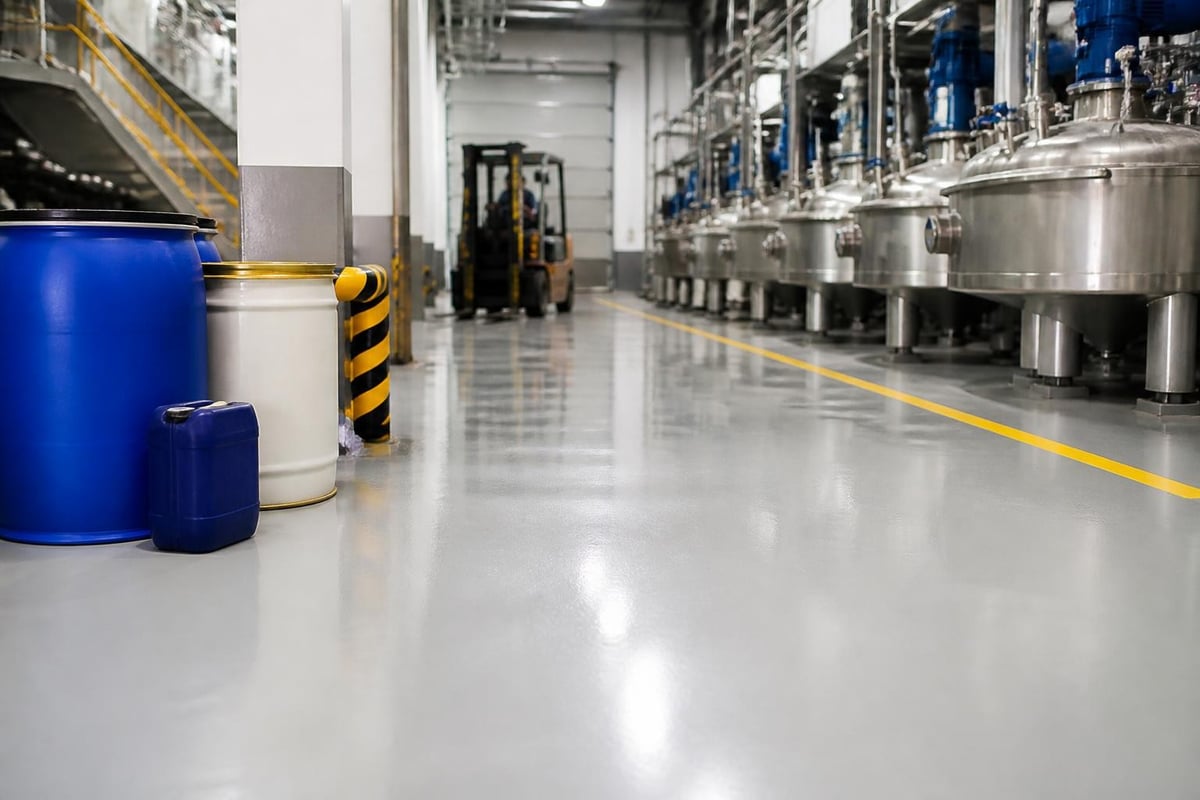
Manufacturing facilities face unique flooring challenges that demand robust, long-lasting solutions capable of withstanding constant operational stress. Epoxy flooring for factory environments has become the industry standard across South East Queensland and beyond, delivering exceptional performance in the most demanding industrial settings. From heavy machinery movement to chemical exposure and thermal cycling, modern epoxy systems provide the resilience and functionality that production facilities require. Understanding the specific benefits, application requirements, and long-term value of factory epoxy flooring enables facility managers to make informed decisions that protect their operations and workforce.
Why Factories Choose Epoxy Flooring Systems
Manufacturing operations create harsh conditions that quickly deteriorate standard flooring materials. Concrete alone, whilst strong in compression, remains vulnerable to chemical attack, surface wear, and moisture penetration.
Epoxy flooring solutions transform vulnerable concrete into a robust, sealed surface that handles industrial demands. The chemical bond created between epoxy resin and concrete substrate produces a monolithic floor system that eliminates weak points and failure zones.
Exceptional Load-Bearing Performance
Factory floors must support heavy equipment, forklifts, pallet jacks, and constant traffic patterns. Epoxy systems excel in these applications because they:
- Distribute point loads across the concrete substrate
- Resist cracking under impact stress
- Maintain structural integrity despite thermal expansion
- Support weights exceeding standard warehouse requirements
The durability advantages of industrial epoxy flooring make it particularly suitable for facilities with automated guided vehicles, overhead cranes, and heavy manufacturing equipment. Load ratings often exceed 100 tonnes per square metre when properly installed over sound concrete.
Chemical and Spill Resistance
Manufacturing processes frequently involve oils, solvents, acids, alkalis, and other aggressive substances. Epoxy flooring for factory applications creates an impermeable barrier that prevents chemical penetration and substrate damage.
| Chemical Type | Epoxy Resistance | Protection Level |
|---|---|---|
| Petroleum products | Excellent | Full containment |
| Mild acids/alkalis | Very good | Surface protection |
| Coolants/lubricants | Excellent | Zero penetration |
| Cleaning agents | Excellent | Complete resistance |
This chemical resistance extends floor life significantly whilst reducing maintenance costs and contamination risks. Spills remain on the surface for easy cleanup rather than soaking into porous concrete.
Essential Performance Characteristics
Beyond basic durability, epoxy flooring for factory environments delivers specific performance attributes that directly impact operational efficiency and safety compliance.
Seamless Surface Integration
Unlike tiled or segmented flooring, epoxy coatings for concrete floors create continuous, seamless surfaces without joints or gaps. This characteristic proves critical in manufacturing environments where:
Hygiene matters: Food processing, pharmaceutical manufacturing, and clean room facilities benefit from surfaces that harbour no bacteria or contaminants.
Debris accumulation threatens operations: Joints collect dust, metal shavings, and particulates that interfere with precision manufacturing.
Forklift traffic is constant: Seamless floors eliminate the jolts and vibration caused by expansion joints, reducing equipment wear and operator fatigue.
The benefits of seamless epoxy flooring in industrial settings extend to easier cleaning protocols and improved workplace safety through elimination of trip hazards.

Safety Enhancement Features
Factory safety regulations demand flooring that minimises slip risks whilst remaining easy to clean. Modern epoxy systems incorporate specific safety features:
- Customisable slip resistance: Aggregate additives create traction appropriate to the work environment
- High visibility: Light reflective properties improve illumination by up to 300%
- Line marking integration: Coloured epoxy enables permanent safety zones and traffic patterns
- Fire resistance: Properly formulated systems meet industrial fire safety standards
The safety benefits of factory epoxy flooring include reduced workplace incidents and improved compliance with OH&S requirements across Queensland facilities.
Installation Requirements and Considerations
Successful epoxy flooring for factory applications demands proper planning, preparation, and execution. Shortcuts during installation inevitably lead to premature failure and costly repairs.
Concrete Substrate Preparation
The foundation determines system performance. Professional preparation involves:
- Moisture testing to verify concrete is sufficiently dry
- Diamond grinding or shot blasting to create proper surface profile
- Crack repair and joint treatment
- Contamination removal through chemical stripping or mechanical methods
- Final cleaning to eliminate all dust and debris
Concrete must exhibit minimum compressive strength of 25 MPa and be free from laitance, curing compounds, and sealers. Any compromise in preparation compromises the entire system.
System Selection and Specification
Not all epoxy systems suit every factory environment. Industrial epoxy floor coating specifications should match operational demands:
| Factory Type | Recommended System | Typical Thickness |
|---|---|---|
| Light manufacturing | Two-coat epoxy | 300-500 microns |
| Heavy manufacturing | Multi-coat epoxy | 2-3 mm |
| Chemical processing | Chemical-resistant epoxy | 3-5 mm |
| Food production | Antimicrobial epoxy | 2-4 mm |
Temperature during application, ambient humidity, and concrete temperature all influence curing and final properties. Professional installers account for these variables to ensure optimal results.
Long-Term Value and Maintenance
The true cost of flooring extends far beyond initial installation. Epoxy flooring for factory environments delivers exceptional lifecycle value through reduced maintenance requirements and extended service life.
Maintenance Protocols
Daily cleaning involves simple dust mopping or auto-scrubbing with neutral pH cleaners. The non-porous surface prevents dirt embedding, maintaining appearance and hygiene with minimal effort.
Routine maintenance schedule:
- Daily: Sweep or dust mop high-traffic areas
- Weekly: Machine scrub with approved cleaning solution
- Monthly: Inspect for damage or wear patterns
- Annually: Deep clean and assess condition
Properly maintained epoxy floor coating systems routinely provide 15-25 years of service in demanding factory environments. This longevity far exceeds alternative flooring materials whilst requiring significantly less intervention.
Cost-Benefit Analysis
Initial installation costs for epoxy flooring for factory applications typically range from $50 to $150 per square metre depending on system specification and site conditions. Whilst higher than basic concrete sealing, the return on investment becomes apparent through:
- Elimination of floor replacement cycles
- Reduced cleaning labour and chemical costs
- Decreased equipment maintenance from smooth running surfaces
- Lower lighting costs due to reflective properties
- Minimised production downtime for floor repairs
The protective qualities of epoxy in manufacturing plants translate directly to operational savings that recover installation costs within 3-5 years in most applications.
Specialised Factory Applications
Different manufacturing sectors impose unique demands on flooring systems. Understanding these requirements ensures appropriate system selection and specification.
Heavy Manufacturing and Metalworking
Facilities producing machinery, metal products, or heavy equipment require maximum impact resistance and load capacity. Three-coat epoxy systems with aggregate reinforcement handle falling tools, dragged materials, and point loads from manufacturing equipment.
Metal shavings and cutting fluids present ongoing challenges. Epoxy resin concrete floors in metalworking facilities incorporate enhanced chemical resistance whilst maintaining the hardness necessary to resist metal abrasion.
Food and Beverage Production
Regulatory compliance drives flooring decisions in food manufacturing. Epoxy systems must meet HACCP requirements whilst withstanding hot water washdowns, sanitisers, and organic acids.
The resilience of epoxy coatings in industrial environments proves particularly valuable in food production where thermal cycling from refrigeration zones to processing areas creates significant stress. Antimicrobial additives prevent bacterial growth in microscopic surface imperfections.

Automotive and Assembly Operations
Just-in-time manufacturing and lean production methods demand flooring that supports efficiency whilst marking workflow zones clearly. Epoxy floor installation in automotive facilities often incorporates multiple colours to delineate assembly stations, material flow paths, and safety zones.
The dust-free environment created by sealed epoxy surfaces proves critical in paint booths and quality control areas where particulate contamination affects product quality.
Environmental and Sustainability Considerations
Modern manufacturing increasingly focuses on environmental responsibility and sustainable operations. Epoxy flooring for factory facilities contributes to green building initiatives through several mechanisms.
Energy Efficiency Improvements
Light reflective epoxy surfaces reduce artificial lighting requirements by 20-30% compared to darker flooring materials. This translates to substantial energy savings in large manufacturing facilities operating multiple shifts.
The thermal mass of concrete combined with reflective epoxy coating helps stabilise internal temperatures, reducing HVAC loads and associated energy consumption.
VOC Compliance and Indoor Air Quality
Queensland regulations and green building standards limit volatile organic compound emissions. Modern epoxy formulations meet or exceed these requirements whilst maintaining superior performance characteristics.
Low-odour, water-based epoxy systems enable installation during operational hours with minimal disruption. This flexibility proves valuable in facilities requiring continuous production or staged floor replacement.
Material Longevity and Waste Reduction
The extended service life of epoxy flooring for factory applications reduces material consumption and landfill waste compared to flooring requiring frequent replacement. A single epoxy installation often outlasts three to four cycles of alternative materials.
When eventual replacement becomes necessary, epoxy can be mechanically removed and the concrete substrate reused, supporting circular economy principles.
Selecting Professional Installation Services
The quality of installation determines system performance and longevity. Epoxy Flooring requires specialised knowledge, proper equipment, and experienced application techniques to achieve specified results.

Critical Qualifications and Credentials
Professional epoxy installers should demonstrate:
- Valid QBCC licensing for commercial flooring work
- Comprehensive public liability and workers compensation insurance
- Documented training in epoxy system application
- References from similar factory installations
- Understanding of Australian Standards for flooring systems
Decades of industry experience proves invaluable when addressing unexpected site conditions or complex project requirements. Knowledge of substrate moisture issues, crack repair techniques, and system compatibility prevents costly failures.
Project Planning and Execution
Successful factory floor projects require careful coordination to minimise production disruption. Key planning elements include:
- Comprehensive site assessment and moisture testing
- Detailed specification matching operational requirements
- Staging plan enabling phased installation
- Quality control procedures at each application stage
- Post-installation care and maintenance guidance
Professional contractors provide realistic timeframes accounting for surface preparation, curing requirements, and return-to-service schedules. Rushing installation to meet artificial deadlines inevitably compromises quality.
Addressing Common Installation Challenges
Factory environments present unique obstacles that demand adaptive solutions and experienced problem-solving.
Existing Floor Contamination
Years of manufacturing operations embed oils, chemicals, and contaminants deep into concrete pores. Surface cleaning alone proves insufficient for proper epoxy adhesion.
Contamination removal requires:
- Chemical stripping for oil and grease penetration
- Mechanical grinding to expose clean concrete
- Multiple solvent wipes and drying periods
- Adhesion testing before epoxy application
Facilities with extensive contamination may require specialised primers or moisture-tolerant systems to achieve acceptable bond strength.
Operational Constraints
Production facilities rarely afford extended shutdown periods for complete floor replacement. Industrial flooring projects must accommodate operational realities through:
- Night and weekend installation schedules
- Sectional replacement maintaining production access
- Fast-cure systems reducing downtime
- Temporary traffic protection during curing
Experienced contractors develop staging plans that balance installation requirements with manufacturing continuity.
Temperature and Humidity Variables
Queensland's subtropical climate creates application challenges during summer humidity and winter temperature fluctuations. Epoxy curing chemistry depends on controlled environmental conditions.
Professional installation accounts for seasonal variables through:
- Climate-controlled application timing
- Dehumidification equipment in humid conditions
- Temperature monitoring throughout curing
- Formulation adjustments for ambient conditions
These measures ensure proper curing and optimal final properties regardless of installation season.
Future-Proofing Factory Floors
Strategic flooring decisions consider not only current requirements but anticipated operational changes and expansion plans.
Scalability and Expansion
Growing manufacturing operations require flooring systems that integrate seamlessly with facility additions. Epoxy flooring for factory environments enables straightforward expansion through:
- Matching colour and finish to existing floors
- Chemical compatibility with established systems
- Preparation techniques that bond new to old
- Documentation enabling consistent future work
Maintaining installation records including system specification, applicator details, and colour codes simplifies future modifications and repairs.
Adaptability to Changing Uses
Manufacturing facilities often repurpose areas for different operations or lease space to new tenants. The versatility of epoxy coating services allows relatively simple modification of existing floors through:
- Recoating with different colours for new zoning
- Adding slip resistance where requirements change
- Increasing chemical resistance for new processes
- Implementing line marking for revised layouts
This adaptability protects capital investment whilst accommodating operational evolution.
Regulatory Compliance and Standards
Factory flooring must satisfy multiple regulatory frameworks governing workplace safety, environmental protection, and industry-specific requirements.
Australian Standards and Building Codes
Queensland commercial facilities must comply with relevant Australian Standards including:
- AS/NZS 4586: Slip resistance classification
- AS 3958: Guide to industrial coating inspection
- Building Code of Australia provisions for commercial buildings
Professional installers ensure specified systems meet all applicable standards and provide documentation supporting compliance verification.
Industry-Specific Requirements
Certain manufacturing sectors impose additional flooring standards:
| Industry Sector | Key Requirements | Relevant Standards |
|---|---|---|
| Food production | HACCP compliance, antimicrobial | AS 4674 |
| Pharmaceutical | Clean room classification | ISO 14644 |
| Chemical processing | Spill containment, chemical resistance | AS/NZS 2107 |
| Automotive | Static dissipation, fire resistance | AS 1530 |
Understanding these requirements during specification prevents costly modifications after installation.
Regional Considerations for South East Queensland
Local conditions and market factors influence epoxy flooring for factory projects across Brisbane, Gold Coast, and surrounding industrial areas.
Climate Impact on Performance
South East Queensland's humidity and temperature ranges affect both installation and long-term performance. Summer conditions above 30°C with high humidity require careful application timing and potentially modified formulations.
The application of epoxy flooring in factories and warehouses must account for substrate moisture levels elevated by Queensland's wet season. Professional moisture testing prevents osmotic blistering and adhesion failure.
Market Availability and Support
South East Queensland's established commercial flooring industry provides ready access to:
- Quality epoxy materials from reputable suppliers
- Experienced installation contractors with regional knowledge
- Ongoing maintenance support and repair services
- Competitive pricing through market competition
This infrastructure supports both initial installation and lifecycle maintenance requirements.
Epoxy flooring for factory environments delivers unmatched durability, safety, and long-term value for manufacturing operations across South East Queensland. The combination of chemical resistance, load-bearing capacity, and minimal maintenance requirements makes epoxy systems the logical choice for facilities demanding reliable, high-performance flooring. With decades of experience installing commercial and industrial flooring systems throughout the region, Superior Concrete Finishes provides expert epoxy flooring solutions tailored to your facility's specific operational requirements, backed by full QBCC licensing and comprehensive insurance coverage.

Joshua Miller has over 15 years of experience in the commercial concrete flooring industry, specialising in epoxy flooring systems and polished concrete solutions for warehouses, factories, retail spaces and commercial developments. Joshua and his team work closely with builders, property owners and facility managers across South East Queensland to deliver durable, cost-effective commercial flooring systems for warehouses, industrial facilities, commercial kitchens, retail stores and large commercial developments.
Major builders and organisations Josh has led projects on include McNab, Hutchinson Builders, IKEA, Queensland Rail, University of Queensland, ADCO, Tomkins Commercial, Bunnings, OfficeWorks, Spotlight, and Anaconda.
If you're planning a project and need advice on the best commercial concrete flooring solution, contact Josh or one of the team at Superior Concrete Finishes.
-
 info@superiorconcretefinishes.com.au
-
1300 789 740
-
Connect with Josh on
LinkedIn


 Connect with Josh on