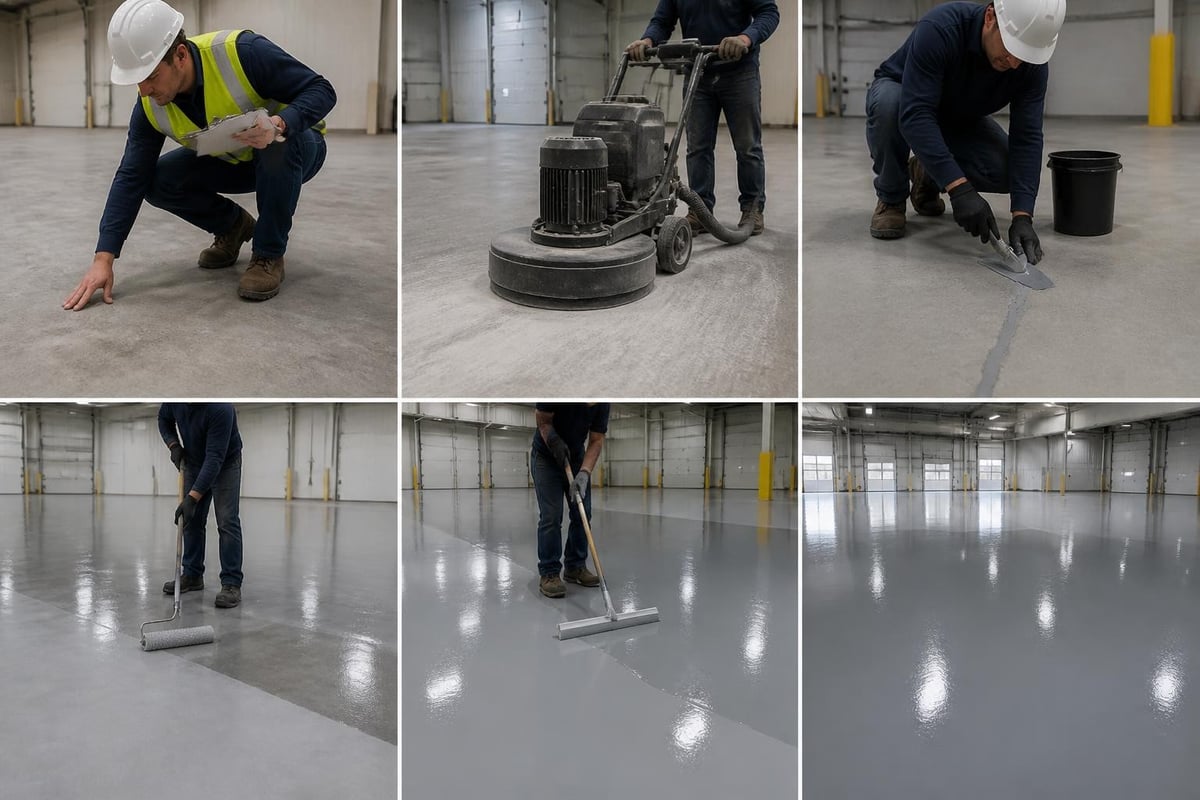
Understanding the epoxy flooring process is essential for achieving durable, long-lasting commercial flooring solutions. Whether you're planning a warehouse upgrade, factory refurbishment, or commercial kitchen installation, knowing each step ensures optimal results. This comprehensive guide walks through the professional installation process, from initial assessment to final curing, helping commercial and industrial clients make informed decisions about their flooring investments.
Understanding the Epoxy Flooring System
The epoxy flooring process begins with understanding what makes this system unique. Epoxy comprises two primary components: a resin and a hardener. When mixed together, these elements undergo a chemical reaction that creates a rigid, high-performance surface.
The chemistry behind epoxy creates several key advantages:
- Exceptional adhesion to concrete substrates
- Superior resistance to chemicals and oils
- High impact and abrasion tolerance
- Seamless, hygienic surface ideal for food processing
- Long-term durability exceeding traditional coatings
This two-part system requires precise mixing ratios and careful application timing. The chemical composition of epoxy flooring determines its final properties, making professional installation critical for commercial applications.
Different epoxy formulations suit different environments. Water-based epoxies offer lower VOC emissions for enclosed spaces, while solvent-based systems provide enhanced chemical resistance for industrial workshops and factories.
Initial Assessment and Planning
Before any physical work begins, a thorough site assessment shapes the entire epoxy flooring process. Professional contractors evaluate multiple factors that influence installation success.
Concrete Condition Evaluation
The substrate condition determines preparation requirements. Contractors assess concrete age, moisture content, existing coatings, and structural integrity. New concrete typically requires 28 days of curing before epoxy application, whilst older slabs may present different challenges.
Critical evaluation points include:
- Surface contamination from oils, grease, or chemicals
- Existing cracks, spalling, or delamination
- Moisture vapour transmission rates
- Floor levelness and slope requirements
- Temperature and humidity conditions
Testing methods such as calcium chloride tests measure moisture levels. High moisture content can prevent proper epoxy adhesion, requiring additional moisture mitigation measures. Many commercial carparks and warehouse facilities need comprehensive moisture testing before proceeding.
Environmental Considerations
Temperature and humidity significantly impact the epoxy flooring process. Ideal application conditions range between 10°C and 30°C, with relative humidity below 85%. South East Queensland's subtropical climate occasionally demands scheduling adjustments to avoid extreme weather.
Surface Preparation Phase
Surface preparation represents the most critical step in the epoxy flooring process. Industry experts consistently emphasise that proper preparation prevents coating failures and ensures long-term performance.
Mechanical Grinding and Shot Blasting
Professional-grade equipment removes existing coatings, laitance, and surface contaminants. Diamond grinding creates the ideal surface profile for epoxy adhesion. The process opens concrete pores, allowing epoxy to penetrate and bond effectively.
| Preparation Method | Best Application | Profile Depth | Equipment Required |
|---|---|---|---|
| Diamond Grinding | Large commercial areas | Medium | Floor grinder with dust extraction |
| Shot Blasting | Industrial workshops | Deep | Shot blaster machine |
| Acid Etching | Small repairs | Light | Chemical application tools |
| Scarifying | Heavy contamination | Very deep | Scarifier with carbide cutters |
Shot blasting works exceptionally well in factory flooring applications where oils and heavy contamination exist. This aggressive method removes stubborn residues and creates superior mechanical bonding.

Crack and Joint Repair
All cracks, joints, and surface imperfections require addressing before epoxy application. Small cracks get routed out and filled with epoxy-based repair mortars. Expansion joints need appropriate flexible sealants to accommodate building movement.
Control joints in warehouse flooring often span considerable distances. These joints require special attention to prevent epoxy cracking. Professionals use flexible joint fillers that move with concrete whilst maintaining a sealed surface.
Priming Application
The primer coat forms the foundation of successful epoxy flooring. This essential layer enhances adhesion between concrete and subsequent epoxy coats. Primer selection depends on substrate porosity, moisture levels, and environmental conditions.
Primer application follows strict protocols:
- Mix primer components according to manufacturer specifications
- Apply using squeegees or rollers within pot life window
- Maintain consistent thickness across entire surface
- Allow proper cure time before next coat
- Verify coverage rates match technical specifications
Moisture-tolerant primers serve commercial kitchens and areas with potential water exposure. Standard primers suit dry environments like retail stores and offices. The epoxy floor coating process requires selecting appropriate primers for optimal results.
Pot life considerations matter significantly. Once mixed, primer must be applied before chemical curing begins. Professional teams coordinate mixing and application timing to avoid material waste and ensure proper coverage.
Base Coat Application
The base coat represents the primary protective layer in the epoxy flooring process. This thick application provides the bulk of the system's chemical resistance, durability, and aesthetic properties.
Mixing and Application Technique
Precise mixing ratios ensure proper curing chemistry. Professional installers use calibrated measuring equipment and power mixers to achieve homogeneous blends. Any deviation from specified ratios compromises final performance.
Application techniques vary based on project scale. Squeegees spread epoxy evenly across surfaces, whilst spiked rollers remove air bubbles and ensure consistent thickness. Epoxy resin concrete floors require experienced application to achieve uniform coverage.
Temperature monitoring continues throughout application. Epoxy cures faster in warmer conditions and slower in cooler environments. Installers adjust working methods accordingly to maintain quality standards.
Coverage Rates and Thickness
Commercial applications typically require minimum 2mm thickness for adequate protection. Higher traffic areas like warehouse flooring may need thicker applications reaching 3-4mm.
Coverage rates depend on surface porosity and profile depth. Rough, porous concrete absorbs more epoxy than smooth, dense surfaces. Experienced contractors calculate material requirements accurately to avoid shortages or excessive waste.
Topcoat and Seal Coat
The final protective layer enhances durability and provides desired aesthetic finish. Topcoats offer additional UV resistance, chemical protection, and improved cleanability for commercial environments.
Clear seal coats protect underlying epoxy whilst showcasing the base colour. When selecting epoxy flooring colours, many commercial clients prefer neutral tones that hide minor dirt and wear patterns.
Topcoat benefits for commercial applications:
- Enhanced abrasion resistance for high-traffic areas
- Improved chemical resistance against spills
- Easier cleaning and maintenance protocols
- UV stability preventing yellowing
- Gloss levels from matte to high-shine
Some industrial applications require anti-slip additives in topcoats. Commercial carpark flooring benefits from textured finishes that improve vehicle and pedestrian traction in wet conditions.
Application timing between base coat and topcoat follows manufacturer guidelines. Applying topcoat too early can cause delamination, whilst waiting too long may require surface preparation to ensure adhesion.
Curing and Post-Installation
Proper curing completes the epoxy flooring process and determines final performance characteristics. Understanding cure schedules helps facility managers plan downtime and reopening timelines.
Cure Time Requirements
| Cure Stage | Timeline | Restrictions | Temperature Impact |
|---|---|---|---|
| Initial Set | 6-12 hours | No foot traffic | Faster in warm conditions |
| Light Traffic | 24-48 hours | Foot traffic only | Humidity affects cure rate |
| Full Cure | 5-7 days | Normal operations | Cold slows chemical reaction |
| Maximum Hardness | 14-30 days | No restrictions | Achieves peak properties |
Light foot traffic typically begins after 24 hours, but heavy equipment and vehicles need longer cure periods. The detailed installation process emphasises respecting cure schedules to prevent surface damage.
Chemical resistance develops progressively during curing. Avoiding spills and heavy chemicals during the first week protects the developing coating system. Commercial kitchens and food processing facilities plan cleaning protocols around cure schedules.
Environmental Control During Curing
Temperature and humidity control remains important during curing phases. Extreme temperature fluctuations can cause surface defects or incomplete curing. Enclosed spaces benefit from climate control during winter months or humid summer periods.
Ventilation requirements balance curing needs with occupational health considerations. Whilst modern low-VOC epoxies reduce emissions, adequate airflow supports optimal curing and worker safety.
Quality Control and Inspection
Professional epoxy flooring installation includes comprehensive quality checks throughout the epoxy flooring process. These inspections ensure specification compliance and identify potential issues before they become problems.
Surface Profile Testing
Before epoxy application, surface profile gauges measure concrete roughness. Adequate profile ensures mechanical bonding between concrete and coating. Insufficient profile leads to adhesion failures and costly repairs.
Pull-off adhesion tests verify coating bonding strength. These destructive tests remove small coating sections to measure adhesion force. Results confirm whether preparation and application met required standards.
Thickness Verification
Wet film thickness gauges measure applied coating depth during installation. This real-time monitoring ensures proper coverage rates and adequate protection. Dry film thickness testing after curing verifies final specifications.
Documentation includes:
- Surface preparation records and test results
- Material batch numbers and mixing ratios
- Application conditions (temperature, humidity)
- Cure time monitoring and traffic introduction
- Final inspection reports and warranty information
Professional contractors maintain detailed records supporting warranty claims and future maintenance planning. These documents prove valuable for facility managers tracking flooring performance over time.
Common Challenges and Solutions
Even with careful planning, the epoxy flooring process occasionally encounters challenges requiring expert problem-solving. Understanding common issues helps prevent delays and quality problems.
Moisture-Related Problems
Excessive substrate moisture causes bubbling, delamination, and coating failure. Moisture testing before installation prevents these issues. When moisture problems emerge, mitigation options include moisture barriers, extended drying periods, or moisture-tolerant epoxy systems.
South East Queensland's humidity occasionally complicates moisture management. Professional installers monitor conditions and adjust schedules to avoid problematic weather periods. Understanding proper installation techniques helps overcome regional challenges.
Temperature Variations
Unexpected temperature changes during application affect workability and curing. Cold weather slows reactions, extending cure times and potentially causing surface defects. Hot conditions accelerate curing, reducing working time and potentially causing application problems.
Experienced installers adapt mixing quantities, application speeds, and timing to compensate for temperature variations. Small batch mixing in hot weather prevents material waste from shortened pot life.

Coating Defects
Fish eyes, orange peel, and pinholing occasionally occur despite careful application. These defects typically result from surface contamination, improper mixing, or environmental conditions. Identifying causes allows corrective action before final coats.
Some defects require complete removal and reapplication, whilst others accept spot repairs. Professional contractors assess each situation individually, recommending appropriate remediation that maintains overall system integrity.
Specialised Applications and Variations
Different commercial environments require adapted epoxy flooring processes. Understanding these variations ensures optimal performance in specialised settings.
Commercial Kitchen Requirements
Food-safe epoxy systems meet stringent hygiene standards. These formulations resist frequent washdowns with harsh chemicals and high-temperature cleaning. Commercial kitchen flooring often incorporates antimicrobial additives and thermal shock resistance.
Seamless cove bases extend epoxy up walls, eliminating dirt-harbouring joints. This detail simplifies cleaning and maintains food safety compliance. Installation requires skilled applicators forming smooth, bubble-free transitions.
Heavy Industrial Environments
Factories and mechanical workshops demand maximum chemical and impact resistance. Thicker applications using high-solids epoxies provide enhanced durability. Some applications incorporate quartz aggregates for additional mechanical strength.
Understanding the complete epoxy flooring installation guide helps specify appropriate systems for demanding industrial applications. These environments often require faster return-to-service schedules, influencing product selection.
Retail and Commercial Spaces
Aesthetic considerations dominate retail flooring decisions whilst maintaining durability. The epoxy flooring process for retail stores emphasises appearance alongside performance. Decorative options include metallic finishes, colour blends, and logo incorporation.
Lower chemical exposure in retail environments allows using coating systems optimised for aesthetics and foot traffic resistance rather than maximum chemical protection.
Maintenance Considerations
Proper maintenance begins during the epoxy flooring process planning phase. Designing systems that suit client maintenance capabilities ensures long-term satisfaction and performance.
Maintenance protocols for commercial epoxy floors:
- Regular sweeping or dust mopping removes abrasive particles
- Damp mopping with neutral pH cleaners maintains appearance
- Immediate spill cleanup prevents staining and chemical damage
- Periodic deep cleaning removes accumulated soiling
- Annual inspections identify wear patterns requiring attention
High-traffic areas eventually show wear regardless of initial quality. Planning for periodic topcoat renewal extends system life economically. Many warehouse flooring installations schedule topcoat refreshing every 5-7 years.
Avoiding harsh chemicals and abrasive cleaning tools preserves epoxy surfaces. Educating maintenance staff about appropriate cleaning methods prevents premature coating damage.
Selecting Professional Contractors
Choosing qualified installers significantly impacts epoxy flooring process outcomes. Experience, licensing, and insurance protect commercial clients from installation failures and liability issues.
QBCC licensing verifies contractor qualifications and financial stability. This regulatory oversight provides recourse if problems arise. Fully insured contractors protect facility owners from liability during installation and throughout warranty periods.
Evaluation criteria for commercial contractors:
- Demonstrated experience in similar commercial applications
- Portfolio showing completed projects matching scope
- Current licensing and comprehensive insurance coverage
- Technical knowledge of products and application methods
- References from comparable commercial clients
- Quality control procedures and documentation practices
For commercial and industrial clients requiring professional Epoxy Flooring solutions, working with experienced specialists ensures projects meet performance expectations and budget requirements. Decades of industry expertise translate into efficient installation, minimal disruption, and durable results.

Requesting detailed proposals helps compare contractors objectively. Comprehensive quotes specify materials, preparation methods, coating systems, cure schedules, and warranty terms. Lowest price rarely indicates best value when considering long-term performance.
Site visits allow contractors to assess conditions accurately and clients to evaluate professionalism. Discussing previous similar projects reveals problem-solving capabilities and technical expertise relevant to specific applications.
Project Timeline and Scheduling
Understanding realistic timeframes helps commercial clients plan facility downtime effectively. The epoxy flooring process duration varies based on project size, existing conditions, and coating system complexity.
| Project Phase | Small Area (100-500m²) | Medium Area (500-2000m²) | Large Area (2000m²+) |
|---|---|---|---|
| Site Preparation | 1 day | 1-2 days | 2-3 days |
| Surface Grinding | 1-2 days | 2-3 days | 3-5 days |
| Primer Application | 1 day | 1-2 days | 2-3 days |
| Base Coat | 1 day | 1-2 days | 2-3 days |
| Topcoat | 1 day | 1 day | 1-2 days |
| Initial Cure | 1-2 days | 1-2 days | 1-2 days |
| Total Duration | 5-8 days | 7-12 days | 11-18 days |
These timelines assume normal conditions without complications. Extensive repairs, moisture issues, or weather delays extend schedules. Building adequate contingency time prevents rushed work compromising quality.
Phased installations allow partial facility operation during installation. Dividing large warehouses or carparks into sections minimises business disruption. Coordination between contractor and facility manager optimises workflow and maintains operational requirements.
Weekend and after-hours scheduling suits retail and commercial operations unable to close during business hours. Premium rates typically apply, but avoiding revenue loss justifies additional costs.
Cost Factors and Budget Planning
Multiple variables influence epoxy flooring process costs. Understanding these factors helps commercial clients budget accurately and evaluate proposals effectively.
Primary cost drivers include:
- Surface preparation requirements and existing condition
- Total floor area and project accessibility
- Coating system type and thickness specifications
- Colour selections and decorative elements
- Site location and mobilisation requirements
- Timeline constraints and scheduling preferences
Surface preparation represents 40-60% of total project costs. Heavily contaminated or damaged concrete requires extensive grinding, repairs, and preparation, increasing overall investment. Well-maintained substrates reduce preparation costs significantly.
Premium epoxy systems cost more initially but deliver superior longevity and performance. Life-cycle cost analysis often favours higher-grade materials for commercial applications expecting decades of service. Comparing initial costs against maintenance requirements and replacement intervals provides realistic value assessment.
Additional costs emerge from downtime, temporary relocations, and operational disruptions. Efficient contractors minimise business impact through careful planning and execution.
Environmental and Safety Considerations
Modern epoxy flooring processes increasingly emphasise environmental responsibility and occupational safety. Low-VOC formulations reduce emissions whilst maintaining performance standards.
Proper ventilation during application protects installers and building occupants. Professional contractors implement safety protocols including respiratory protection, adequate airflow, and restricted access during installation and initial curing.
Sustainable practices include minimising waste through accurate material calculations, recycling packaging materials, and using energy-efficient equipment. Some epoxy systems incorporate recycled content or bio-based components reducing environmental impact.
Safety data sheets provide critical information about handling, application, and emergency procedures. Commercial clients should verify contractors maintain current SDS documentation and train personnel appropriately.
The epoxy flooring process requires expertise, precision, and quality materials to deliver durable commercial flooring solutions. From initial assessment through final curing, each step influences long-term performance and client satisfaction. For commercial and industrial clients throughout South East Queensland seeking professional epoxy flooring and polished concrete installations, Superior Concrete Finishes brings decades of experience to warehouses, factories, retail stores, commercial kitchens, and carparks. Our QBCC-licensed, fully insured team delivers quality finishes backed by comprehensive knowledge of the complete installation process.

Joshua Miller has over 15 years of experience in the commercial concrete flooring industry, specialising in epoxy flooring systems and polished concrete solutions for warehouses, factories, retail spaces and commercial developments. Joshua and his team work closely with builders, property owners and facility managers across South East Queensland to deliver durable, cost-effective commercial flooring systems for warehouses, industrial facilities, commercial kitchens, retail stores and large commercial developments.
Major builders and organisations Josh has led projects on include McNab, Hutchinson Builders, IKEA, Queensland Rail, University of Queensland, ADCO, Tomkins Commercial, Bunnings, OfficeWorks, Spotlight, and Anaconda.
If you're planning a project and need advice on the best commercial concrete flooring solution, contact Josh or one of the team at Superior Concrete Finishes.
-
 info@superiorconcretefinishes.com.au
-
1300 789 740
-
Connect with Josh on
LinkedIn


 Connect with Josh on