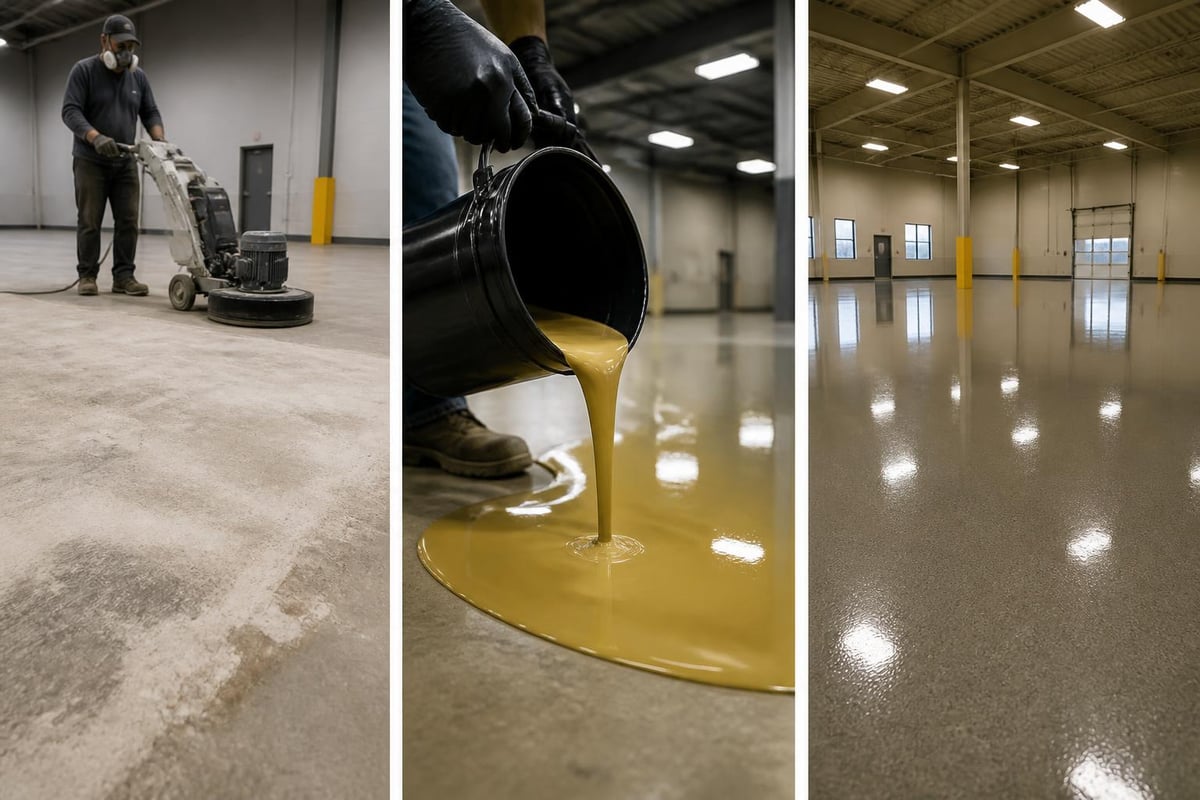
Commercial and industrial facilities across South East Queensland demand flooring systems that withstand heavy traffic, chemical exposure, and constant operational demands. Epoxy flooring solutions have emerged as the premier choice for warehouses, factories, retail stores, and industrial workshops, delivering unmatched durability and performance. These advanced coating systems transform standard concrete surfaces into resilient, chemical-resistant floors that protect your investment whilst enhancing workplace safety and operational efficiency.
Understanding Epoxy Flooring Chemistry and Performance
Epoxy flooring solutions combine resin and hardener components through a chemical reaction called cross-linking, creating a rigid, three-dimensional molecular structure. This process produces a thermosetting polymer that bonds directly to concrete substrates, forming an integrated surface layer rather than a simple coating.
The chemical composition of epoxy systems determines their performance characteristics. Different formulations offer varying levels of chemical resistance, impact tolerance, and flexibility. Understanding these properties helps facility managers select appropriate solutions for specific operational requirements.
Key performance attributes include:
- Chemical resistance against oils, acids, alkalis, and solvents
- Compressive strength exceeding 10,000 psi when fully cured
- Abrasion resistance for high-traffic industrial environments
- Moisture barrier properties protecting concrete substrates
- Temperature stability across operational ranges
Research into epoxy thermal conductivities and mechanical properties demonstrates how cross-linking density affects final performance, providing valuable insights for commercial applications.
Application Methodology and System Selection
Professional installation begins with comprehensive substrate evaluation and preparation. The concrete surface must achieve specific moisture content levels, typically below 4% relative humidity, to ensure proper adhesion and prevent delamination.
Proper substrate preparation remains the single most critical factor determining long-term performance. Surface contamination, inadequate mechanical preparation, or moisture issues account for the majority of epoxy flooring failures in commercial installations.
| Preparation Stage | Process | Equipment Required |
|---|---|---|
| Surface Assessment | Moisture testing, adhesion testing | Moisture meters, pull-off testers |
| Mechanical Preparation | Grinding, shot blasting | Diamond grinders, shot blasters |
| Crack Repair | Routing and filling | Crack chasing tools, epoxy fillers |
| Profile Verification | Surface profile measurement | CSP comparator chips |
Installation teams apply epoxy systems in multiple layers, beginning with a primer coat that penetrates the concrete substrate. Build coats follow, providing thickness and structural integrity. Topcoats deliver the final protective barrier and aesthetic finish.
Commercial Applications and Industry-Specific Requirements
Warehousing operations require epoxy flooring solutions that accommodate forklift traffic, pallet jack movement, and potential chemical spills from stored materials. Modern distribution centres process thousands of pallet movements daily, creating intense point-loading conditions that demand robust flooring systems.
Warehouse flooring specifications typically include minimum thickness requirements of 3-5mm for high-traffic zones, with additional protective measures in designated heavy-load areas.
Manufacturing and Production Facilities
Factories present unique challenges including chemical exposure, thermal cycling, and continuous operational demands. Production lines cannot afford extended downtime for flooring repairs, making initial system selection crucial for operational continuity.
Factory environments benefit from epoxy systems offering rapid cure times and chemical resistance tailored to specific manufacturing processes. Automotive facilities require resistance to hydraulic fluids and lubricants, whilst pharmaceutical manufacturing demands antimicrobial properties and cleanroom compatibility.
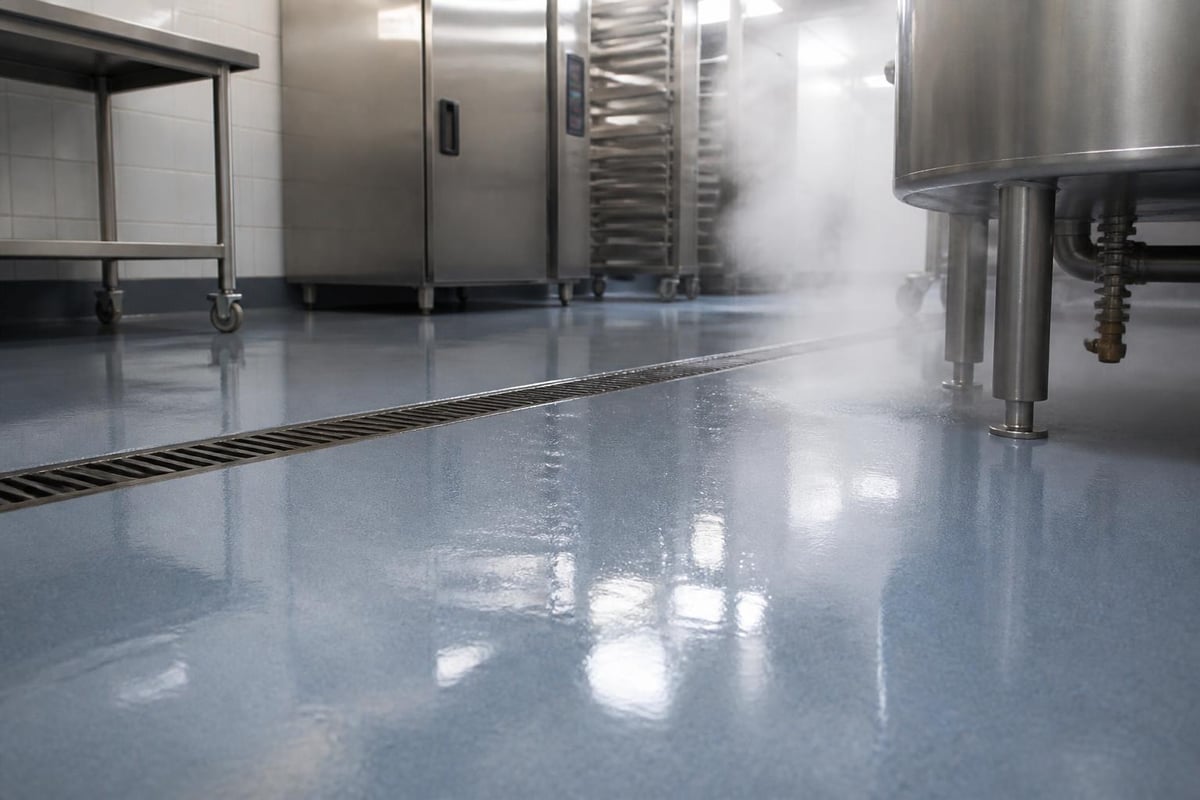
Food processing operations add another dimension to epoxy flooring requirements:
- Thermal shock resistance for hot water washdowns
- Antimicrobial additives preventing bacterial growth
- Slip-resistant textures maintaining safety when wet
- Chemical resistance to cleaning agents and sanitizers
- HACCP compliance for food safety standards
Retail and Commercial Spaces
Retail environments demand aesthetically appealing flooring solutions whilst maintaining durability for customer traffic and merchandise displays. Epoxy systems offer design flexibility through colour selection, aggregate incorporation, and finish options ranging from high-gloss to matte surfaces.
Shopping centres, showrooms, and commercial offices increasingly specify epoxy flooring solutions for their combination of visual appeal and practical performance. These spaces require flooring that enhances brand presentation whilst tolerating daily foot traffic and cleaning protocols.
The retail sector particularly values low VOC emissions and rapid installation schedules that minimize business disruption. Weekend installations allow stores to resume operations without extended closures, protecting revenue streams during flooring upgrades.
Workshop and Mechanical Service Environments
Automotive workshops, mechanical service centres, and industrial maintenance facilities subject floors to extreme conditions including oil contamination, dropped tools, and heavy equipment placement. Workshop flooring systems must resist petroleum-based chemicals whilst providing adequate slip resistance in potentially contaminated areas.
Professional epoxy applicators recommend system thicknesses of 4-6mm for workshop environments, incorporating additional aggregate for enhanced impact resistance. This specification protects against common workshop hazards whilst maintaining the chemical resistance essential for automotive service operations.
System Variants and Technical Specifications
Epoxy flooring solutions encompass several distinct system types, each engineered for specific performance requirements and operational conditions.
Self-levelling epoxy systems provide smooth, uniform surfaces ideal for manufacturing facilities requiring easy cleaning and contamination control. These systems flow to create level surfaces, eliminating surface irregularities whilst building substantial thickness.
Mortar epoxy systems incorporate graded aggregates within the epoxy matrix, creating extremely durable floors capable of withstanding severe mechanical impact and chemical exposure. These heavy-duty systems suit foundries, heavy manufacturing, and industrial operations with exceptional wear demands.
Epoxy coating systems apply thinner layers ranging from 2-4mm, providing chemical resistance and surface protection for moderate-traffic commercial environments. These economical solutions deliver excellent performance in office spaces, light manufacturing, and storage areas.
| System Type | Thickness Range | Primary Applications | Key Benefits |
|---|---|---|---|
| Self-Levelling | 3-6mm | Cleanrooms, food processing | Smooth finish, easy cleaning |
| Mortar Systems | 6-12mm | Heavy industry, foundries | Maximum durability, impact resistance |
| Coating Systems | 2-4mm | Offices, light warehousing | Cost-effective, quick installation |
| Broadcast Systems | 4-8mm | General industrial | Texture options, slip resistance |
Advanced formulations incorporate two-dimensional materials creating multifunctional nanocomposites, enhancing mechanical properties and chemical resistance beyond traditional epoxy systems.
Installation Timelines and Operational Planning
Commercial projects require careful scheduling to minimize operational disruption whilst ensuring proper cure times between application stages. Standard epoxy installations proceed through distinct phases, each requiring specific environmental conditions and cure periods.
Facility managers must understand that ambient temperature significantly affects cure rates and final performance. Installations conducted in temperatures below 10°C or above 30°C require modified procedures and specialized formulations.
Typical installation timeline:
- Day 1: Substrate preparation and primer application
- Day 2: Base coat application and partial cure
- Day 3: Build coats and aggregate broadcast (if specified)
- Day 4: Seal coat application
- Day 5-7: Cure period before light traffic
- Day 7-14: Full cure before heavy traffic and chemical exposure
Rush installations utilizing rapid-cure formulations can compress these timelines, enabling return to service within 24-48 hours. However, these systems typically carry premium pricing and may sacrifice some performance characteristics for speed.
Working with experienced epoxy flooring contractors ensures proper planning, execution, and cure monitoring throughout the installation process.
Performance Longevity and Maintenance Protocols
Properly installed epoxy flooring solutions deliver service lives exceeding 15-20 years in industrial environments when maintained according to manufacturer specifications. This longevity stems from the system's inherent durability and resistance to common degradation factors affecting alternative flooring options.
Maintenance requirements remain minimal compared to alternative flooring materials. Regular cleaning with neutral pH detergents preserves surface integrity whilst removing contaminants before they compromise the epoxy matrix. Facilities should avoid harsh alkaline cleaners exceeding pH 11, which can gradually degrade epoxy surfaces over extended exposure.
Periodic inspection identifies minor damage before it propagates into larger repairs. Small areas of wear or impact damage can receive localized repairs, extending overall system life without complete replacement.
Chemical Resistance and Exposure Management
Different epoxy formulations offer varying levels of chemical resistance. Westcoat’s epoxy systems demonstrate how specialized formulations address specific chemical exposure scenarios, from mild cleaning agents to aggressive industrial solvents.
Facilities should maintain chemical resistance charts specific to their installed system, guiding operational practices and spill response protocols. Immediate cleanup of chemical spills prevents prolonged exposure that might exceed system tolerances.
Temperature also influences chemical resistance. Elevated temperatures increase chemical reactivity and penetration rates, potentially overwhelming system resistance capabilities designed for ambient conditions.

Cost Analysis and Investment Justification
Epoxy flooring solutions represent a significant capital investment, typically ranging from $50-$150 per square metre depending on system type, preparation requirements, and project scale. However, total cost of ownership calculations demonstrate compelling value when compared to alternative flooring options.
Investment considerations include:
- Initial installation costs including substrate preparation
- Minimal maintenance expenses over service life
- Reduced downtime from flooring failures or replacements
- Enhanced safety reducing injury-related costs
- Improved cleaning efficiency lowering operational expenses
- Extended service life amortizing initial investment
Epoxy Flooring delivers exceptional value for commercial and industrial facilities requiring durable, chemical-resistant surfaces. The system creates a hard, protective surface that withstands daily operational demands whilst maintaining its protective properties for decades.
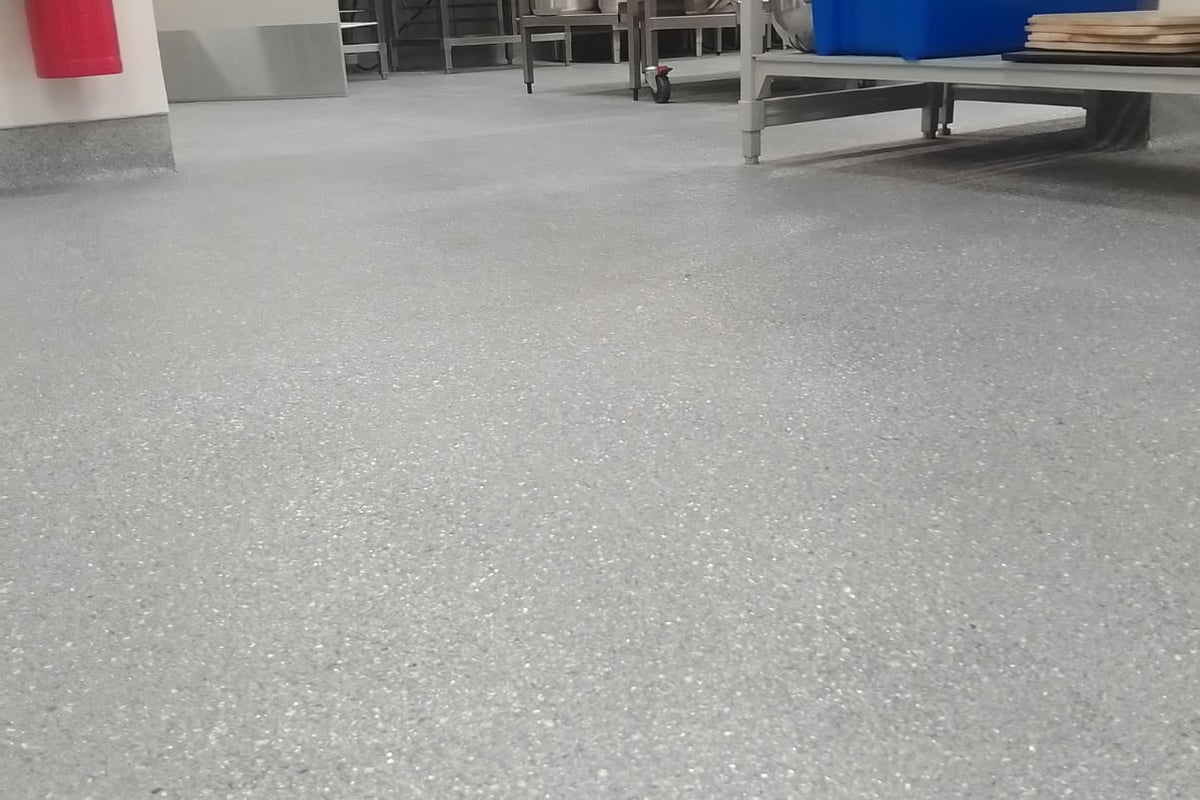
Warehouses benefit particularly from these economic advantages, as flooring failures can disrupt entire logistics operations. The investment in quality epoxy systems prevents costly operational interruptions whilst protecting the underlying concrete substrate from degradation.
Environmental Considerations and Sustainability
Modern epoxy flooring solutions incorporate low-VOC formulations meeting stringent environmental standards whilst maintaining performance characteristics. These advances enable installation in occupied facilities without requiring extended building evacuations or special ventilation measures.
The longevity of epoxy systems contributes to sustainability by reducing material consumption and waste generation associated with frequent flooring replacements. A single epoxy installation can outlast multiple cycles of alternative flooring materials, significantly reducing environmental impact over facility lifetimes.
Energy efficiency improves through epoxy's reflective properties, particularly in lighter colours. These surfaces enhance lighting efficiency by reflecting artificial and natural light throughout facilities, potentially reducing illumination requirements and associated energy consumption.
Machine learning approaches now inform epoxy formulation development, optimizing mechanical and thermal properties whilst reducing material waste during manufacturing processes.
Quality Assurance and Industry Standards
Professional epoxy installations adhere to industry standards governing surface preparation, application techniques, and performance verification. These standards ensure consistent quality across projects whilst providing benchmarks for performance expectations.
Testing protocols verify critical parameters including:
- Surface preparation adequacy through pull-off adhesion testing
- Cure completion via hardness testing and chemical exposure
- Thickness verification ensuring specification compliance
- Chemical resistance confirmation through immersion testing
- Slip resistance measurement for safety compliance
Quality contractors maintain comprehensive documentation throughout installation, providing facility managers with permanent records of system specifications, application conditions, and performance testing results. This documentation proves invaluable for warranty claims and future maintenance planning.
The portfolio of completed projects demonstrates installation quality and system performance across diverse commercial and industrial applications.
Dispelling Common Misconceptions
Several myths persist regarding epoxy flooring solutions despite decades of proven commercial performance. Understanding factual information enables informed decision-making when specifying flooring systems.
Common misconceptions include:
-
Myth: All epoxy systems are identical. Reality: Significant variations exist in formulations, with different systems engineered for specific applications and performance requirements.
-
Myth: Epoxy can be applied over any concrete surface. Reality: Proper substrate preparation remains essential, with contaminated or degraded concrete requiring remediation before application.
-
Myth: Thicker always means better. Reality: System thickness should match application requirements, with excessive thickness potentially causing issues including brittleness and thermal stress.
-
Myth: Epoxy floors are slippery. Reality: Properly specified systems incorporate slip-resistant additives and textures meeting safety standards for specific environments.
Understanding common epoxy flooring myths helps facility managers set realistic expectations and make informed specification decisions.
Integration with Building Systems and Infrastructure
Successful epoxy installations require coordination with other building systems including drainage, electrical conduits, and equipment foundations. Floor transitions between different areas demand careful detailing to maintain performance whilst accommodating thermal movement and substrate variations.
Commercial flooring projects benefit from integrated planning addressing these interfaces during design phases. Early coordination prevents conflicts and ensures seamless integration between flooring systems and building infrastructure.
Expansion joints within concrete substrates require special consideration. Epoxy systems must accommodate substrate movement without cracking or delaminating, typically achieved through specialized joint treatments or flexible epoxy formulations.
Future Developments and Innovation
Ongoing research continues advancing epoxy flooring technology, incorporating novel materials and application techniques. Broadband anti-reflection coatings developed for optical applications demonstrate epoxy's versatility and potential for specialized industrial applications.
Antimicrobial additives represent significant advancement for healthcare, food processing, and pharmaceutical applications. These incorporated agents actively inhibit bacterial growth on floor surfaces, complementing regular cleaning protocols with continuous antimicrobial action.
Smart flooring concepts integrating sensors within epoxy systems offer potential for predictive maintenance and operational monitoring. These developments may enable real-time tracking of floor conditions, identifying wear patterns and chemical exposures before they compromise system integrity.
Sustainability drives formulation development toward bio-based epoxy resins derived from renewable resources. These emerging alternatives maintain performance characteristics whilst reducing dependence on petroleum-based raw materials.
Selecting appropriate epoxy flooring solutions requires understanding your facility's specific operational demands, chemical exposure risks, and performance expectations. Professional specification and installation ensure these advanced systems deliver decades of reliable service, protecting your concrete investment whilst enhancing workplace safety and operational efficiency. For commercial and industrial facilities across South East Queensland requiring expert epoxy flooring installation, Superior Concrete Finishes brings decades of specialized experience to warehouses, factories, retail spaces, and industrial workshops throughout the region.

Joshua Miller has over 15 years of experience in the commercial concrete flooring industry, specialising in epoxy flooring systems and polished concrete solutions for warehouses, factories, retail spaces and commercial developments. Joshua and his team work closely with builders, property owners and facility managers across South East Queensland to deliver durable, cost-effective commercial flooring systems for warehouses, industrial facilities, commercial kitchens, retail stores and large commercial developments.
Major builders and organisations Josh has led projects on include McNab, Hutchinson Builders, IKEA, Queensland Rail, University of Queensland, ADCO, Tomkins Commercial, Bunnings, OfficeWorks, Spotlight, and Anaconda.
If you're planning a project and need advice on the best commercial concrete flooring solution, contact Josh or one of the team at Superior Concrete Finishes.
-
 info@superiorconcretefinishes.com.au
-
1300 789 740
-
Connect with Josh on
LinkedIn


 Connect with Josh on