
Selecting the right flooring solution for an industrial workshop demands careful consideration of durability, safety, and long-term performance. An epoxy workshop floor has emerged as the leading choice for facilities across South East Queensland, offering unmatched resistance to the demanding conditions found in manufacturing environments, automotive workshops, and heavy industrial spaces. This flooring system combines chemical resistance, mechanical strength, and ease of maintenance in a single solution that protects your concrete substrate while improving workplace safety. Understanding the technical specifications, installation requirements, and maintenance protocols for workshop epoxy systems enables facility managers to make informed decisions that deliver decades of reliable service.
Understanding Epoxy Workshop Floor Systems
Workshop environments present unique challenges that standard flooring simply cannot withstand. The constant exposure to oils, solvents, heavy equipment, and impact forces requires a flooring system engineered for industrial-grade performance.
An epoxy workshop floor consists of multiple layers of resin and hardener applied directly to prepared concrete. The chemical reaction between these components creates a rigid plastic material that bonds to the substrate, forming a seamless, impervious surface. This molecular bond provides strength that mechanical fastening systems cannot match.
Chemical Composition and Performance Characteristics
The performance of workshop epoxy depends on the specific formulation selected for your application. Key components include:
- Base resin type: Determines chemical resistance and adhesion properties
- Hardener chemistry: Influences cure time and final hardness
- Aggregate additives: Enhance slip resistance and mechanical strength
- Pigments and colorants: Provide aesthetic appeal and zoning capabilities
Workshop-grade epoxy systems typically range from 2mm to 6mm in thickness, with heavier-duty applications requiring multiple coats to achieve the necessary build. The epoxy flooring preparation process remains critical to long-term adhesion and performance.
Load-Bearing Capacity and Impact Resistance
Industrial workshops subject floors to extreme mechanical stress. Properly installed epoxy systems can withstand:
| Load Type | Performance Specification |
|---|---|
| Point loads | Up to 15,000 PSI compressive strength |
| Rolling loads | Heavy forklift and machinery traffic |
| Impact resistance | Superior to standard concrete surfaces |
| Abrasion resistance | CS-17 wear index or better |
The seamless nature of an epoxy workshop floor eliminates joints where concrete damage typically begins, distributing loads more evenly across the substrate.
Surface Preparation Requirements for Workshop Applications
The foundation of every successful epoxy installation lies in proper substrate preparation. Workshop floors often carry years of contamination that must be completely removed before coating application.
Concrete surfaces require diamond grinding or shot blasting to achieve the concrete surface profile necessary for mechanical adhesion. This process opens the concrete pores, allowing the epoxy to penetrate and create a molecular bond with the substrate.
Contamination Removal Protocols
Workshop floors accumulate oils, greases, coolants, and other contaminants that prevent epoxy adhesion. Thorough degreasing involves:
- Initial sweeping to remove loose debris and metal shavings
- Application of industrial degreasers to break down oil films
- High-pressure washing to flush contaminants from concrete pores
- Acid etching or mechanical grinding to open the surface
- Final cleaning and moisture testing before coating application
The detailed installation process emphasizes that any remaining contamination will compromise the entire system, regardless of product quality.
Moisture Testing and Mitigation
Concrete moisture presents one of the most common causes of epoxy failure. Before installation, comprehensive moisture testing determines whether the substrate can accept epoxy coating.
Required moisture tests include:
- Calcium chloride testing for moisture vapour emission rates
- Relative humidity testing using in-situ probes
- Plastic sheet testing for visual moisture indicators
- pH testing to identify alkaline conditions
Acceptable moisture levels typically remain below 3 pounds per 1,000 square feet per 24 hours. Elevated moisture requires additional preparation or specialized moisture-mitigating primers.

Installation Process for Industrial Workshop Floors
Professional installation separates successful long-term performance from premature failure. The multi-stage application process requires technical expertise and strict adherence to manufacturer specifications.
Temperature and humidity during application directly affect cure rates and final properties. Workshop installations typically proceed when ambient temperatures range between 10°C and 30°C, with relative humidity below 85%.
Primer Application and Base Coat Systems
The primer coat penetrates deep into the concrete substrate, providing the critical first layer of adhesion. Epoxy flooring contractors select primers based on substrate porosity, moisture conditions, and the final system specification.
Following primer cure, the base coat provides the bulk of the system thickness. This layer may be applied in multiple passes to achieve the required build. Roller or squeegee application ensures uniform coverage across the workshop floor.
Broadcast Aggregates and Texture Control
Safety considerations in workshop environments often require textured surfaces for slip resistance. Broadcast aggregates incorporated into the base coat create mechanical texture while maintaining the chemical resistance of the system.
Aggregate options include:
- Silica sand for moderate texture and economy
- Aluminium oxide for maximum slip resistance
- Decorative quartz for aesthetic appeal
- Glass beads for lighter texture requirements
The broadcast rate determines final texture, with heavier broadcasts providing more aggressive slip resistance. Many industrial concrete flooring applications specify controlled broadcast densities to balance safety with ease of cleaning.
Topcoat Selection and UV Stability
The final topcoat seals the system and provides the wear surface for daily operations. Workshop applications typically employ aliphatic polyurethane topcoats for superior UV stability and chemical resistance.
| Topcoat Type | Primary Advantage | Typical Application |
|---|---|---|
| Epoxy | Maximum chemical resistance | Heavy chemical exposure |
| Polyurethane | UV stability and gloss retention | High-traffic areas |
| Polyaspartic | Rapid cure and temperature tolerance | Quick-turnaround projects |
The topcoat also determines the final appearance and maintenance characteristics of the workshop floor.
Performance Benefits in Workshop Environments
An epoxy workshop floor delivers measurable operational advantages beyond basic floor protection. These benefits translate directly to reduced downtime, lower maintenance costs, and improved workplace safety.
The seamless, non-porous surface prevents fluid penetration, making cleanup of oils, coolants, and chemical spills straightforward. This ease of maintenance for epoxy floors reduces labour requirements while improving facility hygiene.
Chemical Resistance Specifications
Workshop operations expose floors to aggressive chemicals that rapidly degrade unprotected concrete. Properly formulated epoxy systems resist:
- Petroleum products including oils, greases, and solvents
- Hydraulic fluids and coolants
- Mild acids and alkaline solutions
- De-icing salts and automotive chemicals
Resistance levels vary by product formulation, with specialized systems available for severe chemical exposure environments.
Light Reflectivity and Energy Efficiency
The glossy finish of an epoxy workshop floor significantly improves light reflectivity compared to bare concrete. This enhancement delivers:
- Reduced lighting requirements for equivalent lux levels
- Improved visibility for precision work and safety
- More pleasant working environment with brighter appearance
- Lower energy consumption for facility lighting
Many facilities report 20-30% improvements in ambient light levels following epoxy installation, directly reducing electricity costs.
Dust Suppression and Air Quality
Concrete naturally generates dust through surface erosion and efflorescence. This concrete dust contaminates equipment, products, and breathing air throughout workshop facilities.
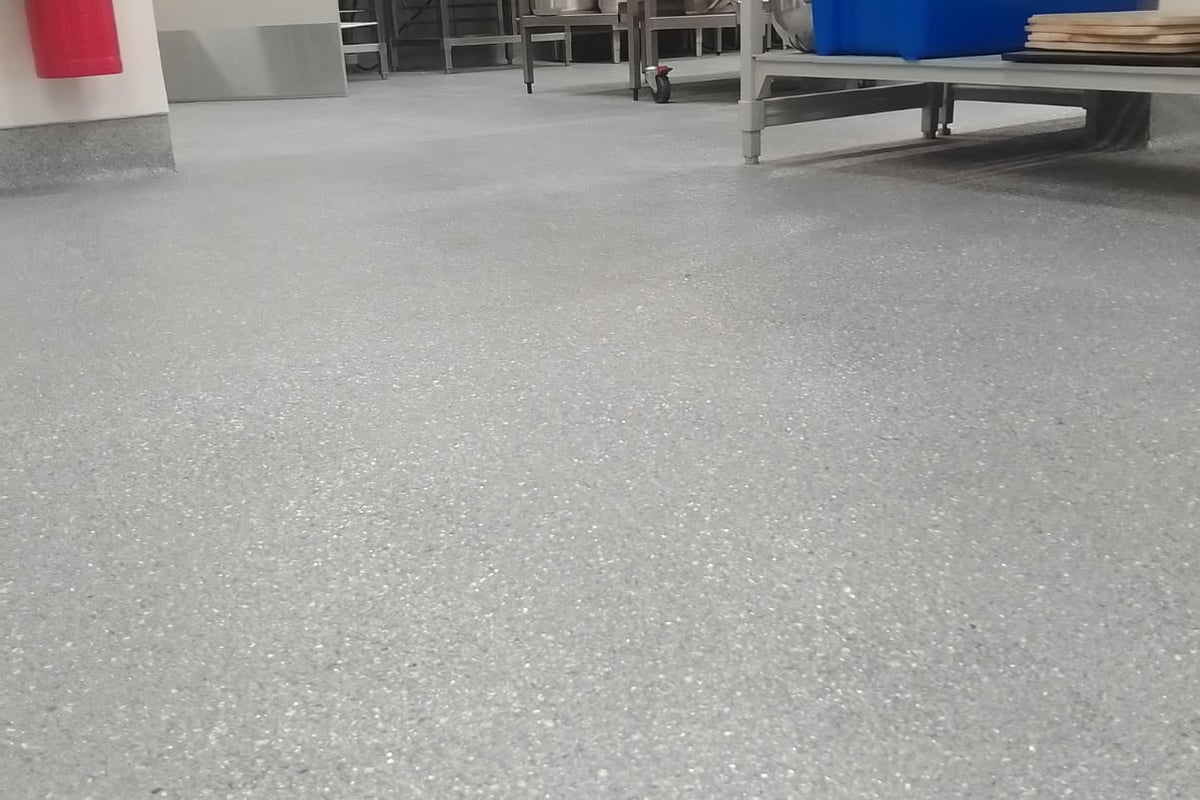
Epoxy Flooring from Superior Concrete Finishes seals the concrete surface completely, eliminating dust generation at the source. This improvement proves particularly valuable in precision manufacturing and automotive workshop environments where particulate contamination causes quality issues.
Maintenance Protocols for Extended Service Life
Proper maintenance extends the service life of an epoxy workshop floor while preserving its appearance and protective properties. Establishing routine cleaning protocols prevents the accumulation of contaminants that gradually degrade the surface.
Daily maintenance involves dry sweeping or dust mopping to remove loose debris and metal shavings. This simple step prevents scratching from particles ground into the surface by foot and equipment traffic.
Cleaning Methods and Chemical Compatibility
Weekly cleaning with appropriate solutions maintains the floor's appearance and removes deposited oils. The care and maintenance protocols recommend pH-neutral cleaners for routine applications.
Recommended cleaning approach:
- Remove loose debris with dust mop or soft-bristle broom
- Mix pH-neutral cleaner according to manufacturer specifications
- Apply cleaning solution with microfiber mop or auto-scrubber
- Agitate soiled areas with soft deck brush as required
- Remove dirty solution with wet vacuum or mop
- Rinse with clean water to prevent residue buildup
Avoid harsh alkaline cleaners and citrus-based degreasers that can gradually dull the surface finish. For maintaining polished concrete and epoxy surfaces, pH-neutral products deliver the best long-term results.
Damage Prevention and Traffic Management
While epoxy systems offer excellent durability, preventive measures extend service life significantly. Key protective practices include:
- Installing walk-off mats at entry points to capture abrasive particles
- Using equipment pads under stationary machinery and workbenches
- Avoiding dragging sharp metal objects across the surface
- Implementing spill response procedures for immediate cleanup
- Restricting use of metal-wheeled carts and equipment
Facilities that implement comprehensive protection protocols routinely achieve service lives exceeding 15-20 years before requiring complete refinishing.
Inspection and Repair Procedures
Regular inspection identifies developing issues before they compromise the floor system. Quarterly inspections should assess:
| Inspection Point | Warning Signs | Action Required |
|---|---|---|
| Surface adhesion | Hollow sounds when tapped | Investigate for delamination |
| Chemical staining | Persistent discoloration | Review cleaning protocols |
| Physical damage | Chips, cracks, or gouges | Schedule repair procedures |
| Gloss retention | Dulling in traffic areas | Consider topcoat renewal |
Minor damage typically responds well to localized repair, while extensive deterioration may require complete resurfacing. Understanding how long epoxy floors last helps facilities plan maintenance budgets appropriately.
Design Considerations and Customization Options
Modern epoxy workshop floor systems offer extensive customization to meet operational and aesthetic requirements. Strategic design choices enhance functionality while supporting workplace organization.
Colour coding different work zones improves workflow efficiency and safety compliance. Designated areas for specific operations, equipment parking, and pedestrian traffic create visual organization throughout the facility.
Traffic Marking and Safety Delineation
Integrating traffic markings directly into the epoxy system provides permanent, durable delineation that won't wear away like painted lines. Options include:
- Contrasting colour borders for walkways and work zones
- Embedded tape for forklift traffic lanes
- Textured surfaces in slip-prone areas
- High-visibility markings for emergency equipment
These integrated safety features align with flooring safety standards while eliminating ongoing repainting costs.
Anti-Slip Texture Variations
Different workshop areas require varying degrees of slip resistance. Wet process areas demand aggressive texture, while precision assembly zones benefit from smoother surfaces.
The anti-slip epoxy flooring approach allows customization of texture levels within a single facility. Heavy aggregate broadcast creates maximum slip resistance, while fine texture maintains easy cleaning in lower-risk areas.
Aesthetic Integration with Facility Branding
Workshop floors need not sacrifice appearance for performance. Contemporary epoxy systems accommodate:
- Custom colour matching to corporate branding
- Metallic finishes for modern aesthetic appeal
- Subtle pattern incorporation through decorative chips
- Logo integration at facility entrances
These design elements create professional facilities that enhance company image during client visits while maintaining full industrial performance.
Selecting the Right System for Your Workshop
Workshop diversity demands customized flooring solutions. The correct system specification depends on specific operational requirements, traffic patterns, and chemical exposure profiles.
Understanding the advantages of epoxy flooring for different applications guides appropriate system selection. Light manufacturing facilities require different specifications than heavy fabrication shops or automotive service centres.
Application-Specific System Requirements
Different workshop types present distinct flooring challenges:
Automotive workshops: Require maximum oil resistance and easy cleanup of fluid spills. Medium-build systems with chemical-resistant topcoats perform optimally.
Manufacturing facilities: Demand high impact resistance and heavy load capacity. Thick-build systems with aggregate reinforcement handle machinery traffic effectively.
Assembly operations: Benefit from smooth, dust-free surfaces that prevent product contamination. Standard-build systems with high-gloss finishes suit these environments.
Fabrication shops: Need superior abrasion resistance for metal working operations. Heavy-duty systems with enhanced mechanical properties withstand this demanding service.
The comprehensive workshop epoxy flooring guide provides detailed information on matching systems to specific applications.
Build Thickness and Performance Correlation
System thickness directly impacts durability and service life. Workshop applications typically specify:
- Light-duty (1-2mm): Suitable for low-traffic workshops with minimal chemical exposure
- Medium-duty (2-4mm): Standard specification for general workshop applications
- Heavy-duty (4-6mm): Required for severe service with heavy equipment and chemical exposure
- Ultra-heavy-duty (6mm+): Specialized applications with extreme loading conditions
Thicker systems cost more initially but deliver superior long-term value through extended service life and reduced maintenance requirements.
Return on Investment Analysis
Evaluating flooring options requires comprehensive cost analysis beyond initial installation expense. An epoxy workshop floor typically demonstrates superior ROI through:
- Extended service life reducing replacement frequency
- Lower maintenance labour and material costs
- Reduced lighting expenses from improved reflectivity
- Decreased product contamination from dust suppression
- Enhanced safety reducing workplace injury costs
- Improved facility appearance supporting company image
Most commercial installations achieve payback within 3-5 years compared to alternative flooring options, with total service lives extending 15-20 years under proper maintenance.
Installation Timeline and Project Planning
Successful workshop floor installation requires careful project planning to minimize operational disruption. Understanding the timeline enables effective scheduling around production requirements.
The complete installation process spans multiple days, with cure times between coats representing the primary time constraint. Typical project phases include:
- Site preparation (1-2 days): Equipment removal, cleaning, and surface profiling
- Primer application (1 day): Initial coat with overnight cure period
- Base coat installation (1-2 days): Multiple passes to achieve specified thickness
- Aggregate broadcast (same day): Applied wet-on-wet with base coat
- Scraping and topcoat (1 day): Remove excess aggregate and apply final sealer
- Cure period (2-3 days): Allow full hardness development before resuming operations
Total project duration typically ranges from 5-7 days for standard workshop installations. Accelerated cure systems reduce this timeline when rapid turnaround proves essential.
Temperature and Environmental Controls
Ambient conditions during installation critically affect system performance. Ideal installation conditions include:
- Air temperature: 15-25°C
- Substrate temperature: Above dew point by minimum 3°C
- Relative humidity: Below 80%
- Adequate ventilation for solvent evacuation
Projects scheduled during extreme weather may require temporary environmental controls to maintain specification compliance. Understanding how durable epoxy flooring is depends partly on proper installation conditions.
Coordinating Workshop Operations
Minimizing downtime requires strategic planning of floor installation around production schedules. Common approaches include:
Phased installation: Divide the workshop into sections, completing installation progressively while maintaining partial operations.
Weekend scheduling: Concentrate work during non-production periods to maximize available cure time before Monday startup.
Planned shutdown coordination: Align floor installation with scheduled maintenance periods or annual facility shutdowns.
The commercial epoxy flooring process can be adapted to various operational constraints through careful planning.
An epoxy workshop floor represents a strategic investment in facility infrastructure that delivers measurable returns through enhanced durability, safety, and operational efficiency. From chemical resistance and easy maintenance to improved lighting and professional appearance, properly installed epoxy systems address the demanding requirements of modern industrial workshops. If you're planning workshop flooring improvements across South East Queensland, Superior Concrete Finishes brings decades of commercial flooring expertise to deliver industrial-grade epoxy solutions tailored to your specific operational requirements.

Joshua Miller has over 15 years of experience in the commercial concrete flooring industry, specialising in epoxy flooring systems and polished concrete solutions for warehouses, factories, retail spaces and commercial developments. Joshua and his team work closely with builders, property owners and facility managers across South East Queensland to deliver durable, cost-effective commercial flooring systems for warehouses, industrial facilities, commercial kitchens, retail stores and large commercial developments.
Major builders and organisations Josh has led projects on include McNab, Hutchinson Builders, IKEA, Queensland Rail, University of Queensland, ADCO, Tomkins Commercial, Bunnings, OfficeWorks, Spotlight, and Anaconda.
If you're planning a project and need advice on the best commercial concrete flooring solution, contact Josh or one of the team at Superior Concrete Finishes.
-
 info@superiorconcretefinishes.com.au
-
1300 789 740
-
Connect with Josh on
LinkedIn


 Connect with Josh on