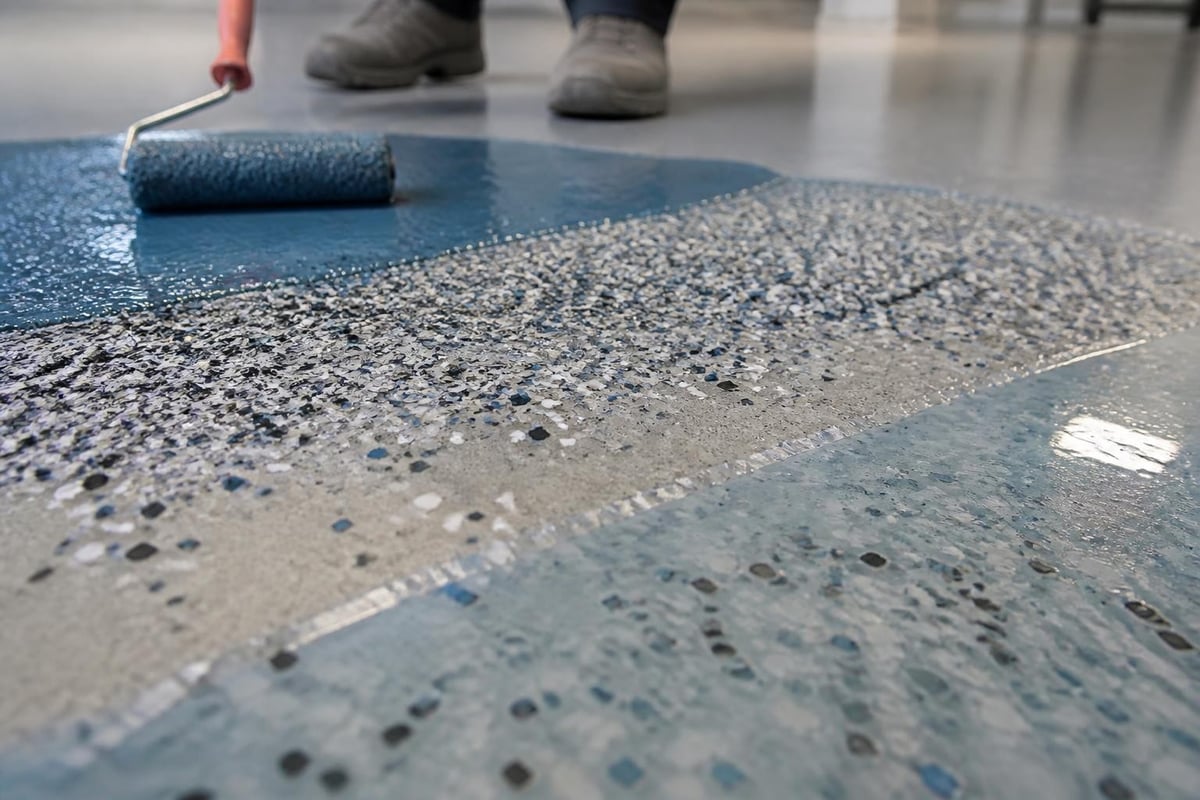
Flake epoxy flooring has become a widely recognized solution in commercial and industrial environments, offering both functional performance and aesthetic versatility. This decorative concrete coating system combines the durability of traditional epoxy with the visual appeal and enhanced slip resistance provided by decorative flakes. Understanding the composition, benefits, and appropriate applications of flake epoxy systems helps facility managers and business owners make informed decisions about their flooring investments. In South East Queensland's commercial sector, these systems have found particular relevance in environments where both performance and appearance matter, though their adoption varies significantly across different industry segments.
Understanding Flake Epoxy Composition and Structure
Flake epoxy systems consist of multiple distinct layers that work together to create a cohesive flooring surface. The foundation begins with a base coat of epoxy resin, which bonds directly to the prepared concrete substrate. This base layer provides the structural integrity and adhesion required for long-term performance.
The decorative element comes from the flakes themselves, which are broadcast onto the wet epoxy base coat. These flakes-also called chips or colour flakes-are typically made from vinyl or acrylic materials and come in various sizes, colours, and combinations. The broadcast density can range from partial coverage to full coverage, depending on the desired aesthetic and functional requirements.
System Components and Their Functions
Each layer within a flake flooring system serves a specific purpose:
- Primer coat: Enhances adhesion to the concrete substrate and seals porosity
- Base epoxy coat: Provides the bonding surface for flakes and structural foundation
- Decorative flakes: Create the visual pattern, texture, and slip resistance
- Top coat: Seals the system, protects flakes, and determines final gloss level
The topcoat represents a critical component that many specifiers overlook. This clear coat not only seals the flakes in place but also determines the system's chemical resistance, UV stability, and overall longevity. Polyurethane topcoats offer superior UV resistance compared to epoxy topcoats, making them preferable for areas with natural light exposure.
Film thickness varies considerably across different system specifications. Light-duty systems might achieve a total thickness of 15-20 mils, whereas heavy-duty commercial applications often require 40 mils or more. This thickness directly correlates with the system's ability to withstand traffic, impact, and chemical exposure.
| System Component | Typical Thickness | Primary Function |
|---|---|---|
| Primer | 2-4 mils | Substrate adhesion and sealing |
| Base Coat | 6-10 mils | Structural foundation and flake bonding |
| Flake Layer | 3-8 mils | Aesthetics and texture |
| Top Coat | 4-12 mils | Protection and chemical resistance |
Performance Characteristics in Commercial Environments
The functional advantages of flake epoxy extend beyond visual appeal, particularly in commercial settings where durability and safety take precedence. Chemical resistance stands as one of the primary benefits, with properly specified systems withstanding exposure to oils, solvents, acids, and alkaline cleaning solutions common in industrial facilities.
Slip resistance improves significantly with flake broadcast, especially when using full-coverage applications. The texture created by the embedded flakes provides grip underfoot, though the degree of slip resistance depends heavily on the topcoat selection and finish profile.
Durability and Maintenance Considerations
Commercial operations require flooring that withstands constant use without deteriorating. Flake epoxy systems deliver this durability through their multi-layer construction, though performance varies based on specification quality and installation execution.
The flakes themselves add structural benefit by creating a thicker overall system compared to thin-film epoxy coatings. This increased thickness provides better impact resistance and helps bridge minor substrate imperfections that might telegraph through thinner systems.
Maintenance requirements remain relatively straightforward:
- Daily dust mopping or sweeping to remove loose debris
- Regular wet mopping with pH-neutral cleaners
- Periodic deep cleaning with auto-scrubbers for larger facilities
- Annual inspection for wear patterns or damage
- Touch-up applications in high-traffic zones as needed
The sealed surface resists staining and doesn't harbour bacteria, making these systems appropriate for environments with strict hygiene requirements. However, the glossy finish can show dirt and dust more readily than matte surfaces, requiring more frequent cleaning in some applications.

Design Flexibility and Aesthetic Options
Colour selection represents one of the most significant decisions when specifying a flake epoxy system. Manufacturers offer hundreds of colour combinations, from subtle neutrals to bold contrasts. The customization options for flake systems allow designers to align flooring with corporate branding or create distinct zones within larger facilities.
Flake sizes typically range from small (1/16 inch) to large (1/2 inch or more), with most commercial applications favouring medium sizes that balance visual impact with practical performance. Smaller flakes create a tighter, more uniform appearance, while larger flakes deliver a more pronounced decorative effect.
Broadcast density dramatically changes the final appearance. Partial broadcasts show more of the base coat colour, creating a speckled look. Full broadcasts completely cover the base coat, resulting in a seamless flake surface. The choice between these approaches depends on aesthetic preferences and budget considerations, as full broadcasts require significantly more material.
Colour and Pattern Strategies
Commercial projects often benefit from strategic colour deployment rather than decorative excess. Neutral grey, tan, and beige flake combinations provide professional aesthetics without overwhelming the space or competing with product displays and equipment.
Some facilities use contrasting colours to demarcate different zones-separating production areas from QA spaces, or distinguishing traffic lanes from work areas. This approach adds functional value to the decorative system by improving wayfinding and safety awareness.
Application Suitability Across Commercial Sectors
While flake epoxy finds use in various environments, its suitability varies considerably by sector. Retail environments represent one area where these systems appear frequently, particularly in back-of-house spaces like stockrooms and break areas. The decorative element provides a finished appearance without the cost of tile or polished concrete, though many retailers prefer polished concrete flooring for customer-facing areas due to its refined aesthetic.
Manufacturing facilities occasionally specify flake systems in office areas, break rooms, or quality control laboratories. However, production floors typically demand heavier-duty solutions better suited to forklift traffic and industrial processes. Commercial flooring in these environments often requires more robust systems than decorative flake epoxies can provide.
Where Flake Epoxy Performs Well
Specific commercial applications where flake epoxy delivers appropriate performance include:
- Showrooms and display areas: Provides attractive finish without production-floor durability requirements
- Administrative offices: Offers upgrade from concrete in industrial office settings
- Break rooms and amenities: Combines cleanability with pleasant aesthetics
- Light-duty workshops: Suitable for spaces without heavy equipment or chemical exposure
- Exhibition spaces: Creates professional appearance for temporary or permanent installations
Commercial kitchens present a challenging environment for any flooring system. While some suppliers market flake epoxy for these applications, the combination of thermal shock, grease exposure, and aggressive cleaning chemicals often exceeds what these systems can reliably handle. Purpose-built kitchen flooring systems with enhanced chemical and thermal resistance typically prove more appropriate for food service environments.
Installation Requirements and Quality Factors
Proper surface preparation determines the success or failure of any epoxy system, and flake applications are no exception. The concrete substrate must be clean, dry, and properly profiled to achieve adequate adhesion. Shot blasting or diamond grinding creates the mechanical profile necessary for epoxy bonding, removing surface contaminants, laitance, and weak concrete.
Moisture testing remains critical, as epoxy systems fail when applied over concrete with excessive moisture vapour transmission. Australian Standard AS 1884 provides testing protocols, though many commercial projects reference international standards like ASTM F2170 for relative humidity testing.
Professional Installation Protocols
The broadcast technique significantly impacts both aesthetics and performance. Achieving uniform flake distribution requires skill and experience, particularly on larger projects where maintaining consistent coverage across multiple installers becomes challenging. The EPX-F seamless flake system demonstrates how systematic application procedures improve outcomes.
Temperature and humidity conditions during installation affect pot life, cure times, and final properties. Most epoxy systems specify application temperatures between 10°C and 30°C, with relative humidity below 85%. Queensland's subtropical climate occasionally presents challenges during summer months when temperature and humidity exceed ideal ranges.
Quality control measures during installation include:
- Moisture testing before coating application
- Batch mixing to ensure proper resin-to-hardener ratios
- Wet film thickness gauges to verify coverage rates
- Documentation of ambient conditions throughout application
- Post-cure hardness testing to confirm proper cure
The time between coats-known as recoat windows-requires careful attention. Applying subsequent layers too early can affect cure, while waiting too long may necessitate additional surface preparation to achieve intercoat adhesion. Professional installers understand these timing requirements and plan accordingly.
Cost Considerations and Value Analysis
Flake epoxy systems generally cost more than solid-colour epoxy but less than high-performance industrial coatings or polished concrete. Material costs vary based on flake quality, broadcast density, and topcoat selection, with full-broadcast systems requiring substantially more material than partial-broadcast alternatives.
Labour represents a significant cost component, as proper installation demands skill, experience, and time. The broadcast process itself requires coordination and speed-once the base coat is applied, installers have a limited window to broadcast flakes before the epoxy begins to gel. Projects requiring multiple installers working simultaneously drive labour costs higher than single-colour applications.
| Cost Factor | Impact on Total Price | Variability |
|---|---|---|
| Substrate Condition | High | Extensive repairs increase costs significantly |
| Broadcast Density | Medium | Full coverage uses 3-4× more flakes |
| Area Size | Medium | Larger areas benefit from economies of scale |
| Access and Logistics | Low to Medium | Multi-level facilities or restricted access add costs |
| Topcoat Selection | Medium | Polyurethane costs more than epoxy topcoats |

Return on Investment Factors
When evaluating flake epoxy against alternatives, decision-makers should consider lifecycle costs rather than initial installation expense alone. A properly installed flake system in an appropriate application should deliver 7-10 years of service before requiring significant maintenance or replacement.
The decorative chip and flake coating system offers advantages in specific scenarios, but commercial facilities must assess whether those benefits justify the cost differential compared to simpler epoxy systems. For many industrial operations focused purely on functionality, solid-colour epoxy or epoxy industrial flooring provides better value by eliminating unnecessary decorative expense.
Maintenance costs typically remain low throughout the system's life, though glossy finishes may require more frequent cleaning to maintain appearance. The sealed surface prevents dust generation and eliminates the need for ongoing concrete densifier or sealer applications required by untreated concrete.
Limitations and Performance Boundaries
Despite their advantages, flake epoxy systems have distinct limitations that restrict their appropriate use in commercial environments. UV exposure causes yellowing and colour shift in standard epoxy topcoats, making these systems problematic for outdoor applications or areas with significant natural light. Polyurethane topcoats mitigate but don't eliminate this issue.
Heavy forklift traffic, particularly from trucks with solid tyres, can damage flake systems through impact and shear forces. The decorative flakes themselves can dislodge under extreme mechanical stress, creating an uneven surface and compromising the system's integrity. Warehouse flooring applications typically require heavier-duty solutions than decorative systems provide.
Thermal and Chemical Limitations
Thermal shock resistance proves limited in standard flake epoxy systems. Sudden temperature changes-common in commercial kitchens or food processing facilities-can cause delamination or surface damage. Specialized systems with enhanced thermal properties exist but come at premium prices that often make alternative flooring solutions more economical.
Chemical resistance, while good, isn't unlimited. Prolonged exposure to strong solvents, concentrated acids, or high-pH cleaners can degrade the coating. Facilities with significant chemical exposure should carefully review the compatibility of specific chemicals with their chosen epoxy system before specifying.
The application process itself creates limitations. Epoxy systems require downtime for installation and cure, typically 3-7 days depending on the specific product and environmental conditions. This disruption to operations represents a significant consideration for facilities operating multiple shifts or maintaining continuous production schedules.
Comparing Alternatives for Commercial Applications
Commercial decision-makers should evaluate flake epoxy within the broader context of available flooring solutions. Polished concrete offers superior longevity and lower lifecycle costs in many commercial settings, particularly retail and office environments where the refined aesthetic enhances the space. The benefits of polished concrete in commercial retail stores include minimal maintenance requirements and exceptional durability.
Standard epoxy flooring without decorative flakes delivers excellent performance at lower cost for purely functional applications. Manufacturing facilities, industrial workshops, and warehouse environments rarely benefit from the decorative aspect of flake systems, making solid-colour epoxy flooring the more practical choice.

High-performance systems like polyurethane or methyl methacrylate (MMA) coatings provide superior chemical resistance, faster cure times, and better thermal properties than flake epoxy. These systems cost significantly more but prove essential in demanding environments that exceed flake epoxy's capabilities.
Decision Framework for System Selection
Selecting appropriate flooring requires matching system capabilities to actual performance requirements:
Choose flake epoxy when:
- Aesthetic appeal matters alongside functional performance
- Traffic is light to medium duty
- Chemical exposure is limited to mild cleaners and occasional spills
- Budget allows for decorative enhancement
- Slip resistance improvement is desired
Consider alternatives when:
- Heavy forklift traffic occurs regularly
- Severe chemical exposure is routine
- Thermal shock is a concern
- Maximum durability is the sole priority
- Budget constraints limit options
Specification Best Practices for Commercial Projects
Writing effective specifications for flake epoxy requires detailed attention to system components, performance requirements, and installation procedures. Generic specifications often lead to inadequate systems that fail prematurely or don't meet expectations.
Performance criteria should focus on measurable standards rather than subjective qualities. Specifying minimum compressive strength for the concrete substrate, required bond strength for the coating system, and chemical resistance parameters creates objective benchmarks for quality.
Key Specification Elements
Comprehensive specifications address these critical areas:
- Substrate requirements: Concrete age, strength, moisture limits, and profile depth
- System build-up: Primer, base coat, flake type and density, topcoat thickness
- Material properties: Pot life, cure time, chemical resistance, abrasion resistance
- Installation standards: Surface preparation methods, ambient conditions, application techniques
- Quality assurance: Testing protocols, inspection procedures, acceptance criteria
References to applicable Australian Standards provide a quality framework, though many epoxy specifications also incorporate international standards where local codes don't exist. AS/NZS 4020 for water contact applications and AS 3730 for slip resistance offer relevant guidance for specific commercial scenarios.
Warranty requirements merit careful consideration. Most manufacturers offer material warranties but limit coverage to product defects rather than performance issues. Installation warranties from qualified contractors provide more comprehensive protection but typically last only 1-2 years for flake systems in commercial use.
Flake epoxy systems deliver a balanced combination of aesthetics and functionality for specific commercial applications, though they're not universally appropriate across all industrial environments. Understanding their composition, capabilities, and limitations enables informed flooring decisions that align with actual performance requirements and budget constraints. For South East Queensland commercial and industrial facilities requiring expert concrete flooring solutions-whether durable epoxy floors for demanding applications or polished concrete for refined spaces-Superior Concrete Finishes brings decades of specialized experience to warehouses, factories, retail stores, and commercial facilities throughout the region.

Joshua Miller has over 15 years of experience in the commercial concrete flooring industry, specialising in epoxy flooring systems and polished concrete solutions for warehouses, factories, retail spaces and commercial developments. Joshua and his team work closely with builders, property owners and facility managers across South East Queensland to deliver durable, cost-effective commercial flooring systems for warehouses, industrial facilities, commercial kitchens, retail stores and large commercial developments.
Major builders and organisations Josh has led projects on include McNab, Hutchinson Builders, IKEA, Queensland Rail, University of Queensland, ADCO, Tomkins Commercial, Bunnings, OfficeWorks, Spotlight, and Anaconda.
If you're planning a project and need advice on the best commercial concrete flooring solution, contact Josh or one of the team at Superior Concrete Finishes.
-
 info@superiorconcretefinishes.com.au
-
1300 789 740
-
Connect with Josh on
LinkedIn


 Connect with Josh on