Selecting the right flooring for stores represents one of the most critical decisions retail business owners face. The floor beneath your customers’ feet influences everything from first impressions to long-term operational costs. In retail environments across South East Queensland, commercial flooring must withstand heavy foot traffic, frequent cleaning, potential spills, and constant visual scrutiny whilst maintaining an attractive appearance that enhances your brand. This guide examines the essential considerations, material options, and practical strategies for choosing flooring that serves both functional and aesthetic requirements in retail spaces.
Understanding the Unique Demands of Retail Flooring
Retail environments present distinct challenges that separate them from other commercial applications. Unlike warehouses or factories where functionality dominates decision-making, flooring for stores must balance durability with visual appeal.
Customer perception begins the moment someone enters your store. The flooring contributes significantly to the overall atmosphere, influencing whether shoppers perceive your business as premium, budget-friendly, modern, or traditional. Simultaneously, that same surface must endure thousands of footsteps daily, resist staining from dropped merchandise or beverages, and maintain its appearance despite constant wear.
Traffic Patterns and Durability Requirements
High-traffic zones near entrances, checkout areas, and popular product displays experience dramatically more wear than quieter sections. Professional commercial flooring solutions account for these variations.
Key traffic considerations include:
- Peak shopping periods and seasonal variations
- Cart and trolley movement patterns
- Staff work areas versus customer zones
- Display fixture placement and rotation
Store layout directly affects flooring performance expectations. Entrance areas may see 10 times the foot traffic of back corners, requiring either more durable materials or planned replacement schedules for high-wear zones.
Concrete-Based Flooring Solutions for Retail Environments
Concrete flooring systems offer compelling advantages for retail applications. Both polished concrete and epoxy systems deliver the durability required in commercial settings whilst providing aesthetic flexibility.
Polished Concrete in Retail Stores
Polished concrete has become increasingly popular in modern retail environments, particularly for businesses seeking an industrial-modern aesthetic. The process involves mechanically grinding, honing, and polishing the concrete surface to achieve a smooth, reflective finish.
This commercial surface polishing approach creates a sophisticated look suitable for fashion boutiques, electronics stores, automotive showrooms, and contemporary retail concepts. The natural variations in concrete provide unique character that cannot be replicated with manufactured materials.
| Advantage | Benefit for Retail |
|---|---|
| Durability | Withstands heavy foot traffic without wearing |
| Reflectivity | Enhances lighting efficiency, reducing energy costs |
| Low maintenance | Simple cleaning protocols reduce operational costs |
| Customisation | Various sheen levels from matte to high-gloss |
| Longevity | Decades of service life with minimal intervention |
The reflective properties of polished concrete can reduce lighting requirements by up to 30%, offering measurable operational savings. This makes it particularly attractive for large-format retail stores where lighting costs represent significant overhead.
Epoxy Flooring Systems for Retail Applications
Epoxy flooring provides another concrete-based solution well-suited to certain retail environments. While more commonly associated with industrial applications, epoxy systems offer specific benefits for stores requiring chemical resistance or seamless, hygienic surfaces.
Retail businesses dealing with food products, automotive parts, or cleaning supplies benefit from epoxy’s resistance to stains and chemicals. The seamless nature of epoxy flooring eliminates grout lines and joints where dirt, bacteria, or moisture can accumulate.
Epoxy advantages in retail settings:
- Complete customisation of colour and finish
- Seamless installation without joints
- Chemical and stain resistance
- Easy-to-clean surface
- Slip-resistant options available
The application process requires professional expertise to ensure proper surface preparation, mixing ratios, and curing conditions. Epoxy flooring installations demand precise temperature and humidity control during application.
Comparing Flooring Materials for Store Applications
Understanding how different materials perform helps retailers make informed decisions aligned with their specific requirements and budget constraints. The best flooring for retail stores varies based on merchandise type, target customer demographic, and operational priorities.
Material Performance Matrix
Different flooring types excel in different areas. Evaluating options requires weighing multiple factors rather than focusing solely on initial cost.
| Material Type | Durability | Maintenance | Aesthetics | Lifespan | Cost Range |
|---|---|---|---|---|---|
| Polished Concrete | Excellent | Very Low | Modern/Industrial | 20+ years | Medium |
| Epoxy Systems | Excellent | Low | Customisable | 15-20 years | Medium |
| Luxury Vinyl Tile | Good | Medium | Versatile | 10-15 years | Low-Medium |
| Porcelain Tile | Excellent | Medium | Traditional | 20+ years | Medium-High |
| Hardwood | Fair | High | Premium | 15-25 years | High |
Each material serves specific retail concepts more effectively than others. Luxury fashion boutiques may prioritise aesthetics and accept higher maintenance, whilst sporting goods retailers might emphasise durability and moisture resistance.

Lifecycle Cost Considerations
Initial installation cost represents only one component of total flooring investment. Smart retailers evaluate lifecycle costs encompassing installation, maintenance, cleaning, repairs, and eventual replacement.
Concrete-based systems typically demonstrate superior lifecycle economics. While initial costs may exceed vinyl or carpet options, the extended lifespan and minimal maintenance requirements often deliver better long-term value.
Lifecycle cost factors include:
- Initial material and installation expenses
- Daily and periodic cleaning requirements
- Repair and patching needs
- Replacement frequency
- Business disruption during maintenance
A quality polished concrete floor may last 25 years with minimal intervention, whilst carpet might require replacement every 7-10 years in high-traffic retail environments. This difference dramatically affects long-term operational budgets.
Design and Aesthetic Considerations
Flooring for stores functions as a critical design element that reinforces brand identity and enhances the shopping experience. The right flooring choice can guide customer flow, highlight merchandise zones, and create memorable impressions.
Creating Zones with Flooring Choices
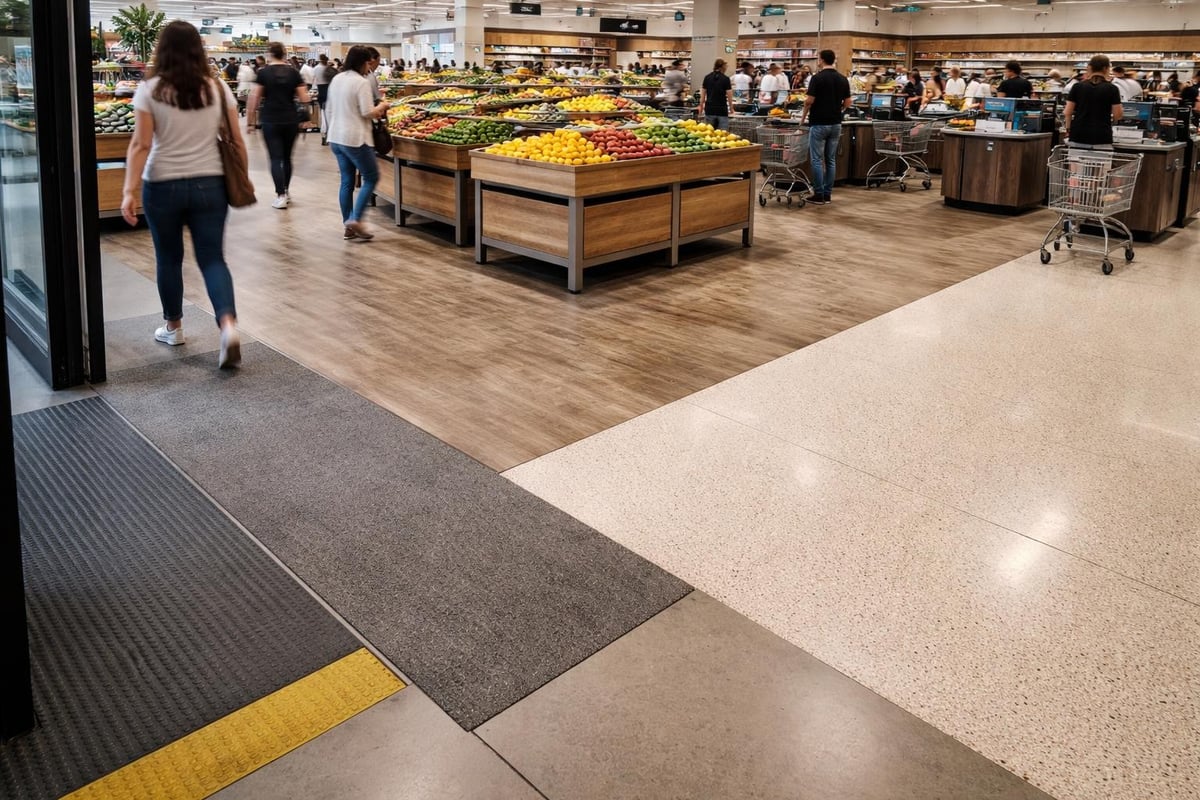
Many retailers use flooring variations to delineate different store sections or create visual interest. The psychology of retail flooring demonstrates how floor treatments influence customer behaviour and perception.
Premium product areas might feature higher-end finishes, whilst utility sections use more practical materials. This strategic approach balances budget constraints with aesthetic impact.
Different concrete finishes can achieve this zoning effect. Varying the polish level, adding saw-cut patterns, or incorporating different concrete mixes creates visual separation without introducing multiple material types and their associated maintenance complexities.
Colour and Finish Selection
Concrete flooring systems offer extensive customisation options. Polished concrete can range from exposed aggregate showing decorative stones to cream finishes highlighting the cement paste. The degree of polish controls reflectivity from subtle satin to mirror-like gloss.
Natural concrete tones complement various design aesthetics:
- Light grey tones create bright, spacious feelings
- Darker charcoal finishes add sophistication
- Exposed aggregate provides texture and visual interest
- Stained concrete introduces colour whilst maintaining durability
For retail stores seeking specific brand colours, the selection process should consider how flooring interacts with lighting, wall colours, and merchandise displays to create cohesive environments.
Installation Considerations and Timeline Planning
Flooring installation in retail environments requires careful planning to minimise business disruption. Unlike new construction where timing flexibility exists, occupied stores must balance installation requirements with operational needs.
Minimising Business Interruption
Most concrete flooring installations require the store to close temporarily. Polished concrete projects may take several days depending on area size and desired finish level. Proper planning can reduce operational impact.
Working with experienced retail flooring specialists ensures realistic timeline estimates and efficient execution. Many commercial flooring contractors offer after-hours or weekend installation to accommodate business operations.
Timeline factors affecting installation:
- Floor area and complexity
- Existing surface condition and preparation requirements
- Cure times between application stages
- Weather and humidity conditions
- Access limitations and working hour restrictions
Concrete preparation represents the most critical phase. Proper surface profiling, crack repair, and moisture testing prevent future failures and ensure coating adhesion.
Surface Preparation Requirements
The existing concrete slab condition significantly impacts the installation approach. New concrete requires adequate curing before polishing or coating application. Older slabs may need repairs, levelling, or contamination removal.
Professional assessment identifies issues like:
- Structural cracks requiring repair
- Surface contamination from previous coatings or sealers
- Moisture vapour transmission levels
- Surface flatness and levelness
- Substrate strength and density
Addressing these factors during preparation prevents premature failure and ensures the flooring system performs as expected throughout its service life.
Maintenance and Long-Term Performance
One of the primary advantages of concrete flooring systems involves simplified maintenance protocols. Unlike carpet requiring regular deep cleaning or tile needing grout maintenance, polished concrete and epoxy floors demand minimal ongoing care.
Daily Maintenance Protocols
Routine cleaning for concrete floors involves simple dust mopping or auto-scrubbing with pH-neutral cleaners. The sealed, dense surface resists staining and prevents dirt penetration, making spill cleanup straightforward.
Recommended maintenance practices include:
- Daily dust mopping or sweeping
- Weekly damp mopping with appropriate cleaners
- Immediate spill cleanup
- Periodic burnishing for polished concrete
- Annual or bi-annual resealing as needed
Avoiding harsh chemicals, acidic cleaners, or abrasive scrubbing pads protects the floor finish. Proper maintenance preserves appearance and extends service life, maximising return on investment.
Addressing Wear and Damage
Despite exceptional durability, concrete floors may eventually show wear in extreme high-traffic areas. The advantage of concrete systems lies in their repairability and ability to restore appearance without complete replacement.
Polished concrete can be re-polished to restore lustre. Epoxy coatings can be reapplied to refresh appearance or address localised damage. These interventions cost significantly less than complete floor replacement whilst delivering results that match original installation quality.

Safety and Compliance Considerations
Retail flooring must meet safety standards protecting both customers and employees. Slip resistance represents the primary safety concern, particularly in areas exposed to moisture or where food service occurs.
Slip Resistance Standards
Australian standards specify minimum slip resistance values for commercial flooring based on application. Wet areas require higher slip resistance than dry retail spaces. Professional flooring contractors understand these requirements and recommend appropriate finishes.
Concrete floors can be finished with varying slip resistance levels. Polished concrete offers good slip resistance in dry conditions. For areas where moisture exposure occurs, mechanical texturing or anti-slip additives during installation enhance traction.
Testing methods like the pendulum test or wet ramp test quantify slip resistance, ensuring compliance with workplace health and safety regulations. Documented testing provides liability protection and demonstrates due diligence.
Accessibility Requirements
Commercial premises must accommodate customers with mobility challenges. Flooring plays a role in accessibility compliance through level transitions, surface smoothness, and visual contrast at elevation changes.
Concrete flooring systems create seamless surfaces ideal for wheelchair navigation and walker use. The elimination of carpet edges, tile grout lines, or threshold transitions removes obstacles that impede mobility device movement.
Environmental and Sustainability Factors
Increasing numbers of retailers prioritise environmental responsibility in operational decisions. Flooring choices contribute to overall sustainability profiles through material sourcing, manufacturing impacts, operational efficiency, and end-of-life considerations.
Concrete’s Environmental Profile
Concrete flooring systems, particularly polished concrete utilising existing slabs, offer environmental advantages over manufactured flooring products. By finishing the structural slab rather than installing additional materials, polished concrete eliminates manufacturing impacts, transportation emissions, and material waste.
Sustainability benefits include:
- Utilising existing structural elements
- No VOC emissions from adhesives or finishes
- Energy efficiency through light reflectivity
- Exceptional durability reducing replacement cycles
- Complete recyclability at building end-of-life
The thermal mass of concrete slabs contributes to building energy efficiency by moderating temperature fluctuations. This reduces heating and cooling demands, particularly beneficial in large retail spaces.
Indoor Air Quality Considerations
Flooring materials can significantly impact indoor air quality through volatile organic compound (VOC) emissions. Carpets, vinyl products, and adhesives often release chemicals that affect air quality and occupant health.
Concrete flooring systems, when properly specified, contribute minimal VOCs to indoor environments. Water-based sealers and low-emission coatings maintain healthy air quality whilst delivering necessary protection and performance.
For retailers emphasising health and wellness, concrete floors support marketing messages about environmental responsibility and customer wellbeing.
Cost Analysis and Budget Planning
Understanding the complete cost picture enables informed decision-making when selecting flooring for stores. Initial quotes represent only part of the investment equation.
Breaking Down Installation Costs
Concrete flooring installation costs vary based on multiple factors including existing surface condition, desired finish level, area size, and site accessibility. Polished concrete typically ranges from moderate to medium-high initial investment depending on specification.
| Cost Component | Typical Range | Variables Affecting Cost |
|---|---|---|
| Surface Preparation | $10-30/m² | Existing condition, repairs needed |
| Polished Concrete | $50-100/m² | Polish level, area size, complexity |
| Epoxy Systems | $60-120/m² | System type, thickness, colour |
| Site Mobilisation | Fixed fee | Location, access, project size |
Larger projects benefit from economies of scale. A 500m² retail space achieves better per-square-metre pricing than a 100m² boutique due to reduced mobilisation and setup impacts.
Return on Investment Timeline
Evaluating flooring as an investment rather than an expense changes the decision framework. While concrete systems may cost more initially than vinyl or carpet, the extended lifespan and reduced maintenance deliver superior returns.
Consider a 300m² retail store comparing options over 20 years:
Polished concrete: $24,000 initial installation, $400 annual maintenance, $1,000 re-polish at year 15 = $33,000 total
Commercial carpet: $12,000 initial installation, $1,200 annual maintenance, $12,000 replacement at years 8 and 16 = $60,000 total
This simplified analysis demonstrates how lifecycle costs favour durable concrete solutions despite higher upfront investment. Actual results vary based on specific conditions and maintenance practices.
Selecting the Right Contractor
The quality of flooring installation profoundly impacts long-term performance and satisfaction. Choosing experienced commercial flooring specialists ensures proper execution and minimises future problems.
Qualifications and Experience
Commercial concrete flooring requires specific expertise distinct from general construction or residential work. Contractors should demonstrate:
- Valid licensing for commercial work (QBCC in Queensland)
- Comprehensive insurance coverage
- Portfolio of comparable retail projects
- Technical knowledge of concrete systems
- Understanding of commercial requirements and timelines
For businesses in South East Queensland, selecting polished concrete specialists with local project experience ensures familiarity with regional conditions, building codes, and material performance expectations.
Experienced contractors provide realistic timelines, accurate cost estimates, and professional project management that minimises disruption to retail operations.
Evaluating Proposals and References
Comparing multiple proposals helps establish fair market pricing and identifies contractors offering best value. Beyond price, evaluation should consider warranty terms, timeline commitments, and communication quality.
Checking references from similar retail projects provides insights into contractor performance, problem-solving capability, and post-installation support. Speaking with previous clients reveals information about schedule adherence, site cleanliness, and long-term floor performance.
Professional contractors welcome reference checks and provide contact information for recent projects. Site visits to completed installations allow firsthand evaluation of workmanship quality and finish appearance.
Sector-Specific Flooring Recommendations
Different retail sectors have varying priorities that influence optimal flooring choices. Understanding these nuances helps match flooring systems to specific business requirements.
Fashion and Apparel Stores
Clothing retailers typically prioritise aesthetics and brand alignment. Polished concrete has become increasingly popular in fashion retail for its modern, sophisticated appearance. The clean lines and reflective qualities complement contemporary merchandising approaches.
Lighter concrete tones create bright, spacious environments that showcase merchandise effectively. The durability ensures floors maintain appearance despite constant customer traffic and frequent merchandise rotation.
Automotive and Parts Retailers
Automotive retail environments present unique challenges including potential fluid spills, heavy cart traffic, and the need to project technical competence. Epoxy flooring systems excel in these applications through chemical resistance and professional appearance.
The seamless, easy-to-clean nature of epoxy suits businesses where oil, coolant, or cleaning products might contact flooring. Customised colours can incorporate corporate branding whilst maintaining the practical performance required.
Food and Specialty Retailers
Stores selling food products or operating café sections within retail spaces require flooring meeting health and safety standards. Concrete systems with appropriate slip resistance and seamless construction support hygiene requirements whilst maintaining aesthetic appeal.
The ability to thoroughly clean and sanitise concrete floors makes them suitable for food retail applications. Properly sealed surfaces prevent moisture absorption and bacterial growth whilst resisting staining from food and beverage spills.
Regional Considerations for South East Queensland
Climate and local conditions influence flooring performance and selection criteria. South East Queensland’s subtropical climate presents specific considerations for retail flooring choices.
Humidity and Moisture Management
Queensland’s humidity levels require attention to moisture vapour transmission in concrete slabs. Proper moisture testing before coating application prevents future delamination or coating failure.
Professional installers conduct calcium chloride or relative humidity testing to quantify moisture levels. High readings may require moisture mitigation systems before coating installation to ensure long-term performance.
The region’s wet season can impact installation scheduling. Some flooring systems require specific temperature and humidity ranges during application, potentially necessitating climate control or timing adjustments.
Thermal Considerations
The reflective properties of polished concrete contribute to thermal comfort in Queensland’s climate. By bouncing light rather than absorbing heat, polished floors help moderate indoor temperatures and reduce air conditioning demands.
This characteristic proves particularly valuable in large retail spaces where climate control represents significant operational cost. The thermal mass of concrete slabs further contributes to temperature stability throughout daily cycles.
Selecting appropriate flooring for stores requires balancing durability, aesthetics, maintenance requirements, and lifecycle costs whilst considering your specific retail environment and customer expectations. For retailers across South East Queensland seeking concrete flooring solutions that deliver lasting performance and professional appearance, Superior Concrete Finishes brings decades of commercial flooring expertise to warehouses, retail stores, and industrial facilities throughout the region.

Joshua Miller has over 15 years of experience in the commercial concrete flooring industry, specialising in epoxy flooring systems and polished concrete solutions for warehouses, factories, retail spaces and commercial developments. Joshua and his team work closely with builders, property owners and facility managers across South East Queensland to deliver durable, cost-effective commercial flooring systems for warehouses, industrial facilities, commercial kitchens, retail stores and large commercial developments.
Major builders and organisations Josh has led projects on include McNab, Hutchinson Builders, IKEA, Queensland Rail, University of Queensland, ADCO, Tomkins Commercial, Bunnings, OfficeWorks, Spotlight, and Anaconda.
If you're planning a project and need advice on the best commercial concrete flooring solution, contact Josh or one of the team at Superior Concrete Finishes.
-
 info@superiorconcretefinishes.com.au
-
1300 789 740
-
Connect with Josh on
LinkedIn


 Connect with Josh on