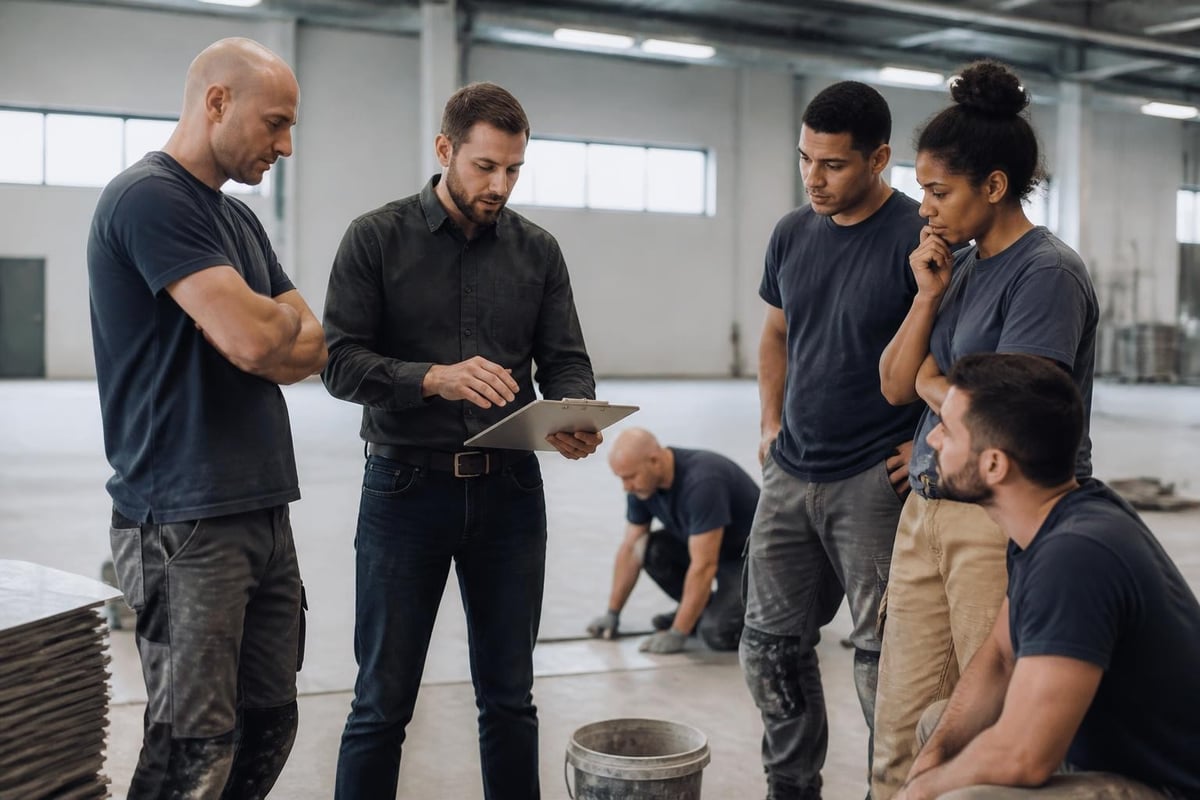
The success of any commercial concrete flooring project depends heavily on the quality and capabilities of the flooring team executing the work. In South East Queensland's competitive commercial and industrial sectors, assembling the right combination of skilled professionals makes the difference between a satisfactory installation and an exceptional one that stands the test of time. From warehouses and factories to retail stores and commercial kitchens, the demands placed on concrete flooring systems require teams with specialized knowledge, technical expertise, and proven collaboration skills. Understanding how to structure, train, and manage a professional flooring team is essential for delivering the high-performance finishes that commercial clients expect.
Essential Roles Within a Professional Flooring Team
A well-structured flooring team comprises multiple specialized roles, each contributing unique expertise to project success. The hierarchy typically begins with project managers who oversee scheduling, client communication, and resource allocation across multiple job sites simultaneously.
Lead installers form the backbone of any flooring team, bringing years of hands-on experience with specific flooring systems. These professionals understand the nuances of surface preparation, mixing ratios, application techniques, and curing requirements that determine long-term performance. Their expertise becomes particularly critical when working with materials like epoxy resin concrete floors that require precise application protocols.
Technical Specialists and Support Personnel
Beyond lead installers, skilled flooring teams include surface preparation technicians who focus exclusively on substrate assessment and grinding operations. This specialization ensures concrete surfaces meet exact specifications before any coating or polishing begins.
Quality control inspectors provide another crucial layer of expertise, verifying work meets Australian Standards and manufacturer specifications throughout each project phase. These team members document conditions, test adhesion, measure thickness, and confirm proper curing.
Support roles that strengthen team performance include:
- Equipment operators skilled in diamond grinding and polishing machinery
- Material handlers responsible for product mixing and logistics
- Safety coordinators ensuring compliance with workplace health and safety requirements
- Apprentices developing skills under experienced professionals
The International Certified Flooring Installers Association provides valuable certification programs that help team members develop specialized skills across various flooring disciplines.
Building Technical Competency Through Structured Training
Technical proficiency doesn't develop overnight. A truly capable flooring team requires ongoing investment in education and skill development that extends well beyond basic installation knowledge.
Formal training programs provide foundational knowledge covering material science, substrate preparation, application techniques, and troubleshooting. Organizations like INSTALL offer industry-leading certification programs that standardize skills and ensure consistent quality across installations.
Hands-On Experience and Mentorship
While classroom learning establishes theoretical understanding, nothing replaces practical experience on actual job sites. Senior team members should actively mentor newer installers, sharing insights gained through years of problem-solving in diverse conditions.
This mentorship approach proves particularly valuable when dealing with complex projects like warehouse flooring applications where substrate conditions, environmental factors, and client requirements create unique challenges.
Effective training programs should cover:
- Concrete surface assessment and preparation methods
- Moisture testing protocols and interpretation
- Product selection based on usage requirements
- Mixing procedures and pot life management
- Application techniques for various systems
- Quality control testing during and after installation
- Problem identification and remediation strategies
The National Association of Floor Covering Technicians offers continuous education opportunities that keep flooring teams current with evolving materials and techniques.

Communication Systems That Drive Project Success
Even highly skilled flooring teams fail when communication breaks down. Establishing clear protocols for information sharing between team members, clients, and other trades prevents costly mistakes and schedule delays.
Daily briefings before work begins ensure every team member understands the day's objectives, safety requirements, and quality expectations. These brief meetings provide opportunities to address questions, clarify specifications, and coordinate with other contractors sharing the job site.
Documentation and Progress Reporting
Systematic documentation creates accountability and provides valuable reference information throughout project lifecycles. Photograph substrate conditions before preparation begins, document moisture readings, record application times and environmental conditions, and capture finished work from multiple angles.
Digital project management platforms streamline this documentation process while improving communication between field teams and office personnel. Real-time updates keep project managers informed about progress, material usage, and potential issues requiring attention.
| Communication Tool | Primary Function | Key Benefits |
|---|---|---|
| Daily briefings | Team alignment | Prevents miscommunication, reinforces safety |
| Digital platforms | Progress tracking | Real-time updates, document centralization |
| Client meetings | Expectation management | Reduces disputes, builds relationships |
| Post-job reviews | Continuous improvement | Identifies lessons, refines processes |
Quality Control Standards and Inspection Protocols
Quality doesn't happen by accident. Professional flooring teams implement rigorous inspection protocols at multiple project stages to ensure work meets exacting standards before moving forward.
Pre-installation inspections verify substrates meet flatness requirements, moisture levels fall within acceptable ranges, and environmental conditions support proper curing. These checks prevent failures by identifying problems before costly materials get applied.
During application, experienced teams monitor thickness, coverage rates, and adhesion. They verify mixing procedures follow manufacturer specifications and adjust techniques based on real-time conditions. This vigilance during installation prevents the defects that often don't become apparent until weeks or months after completion.
Critical inspection checkpoints include:
- Substrate moisture testing using reliable calibrated equipment
- Surface profile verification meeting system requirements
- Product temperature and ambient condition monitoring
- Film thickness measurements during application
- Adhesion testing after initial cure
- Final surface evaluation for uniformity and defects
The Institute for Floor Covering Inspectors International provides comprehensive training for professionals conducting these critical evaluations, ensuring inspections meet industry standards.
Team Structure for Different Project Types
Commercial flooring projects vary dramatically in scope, complexity, and requirements. Smart contractors adjust team composition and size based on specific project demands rather than applying a one-size-fits-all approach.
Small retail installations requiring polished concrete finishes might deploy a compact team of three to four skilled professionals who can complete preparation, grinding, and polishing efficiently without disrupting business operations more than necessary.
Large warehouse projects spanning thousands of square metres require substantially larger crews with specialized roles. These teams often work in coordinated shifts, with surface preparation crews operating independently from application teams to maximize productivity while maintaining quality standards.
Specialized Teams for Complex Environments
Commercial kitchen flooring and food processing facilities demand teams with specific experience in antimicrobial systems, cove base installations, and compliance with stringent health regulations. Team members working these projects understand HACCP requirements and coordinate closely with health inspectors.
Similarly, car park flooring projects require teams experienced with traffic management, rapid cure systems, and line marking coordination. The flooring team must work efficiently within tight access windows while meeting durability requirements for heavy vehicle traffic.
Safety Culture and Risk Management
Professional flooring teams prioritize safety not merely for compliance purposes but because it directly impacts productivity, quality, and long-term business viability. A safety-first culture begins with leadership commitment and permeates every aspect of operations.
Comprehensive safety training covers equipment operation, chemical handling, respiratory protection, and emergency procedures. Team members understand Material Safety Data Sheets for every product they use and employ appropriate personal protective equipment without exception.
Regular toolbox talks address specific hazards present on current job sites. These discussions keep safety awareness high and provide forums for team members to raise concerns or suggest improvements to existing protocols.
Essential safety program components include:
- Pre-start risk assessments for each project
- Site-specific safety plans addressing identified hazards
- Equipment inspection and maintenance schedules
- Chemical safety training and PPE protocols
- Incident reporting and investigation procedures
- Regular safety audits and performance reviews
Equipment Investment and Maintenance Systems
The capabilities of any flooring team correlate directly with the quality and condition of their equipment. Professional-grade diamond grinding systems, dust extraction equipment, and application tools represent significant capital investments that require proper maintenance to deliver consistent results.
Systematic maintenance schedules prevent equipment failures that delay projects and frustrate clients. Daily inspections, regular servicing, and proactive part replacement keep machinery operating at peak performance. Well-maintained equipment also produces better work, as worn components compromise surface preparation quality and finishing precision.
| Equipment Category | Maintenance Frequency | Critical Considerations |
|---|---|---|
| Grinding machines | Daily inspection, monthly service | Diamond segment condition, motor performance |
| Dust extractors | Daily filter checks, weekly cleaning | Filter efficiency, suction power |
| Application tools | After each use | Cleanliness, proper storage |
| Mixing equipment | After each use | Residue removal, seal condition |
Teams should maintain backup equipment for critical machinery to prevent single-point failures from stopping work entirely. When a primary grinder develops problems, having a backup unit available keeps projects moving forward.

Fostering Continuous Improvement and Innovation
The most successful flooring teams embrace continuous improvement, regularly evaluating processes and seeking opportunities to enhance efficiency, quality, and safety. Post-project reviews create structured opportunities to identify successes worth repeating and challenges requiring better solutions.
Encouraging team members to contribute improvement ideas leverages frontline insights that management might otherwise miss. Installers working daily with materials and techniques often recognize optimization opportunities before anyone else. Creating channels for these suggestions and acting on viable ideas builds engagement while improving operations.
Staying current with industry developments keeps teams competitive. New products, application techniques, and equipment technologies emerge regularly. Professional development opportunities like those offered through World Floor Covering Association training programs ensure team members understand evolving best practices.
Recruiting and Retaining Skilled Team Members
Building an exceptional flooring team starts with recruiting individuals who possess both technical aptitude and professional attitude. The demanding nature of commercial flooring work requires physical capability, attention to detail, and commitment to quality that not every candidate demonstrates.
Effective recruitment looks beyond immediate skills to identify candidates with learning potential and alignment with company values. Apprenticeship programs provide structured pathways for developing talent internally while building loyalty through investment in career development.
Key retention strategies include:
- Competitive compensation reflecting skill levels and experience
- Clear advancement pathways showing career progression opportunities
- Investment in training and professional development
- Recognition programs celebrating exceptional performance
- Stable work schedules supporting work-life balance
- Quality equipment and materials enabling pride in workmanship
Retention becomes particularly critical given the time and expense required to develop truly skilled flooring professionals. Experienced installers understand substrate preparation intricacies, recognize early warning signs of potential problems, and deliver consistent quality that builds client confidence.
Client Communication and Expectation Management
The interface between flooring teams and clients significantly influences project satisfaction levels regardless of technical execution quality. Professional teams understand that managing expectations, maintaining transparency, and demonstrating respect for client operations form essential aspects of service delivery.
Pre-installation meetings establish clear understanding about project scope, timeline, access requirements, and potential disruptions. These discussions prevent surprises that damage relationships and create unnecessary conflict during project execution.
Throughout installation, regular progress updates keep clients informed and engaged. Addressing concerns promptly rather than avoiding difficult conversations builds trust and often reveals simple solutions to potential problems. Epoxy flooring installations require coordination with client operations to ensure proper ventilation, access control, and cure time protection.

Performance Metrics and Accountability Systems
Measuring flooring team performance provides objective data for evaluating productivity, quality, and efficiency. These metrics identify high performers deserving recognition, reveal training needs, and highlight operational inefficiencies requiring attention.
Production metrics track square metres completed per day, comparing actual performance against estimated productivity rates. Significant variations indicate either estimation problems or execution issues requiring investigation.
Quality metrics monitor defect rates, callback frequency, and client satisfaction scores. Teams consistently delivering work that meets specifications on the first attempt demonstrate superior competency compared to those requiring frequent remediation.
Valuable performance indicators include:
- Square metre production rates by project type
- Material waste percentages
- Safety incident frequency
- Client satisfaction scores
- On-time completion rates
- Budget variance analysis
These measurements should inform constructive feedback and improvement planning rather than punitive actions that create defensive cultures. The goal involves building capability through data-driven insights.
Collaboration With Other Trades and Stakeholders
Commercial construction projects involve multiple trades working within shared spaces and compressed schedules. Professional flooring teams coordinate effectively with builders, electricians, plumbers, and other contractors to minimize conflicts and optimize workflow.
Understanding project sequencing prevents work from proceeding prematurely. Flooring teams verify that overhead work likely to damage finished floors has been completed before installing final systems. They coordinate with mechanical trades about penetrations, drains, and floor boxes requiring special attention.
Respectful communication with site supervisors and other trades builds positive working relationships that facilitate problem-solving when inevitable conflicts arise. Professional conduct, site cleanliness, and reliable scheduling make flooring teams preferred contractors on future projects.
Adapting Teams for Specialized Applications
Certain commercial environments demand specialized knowledge beyond standard flooring installation expertise. Teams working in food processing facilities, pharmaceutical manufacturing, or chemical plants need additional training covering industry-specific requirements and regulatory compliance.
Factory flooring applications often involve heavy point loads, chemical exposure, thermal cycling, and intensive cleaning regimens that require robust systems and meticulous installation. Team members working these projects understand how seemingly minor application details influence long-term performance under extreme conditions.
Developing specialized capabilities allows flooring teams to command premium pricing while serving markets where inferior work creates serious operational and safety consequences. This specialization also reduces competition from general contractors lacking necessary expertise.
Building and maintaining a high-performing flooring team requires sustained commitment to training, safety, quality, and continuous improvement. The investment pays dividends through superior installations, satisfied clients, and competitive differentiation in demanding commercial markets. Whether your project involves warehouses, retail stores, factories, or commercial kitchens across South East Queensland, the experienced team at Superior Concrete Finishes brings decades of expertise in epoxy and polished concrete systems backed by full insurance and QBCC licensing. Contact us today to discuss how our professional team can deliver the durable, high-performance flooring solutions your commercial facility requires.

Joshua Miller has over 15 years of experience in the commercial concrete flooring industry, specialising in epoxy flooring systems and polished concrete solutions for warehouses, factories, retail spaces and commercial developments. Joshua and his team work closely with builders, property owners and facility managers across South East Queensland to deliver durable, cost-effective commercial flooring systems for warehouses, industrial facilities, commercial kitchens, retail stores and large commercial developments.
Major builders and organisations Josh has led projects on include McNab, Hutchinson Builders, IKEA, Queensland Rail, University of Queensland, ADCO, Tomkins Commercial, Bunnings, OfficeWorks, Spotlight, and Anaconda.
If you're planning a project and need advice on the best commercial concrete flooring solution, contact Josh or one of the team at Superior Concrete Finishes.
-
 info@superiorconcretefinishes.com.au
-
1300 789 740
-
Connect with Josh on
LinkedIn


 Connect with Josh on