Polished concrete floors have become the flooring solution of choice for warehouses, retail stores, factories, and commercial facilities across South East Queensland. Their reflective finish, exceptional durability, and modern aesthetic appeal make them ideal for high-traffic commercial environments. However, maintaining that pristine appearance and extending the floor's lifespan requires a strategic approach to polished concrete floor maintenance. Without proper care protocols, even the most expertly installed floors can lose their lustre, develop surface damage, and require costly restoration work. Understanding the fundamentals of maintenance will protect your flooring investment and ensure your commercial space maintains its professional appearance for decades.
Understanding Your Polished Concrete Floor System
Before implementing any maintenance programme, it's essential to understand what makes polished concrete unique. Unlike coated flooring systems, polished concrete achieves its shine through mechanical grinding and densifying treatments rather than topical coatings. This process creates a surface that's incredibly durable yet requires specific care approaches.
The level of polish on your floor directly impacts maintenance requirements. Floors finished to higher grit levels (1500-3000 grit) produce a glass-like finish that shows dust and scuff marks more readily than lower grit finishes. Commercial facilities typically specify 400-800 grit for functional areas and reserve higher polishes for retail and office environments.
Densifier and Sealer Considerations
Most commercial polished concrete floors receive chemical densification during installation. These lithium or sodium silicate treatments penetrate the concrete, creating a harder, denser surface that resists wear and moisture penetration. Understanding whether your floor includes densifier treatment helps determine appropriate cleaning products and frequencies.
Some installations also include topical guards or sealers for enhanced stain resistance. According to comprehensive maintenance guidelines, knowing your floor's specific treatment history is critical for developing an effective maintenance plan.
Daily Polished Concrete Floor Maintenance Protocols
Daily maintenance forms the foundation of any successful floor care programme. For commercial environments, this means implementing systematic cleaning routines that remove abrasive particles before they damage the polished surface.
Dust mopping should occur at minimum once daily, with high-traffic areas requiring multiple passes. Use microfibre dust mops rather than traditional cotton mops, as microfibre more effectively captures fine particles that cause microscopic surface scratching.
- Use clean mops dedicated exclusively to polished concrete
- Replace mop heads when visibly soiled or weekly, whichever comes first
- Mop in systematic patterns to ensure complete coverage
- Pay special attention to entry points where tracked debris accumulates
Addressing Spills and Stains Immediately
Commercial kitchens, warehouses, and retail environments inevitably experience spills. The key to polished concrete floor maintenance success lies in immediate response rather than delayed cleanup.
Liquid spills should be wiped up within minutes of occurrence. While polished concrete resists staining better than many flooring types, acidic substances (citrus juices, vinegar, soft drinks) can etch the surface if left standing. Oils and greases may penetrate unsealed areas, creating permanent discolouration.
For factories and workshops handling chemicals, maintain spill kits near high-risk areas. Quick response prevents both staining and potential slip hazards that could expose your business to liability.
Weekly Deep Cleaning Procedures
Weekly maintenance escalates beyond dust removal to actual wet cleaning. This process removes accumulated grime, restores surface clarity, and addresses contamination that dry mopping cannot eliminate.
Selecting appropriate cleaning solutions is non-negotiable. Polished concrete requires pH-neutral cleaners specifically formulated for concrete surfaces. Avoid vinegar, ammonia, bleach, and acidic cleaners that etch the surface and dull the finish.
| Cleaner Type | pH Level | Appropriate Use | Avoid |
|---|---|---|---|
| Concrete-specific neutral cleaners | 7-10 | Daily and weekly cleaning | Never on polished concrete |
| Acidic cleaners | Below 7 | Never | Etches surface, removes shine |
| Alkaline degreasers | Above 11 | Heavy soil removal only | Frequent use degrades sealers |
| General-purpose cleaners | Varies | Never | May contain incompatible chemicals |
Mix cleaning solutions according to manufacturer specifications. More concentrated does not mean more effective and often leaves residue that attracts dirt and creates a hazy appearance.

The Two-Bucket Mopping Method
Professional cleaning services employ the two-bucket method to prevent redistributing dirty water across clean floors. One bucket contains fresh cleaning solution whilst the second holds rinse water for cleaning the mop.
- Fill the first bucket with diluted pH-neutral cleaner
- Fill the second bucket with clean water for rinsing
- Saturate the mop in cleaning solution
- Wring excess liquid (floor should be damp, not soaking)
- Mop 3-4 square metres in overlapping patterns
- Rinse mop thoroughly in rinse bucket
- Wring completely and return to cleaning solution
- Repeat process across entire floor area
This method dramatically reduces the dirt and residue transferred during mopping, maintaining the polished concrete's clarity between deep cleans.
Monthly Maintenance and Burnishing
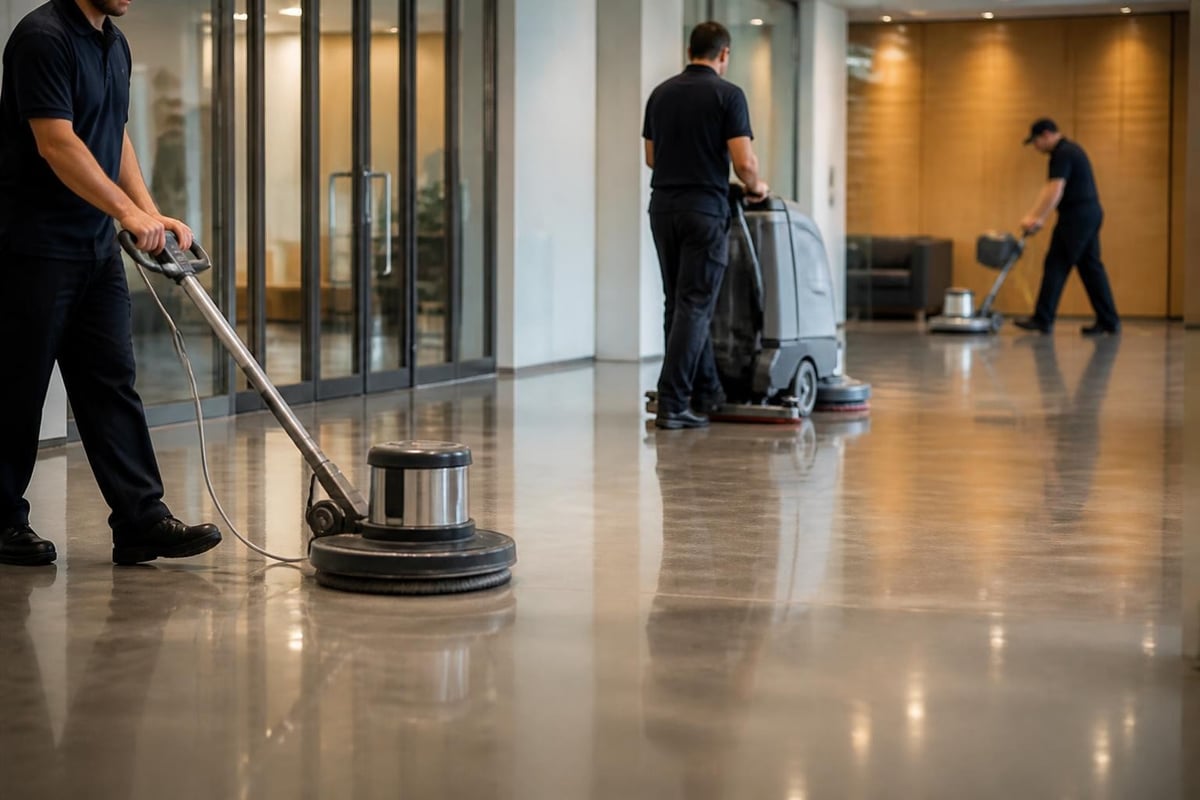
Monthly polished concrete floor maintenance includes procedures that restore gloss and address minor surface imperfections. Burnishing, also called buffing, uses high-speed floor machines fitted with polishing pads to mechanically enhance the floor's reflective properties.
Commercial facilities should schedule monthly burnishing for retail areas and quarterly burnishing for warehouses and back-of-house spaces. High-traffic zones may require more frequent attention based on visual assessment.
Burnishing pad selection matters significantly. Natural hair pads work well for general maintenance, whilst resin-bonded diamond pads provide more aggressive cutting action for floors showing wear patterns. For routine monthly maintenance, use pads rated 800-1500 grit to maintain existing polish levels.
Before burnishing, thoroughly clean and dry the floor. Burnishing over dirt or residue embeds contaminants into the surface and can create visible scratching. The process generates heat through friction, so proper technique prevents surface damage.
Equipment Requirements for Effective Burnishing
Professional burnishing requires equipment beyond basic cleaning tools:
- High-speed burnisher (1500-3000 RPM minimum)
- Appropriate burnishing pads for your floor's grit level
- Dust collection system or wet burnishing capability
- Safety equipment including hearing and eye protection
Many commercial facilities contract this service to professionals who maintain proper equipment and understand the nuanced techniques required. Detailed care practices emphasise that improper burnishing can damage floors, making professional service a worthwhile investment.
Protecting High-Traffic and Vulnerable Areas
Certain zones within commercial facilities experience disproportionate wear. Entry points, checkout counters, workstation areas, and vehicle pathways all require enhanced protection strategies beyond standard polished concrete floor maintenance.
Entry matting systems prevent 80% of tracked soil when properly sized and maintained. Install mats both outside and inside entry doors, with combined mat length of at least 4.5 metres. This distance allows multiple foot contacts to dislodge particles before they reach your polished floor.
For commercial car parks and areas where forklifts operate, consider polished concrete flooring with enhanced densification and topical guards that provide additional abrasion resistance. These treatments don't eliminate maintenance requirements but reduce wear rates in challenging environments.

Mat Maintenance and Selection
Entry mats themselves require maintenance to remain effective. Mats saturated with moisture and dirt become slip hazards and cease protecting the floor beyond them. Establish protocols for daily mat vacuuming and weekly professional cleaning or replacement.
Choose mats with:
- Rubber or vinyl backing that won't stain concrete
- Aggressive scraping surfaces for outside placement
- Absorbent materials for interior locations
- Low-profile edges that prevent tripping hazards
Addressing Common Maintenance Challenges
Even with rigorous maintenance programmes, commercial polished concrete floors encounter specific challenges requiring targeted responses. Understanding these issues and their solutions prevents minor problems from becoming major restoration projects.
Tyre marks from forklifts and pallet jacks plague warehouse environments. These marks aren't actually rubber transfer but plasticiser migration from the tyres. Standard mopping cannot remove them. Instead, use a concrete-safe degreaser applied sparingly to affected areas, then scrub with a nylon brush and rinse thoroughly.
Scuff marks from shoes appear in retail and office environments. These typically respond to burnishing or, for stubborn marks, a slightly more aggressive pad than used for routine maintenance. Regular burnishing prevents scuff mark accumulation.
Hard Water Deposits and Efflorescence
Facilities using hard water for cleaning may notice white, hazy deposits developing over time. These mineral deposits dull the floor's appearance and create a rough texture. Prevention involves using softened or demineralised water for wet cleaning when possible.
If deposits develop, specialised concrete cleaners designed for mineral removal can restore clarity. However, these products often contain mild acids requiring careful application and thorough rinsing. Proper maintenance strategies recommend testing any new product in an inconspicuous area first.
Annual Maintenance and Resealing Considerations
Comprehensive annual maintenance assessments identify developing issues before they require extensive intervention. This evaluation should examine the floor's overall condition, measure gloss levels, and determine whether resealing or re-densification is necessary.
Most commercial polished concrete floors benefit from resealing every 2-3 years, though high-traffic environments may require annual applications. Topical guards and sealers wear away gradually through foot traffic, cleaning, and burnishing. Reapplication restores stain resistance and can refresh the floor's appearance.
Professional assessment provides objective data about your floor's condition. Gloss meters measure reflectivity quantitatively, tracking whether your maintenance programme effectively preserves the finish. Declining gloss readings indicate the need for programme adjustments or restoration services.
| Maintenance Task | Frequency | Purpose | Professional vs DIY |
|---|---|---|---|
| Dust mopping | Daily | Remove abrasive particles | In-house staff |
| Wet mopping | Weekly | Deep cleaning | In-house staff |
| Burnishing | Monthly-Quarterly | Restore gloss | Professional recommended |
| Resealing | Every 2-3 years | Refresh protection | Professional required |
| Full restoration | As needed | Address deep wear | Professional required |
Documentation and Record Keeping
Maintain detailed records of all maintenance activities, products used, and areas requiring special attention. This documentation proves invaluable when troubleshooting problems or transitioning between cleaning contractors. Records also demonstrate due diligence for insurance purposes if slip-and-fall incidents occur.
Document should include:
- Dates and types of maintenance performed
- Products and dilution rates used
- Equipment specifications
- Problem areas identified
- Actions taken to address issues
Selecting Maintenance Products and Equipment
The commercial cleaning market offers countless products claiming suitability for polished concrete. Navigating these options requires understanding what actually benefits your specific floor system versus what might cause damage.
Always verify pH levels before purchasing cleaning products. Many "all-purpose" cleaners contain acids or high-alkaline formulations incompatible with polished concrete. Request technical data sheets showing exact pH values and ingredient lists.
For commercial facilities in South East Queensland, consider local water hardness when selecting products. Professional maintenance guides note that Brisbane and Gold Coast's moderately hard water requires attention to mineral deposit prevention.
Equipment Investment Considerations
Quality equipment outperforms budget alternatives significantly in commercial applications. Industrial-grade wet vacuums, auto-scrubbers, and burnishers withstand daily use and deliver consistent results that protect your flooring investment.
For facilities exceeding 2,000 square metres, auto-scrubbers dramatically improve efficiency whilst ensuring consistent cleaning quality. These machines apply solution, scrub, and recover dirty water in a single pass, reducing labour costs and improving outcomes.
Smaller facilities may manage with conventional mops and equipment, but should still invest in commercial-grade tools rather than residential products. The performance differential justifies the cost through improved cleaning effectiveness and equipment longevity.
Training Staff for Proper Maintenance Execution
Even the best maintenance programme fails without properly trained personnel executing procedures correctly. Polished concrete floor maintenance requires specific techniques that differ from caring for tile, vinyl, or carpet.
Develop written protocols covering daily, weekly, and monthly tasks. Include product dilution rates, equipment operation instructions, and safety procedures. Written standards ensure consistency regardless of which staff member performs the work.
Conduct hands-on training when onboarding new cleaning personnel. Demonstrate proper mopping technique, equipment operation, and how to identify problems requiring supervisor notification. Regular refresher training reinforces proper habits and introduces new techniques or products.
Common training topics include:
- Correct mop and equipment handling techniques
- Product selection and dilution procedures
- Spill response protocols
- Problem identification and reporting
- Safety equipment use and requirements
Environmental Considerations and Sustainability
Polished concrete floor maintenance aligns well with environmental sustainability goals when executed thoughtfully. The floor itself represents a sustainable choice, utilising existing concrete slabs rather than requiring additional materials.
Maintenance sustainability focuses on product selection and water conservation. Choose cleaning products with environmental certifications indicating reduced toxicity and biodegradability. Many effective concrete cleaners now carry Green Seal or similar certifications without compromising performance.
Water usage in commercial cleaning can be substantial. Auto-scrubbers with water recycling capabilities reduce consumption whilst maintaining cleaning effectiveness. When wet mopping, proper solution dilution prevents waste whilst ensuring adequate cleaning power.
Comparing Polished Concrete to Alternative Flooring
From a maintenance perspective, polished concrete offers significant advantages over alternative commercial flooring:
Vinyl composite tile requires regular stripping and waxing, consuming labour, chemicals, and generating waste. This process typically occurs 2-4 times annually in commercial environments.
Epoxy coatings provide excellent durability but eventually require complete removal and reapplication. This process is disruptive and costly compared to polished concrete maintenance.
Sealed concrete without polishing requires more frequent resealing and lacks the hardness that polishing develops. Maintenance costs typically exceed polished systems over the floor's lifetime.
The reduced lifetime maintenance burden explains polished concrete's growing popularity in warehouses, retail stores, and industrial facilities despite higher initial installation costs compared to some alternatives.
Troubleshooting Maintenance Programme Failures
When polished concrete floors don't maintain their appearance despite regular care, systematic troubleshooting identifies the root cause. Common issues include incorrect products, inadequate cleaning frequency, or underlying concrete problems.
Dull, hazy appearance typically indicates product buildup from improper cleaner selection or excessive application. Residue accumulates over time, obscuring the concrete's natural lustre. Resolution requires deep cleaning with a residue-removing product, then transitioning to appropriate pH-neutral cleaners.
Uneven wear patterns suggest traffic flow issues or inadequate protection in high-use zones. While maintenance cannot reverse wear, identifying patterns allows strategic placement of mats or adjustment of burnishing frequency in affected areas.
Staining that resists normal cleaning may indicate sealer failure, requiring professional resealing. However, some substances (rust, oil, certain dyes) penetrate deeply and resist surface cleaning. Complete maintenance guides emphasise that prevention through immediate spill response remains more effective than attempting stain removal.
When to Call Professionals
Certain situations exceed in-house maintenance capabilities and require professional intervention:
- Significant gloss loss across large areas
- Deep staining that resists standard cleaning
- Surface damage including spalling or cracking
- Complete loss of sealer or densifier effectiveness
- Uncertainty about appropriate maintenance approaches
Professional concrete restoration services can assess damage, recommend remediation, and execute repairs that restore your floor's appearance and performance. These interventions, whilst more costly than routine maintenance, prevent the need for complete floor replacement.
Cost-Benefit Analysis of Proper Maintenance
Understanding polished concrete floor maintenance as an investment rather than an expense reshapes budgeting perspectives. Proper care extends floor life from 20-30 years to 40+ years, delivering substantial financial returns.
Calculate lifetime costs including installation, routine maintenance, periodic restoration, and eventual replacement. Polished concrete with proper maintenance demonstrates lower total cost of ownership than virtually all alternative commercial flooring systems.
For a 1,000 square metre warehouse, annual maintenance costs typically range from $2,000-$4,000 including labour, products, and equipment. Compare this to vinyl tile requiring $8,000-$12,000 annually for stripping, waxing, and eventual replacement, or carpet requiring replacement every 5-7 years at $40,000-$60,000.
The financial advantage compounds over time as polished concrete requires no replacement if properly maintained, whilst alternatives inevitably need complete renewal multiple times over the building's lifespan.
Budgeting for Maintenance Programmes
Develop maintenance budgets covering consumables, equipment replacement, and professional services:
- Consumables (cleaners, mop heads, pads): $500-$1,500 annually per 1,000 sqm
- Equipment maintenance/replacement: $300-$800 annually
- Professional burnishing (if outsourced): $1,000-$2,000 per service
- Annual resealing (when required): $3,000-$6,000 per 1,000 sqm
These figures vary based on traffic levels, local labour costs, and specific facility requirements. However, they provide planning baselines for facilities managers developing comprehensive care programmes.
Implementing a comprehensive polished concrete floor maintenance programme protects your flooring investment whilst maintaining the professional appearance your commercial facility demands. The systematic approach outlined here, from daily dust mopping through annual restoration assessment, ensures your floors deliver decades of service without costly interventions. For commercial and industrial facilities across South East Queensland requiring expert concrete flooring solutions, Superior Concrete Finishes brings decades of experience installing and maintaining polished concrete systems in warehouses, retail stores, factories, and industrial workshops. Our team understands the unique demands of commercial environments and delivers flooring solutions built to withstand rigorous use whilst remaining easy to maintain.

Joshua Miller has over 15 years of experience in the commercial concrete flooring industry, specialising in epoxy flooring systems and polished concrete solutions for warehouses, factories, retail spaces and commercial developments. Joshua and his team work closely with builders, property owners and facility managers across South East Queensland to deliver durable, cost-effective commercial flooring systems for warehouses, industrial facilities, commercial kitchens, retail stores and large commercial developments.
Major builders and organisations Josh has led projects on include McNab, Hutchinson Builders, IKEA, Queensland Rail, University of Queensland, ADCO, Tomkins Commercial, Bunnings, OfficeWorks, Spotlight, and Anaconda.
If you're planning a project and need advice on the best commercial concrete flooring solution, contact Josh or one of the team at Superior Concrete Finishes.
-
 info@superiorconcretefinishes.com.au
-
1300 789 740
-
Connect with Josh on
LinkedIn


 Connect with Josh on