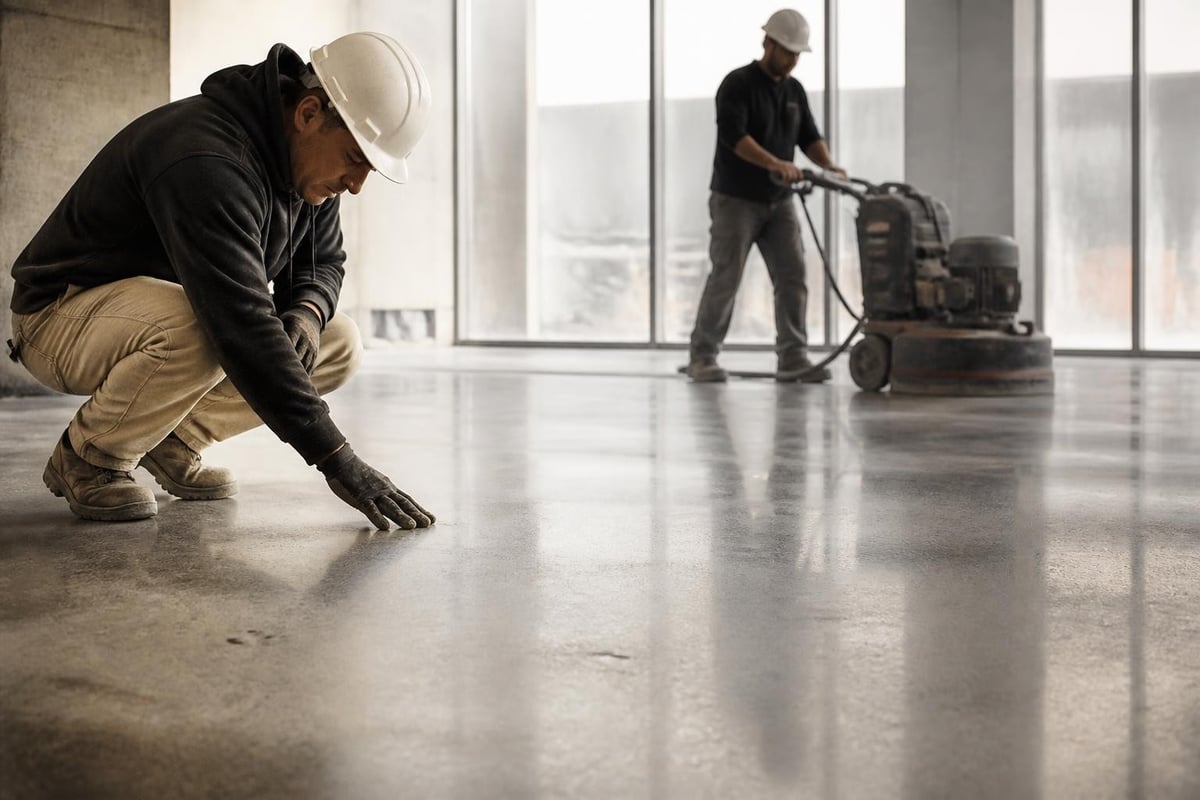
Understanding the polished concrete floors cost for commercial and industrial applications is essential for accurate budgeting and project planning. In 2026, commercial property owners and facility managers across South East Queensland are increasingly turning to polished concrete as a durable, aesthetically appealing flooring solution for warehouses, retail stores, factories, and workshops. The investment in polished concrete flooring varies significantly based on multiple factors, from the existing concrete condition to the desired finish level, making it crucial to understand the complete pricing structure before committing to a project. This comprehensive guide breaks down the polished concrete floors cost components, helping you make informed decisions for your commercial flooring investment.
Understanding Polished Concrete Floor Pricing Structures
The polished concrete floors cost in commercial settings operates on a tiered pricing model that reflects the complexity and finish level required. Unlike residential applications, commercial projects often involve larger floor areas, which can influence per-square-metre pricing.
Base Price Categories
Commercial polished concrete typically falls into three primary cost categories:
- Basic polish: $50-$75 per square metre
- Medium polish: $75-$100 per square metre
- High-gloss polish: $100-$150+ per square metre
These figures represent standard pricing for straightforward applications on good-quality existing concrete. According to This Old House, the national average reflects similar pricing structures, though regional variations exist.
The variation in pricing directly correlates to the number of grinding and polishing steps required. A basic polish might involve 3-4 grinding stages, whilst a high-gloss finish requires 8-10 stages with progressively finer diamond abrasives.
| Finish Level | Grinding Steps | Gloss Rating | Typical Applications |
|---|---|---|---|
| Basic | 3-4 | Low sheen | Warehouses, workshops |
| Medium | 5-7 | Moderate gloss | Retail back-of-house, factories |
| High-gloss | 8-10 | Mirror-like | Showrooms, retail floors |
Square Metre Economics
Commercial projects benefit from economies of scale. A 500-square-metre warehouse floor will have a lower per-square-metre cost than a 100-square-metre retail space. Projects exceeding 1,000 square metres often receive preferential pricing as equipment mobilisation and setup costs are distributed across a larger area.
For commercial facilities in South East Queensland, the polished concrete floors cost calculation should account for site-specific factors including accessibility, power availability, and operational constraints during installation.
Factors Influencing Commercial Polished Concrete Costs
Multiple variables affect the final polished concrete floors cost for commercial projects. Understanding these elements helps in developing accurate budget projections.
Concrete Condition Assessment
The existing concrete slab condition dramatically impacts pricing. New concrete in excellent condition requires minimal preparation, whilst older slabs with damage, contamination, or surface defects need extensive remediation work.
Condition-based cost additions:
- Light surface damage: +$5-$15 per square metre
- Moderate cracking or spalling: +$15-$30 per square metre
- Severe damage requiring patching: +$30-$60 per square metre
- Oil or chemical contamination removal: +$20-$40 per square metre
Elite Concrete Restoration notes that concrete condition represents one of the most significant variables in project pricing, particularly for industrial facilities where oil contamination is common.
Decorative Enhancement Options
Commercial clients often request decorative elements that increase the polished concrete floors cost but deliver distinctive aesthetic results. These enhancements transform standard polished concrete into custom flooring solutions.
- Saw-cut patterns: $8-$15 per linear metre
- Dye application: $10-$25 per square metre
- Aggregate exposure: $15-$35 per square metre
- Stencilled designs: $25-$50 per square metre
Retail environments frequently invest in these enhancements to create branded floor designs that align with corporate identity. The commercial office flooring sector particularly values these customisation options.

Commercial Project Cost Breakdowns
Understanding how the polished concrete floors cost distributes across project phases helps in managing cash flow and identifying potential cost optimisation opportunities.
Labour Versus Materials
Commercial polished concrete projects typically allocate costs as follows:
| Cost Component | Percentage | Commercial Consideration |
|---|---|---|
| Labour | 50-60% | Skilled operators required |
| Equipment | 20-25% | Specialised grinding machinery |
| Materials | 15-20% | Densifiers, sealers, abrasives |
| Overhead | 5-10% | Insurance, licensing, supervision |
Labour represents the largest cost component because polished concrete requires experienced operators who understand diamond tooling selection, grinding techniques, and finish quality control. For warehouse flooring projects, labour efficiency increases with larger, obstruction-free areas.
Preparation Work Investments
Surface preparation often accounts for 30-40% of total polished concrete floors cost in commercial applications. This phase includes:
- Shot blasting or grinding to remove coatings or contaminants
- Crack repair and joint filling to create a seamless surface
- Profile correction to address uneven areas
- Moisture testing and mitigation if necessary
Factories and industrial workshops typically require more extensive preparation due to years of operational wear, chemical exposure, and previous coating systems. The investment in thorough preparation directly influences the longevity and performance of the finished floor.
Comparing Polished Concrete With Alternative Flooring Solutions
Commercial decision-makers must evaluate polished concrete floors cost against alternative flooring systems to determine the best value proposition for their specific application.
Initial Investment Comparison
When comparing upfront costs, polished concrete sits in the mid-range for commercial flooring solutions:
- Epoxy coating systems: $40-$90 per square metre
- Polished concrete: $50-$150 per square metre
- Vinyl composite tile: $60-$120 per square metre
- Ceramic tile: $80-$180 per square metre
- Resinous floors: $100-$250 per square metre
However, HomeAdvisor emphasises that initial cost represents only part of the total cost of ownership equation. Lifecycle analysis reveals polished concrete's superior value proposition.
Lifecycle Cost Analysis
The polished concrete floors cost advantage becomes apparent when examining 10-20 year ownership costs:
| Flooring Type | Initial Cost | Maintenance/Year | Replacement Cycle | 15-Year Total |
|---|---|---|---|---|
| Polished Concrete | $100/m² | $2-$5/m² | 20+ years | $130-$175/m² |
| Epoxy Systems | $70/m² | $8-$12/m² | 7-10 years | $260-$310/m² |
| VCT | $80/m² | $15-$20/m² | 10-12 years | $385-$460/m² |
This analysis demonstrates why factory flooring projects increasingly favour polished concrete despite potentially higher initial investment.
Regional Cost Variations in South East Queensland
The polished concrete floors cost in South East Queensland reflects regional market conditions, labour availability, and material logistics. Understanding these regional factors helps in developing realistic budgets.
Metropolitan Versus Regional Pricing
Brisbane and Gold Coast metropolitan areas typically see polished concrete floors cost at the higher end of pricing ranges due to:
- Higher labour rates in urban centres
- Increased operational costs including parking and site access
- Greater demand supporting premium pricing
- Stricter compliance requirements in commercial zones
Regional areas may experience slightly lower base pricing but can incur additional travel and mobilisation charges if specialist contractors must travel from metropolitan centres. For large commercial projects exceeding 2,000 square metres, these mobilisation costs become negligible when distributed across the total area.
Seasonal Considerations
Queensland's climate influences project scheduling and occasionally affects pricing. The polished concrete floors cost may vary slightly based on seasonal factors:
- Peak season (March-November): Standard pricing, high contractor availability
- Wet season considerations (December-February): Potential scheduling constraints
- Year-end projects: Possible premium pricing due to high demand
Commercial clients planning retail flooring installations should schedule major projects during business downtime to minimise operational disruption, which may influence total project costs.

Commercial Application-Specific Cost Considerations
Different commercial environments have unique requirements that influence the polished concrete floors cost calculation. Recognising these application-specific factors ensures accurate budgeting.
Warehouse and Distribution Facilities
Warehouse applications prioritise durability and traffic resistance over high-gloss aesthetics. These projects typically select medium polish finishes that balance cost with performance.
Key cost factors for warehouses:
- Large floor areas reducing per-square-metre costs
- Minimal decorative enhancement requirements
- Focus on densification for abrasion resistance
- Consideration for forklift traffic patterns
- Joint treatment and crack control investment
The warehouse flooring sector benefits from economies of scale, with projects often exceeding 5,000 square metres resulting in optimised pricing.
Retail and Showroom Environments
Retail spaces demand premium aesthetics, frequently selecting high-gloss finishes with decorative elements. The polished concrete floors cost for retail applications typically sits at the upper end of pricing ranges.
Retail-specific investments include:
- High-gloss finishes requiring additional polishing stages
- Custom dye colours matching brand guidelines
- Decorative saw-cut patterns or stencilled designs
- Enhanced sealer systems for stain resistance
- Expedited installation schedules to minimise trading disruption
For businesses seeking polished concrete in retail environments, polished concrete delivers the aesthetic impact and durability required for high-traffic customer areas.
Industrial Manufacturing Facilities
Manufacturing environments present unique challenges affecting the polished concrete floors cost, including chemical exposure, thermal cycling, and heavy equipment loads.
| Industrial Requirement | Cost Impact | Budget Consideration |
|---|---|---|
| Chemical resistance | +$15-$30/m² | Enhanced sealers required |
| Static dissipation | +$20-$40/m² | Conductive additives |
| Thermal shock zones | +$10-$25/m² | Specialised densifiers |
| Heavy load areas | +$5-$15/m² | Extended grinding time |
According to Airtasker, these specialised requirements can increase project costs by 20-50% compared to standard commercial applications.
Hidden Costs and Budget Contingencies
Comprehensive polished concrete floors cost planning accounts for potential additional expenses that may emerge during project execution. Professional contractors identify these risks during initial assessment.
Common Additional Expenses
Experienced commercial flooring contractors anticipate potential cost additions:
- Unexpected substrate damage: 10-15% contingency recommended
- Moisture mitigation requirements: $15-$40 per square metre if needed
- Additional coatings removal: $10-$25 per square metre
- Extended curing times: Potential schedule delays
- Access equipment rental: Scissor lifts or boom lifts for high-bay areas
For factory flooring projects in older industrial buildings, allocating 15-20% contingency proves prudent given the likelihood of discovering substrate issues during initial grinding.
Site-Specific Cost Variables
Commercial facilities often present unique challenges influencing the polished concrete floors cost:
- Limited access: Narrow doorways or elevators increase labour time
- Operational constraints: Working around production schedules
- Power limitations: Generator rental if inadequate power available
- Dust control requirements: HEPA filtration systems for occupied facilities
- After-hours work: Premium labour rates for night or weekend installation
The industrial polished concrete sector frequently encounters these variables, particularly when retrofitting flooring in operational facilities.
Long-Term Value and Return on Investment
Beyond initial polished concrete floors cost, commercial property owners should evaluate the long-term financial benefits and operational advantages this flooring solution delivers.
Maintenance Cost Savings
Polished concrete requires minimal ongoing maintenance compared to alternative commercial flooring systems. Annual maintenance costs typically range from $2-$5 per square metre, consisting primarily of:
- Routine dust mopping or auto-scrubbing
- Periodic reapplication of topical sealers (every 2-3 years)
- Occasional burnishing to restore gloss in high-traffic areas
ProMatcher data indicates commercial facilities save 60-80% on annual maintenance costs compared to VCT or coated concrete systems.
Operational Benefits With Financial Impact
The polished concrete floors cost investment delivers measurable operational advantages:
| Operational Benefit | Financial Impact | Measurement Period |
|---|---|---|
| Reduced lighting costs | 10-30% savings | Annual |
| Eliminated floor replacement | $50-$150/m² avoided | 10-15 years |
| Decreased cleaning time | 30-50% reduction | Weekly |
| Improved air quality | Reduced sick leave | Annual |
These benefits compound over time, creating substantial return on investment that justifies the initial polished concrete floors cost premium over basic flooring options.
Property Value Enhancement
Commercial properties with professionally installed polished concrete flooring command premium lease rates and resale values. Prospective tenants recognise the superior durability, aesthetics, and low maintenance requirements.
Real estate professionals report that quality commercial flooring increases property values by 3-7% for industrial and warehouse facilities, whilst retail spaces may see even higher premiums due to aesthetic impact.
Selecting the Right Commercial Flooring Contractor
The polished concrete floors cost alone shouldn't drive contractor selection. The expertise, equipment quality, and professional credentials of the installation team significantly influence project outcomes and long-term floor performance.
Essential Contractor Qualifications
Commercial clients should verify contractors possess:
- Current QBCC licensing for commercial concrete work
- Comprehensive insurance coverage including public liability and workers compensation
- Demonstrable commercial project experience with verifiable references
- Modern grinding and polishing equipment appropriate for commercial-scale projects
- Quality assurance processes ensuring consistent finish standards
Contractors specialising in commercial warehouse flooring understand the unique requirements of large-scale industrial applications and can optimise both schedule and budget.
Value Engineering Opportunities
Experienced contractors identify opportunities to optimise the polished concrete floors cost without compromising quality:
- Finish level selection matched to functional requirements
- Timing coordination to minimise operational disruption
- Efficient preparation methods reducing labour hours
- Strategic densifier application optimising material usage
- Appropriate sealer systems balancing protection and cost
According to New Cost Report, working with experienced contractors can reduce total project costs by 15-25% through value engineering whilst maintaining quality standards.
Investment Planning and Budget Development
Developing comprehensive budgets for polished concrete floors cost requires systematic assessment of project-specific variables and realistic contingency planning.
Initial Assessment Requirements
Professional contractors conduct thorough site assessments before providing detailed quotations:
- Concrete condition testing including strength and moisture evaluation
- Substrate profile measurement identifying high and low areas
- Contamination assessment detecting oils, coatings, or other issues
- Traffic pattern analysis determining appropriate finish levels
- Operational constraint identification affecting installation scheduling
This assessment process ensures the polished concrete floors cost quotation accurately reflects project requirements rather than providing generic square-metre pricing.
Financing Considerations for Commercial Projects
Large commercial flooring projects may justify financing arrangements to preserve working capital:
- Capital expenditure approval within organisational budgeting cycles
- Lease improvement allowances for tenant fit-out projects
- Equipment finance arrangements for owner-occupied facilities
- Staged installation scheduling spreading costs across financial periods
For multi-site organisations, negotiating framework agreements for consistent polished concrete floors cost across multiple locations can deliver economies of scale and simplified procurement.
Understanding the complete picture of polished concrete floors cost enables commercial property owners and facility managers to make informed investment decisions that balance initial expense with long-term value. Whether you're planning a warehouse renovation, retail fit-out, or factory upgrade across South East Queensland, Superior Concrete Finishes brings decades of commercial concrete flooring expertise to deliver exceptional results. Our qualified team holds full QBCC licensing and comprehensive insurance, ensuring your project meets the highest industry standards. Contact Superior Concrete Finishes today to discuss your commercial flooring requirements and receive a detailed project assessment.


Joshua Miller has over 15 years of experience in the commercial concrete flooring industry, specialising in epoxy flooring systems and polished concrete solutions for warehouses, factories, retail spaces and commercial developments. Joshua and his team work closely with builders, property owners and facility managers across South East Queensland to deliver durable, cost-effective commercial flooring systems for warehouses, industrial facilities, commercial kitchens, retail stores and large commercial developments.
Major builders and organisations Josh has led projects on include McNab, Hutchinson Builders, IKEA, Queensland Rail, University of Queensland, ADCO, Tomkins Commercial, Bunnings, OfficeWorks, Spotlight, and Anaconda.
If you're planning a project and need advice on the best commercial concrete flooring solution, contact Josh or one of the team at Superior Concrete Finishes.
-
 info@superiorconcretefinishes.com.au
-
1300 789 740
-
Connect with Josh on
LinkedIn


 Connect with Josh on