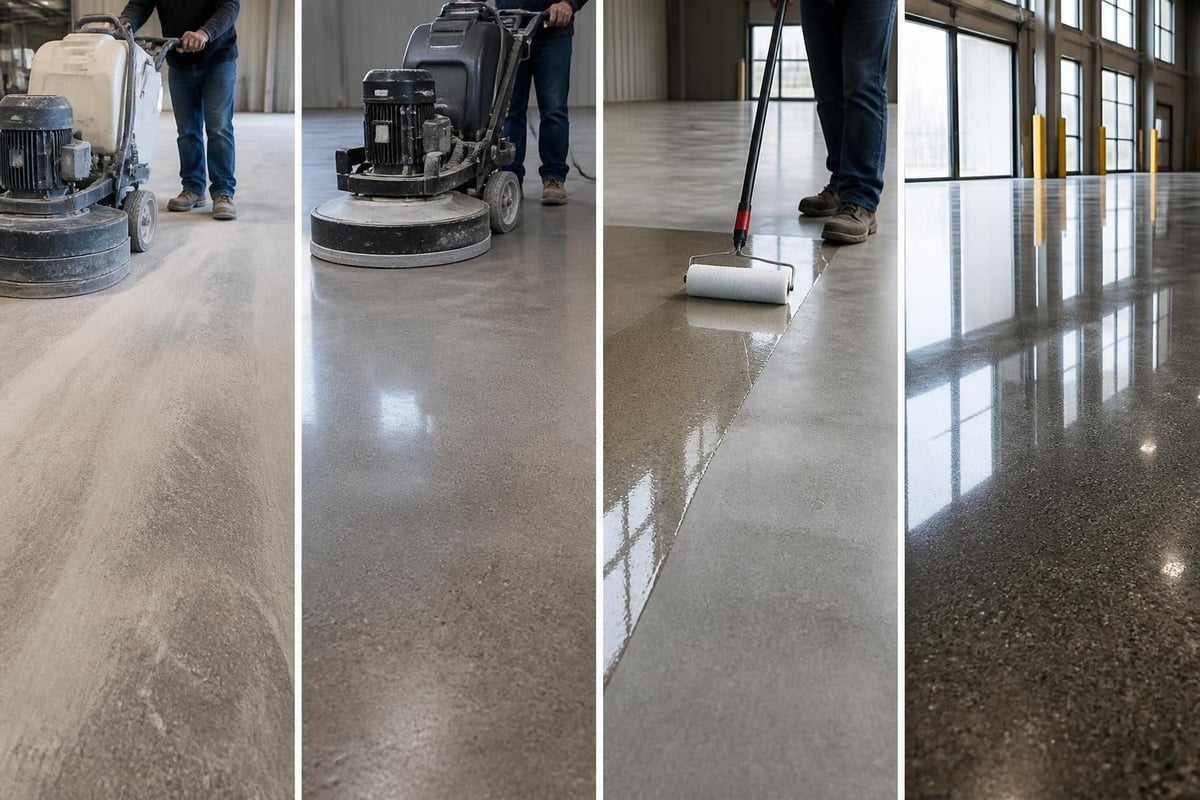
Polishing concrete floors has become one of the most popular flooring solutions for commercial and industrial facilities across South East Queensland. This process transforms ordinary concrete slabs into durable, aesthetically pleasing surfaces that withstand heavy traffic whilst requiring minimal maintenance. For businesses operating warehouses, retail stores, factories, and commercial kitchens, understanding the polishing process, benefits, and specifications ensures informed decision-making when selecting flooring solutions. The concrete polishing industry has evolved significantly over the past two decades, with advanced equipment and techniques now delivering superior results compared to traditional coatings or coverings.
Understanding the Concrete Polishing Process
The process of polishing concrete floors involves mechanically grinding, honing, and polishing the concrete surface using progressively finer diamond abrasives. Unlike surface coatings that sit on top of the concrete, polished concrete works by refining the concrete itself to create a dense, smooth surface.
Initial Surface Preparation
Before any polishing can begin, the concrete surface must be thoroughly assessed and prepared. This critical first step determines the success of the entire project.
Surface preparation checklist includes:
- Removal of existing coatings, adhesives, or contaminants
- Repair of cracks, spalls, or surface damage
- Assessment of concrete hardness and aggregate quality
- Moisture testing to ensure suitable conditions
- Cleaning to remove oil, grease, and debris
The concrete polishing basics involve evaluating whether the existing slab can achieve the desired finish. Factors such as concrete age, mix design, and previous treatments significantly impact the final result.
Grinding and Densification Stages
Once the surface is prepared, the grinding process begins with coarse-grit diamond tooling. This stage removes surface imperfections and opens the concrete pores.
| Grit Level | Purpose | Surface Appearance |
|---|---|---|
| 30-40 grit | Heavy grinding, coating removal | Rough, aggregate exposed |
| 80-120 grit | Medium grinding, surface leveling | Aggregate partially visible |
| 200-400 grit | Fine grinding, preparation for polish | Smooth, matte finish |
After initial grinding, a chemical hardener or densifier is applied to the concrete. This penetrating treatment reacts with the calcium hydroxide in the concrete to create a harder, more durable surface that resists dusting and wear.
The densifier fills microscopic pores within the concrete matrix, creating a surface that can withstand the subsequent polishing stages. This step is particularly crucial for industrial concrete flooring applications where durability is paramount.
Progressive Polishing Stages
Following densification, the polishing stages use increasingly fine diamond grits to refine the surface. Each pass creates a smoother, more reflective finish.
Typical polishing sequence:
- 100-200 grit resin bond: Initial polish, removes grinding marks
- 400 grit resin bond: Increased sheen, smoother feel
- 800 grit resin bond: Satin finish, light reflection
- 1500-3000 grit resin bond: High-gloss finish, mirror-like appearance
The final gloss level achieved depends on the project specifications and intended use. Commercial retail spaces often require higher gloss levels for aesthetic appeal, whilst industrial facilities may opt for lower gloss to maintain slip resistance.
Gloss Levels and Industry Standards
Understanding gloss levels helps commercial clients specify the appropriate finish for their facilities. The concrete polishing industry measures gloss using standardised testing methods that quantify light reflectance.

Standard Gloss Classifications
Industry standards define three primary gloss levels for polished concrete surfaces. The ACI 310.1-20 specification provides technical guidelines for achieving and measuring these finishes.
| Gloss Level | Gloss Units (GU) | Visual Appearance | Common Applications |
|---|---|---|---|
| Flat/Matte | 1-30 GU | Little to no reflection | Warehouses, factories |
| Satin | 30-60 GU | Soft sheen, subtle reflection | Offices, retail backrooms |
| Semi-Polished | 60-90 GU | Noticeable reflection | Retail stores, showrooms |
| Highly Polished | 90+ GU | Mirror-like reflection | High-end retail, corporate lobbies |
The gloss level selection should balance aesthetic requirements with practical considerations such as maintenance, safety, and traffic patterns.
Aggregate Exposure Options
Beyond gloss levels, aggregate exposure affects the final appearance of polished concrete floors. This specification determines how much of the concrete's internal aggregate is revealed during grinding.
Exposure levels include:
- Cream finish: Only the cement paste is visible, no aggregate exposure
- Salt and pepper: Minor aggregate exposure, small stones visible
- Part exposure: Aggregate partially revealed, mixed surface texture
- Full exposure: Maximum grinding depth, large aggregate fully visible
Each exposure level requires different grinding depths and affects both the aesthetic outcome and project cost. Full exposure typically demands more extensive grinding, increasing both time and material expenses.
Benefits for Commercial and Industrial Facilities
The advantages of polishing concrete floors extend beyond aesthetics, offering tangible operational and financial benefits for commercial clients.
Durability and Longevity
Polished concrete creates one of the most durable flooring surfaces available. The densification process hardens the concrete surface to resist wear, impact, and abrasion.
Durability characteristics:
- Increased surface hardness up to 40% compared to untreated concrete
- Resistance to tire marks and scuffing from equipment
- No delamination or coating failures
- Lifespan exceeding 20 years with proper maintenance
- Ability to withstand heavy forklift traffic and pallet jack use
In warehouses and factories across South East Queensland, this durability translates to reduced downtime and lower long-term flooring costs. The process of grinding and polishing fundamentally changes the concrete's surface properties, creating a floor that improves with age rather than deteriorates.
Maintenance and Cost Efficiency
One of the most compelling advantages for commercial clients is the minimal maintenance requirements of polished concrete floors.
Daily maintenance involves simple dust mopping or auto-scrubbing with water and neutral pH cleaners. Unlike coated floors that require periodic recoating, polished concrete maintains its appearance through basic cleaning protocols. For detailed guidance, refer to cleaning concrete polished floors recommendations.
The cost analysis over a 20-year period demonstrates significant savings compared to alternative flooring systems. Initial installation costs may be comparable to high-quality coatings, but the elimination of recoating cycles, reduced cleaning expenses, and extended lifespan create substantial value.
Environmental and Health Considerations
Polished concrete aligns with sustainable building practices and healthy indoor environments. The process uses no volatile organic compounds (VOCs), creates minimal waste, and utilises the existing concrete slab rather than requiring additional materials.
The reflective surface enhances natural and artificial lighting, reducing energy consumption in commercial facilities. Some studies indicate lighting cost reductions of 10-30% due to improved light reflectivity in warehouses and retail spaces.
Superior Concrete Finishes provides comprehensive polished concrete flooring solutions tailored to commercial and industrial requirements across South East Queensland.

Factors Affecting Suitability and Results
Not all concrete slabs are equally suited for polishing. Several factors determine whether a floor can achieve the desired finish and performance characteristics.
Concrete Age and Condition
The age and condition of the concrete slab significantly impact polishing outcomes. New concrete requires adequate curing time before polishing can commence, typically 28 days minimum for structural strength development.
Existing slabs must be evaluated for:
- Surface contamination from oils, chemicals, or sealers
- Structural integrity and absence of major cracking
- Previous treatments that may have altered the concrete
- Moisture content and potential rising damp issues
The feasibility of polishing existing floors depends on addressing these factors during the assessment phase. Contaminated surfaces may require extensive preparation or may be unsuitable for polishing altogether.
Concrete Hardness and Mix Design
The hardness of the concrete matrix affects both the polishing process and the final result. Concrete hardness is influenced by the water-cement ratio, aggregate type, and curing conditions during initial installation.
Hardness considerations:
- Soft concrete (below 25 MPa): May polish unevenly, prone to dusting
- Medium concrete (25-40 MPa): Suitable for most polishing applications
- Hard concrete (above 40 MPa): Excellent for polishing, slower process
- Very hard concrete (above 50 MPa): Requires specialised equipment
The aggregate type also affects the aesthetic outcome. Hard aggregates like granite and basalt produce different appearances compared to softer limestone aggregates. Understanding the grinding versus polishing differences helps contractors select appropriate techniques for specific concrete types.
Environmental Conditions
Environmental factors during and after polishing influence the quality and longevity of the finished floor.
Temperature and humidity levels affect densifier penetration and curing. Optimal conditions range from 10-30°C with relative humidity below 80%. Extreme temperatures or high humidity can compromise chemical reactions during densification.
For facilities in tropical or subtropical climates like South East Queensland, moisture management becomes crucial. The wet concrete polishing approach may be necessary in certain conditions, though it requires specific equipment and expertise.
Polishing for Different Commercial Applications
Different commercial environments have unique requirements that influence the polishing specification and approach.
Retail Stores and Showrooms
Retail environments prioritise aesthetics alongside durability. High-gloss finishes with partial to full aggregate exposure create visually striking floors that enhance the shopping experience.
Retailers benefit from the reflective properties that make spaces appear larger and brighter. The seamless surface also supports flexible store layouts, as polished concrete accommodates frequent fixture rearrangements without visible damage.
Brand identity can be incorporated through decorative saw cuts, dye applications, or exposed aggregate patterns. These customisations integrate with the polishing process to create distinctive retail environments.
Warehouses and Distribution Centres
Warehouses demand maximum durability and minimal maintenance. These facilities typically specify satin to semi-polished finishes that balance reflectivity with slip resistance under various conditions.
The ability to withstand constant forklift traffic, pallet movement, and heavy equipment makes polished concrete ideal for logistics operations. The dust-free surface improves air quality and reduces contamination of stored goods.
Commercial Kitchens and Food Processing
Food-grade facilities require flooring that meets strict hygiene standards whilst withstanding thermal shock, moisture, and cleaning chemicals. The non-porous nature of densified, polished concrete prevents bacterial growth and simplifies sanitation protocols.
For comprehensive information on flooring requirements in food environments, review food-grade flooring specifications. These applications often incorporate antimicrobial treatments and require careful attention to slip resistance ratings.
Commercial Car Parks
Car park environments present unique challenges including vehicle traffic, oil exposure, and weather conditions. Polished concrete in undercover car parks provides a durable, easy-to-clean surface that resists tire marks and chemical staining.
The reflective finish enhances safety by improving visibility in low-light conditions. For car park applications, specifications typically include lower gloss levels to maintain traction when wet. Learn more about car park epoxy flooring alternatives for comparison.
Maintenance Requirements and Best Practices
Whilst polished concrete requires less maintenance than many alternatives, proper care ensures optimal performance and appearance throughout its service life.
Daily and Weekly Maintenance
Regular cleaning prevents dirt accumulation that can dull the surface over time. Daily maintenance protocols include:
Routine cleaning procedures:
- Dust mopping or sweeping to remove loose debris
- Auto-scrubbing with water and pH-neutral cleaner
- Spot cleaning spills promptly to prevent staining
- Using microfiber pads for best results
Weekly deep cleaning may involve more thorough scrubbing with mechanical equipment. The maintaining polished concrete guide provides detailed protocols for commercial facilities.
Avoid acidic or alkaline cleaners that can etch the surface or interfere with the densifier. Many common cleaning products marketed for general use are unsuitable for polished concrete and can cause permanent damage.
Periodic Repolishing and Restoration
Even with excellent maintenance, high-traffic areas may require repolishing every 3-7 years to restore the original gloss level. This process involves light honing with fine-grit diamonds to remove surface scratches and restore reflectivity.
Repolishing is significantly less invasive and expensive than recoating alternative flooring systems. The process typically requires minimal downtime and can be scheduled during off-peak operational periods.
Some commercial clients establish maintenance contracts that include periodic inspections and preventative repolishing to maintain consistent appearance across their facilities.
Equipment and Professional Installation
The complexity of polishing concrete floors necessitates specialised equipment and experienced operators to achieve quality results.
Essential Equipment Requirements
Professional concrete polishing requires significant investment in specialised machinery. The primary equipment includes planetary grinders with multiple diamond tooling heads, dust extraction systems, and burnishing machines for final polish stages.
Critical equipment components:
- Planetary grinders (various sizes for different areas)
- Diamond tooling sets (metal bond and resin bond)
- Dust extraction and filtration systems
- Edge grinders for perimeter work
- Burnishing machines for high-gloss finishes
The comprehensive polishing guide details equipment specifications and operational techniques. Professional contractors maintain extensive tooling inventories to address varying concrete hardness and achieve specified finishes.
Expertise and Certification
The skill level of the installation team directly impacts project outcomes. Experienced operators understand how concrete responds to different tooling pressures, speeds, and sequences.
Professional installation teams possess:
- Knowledge of concrete chemistry and densifier applications
- Ability to troubleshoot issues like lippage or uneven aggregate exposure
- Understanding of moisture management and environmental controls
- Expertise in matching existing floors during expansion or renovation projects
In Queensland, reputable contractors hold QBCC licencing and maintain comprehensive insurance coverage. These credentials protect commercial clients from liability and ensure work meets regulatory standards.
Project Timeline and Facility Access
Polishing concrete floors typically requires 3-7 days for standard commercial projects, depending on area size and finish specifications. The process involves multiple stages that must cure or dry between applications.
Typical project phases:
- Surface preparation and repair (1-2 days)
- Initial grinding stages (1-2 days)
- Densifier application and curing (12-24 hours)
- Progressive polishing stages (1-2 days)
- Final sealing or burnishing (0.5-1 day)
Commercial facilities must plan for restricted access during installation. Some areas may remain operational during work, whilst others require complete closure. Experienced contractors coordinate scheduling to minimise operational disruption, particularly important for tenanted sites.
Comparing Polished Concrete to Alternative Systems
When selecting commercial flooring, understanding how polished concrete compares to alternatives helps businesses make informed decisions.
Polished Concrete versus Epoxy Flooring
Both polished concrete and epoxy systems serve commercial applications effectively, but each offers distinct advantages. The comparison between concrete floor finishes and epoxy reveals important considerations.
| Factor | Polished Concrete | Epoxy Flooring |
|---|---|---|
| Durability | Permanent surface modification | 10-15 year coating life |
| Maintenance | Minimal, no recoating | Periodic recoating required |
| Chemical Resistance | Moderate | Excellent |
| Installation Time | 3-7 days | 3-5 days |
| VOC Emissions | None | Low to moderate |
| Appearance Options | Natural concrete aesthetic | Wide colour range |
Epoxy excels in environments requiring superior chemical resistance, such as manufacturing facilities or commercial kitchens. For insights into epoxy performance, review how durable is epoxy flooring analysis.
Cost Analysis Over Time
Initial installation costs represent only part of the total lifecycle expense. A comprehensive 20-year cost analysis reveals polished concrete's economic advantages.
Polished concrete eliminates recoating expenses that accumulate with alternative systems. Whilst initial costs may be comparable, the absence of periodic replacement or refinishing creates substantial savings over time.
Reduced maintenance labour and materials further enhance cost efficiency. Commercial facilities typically spend 40-60% less on floor maintenance with polished concrete compared to coated systems.
Addressing Common Challenges and Solutions
Despite its advantages, polishing concrete floors presents challenges that require professional expertise to overcome.
Moisture and Vapour Transmission Issues
Moisture within or beneath the concrete slab can cause numerous problems, from efflorescence to densifier failure. Proper moisture testing before project commencement identifies potential issues.
Solutions for moisture-related challenges include:
- Moisture barrier systems beneath the slab
- Vapour reduction treatments applied to the surface
- Dehumidification during installation
- Selection of moisture-tolerant densifiers
Queensland's subtropical climate requires particular attention to moisture management. Professional contractors conduct calcium chloride or relative humidity testing to quantify moisture levels before proceeding.
Surface Irregularities and Lippage
Uneven floors or lippage between concrete panels can complicate polishing projects. Grinding can reduce minor irregularities, but severe unevenness may require alternative approaches.
For facilities such as hotels requiring smooth, level surfaces throughout hospitality spaces, surface preparation becomes critical. Partnerships with specialists like Hantermann’s hotel equipment solutions demonstrate how integrated facility planning addresses multiple requirements simultaneously.
Existing Coatings and Contamination
Removing previous coatings, sealers, or contaminants represents one of the most time-consuming preparation challenges. Complete removal is essential for proper densifier penetration and bond development.
Techniques for coating removal include:
- Aggressive mechanical grinding with coarse diamond tooling
- Chemical stripping for certain coating types
- Shot blasting for heavy contamination
- Scarification for thick coating build-up
The method selected depends on coating type, concrete condition, and project timeline. Experienced contractors assess the situation and recommend the most effective approach.
Polishing concrete floors delivers exceptional performance, aesthetics, and value for commercial and industrial facilities across South East Queensland. Understanding the process, specifications, and maintenance requirements enables businesses to maximise their flooring investment. Whether you're planning a new warehouse, renovating a retail space, or upgrading an existing factory floor, Superior Concrete Finishes brings decades of expertise to deliver professional-grade polished concrete solutions tailored to your operational requirements.

Joshua Miller has over 15 years of experience in the commercial concrete flooring industry, specialising in epoxy flooring systems and polished concrete solutions for warehouses, factories, retail spaces and commercial developments. Joshua and his team work closely with builders, property owners and facility managers across South East Queensland to deliver durable, cost-effective commercial flooring systems for warehouses, industrial facilities, commercial kitchens, retail stores and large commercial developments.
Major builders and organisations Josh has led projects on include McNab, Hutchinson Builders, IKEA, Queensland Rail, University of Queensland, ADCO, Tomkins Commercial, Bunnings, OfficeWorks, Spotlight, and Anaconda.
If you're planning a project and need advice on the best commercial concrete flooring solution, contact Josh or one of the team at Superior Concrete Finishes.
-
 info@superiorconcretefinishes.com.au
-
1300 789 740
-
Connect with Josh on
LinkedIn


 Connect with Josh on