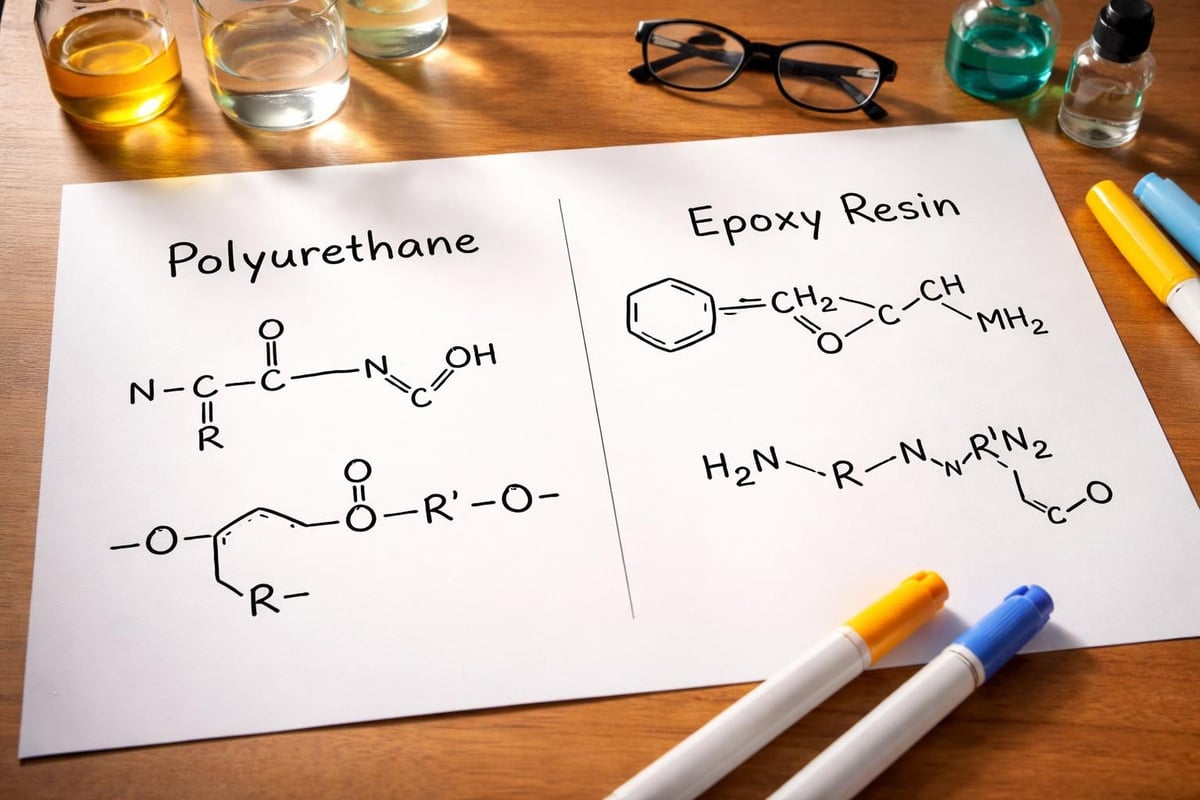
When specifying flooring systems for commercial and industrial facilities, understanding the differences between polyurethane and epoxy becomes essential for long-term performance and cost-effectiveness. Both materials offer distinct advantages in commercial environments, yet their properties, applications, and performance characteristics vary significantly. This comprehensive guide examines the technical aspects, practical applications, and selection criteria for these two prominent coating systems across warehouses, factories, commercial kitchens, and retail spaces throughout South East Queensland.
Chemical Composition and Curing Fundamentals
The chemical compositions of polyurethane and epoxy differ substantially, creating unique performance profiles for each material. Epoxy systems form through a chemical reaction between resin and hardener components, creating rigid cross-linked molecular structures. This thermosetting process produces exceptional adhesion and chemical resistance, making epoxy ideal for high-traffic industrial environments.
Polyurethane coatings cure through different mechanisms depending on their formulation. Moisture-cured polyurethanes react with atmospheric humidity, whilst two-component systems combine polyol resins with isocyanate hardeners. The resulting molecular structure provides superior flexibility and impact resistance compared to epoxy.
Application Environment Requirements
Temperature and humidity conditions during installation significantly affect both systems. Epoxy applications require controlled environments with temperatures typically between 10°C and 30°C and relative humidity below 85%. Substrate moisture content must remain below 4% for optimal adhesion.
Polyurethane systems generally tolerate:
- Wider temperature ranges during application
- Higher humidity levels during curing
- Cooler substrate temperatures
- Variable ambient conditions
The flexibility in application parameters makes polyurethane particularly valuable for projects with tight timelines or challenging environmental conditions. However, this versatility comes with trade-offs in other performance areas that facility managers must carefully evaluate.
Performance Characteristics Comparison
Understanding how polyurethane and epoxy perform under real-world commercial conditions helps facility managers make informed decisions. Each material excels in specific scenarios whilst presenting limitations in others.
| Property | Epoxy | Polyurethane |
|---|---|---|
| Chemical Resistance | Excellent | Good to Very Good |
| Abrasion Resistance | Very Good | Excellent |
| UV Stability | Poor to Fair | Excellent |
| Flexibility | Low | High |
| Impact Resistance | Moderate | Excellent |
| Adhesion Strength | Excellent | Very Good |
Chemical and Environmental Resistance
Epoxy coatings demonstrate outstanding resistance to acids, alkalis, solvents, and petroleum products. This chemical resistance makes epoxy the preferred choice for commercial kitchens, food processing facilities, and chemical storage areas. Recent research demonstrates that incorporating polyurethane into epoxy formulations can enhance mechanical properties whilst maintaining chemical resistance.
Polyurethane excels in environments requiring UV stability and outdoor exposure resistance. The material maintains colour stability and gloss retention under sunlight, making it suitable for undercover car parks with partial sun exposure. Its flexibility also provides superior performance in areas experiencing thermal cycling or substrate movement.
Mechanical Durability in Commercial Settings
The mechanical properties of flooring systems directly impact maintenance costs and service life in industrial facilities. Polyurethane and epoxy respond differently to the demanding conditions found in warehouses, workshops, and high-traffic retail environments.

Abrasion and Wear Resistance
Polyurethane coatings typically outperform epoxy in wear resistance, particularly under steel-wheeled traffic and constant abrasion. Facilities with forklift operations, pallet jacks, or heavy wheeled equipment benefit from polyurethane's superior toughness. The material's elastic properties distribute loads more effectively, reducing surface degradation over time.
Abrasion resistance factors:
- Traffic patterns and volume
- Load weights and wheel types
- Turning and braking frequencies
- Material hardness specifications
- Coating thickness requirements
For industrial concrete flooring applications in South East QLD, these mechanical properties directly influence total cost of ownership through reduced maintenance intervals and extended floor life.
Impact Resistance and Flexibility
The inherent flexibility of polyurethane provides exceptional impact resistance compared to rigid epoxy systems. When tools, materials, or equipment drop onto polyurethane surfaces, the coating absorbs and disperses energy rather than cracking or chipping. This characteristic proves particularly valuable in manufacturing facilities and workshops where impacts occur regularly.
Epoxy's rigidity, whilst providing excellent compressive strength, makes it more susceptible to point-impact damage. However, modern epoxy flooring systems incorporate various technologies to improve impact resistance whilst maintaining superior chemical protection.
Application-Specific Selection Criteria
Selecting between polyurethane and epoxy requires evaluating specific operational requirements, environmental conditions, and performance priorities. Different commercial environments demand distinct material properties for optimal long-term performance.
Warehouse and Distribution Centres
Heavy forklift traffic, constant movement of goods, and varying load distributions characterise warehouse environments. The key performance factors for these facilities include abrasion resistance, rapid installation schedules, and minimal maintenance requirements.
Polyurethane topcoats over epoxy base coats often provide the optimal solution, combining chemical resistance at the substrate level with superior wear resistance at the surface. This hybrid approach delivers comprehensive protection whilst managing project costs effectively.
Food Processing and Commercial Kitchens
Chemical resistance, thermal shock tolerance, and hygiene compliance drive material selection in food-grade environments. Epoxy systems dominate this sector due to exceptional resistance to cleaning chemicals, organic acids, and constant washdown procedures. The material's seamless finish eliminates harbourage points for bacteria whilst withstanding aggressive sanitisation protocols.
For food grade flooring applications, specialized epoxy formulations meet Australian food safety standards whilst providing slip resistance and thermal stability required in commercial kitchens throughout South East Queensland.
Retail and Showroom Spaces
Aesthetic considerations gain prominence in customer-facing environments. Both materials offer decorative possibilities, yet their appearance evolves differently over time. Polyurethane maintains gloss and colour stability superior to epoxy, particularly in areas receiving natural light. Its resistance to yellowing makes it preferable for high-end retail installations prioritising long-term appearance.
Epoxy provides broader decorative options through metallic effects, colour blending, and aggregate incorporation. When protected from UV exposure in enclosed retail spaces, epoxy delivers lasting visual appeal with excellent durability.
Installation Considerations and Cost Analysis
The practical aspects of installing polyurethane and epoxy significantly impact project timelines, labour requirements, and total installed costs. Understanding these factors helps facility managers budget accurately and schedule installations around operational requirements.
Surface Preparation Requirements
Both systems demand thorough substrate preparation for optimal performance. Concrete surfaces must be properly profiled, clean, and dry before coating application. However, the tolerance levels differ between materials.
Critical preparation steps:
- Shot blasting or diamond grinding for profile
- Crack and joint repair
- Moisture testing and mitigation
- Contaminant removal
- Surface porosity evaluation
Epoxy generally requires more stringent moisture control, with substrate moisture content below 4% essential for preventing delamination. Polyurethane tolerates slightly higher moisture levels, though proper preparation remains crucial for long-term adhesion.
Curing Times and Return to Service
Project scheduling depends heavily on curing times and the ability to resume normal operations. Epoxy systems typically cure slower than polyurethane, requiring 5-7 days for full chemical cure under standard conditions. Foot traffic may be permitted after 24-48 hours, whilst vehicular traffic requires longer cure periods.
| System Type | Foot Traffic | Light Vehicles | Full Cure |
|---|---|---|---|
| Epoxy (standard) | 24-48 hours | 3-5 days | 7 days |
| Polyurethane (aliphatic) | 12-24 hours | 2-3 days | 5-7 days |
| Fast-cure variants | 6-12 hours | 1-2 days | 3-5 days |
Fast-cure formulations exist for both materials, enabling rapid return to service for facilities unable to accommodate extended downtime. These specialized products typically cost more but deliver significant value in time-sensitive projects.
Long-Term Performance and Maintenance
The operational lifespan and maintenance requirements of polyurethane and epoxy directly influence total ownership costs. Proper maintenance extends service life significantly, regardless of which system facility managers select.

Expected Service Life
Under appropriate conditions with proper maintenance, both materials deliver excellent longevity. Epoxy systems in protected environments routinely exceed 15-20 years of service life. Polyurethane topcoats may require reapplication every 7-10 years depending on traffic levels, though the protective base layers remain intact.
The durability of epoxy flooring systems in commercial applications depends on numerous factors including coating thickness, substrate quality, and operational conditions. Regular inspections identify minor issues before they escalate into costly repairs.
Cleaning and Maintenance Protocols
Both polyurethane and epoxy benefit from regular cleaning with pH-neutral detergents and soft-bristled equipment. Harsh chemicals, abrasive scrubbers, and steam cleaning at excessive temperatures can degrade either coating system prematurely.
Recommended maintenance practices include:
- Daily sweeping or dust mopping
- Weekly wet mopping with approved cleaners
- Quarterly deep cleaning and inspection
- Annual professional assessment
- Prompt attention to spills and damage
Establishing comprehensive cleaning protocols for polished concrete and epoxy floors preserves appearance and extends service life across commercial facilities in South East Queensland.
Advanced Formulations and Hybrid Systems
Material science continues advancing, creating innovative formulations that combine beneficial properties of both polyurethane and epoxy. These hybrid systems address specific performance requirements whilst managing cost considerations effectively.
Silicone-Modified Systems
Recent developments in silicone-modified polyurethane-epoxy networks demonstrate enhanced mechanical and electrical properties. These advanced formulations offer improved flexibility without sacrificing chemical resistance, opening new possibilities for demanding industrial applications.
Hybrid systems typically employ epoxy primers and body coats for chemical resistance and substrate adhesion, topped with polyurethane wear layers for abrasion resistance and UV stability. This layered approach optimizes each material's strengths whilst minimizing weaknesses.
Industry-Specific Innovations
Specialized formulations address unique requirements in sectors ranging from aerospace to industrial manufacturing. The differences between epoxy and polyurethane paints in aviation applications demonstrate how material selection adapts to extreme performance demands.
For commercial flooring contractors working across diverse industrial sectors, understanding these specialized products enables better matching of flooring systems to operational requirements and environmental conditions.
Specification Development for Commercial Projects
Creating comprehensive specifications for polyurethane and epoxy flooring projects requires technical knowledge, industry experience, and understanding of Australian standards. Properly written specifications protect both facility owners and contractors whilst ensuring quality outcomes.
Performance-Based Specifications
Rather than prescribing specific products, performance-based specifications define required characteristics including chemical resistance, abrasion tolerance, slip resistance, and service life expectations. This approach encourages contractor innovation whilst maintaining quality standards.
Essential specification elements:
- Substrate condition requirements
- Minimum coating thickness
- Physical property requirements
- Chemical resistance standards
- Warranty expectations
- Installation timeline parameters
When developing specifications for commercial floor coatings, facility managers should consult experienced contractors familiar with South East Queensland conditions and commercial flooring requirements.
Quality Assurance and Testing
Comprehensive quality assurance programs verify that installed systems meet specification requirements. Testing protocols include adhesion pull-off tests, hardness measurements, chemical resistance verification, and visual inspections.
Third-party testing provides independent verification of performance characteristics, particularly valuable for large-scale projects or critical facilities. Regular testing during installation identifies issues immediately, enabling corrective action before problems compound.
Environmental and Safety Considerations
Workplace safety and environmental responsibility influence material selection increasingly in commercial and industrial settings. Both polyurethane and epoxy present specific handling requirements and environmental considerations.
VOC Emissions and Air Quality
Volatile organic compound emissions during installation affect worker safety and building occupancy schedules. Traditional solvent-based systems release significant VOCs, whilst modern water-based and high-solids formulations minimize emissions substantially.
Low-VOC epoxy and polyurethane systems enable installations in occupied facilities with minimal disruption. These formulations typically cost more than conventional products but deliver value through reduced downtime and improved indoor air quality.
Slip Resistance and Safety Compliance
Flooring safety standards mandate appropriate slip resistance for commercial environments, particularly in wet areas or high-traffic zones. Both polyurethane and epoxy can be modified with aggregates, texturing, or specialized additives to achieve required slip resistance coefficients.
The material selection process must balance slip resistance requirements against cleaning ease and aesthetic considerations. Overly aggressive textures trap dirt and complicate maintenance, whilst insufficient texture creates safety hazards.
Regional Considerations for South East Queensland
Climate conditions, substrate characteristics, and operational patterns specific to South East Queensland influence how polyurethane and epoxy perform in local commercial applications. Understanding these regional factors optimizes material selection and installation practices.
Climate Impact on Material Performance
The subtropical climate of South East Queensland presents specific challenges including high humidity, temperature variations, and seasonal weather patterns. These conditions affect both installation timing and long-term performance of coating systems.
High humidity during summer months requires careful scheduling of epoxy installations to prevent moisture-related adhesion failures. Polyurethane's greater tolerance for humid conditions provides more flexible installation windows, though proper surface preparation remains essential regardless of material selection.
Substrate Conditions and Local Concrete Characteristics
Concrete characteristics vary across the region based on aggregate sources, mix designs, and construction practices. Understanding local substrate conditions helps contractors anticipate challenges and adjust installation procedures accordingly. Testing substrate moisture, porosity, and strength before specifying coating systems prevents premature failures and ensures compatibility between concrete and applied coatings.
Selecting between polyurethane and epoxy demands careful evaluation of operational requirements, environmental conditions, and performance priorities specific to each commercial facility. Whether you're planning flooring for a new warehouse, upgrading an existing factory floor, or renovating a retail space across South East Queensland, Superior Concrete Finishes brings decades of industry experience to help you choose and install the optimal concrete flooring system. Our team of licensed, insured professionals specializes in epoxy flooring and polished concrete for commercial and industrial clients throughout the region, delivering durable, high-performance floors tailored to your specific operational needs.

Joshua Miller has over 15 years of experience in the commercial concrete flooring industry, specialising in epoxy flooring systems and polished concrete solutions for warehouses, factories, retail spaces and commercial developments. Joshua and his team work closely with builders, property owners and facility managers across South East Queensland to deliver durable, cost-effective commercial flooring systems for warehouses, industrial facilities, commercial kitchens, retail stores and large commercial developments.
Major builders and organisations Josh has led projects on include McNab, Hutchinson Builders, IKEA, Queensland Rail, University of Queensland, ADCO, Tomkins Commercial, Bunnings, OfficeWorks, Spotlight, and Anaconda.
If you're planning a project and need advice on the best commercial concrete flooring solution, contact Josh or one of the team at Superior Concrete Finishes.
-
 info@superiorconcretefinishes.com.au
-
1300 789 740
-
Connect with Josh on
LinkedIn


 Connect with Josh on