
Polyurethane cement flooring represents an innovative hybrid solution that combines the flexibility and chemical resistance of polyurethane with the structural strength of cementitious materials. This advanced flooring system has gained significant traction in commercial and industrial settings across South East Queensland, particularly in facilities requiring exceptional durability under challenging conditions. Unlike traditional concrete finishes or standard resinous systems, polyurethane cement flooring delivers unique performance characteristics that make it ideal for demanding environments such as commercial kitchens, food processing facilities, and industrial workshops where thermal shock resistance and hygiene are paramount.
Understanding Polyurethane Cement Flooring Technology
Polyurethane cement flooring systems operate on a fundamentally different principle compared to conventional concrete flooring systems. The material combines polyurethane resin with specially formulated cement, creating a composite that exhibits properties superior to either component alone.
Material Composition and Chemistry
The basic structure involves a polyurethane binder system mixed with hydraulic cement and carefully selected aggregates. This unique formulation creates a chemical and mechanical bond that produces exceptional adhesion to concrete substrates.
Research into polyurethane-cement composites demonstrates that these materials achieve superior mechanical properties and chemical resistance compared to traditional flooring systems. The polyurethane component provides flexibility and resistance to cracking, whilst the cement matrix contributes compressive strength and thermal stability.
Key compositional elements include:
- Polyurethane resin: Provides elasticity, chemical resistance, and waterproofing properties
- Hydraulic cement: Delivers structural strength and thermal mass
- Aggregate materials: Enhances mechanical properties and slip resistance
- Additives and modifiers: Optimise workability, curing time, and specific performance characteristics
Performance Characteristics
Polyurethane cement flooring excels in several critical performance areas. The system typically withstands thermal shock ranges from -40°C to +120°C, making it exceptionally suitable for commercial kitchens and food processing facilities where hot water washdowns and refrigerated storage areas coexist.
| Property | Polyurethane Cement | Standard Epoxy | Polished Concrete |
|---|---|---|---|
| Thermal Shock Resistance | Excellent | Moderate | Poor |
| Chemical Resistance | Excellent | Good | Moderate |
| Flexibility | High | Low | None |
| Installation Time | 3-5 days | 2-4 days | 5-10 days |
| Service Temperature Range | -40°C to +120°C | -20°C to +60°C | Ambient only |
The material's porosity remains minimal, preventing bacterial growth and facilitating thorough cleaning-essential requirements for facilities subject to food safety regulations and hygiene standards.
Applications in Commercial and Industrial Settings
Polyurethane cement flooring serves specific commercial applications where its unique properties provide measurable operational benefits.
Food Processing and Commercial Kitchens
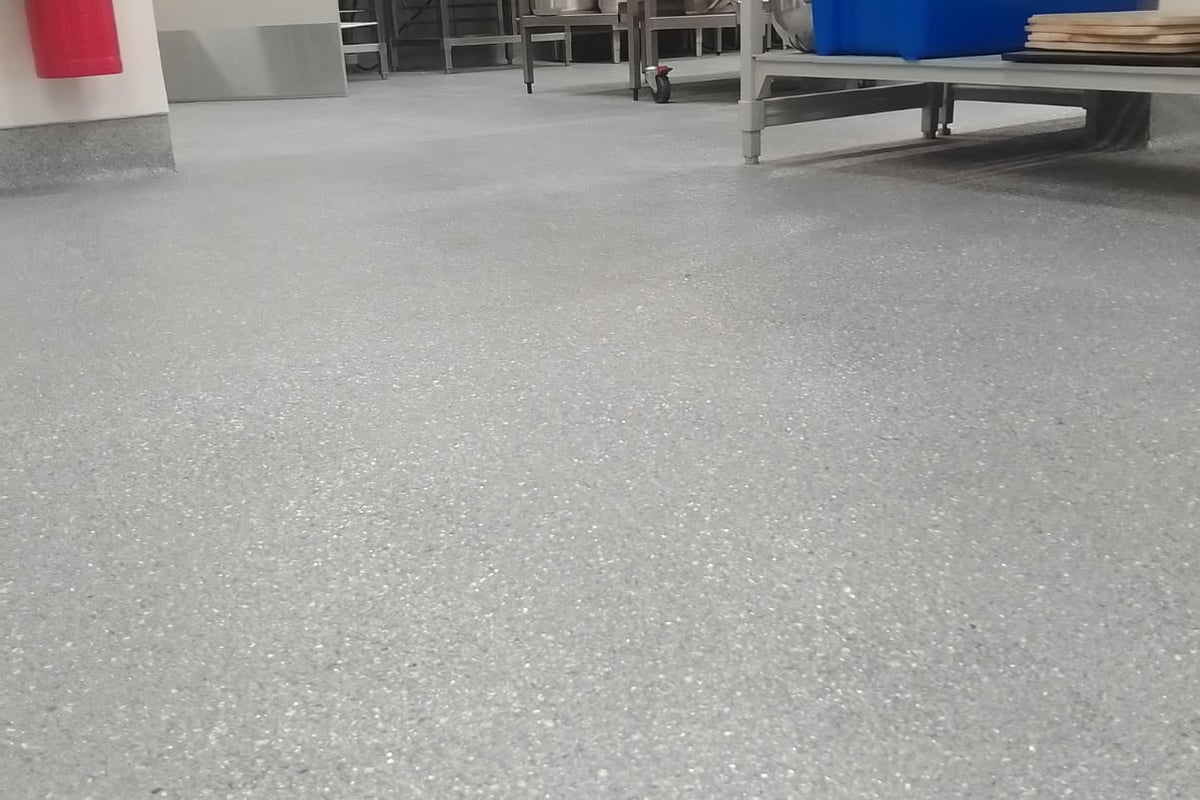
The food industry represents the primary market for polyurethane cement flooring systems. Commercial kitchens, meat processing facilities, and dairy operations benefit from the material's ability to withstand constant exposure to hot water, steam, acids, and caustic cleaning chemicals.
Critical advantages in food environments:
- Seamless installation eliminates joints where bacteria can harbour
- Resistance to lactic acid, citric acid, and other organic acids
- Non-slip surface texture even when wet
- Quick return to service minimises operational downtime
- Compliance with HACCP and food safety standards
Studies examining cement mortars modified with polyurethane highlight the enhanced durability characteristics that make these systems ideal for environments requiring frequent cleaning and sanitation.
Industrial Workshops and Manufacturing
Beyond food processing, polyurethane cement flooring finds applications in mechanical workshop flooring where chemical spills and thermal variations present challenges for conventional systems. Manufacturing facilities handling chemicals, pharmaceuticals, or beverages particularly benefit from the material's resistance profile.

The system's ability to accommodate substrate movement reduces cracking risks in facilities with heavy machinery or vibration. This flexibility proves particularly valuable in older industrial buildings where structural settlement might compromise rigid flooring systems.
Installation Process and Considerations
Installing polyurethane cement flooring requires specialised knowledge and equipment. The process differs significantly from commercial surface polishing or standard resinous floor applications.
Substrate Preparation Requirements
Proper substrate preparation determines long-term performance. The concrete base must be structurally sound, clean, and appropriately profiled to achieve optimal adhesion.
- Surface assessment: Evaluate concrete strength, moisture content, and existing coatings
- Mechanical preparation: Shot blasting or diamond grinding to achieve CSP 3-5 profile
- Crack and joint treatment: Repair structural defects and address movement joints
- Moisture testing: Verify relative humidity and moisture vapour emission rates
- Priming application: Apply compatible primer system to enhance adhesion
Research on rapid-setting mortar as a levelling layer demonstrates the importance of proper substrate preparation in achieving optimal results with polyurethane-based systems.
Application Methodology
The application process typically spans three to five days, depending on system thickness and ambient conditions. Unlike warehouse flooring solutions that might allow faster installation, polyurethane cement systems require careful attention to mixing ratios and application timing.
Installation sequence:
- Prime the prepared substrate with polyurethane cement primer
- Mix base material according to manufacturer specifications (timing critical)
- Apply base coat at specified thickness (typically 6-9mm)
- Broadcast aggregate for enhanced slip resistance (if required)
- Apply seal coat to achieve desired finish
- Allow full cure period before returning to service
Temperature and humidity during installation significantly impact curing. Ambient temperatures between 10°C and 25°C produce optimal results, whilst high humidity can extend curing times.
Cost Analysis and Return on Investment
Evaluating polyurethane cement flooring requires understanding both initial investment and lifecycle costs. The material commands a premium price compared to conventional options, yet delivers compelling long-term value in appropriate applications.
Initial Investment Factors
Material costs for polyurethane cement flooring typically range from $85 to $150 per square metre installed, depending on system thickness, substrate condition, and project complexity. This positions it above standard epoxy flooring but reflects the specialized material properties and application requirements.
| Cost Component | Percentage of Total | Notes |
|---|---|---|
| Materials | 45-55% | Includes primers, base coats, seal coats |
| Labour | 30-40% | Specialist application skills required |
| Preparation | 10-15% | Substrate preparation and repairs |
| Downtime | 5-10% | Operational impact during installation |
Analysis of cost-effectiveness and performance in industrial settings demonstrates that polyurethane flooring systems often justify higher initial investment through reduced maintenance costs and extended service life.
Lifecycle Cost Considerations
The economic case for polyurethane cement flooring strengthens when examining operational costs over the floor's lifespan. Facilities operating 24/7 with aggressive cleaning protocols find particular value in the system's durability.
Expected service life ranges from 15 to 25 years in typical industrial environments, significantly exceeding many alternative systems. Minimal maintenance requirements reduce ongoing costs-regular cleaning with standard equipment suffices, without need for periodic resealing or refinishing.
Research into major advantages of polyurethane flooring systems highlights flexibility, chemical resistance, and favourable life cycle costs as key economic benefits. Facilities avoiding premature floor replacement and unplanned downtime realise substantial savings over time.
Maintenance and Long-Term Performance
Polyurethane cement flooring systems deliver optimal performance when properly maintained. The relatively simple maintenance requirements contribute to the system's lifecycle value proposition.
Daily and Routine Maintenance
Regular cleaning maintains both appearance and hygiene standards. The seamless, non-porous surface facilitates effective cleaning with standard equipment and procedures commonly used in commercial facilities.
Recommended maintenance practices:
- Daily sweeping or dust mopping to remove loose debris
- Regular wet mopping with neutral pH cleaners
- Periodic deep cleaning with automatic scrubbers
- Immediate attention to spills and stains
- Quarterly inspection for early damage detection
Unlike some factory flooring options requiring specialized care products, polyurethane cement systems tolerate a wide range of commercial cleaning agents without degradation.

Long-Term Durability Factors
The hybrid nature of polyurethane cement flooring provides inherent advantages in wear resistance and damage tolerance. The flexible polyurethane component accommodates minor substrate movement without cracking, whilst the cement matrix resists abrasion and impact.
Facilities can expect minimal performance degradation over the first decade of service when properly maintained. Surface wear in high-traffic areas progresses gradually, allowing planned refurbishment rather than emergency replacement.
When localized repairs become necessary, the material allows patch repairs that integrate with existing flooring. This represents a significant advantage over rigid systems where damage often necessitates larger-scale replacement.
Comparing Polyurethane Cement to Alternative Systems
Understanding where polyurethane cement flooring excels relative to alternatives helps facility managers make informed decisions. Each commercial flooring system serves specific applications optimally.
Polyurethane Cement vs. Epoxy Flooring
Epoxy flooring systems dominate warehouses and industrial workshops in South East Queensland due to excellent chemical resistance and cost-effectiveness. However, polyurethane cement outperforms epoxy in specific scenarios.
Thermal shock resistance represents the most significant differentiator. Epoxy systems become brittle at low temperatures and soften when exposed to heat, limiting their suitability for environments with extreme temperature variations. Commercial kitchens routinely experience temperature differentials that would compromise epoxy performance.
The flexibility of polyurethane cement systems also reduces cracking risks in substrates subject to movement or vibration. Studies on bonding properties between polyurethane-cement materials demonstrate superior performance in dynamic loading conditions.
Polyurethane Cement vs. Polished Concrete
Polished concrete offers an attractive, durable solution for retail environments and offices. The aesthetic appeal and minimal maintenance requirements make it popular for commercial retail stores throughout Queensland.
However, polished concrete lacks the chemical resistance and thermal shock tolerance required in food processing or industrial chemical handling. The porous nature of concrete, even when densified and polished, cannot match the hygiene standards achievable with seamless polyurethane cement systems.
| Selection Criteria | Choose Polyurethane Cement | Choose Epoxy | Choose Polished Concrete |
|---|---|---|---|
| Thermal shock exposure | ✓ | ||
| Food safety requirements | ✓ | ||
| Budget constraints | ✓ | ✓ | |
| Aesthetic priority | ✓ | ||
| Chemical exposure | ✓ | ✓ | |
| Installation speed | ✓ |
Regulatory Compliance and Safety Standards
Polyurethane cement flooring installations must address various regulatory requirements, particularly in food processing and commercial kitchen applications where health and safety standards impose strict specifications.
Food Safety and Hygiene Compliance
Facilities subject to food safety audits require flooring systems meeting specific performance criteria. Polyurethane cement flooring typically satisfies requirements for seamless, impervious, and easily cleanable surfaces specified in food safety regulations.
The material's resistance to bacterial growth and ability to withstand aggressive cleaning protocols align with HACCP principles. Regular third-party testing verifies that properly installed systems meet antimicrobial performance standards.
Slip Resistance and Workplace Safety
Slip resistance represents a critical safety consideration in commercial environments, particularly where wet conditions prevail. Polyurethane cement systems achieve appropriate slip resistance through aggregate broadcasting or surface texturing during installation.
Testing to AS 4586 standards ensures compliance with workplace safety requirements. Facilities can specify slip resistance levels appropriate to their operational conditions, balancing safety with cleanability requirements.
The material's inherent properties also contribute to workplace safety through chemical containment. The seamless installation prevents spill migration to underlying substrates or adjacent areas, facilitating effective emergency response to chemical releases.
For facilities throughout South East Queensland seeking food process flooring solutions that meet stringent regulatory requirements, polyurethane cement systems provide a proven pathway to compliance. The combination of hygiene performance, chemical resistance, and thermal stability addresses the unique challenges faced by food industry facilities.
Environmental Considerations and Sustainability
Modern facility management increasingly incorporates environmental performance into flooring system selection. Polyurethane cement flooring presents both advantages and challenges from a sustainability perspective.
Material Lifecycle and Environmental Impact
The extended service life of polyurethane cement flooring reduces environmental impact through decreased replacement frequency. A 20-year service life means fewer resources consumed for removal and replacement compared to systems requiring renewal every 5-10 years.
However, the material's complex chemistry presents challenges for end-of-life disposal. Unlike concrete-based systems that can be crushed and recycled, polyurethane cement composites require specialized handling at project completion.
Sustainability factors to consider:
- Reduced replacement frequency minimises waste generation
- Lower maintenance chemical consumption due to durable surface
- Energy efficiency improvements through thermal mass properties
- Complex material composition limits recycling options
- VOC emissions during installation require ventilation management
Indoor Air Quality and Emissions
Installation of polyurethane cement flooring generates odours from the chemical curing process. Proper ventilation during application and curing protects worker health and maintains acceptable indoor air quality.
Once fully cured, the material exhibits minimal off-gassing, supporting healthy indoor environments. This characteristic makes it suitable for facilities with stringent air quality requirements, including food processing operations where product contamination risks must be minimised.
Selecting the Right Flooring System for Your Facility
Determining whether polyurethane cement flooring represents the optimal choice for your commercial or industrial facility requires systematic evaluation of operational requirements, environmental conditions, and budget constraints.
Decision Framework
Start by documenting specific operational challenges your flooring must address. Facilities experiencing premature floor failure with conventional systems should analyse the failure mechanisms-thermal shock, chemical attack, or mechanical damage patterns reveal whether polyurethane cement properties align with your needs.
Temperature exposure represents a primary selection criterion. Commercial kitchens, food processing areas, and facilities with both refrigerated and heated zones benefit most from polyurethane cement's thermal shock resistance. Conversely, ambient-temperature warehouses might find better value in alternative commercial flooring solutions.
Working with Experienced Contractors
The specialized nature of polyurethane cement flooring demands experienced installation teams. Unlike more forgiving systems, material mixing ratios, timing, and application techniques significantly impact final performance.
When evaluating contractors, verify experience specifically with polyurethane cement systems rather than general flooring experience. Request references from similar facilities and inspect completed projects exhibiting comparable operational demands to your environment.
Proper installation requires understanding substrate preparation standards, moisture management, and system-specific application techniques. The investment in premium materials deserves equally premium installation expertise to achieve designed performance levels.
Polyurethane cement flooring delivers exceptional performance in demanding commercial and industrial environments where thermal shock resistance, chemical exposure, and hygiene requirements exceed the capabilities of conventional systems. The material's unique combination of flexibility, durability, and resistance properties makes it particularly valuable for food processing facilities, commercial kitchens, and specialized industrial applications throughout South East Queensland. If your facility faces challenging operational conditions that have compromised traditional flooring systems, Superior Concrete Finishes brings decades of expertise in commercial concrete flooring solutions to help you select and install the optimal system for your specific requirements.

Joshua Miller has over 15 years of experience in the commercial concrete flooring industry, specialising in epoxy flooring systems and polished concrete solutions for warehouses, factories, retail spaces and commercial developments. Joshua and his team work closely with builders, property owners and facility managers across South East Queensland to deliver durable, cost-effective commercial flooring systems for warehouses, industrial facilities, commercial kitchens, retail stores and large commercial developments.
Major builders and organisations Josh has led projects on include McNab, Hutchinson Builders, IKEA, Queensland Rail, University of Queensland, ADCO, Tomkins Commercial, Bunnings, OfficeWorks, Spotlight, and Anaconda.
If you're planning a project and need advice on the best commercial concrete flooring solution, contact Josh or one of the team at Superior Concrete Finishes.
-
 info@superiorconcretefinishes.com.au
-
1300 789 740
-
Connect with Josh on
LinkedIn


 Connect with Josh on