Polyurethane concrete floor coating has emerged as a critical solution for commercial and industrial facilities demanding exceptional durability and long-term performance. These advanced coating systems combine chemical resistance, abrasion tolerance, and UV stability to protect concrete surfaces in South East Queensland’s most demanding environments. For facility managers and business owners operating warehouses, factories, and commercial car parks, understanding the capabilities and applications of polyurethane systems can inform smarter flooring investment decisions.
Understanding Polyurethane Concrete Floor Coating Systems
Polyurethane concrete floor coating refers to specialised protective systems applied directly to concrete substrates. These coatings form through chemical reactions between polyol resins and isocyanate hardeners, creating cross-linked polymer networks that bond tenaciously to prepared concrete surfaces.
Unlike basic sealers, polyurethane systems penetrate and mechanically lock into the concrete substrate. This molecular-level adhesion delivers superior performance under constant traffic, chemical exposure, and thermal cycling.
Chemical Composition and Bonding Mechanisms
The chemistry behind polyurethane concrete floor coating determines its performance characteristics. Two-component systems require precise mixing ratios, whilst single-component moisture-cured formulations react with ambient humidity. Research on polyurethane coatings demonstrates how proper catalyst selection influences curing speed, final hardness, and chemical resistance.
Key components include:
- Polyol resins providing flexibility and chemical resistance
- Isocyanate hardeners creating cross-linked polymer structures
- UV stabilisers preventing yellowing and degradation
- Additives for slip resistance and aesthetic properties
The molecular structure of polyurethane allows these coatings to flex with concrete movement whilst maintaining protective integrity. This elasticity proves essential in South East Queensland’s climate, where temperature variations cause concrete expansion and contraction.

Performance Advantages in Commercial Applications
Commercial facilities demand flooring systems that withstand relentless abuse whilst minimising maintenance requirements. Polyurethane concrete floor coating delivers measurable advantages over alternative surface treatments.
Superior Abrasion Resistance
High-traffic environments subject concrete floors to constant wear from forklift tyres, pallet jacks, and foot traffic. Polyurethane sealers demonstrate exceptional abrasion resistance, significantly extending floor service life compared to untreated concrete.
Testing data reveals polyurethane systems maintain surface integrity under Taber abrasion testing that would rapidly degrade lesser coatings. This durability translates directly to reduced replacement cycles and lower total ownership costs.
Chemical Resistance Properties
| Chemical Type | Resistance Level | Typical Applications |
|---|---|---|
| Petroleum products | Excellent | Mechanical workshops, car parks |
| Food acids | Very good | Commercial kitchens, food processing |
| Alkaline cleaners | Excellent | Warehouses, retail stores |
| De-icing salts | Good to excellent | Outdoor car parks, loading docks |
Industrial operations regularly expose floors to chemical spills and aggressive cleaning agents. Polyurethane concrete floor coating systems resist degradation from oils, solvents, acids, and alkaline solutions that would penetrate and damage unprotected concrete.
UV Stability and Colour Retention
Whilst many industrial coatings yellow under ultraviolet exposure, aliphatic polyurethane formulations maintain colour stability in naturally lit facilities. Retail stores and commercial spaces with extensive glazing benefit from this UV resistance, preserving aesthetic appeal throughout the coating’s service life.
For facilities prioritising professional appearance alongside durability, polyurethane systems deliver both functional protection and visual consistency. In spaces requiring high-quality aesthetics combined with robust protection, polished concrete offers an alternative approach worth considering.
Polyurethane Cement Systems for Extreme Environments
Beyond standard polyurethane coatings, polyurethane cement (urethane cement) represents a hybrid category engineered for the harshest industrial conditions. These systems combine Portland cement with polyurethane resins, creating composite flooring with exceptional durability.

Composition and Structure
Urethane cement flooring systems incorporate cementitious aggregates within polyurethane matrices. This combination delivers:
- Thermal shock resistance – withstanding rapid temperature changes from -40°C to 120°C
- Chemical impermeability – preventing penetration of aggressive substances
- Antimicrobial properties – inhibiting bacterial growth in food processing areas
- Impact resistance – absorbing heavy dropped loads without cracking
The dense, non-porous surface created by polyurethane cement systems meets stringent hygiene requirements for commercial kitchens and food processing facilities across South East Queensland.
Installation Complexity and Requirements
Three-component polyurethane cement systems demand precise installation protocols. Mixed components must be applied within specific working times, and surface preparation becomes critical for achieving proper adhesion.
Professional installation teams follow these essential steps:
- Mechanical surface preparation to achieve CSP 3-5 profile
- Moisture testing to verify substrate readiness
- Primer application matched to system specifications
- Base coat installation at specified thickness
- Optional broadcast of texture aggregates
- Topcoat application for final protection
Proper concrete preparation directly influences coating longevity. Warehouse flooring applications particularly benefit from thorough surface profiling that maximises mechanical adhesion.
Application Strategies for Different Facility Types
Polyurethane concrete floor coating selection must align with specific operational demands. Different facility types require tailored system specifications.
Warehouse and Distribution Centres
High-volume warehouse operations prioritise rapid return to service and extended durability. For these facilities, fast-curing polyurethane systems minimise downtime whilst delivering the abrasion resistance necessary for constant forklift traffic.
Recommended specifications:
- Minimum 5-7 mils dry film thickness
- Anti-slip additives in travel lanes
- Chemical resistance for diesel and hydraulic fluid exposure
- Light-reflective topcoats improving visibility
Commercial Car Parks
Both covered and open-air car parks face unique challenges from vehicular traffic, oil drips, and weather exposure. Polyurethane concrete floor coating systems designed for car park applications incorporate enhanced UV stabilisers and superior chemical resistance.
Modern car parks increasingly specify aliphatic polyurethane topcoats that resist yellowing whilst providing the slip resistance required for pedestrian safety in wet conditions.
Food Processing and Commercial Kitchens
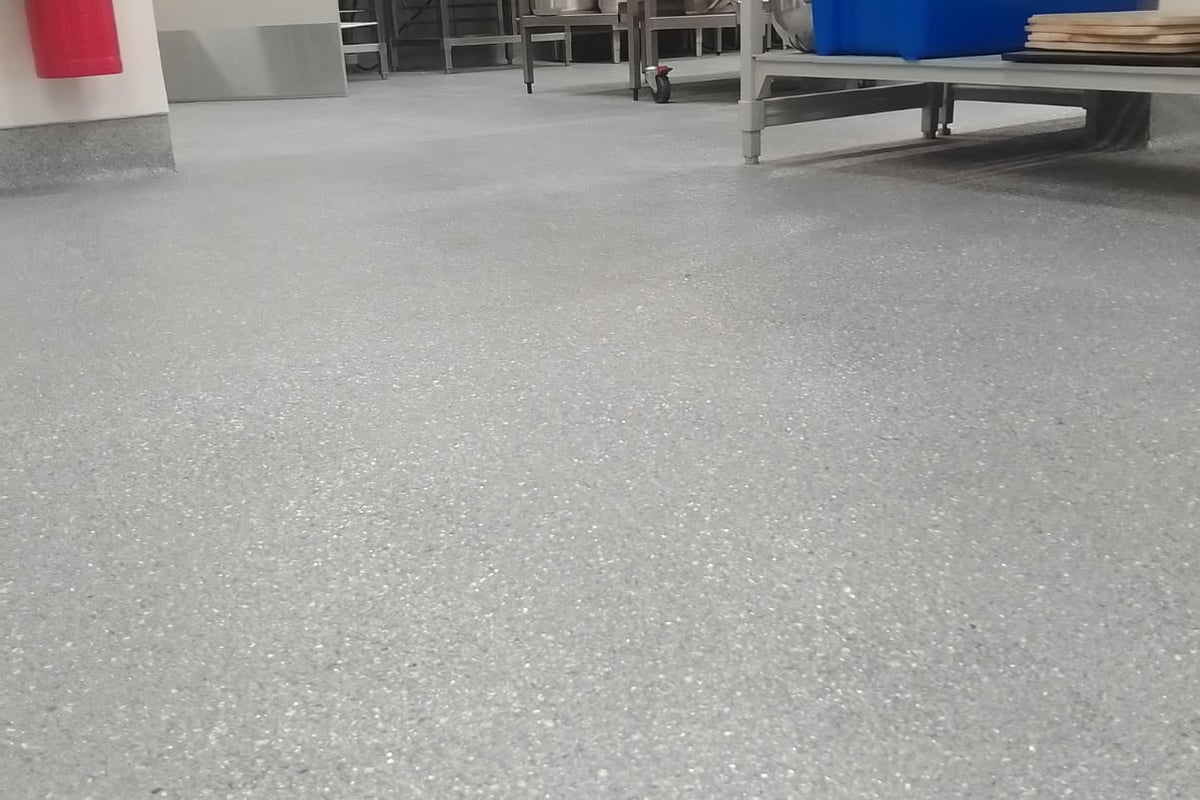
Facilities handling food products must meet strict hygiene standards whilst enduring thermal cycling, steam cleaning, and chemical sanitisers. Polyurethane cement systems prove ideal for these demanding environments.
The seamless, impervious surfaces created by these coatings prevent bacterial harbourage and facilitate thorough cleaning protocols. Food processing flooring installations routinely specify antimicrobial additives for additional protection.
Retail and Showroom Spaces
Commercial retail environments balance durability requirements with aesthetic considerations. Here, polyurethane concrete floor coating provides the wear resistance necessary for constant foot traffic whilst maintaining the professional appearance that reinforces brand identity.
Gloss levels can be specified from matte to high-gloss depending on desired ambience, and custom colours integrate with overall design schemes. For retail clients seeking refined aesthetics, polished concrete in retail stores presents another elegant option.
Comparison with Alternative Coating Systems
Facility managers frequently evaluate polyurethane concrete floor coating against other protective systems. Understanding comparative strengths guides informed specification decisions.
| System Type | Abrasion Resistance | UV Stability | Chemical Resistance | Cost Relative |
|---|---|---|---|---|
| Polyurethane | Excellent | Excellent (aliphatic) | Very good | Higher |
| Epoxy | Very good | Poor (yellows) | Excellent | Moderate |
| Acrylic | Good | Excellent | Moderate | Lower |
| Polyaspartic | Excellent | Excellent | Good | Higher |
Polyurethane Versus Epoxy Systems
Epoxy flooring systems dominate commercial flooring markets due to proven performance and cost-effectiveness. However, polyurethane offers distinct advantages in specific applications.
Epoxy delivers superior chemical resistance and bonds exceptionally well to concrete, making it ideal for factories, workshops, and industrial facilities. Polyurethane excels where UV exposure, flexibility, and abrasion resistance take priority.
Many commercial installations employ hybrid approaches, using epoxy as a basecoat for chemical resistance and adhesion, topped with polyurethane for UV stability and wear resistance. This layered strategy optimises performance characteristics whilst managing project costs.
Long-Term Performance Considerations
Service life projections significantly impact total ownership calculations. Polyurethane concrete floor coating typically delivers 10-15 years of effective protection in high-traffic commercial environments when properly installed and maintained.
Factors affecting longevity:
- Quality of substrate preparation
- Accuracy of mixing ratios during installation
- Consistency of maintenance protocols
- Severity of operational demands
- Environmental exposure levels
Facilities implementing regular cleaning schedules and promptly addressing minor damage extend coating performance well beyond baseline expectations. Simple maintenance practices compound into substantial life-cycle cost savings.
Installation Requirements and Best Practices
Successful polyurethane concrete floor coating installations depend on meticulous preparation and execution. Professional contractors follow established protocols that ensure optimal adhesion and performance.
Surface Preparation Standards
Concrete substrates must achieve specific cleanliness and profile requirements before coating application. Mechanical preparation methods include shot blasting, diamond grinding, and scarification to create the anchor profile necessary for mechanical bonding.
Surface moisture content cannot exceed 4% by weight, and relative humidity within the concrete slab should remain below 75% to prevent coating delamination. Proper moisture testing prevents the most common cause of coating failure in South East Queensland’s humid climate.
Environmental Conditions During Application
Temperature and humidity significantly influence polyurethane curing. Optimal application occurs within these parameters:
- Ambient temperature: 15-30°C
- Relative humidity: 40-80%
- Concrete temperature: minimum 3°C above dew point
- Substrate temperature: 10-35°C
Working outside these ranges compromises coating properties, potentially causing blushing, improper curing, or adhesion failure. Professional installation teams monitor conditions continuously throughout application.
Quality Control Measures
Reputable contractors implement systematic quality controls throughout installation:
- Pre-application substrate testing and documentation
- Material verification confirming correct products and ratios
- Environmental monitoring at regular intervals
- Wet film thickness gauging during application
- Post-installation adhesion testing on representative areas
These measures ensure installations meet manufacturer specifications and performance expectations. Projects completed by QBCC licensed contractors provide additional assurance through regulatory compliance and professional standards adherence.
Maintenance Protocols for Extended Service Life
Even the most durable polyurethane concrete floor coating requires ongoing maintenance to maximise performance longevity. Establishing systematic cleaning and inspection routines protects flooring investments.
Daily and Weekly Maintenance
Regular cleaning tasks include:
- Dust mopping or sweeping to remove abrasive particles
- Damp mopping with pH-neutral cleaners
- Immediate cleanup of chemical spills
- Inspection for damage requiring repair
Abrasive particles act like sandpaper under traffic, accelerating wear. Simple dust removal dramatically extends coating life by eliminating this grinding action.
Quarterly Inspections
Scheduled quarterly inspections identify developing issues before they compromise floor integrity. Facility managers should examine:
- Traffic patterns showing accelerated wear
- Areas of coating delamination or blistering
- Chemical staining requiring attention
- Cracks or joints requiring maintenance
Early intervention addresses minor problems inexpensively, preventing progression to major repairs demanding complete coating replacement.
Long-Term Renewal Options
After years of service, even well-maintained polyurethane concrete floor coating eventually requires renewal. Options range from topcoat reapplication to complete system removal and replacement.
Light surface abrasion followed by fresh topcoat application can restore appearance and protection at fraction of full replacement cost. This approach proves particularly effective when base coating remains sound but surface gloss has diminished.
Economic Considerations and Investment Returns
Polyurethane concrete floor coating represents significant capital investment for commercial facilities. Understanding cost structures and returns guides strategic decision-making.
Initial Investment Components
Total project costs encompass multiple elements beyond coating materials:
- Surface preparation and concrete repair
- Coating materials and installation labour
- Facility downtime during installation
- Staging and logistics for occupied facilities
- Quality testing and project management
For typical commercial applications in South East Queensland, installed costs range from $40-$120 per square metre depending on system type, preparation requirements, and project complexity. Polyurethane cement systems command premium pricing due to material costs and installation expertise.
Return on Investment Calculations
Financial justification extends beyond initial expenditure to total ownership costs across the coating’s service life. Polyurethane systems deliver returns through:
Reduced maintenance expenses – Sealed surfaces require less frequent cleaning and reduce dust generation that affects equipment and inventory.
Extended replacement cycles – Superior durability postpones costly floor replacement, spreading capital investment across longer timeframes.
Enhanced safety – Slip-resistant surfaces reduce workplace incident risks and associated costs including workers’ compensation claims and productivity losses.
Improved operational efficiency – Light-reflective coatings enhance visibility, reducing lighting requirements whilst improving safety and productivity.
Asset value preservation – Well-maintained floors support property values and tenant appeal for commercial property owners.
Comprehensive life-cycle cost analysis typically demonstrates compelling economic advantages for polyurethane systems in appropriate applications, despite higher initial investment compared to basic alternatives.
Regulatory Compliance and Environmental Factors
Commercial flooring installations must satisfy building codes, workplace safety requirements, and environmental regulations. Polyurethane concrete floor coating systems navigate multiple compliance frameworks.
VOC Regulations and Low-Emission Products
Volatile organic compound regulations increasingly restrict coating formulations. Water-based polyurethane systems reduce emissions compared to traditional solvent-based products, though they may sacrifice some performance characteristics.
Modern low-VOC polyurethane formulations achieve compliance whilst delivering comparable durability to conventional systems. Facilities pursuing green building certifications prioritise these environmentally responsible products.
Slip Resistance Standards
Commercial spaces must provide adequate slip resistance to minimise fall hazards. Australian Standard AS 4586 classifies slip resistance using pendulum testing, with different ratings appropriate for varying environments.
Polyurethane topcoats can be modified with texture additives or broadcast aggregates to achieve required slip resistance classifications. Wet areas and exterior applications demand higher ratings than dry interior spaces.
Fire Rating Requirements
Building codes specify fire performance requirements based on facility type and occupancy. Some polyurethane systems achieve appropriate flame spread and smoke development ratings for unrestricted use, whilst others require specific applications or additional fire protection measures.
Project specifications must verify coating fire ratings align with building code requirements. Professional contractors familiar with local regulations ensure compliant installations.
Polyurethane concrete floor coating delivers proven performance for commercial and industrial facilities demanding superior durability, chemical resistance, and long-term value. Understanding system types, application requirements, and maintenance protocols enables informed flooring decisions that protect operational assets. For South East Queensland commercial and industrial facilities requiring expert concrete flooring solutions, Superior Concrete Finishes brings decades of experience installing high-performance floor systems across warehouses, factories, car parks, and commercial spaces throughout the region.

Joshua Miller has over 15 years of experience in the commercial concrete flooring industry, specialising in epoxy flooring systems and polished concrete solutions for warehouses, factories, retail spaces and commercial developments. Joshua and his team work closely with builders, property owners and facility managers across South East Queensland to deliver durable, cost-effective commercial flooring systems for warehouses, industrial facilities, commercial kitchens, retail stores and large commercial developments.
Major builders and organisations Josh has led projects on include McNab, Hutchinson Builders, IKEA, Queensland Rail, University of Queensland, ADCO, Tomkins Commercial, Bunnings, OfficeWorks, Spotlight, and Anaconda.
If you're planning a project and need advice on the best commercial concrete flooring solution, contact Josh or one of the team at Superior Concrete Finishes.
-
 info@superiorconcretefinishes.com.au
-
1300 789 740
-
Connect with Josh on
LinkedIn


 Connect with Josh on