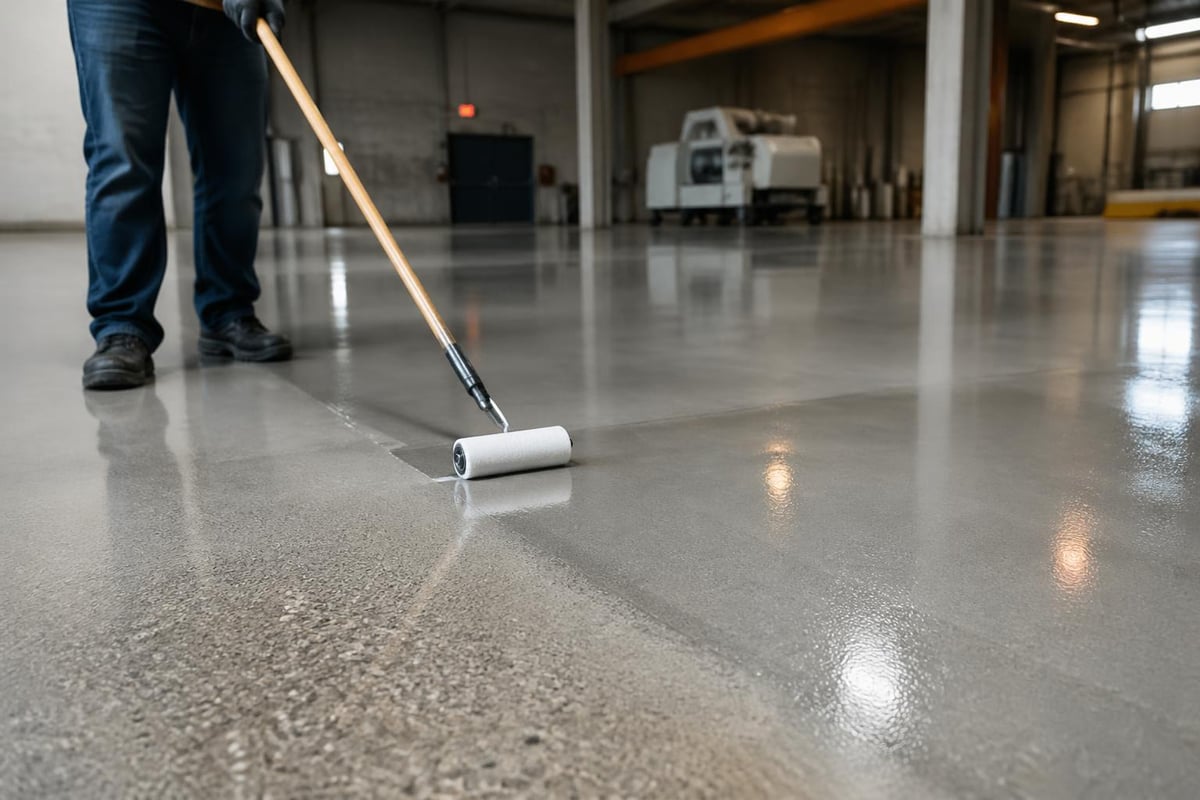
Commercial and industrial facilities across South East Queensland demand flooring solutions that withstand heavy traffic, chemical exposure, and constant operational demands. A sealed concrete finish delivers precisely that combination of protection and performance. This system transforms raw concrete slabs into resilient surfaces that resist moisture penetration, chemical damage, and surface degradation whilst maintaining the natural aesthetic many facility managers seek. Understanding the nuances between sealer types, application methods, and maintenance requirements ensures you select the optimal solution for your specific operational environment.
Understanding Sealed Concrete Finish Systems
A sealed concrete finish represents a protective treatment applied to concrete surfaces to enhance durability and extend service life. Unlike decorative coatings that add thickness and alter appearance dramatically, sealers penetrate or form thin protective layers that preserve the concrete's natural character whilst defending against environmental and operational stresses.
The fundamental purpose of sealing concrete involves creating barriers that prevent moisture infiltration, chemical absorption, and surface degradation. Unsealed concrete remains porous, allowing water, oils, chemicals, and contaminants to penetrate deep into the substrate where they cause structural damage over time. This porosity leads to staining, spalling, dusting, and ultimately premature floor failure in commercial settings.
Types of Concrete Sealers for Commercial Applications
Penetrating sealers represent one primary category within the sealed concrete finish spectrum. These products work by chemically reacting with the concrete substrate to create hydrophobic barriers within the pores themselves. Silicates, silanes, and siloxanes comprise the most common penetrating sealer chemistries, each offering distinct performance characteristics suited to different operational requirements.
Topical sealers form protective films on the concrete surface rather than penetrating into the substrate. Acrylic, polyurethane, and epoxy-based topical sealers provide varying degrees of gloss, durability, and chemical resistance. These systems typically offer enhanced aesthetic appeal compared to penetrating options whilst delivering superior protection against surface abrasion and chemical contact.
The selection between penetrating and topical sealers depends heavily on your facility's specific operational demands. Duomit’s comparison of sealed concrete systems highlights how different environments benefit from different sealer chemistries based on traffic patterns, chemical exposure, and aesthetic requirements.
| Sealer Type | Protection Mechanism | Typical Lifespan | Best Applications |
|---|---|---|---|
| Penetrating Silicate | Chemical densification | 5-10 years | Warehouses, car parks |
| Penetrating Silane/Siloxane | Water repellent barrier | 3-7 years | Outdoor areas, moderate traffic |
| Acrylic Topical | Surface film | 1-3 years | Low traffic, aesthetic focus |
| Polyurethane Topical | Durable film | 3-5 years | Moderate traffic, chemical exposure |
| Epoxy Topical | High-performance film | 5-10 years | Heavy traffic, industrial environments |
Surface Preparation Requirements
Proper surface preparation determines the success or failure of any sealed concrete finish installation. The concrete substrate must be thoroughly cleaned, profiled correctly, and completely dry before sealer application commences. Contaminants including oils, grease, existing coatings, curing compounds, and laitance prevent proper sealer penetration or adhesion, resulting in premature failure.
Mechanical preparation methods remain the gold standard for commercial installations. Diamond grinding removes surface contaminants whilst opening the concrete's pore structure to facilitate sealer penetration. Shot blasting provides aggressive surface profiling for heavily contaminated slabs. These mechanical approaches ensure consistent surface preparation across large commercial areas where chemical cleaning alone proves insufficient.
Concrete moisture content requires careful evaluation before sealer application. Most sealers demand moisture vapor emission rates below specific thresholds to prevent delamination and blistering. Calcium chloride tests and relative humidity probes provide quantitative moisture measurements that determine application readiness. Rushing this evaluation phase leads to costly failures that necessitate complete system removal and reapplication.

Application Techniques for Optimal Performance
Professional application techniques separate successful sealed concrete finish installations from problematic ones. Environmental conditions during application significantly impact final performance. Temperature, humidity, and air movement all influence sealer curing, with most products requiring temperatures between 10°C and 32°C and relative humidity below 85% for optimal results.
Application equipment selection depends on the sealer type and facility size. Low-pressure sprayers work well for penetrating sealers across large warehouse expanses, ensuring even coverage without waste. Roller application provides excellent control for topical sealers in smaller areas or along edges where precision matters. Multiple thin coats invariably outperform single heavy applications, allowing proper curing between coats whilst preventing pooling and uneven coverage.
Coverage rates vary dramatically between sealer types and concrete conditions. Porous concrete absorbs significantly more sealer than densified surfaces, requiring careful material estimation to avoid mid-project shortages. This comprehensive guide to sealing concrete details how surface porosity affects consumption rates and provides practical guidance for calculating material requirements accurately.
The curing period represents a critical phase where facility managers must restrict access to treated areas. Most sealers require 24 to 72 hours for initial cure before light foot traffic, with full chemical resistance developing over seven to fourteen days. Premature loading introduces contaminants into incompletely cured sealers, compromising their protective capabilities and reducing service life substantially.
Performance Characteristics in Commercial Environments
A sealed concrete finish delivers measurable performance advantages across multiple operational parameters relevant to commercial and industrial facilities. Chemical resistance ranks among the most critical benefits for factories, commercial kitchens, and workshops where acids, alkalis, solvents, and oils regularly contact flooring surfaces. High-performance sealers create barriers that prevent these substances from penetrating and damaging the concrete substrate.
Abrasion resistance improves substantially with appropriate sealer selection and application. Whilst sealers don't match the extreme durability of thick epoxy or polyurethane systems, they significantly reduce concrete dusting and surface degradation under moderate wheeled traffic. This characteristic proves particularly valuable in warehouse flooring applications where forklift operations occur continuously.
- Reduced maintenance requirements through easier cleaning
- Enhanced stain resistance preventing permanent discoloration
- Improved light reflectivity reducing lighting costs
- Dust suppression maintaining cleaner working environments
- Moisture vapor control preventing efflorescence
Slip resistance considerations require careful attention when selecting sealed concrete finish systems. Some topical sealers create glossy surfaces that become dangerously slippery when wet, particularly in commercial kitchens or areas exposed to water. Anti-slip additives can be incorporated into topical sealers to maintain traction whilst preserving protective properties, ensuring compliance with workplace safety standards.
The aesthetic versatility of sealed concrete appeals to facility managers seeking industrial character with professional presentation. Natural concrete tones ranging from light grey to charcoal create clean, modern environments suitable for retail flooring applications. The subtle sheen achieved with certain sealers enhances appearance without the high-gloss look that some commercial spaces find inappropriate.
Maintenance Protocols for Long-Term Performance
Establishing systematic maintenance protocols maximizes the service life of your sealed concrete finish whilst preserving its protective capabilities. Regular cleaning removes abrasive particles that would otherwise scratch and dull the sealed surface. Neutral pH cleaners specifically formulated for sealed concrete prevent chemical degradation of the sealer whilst effectively removing soils and contaminants.
Daily dust mopping or auto-scrubbing removes the fine particulate matter that acts like sandpaper under foot and wheeled traffic. This simple practice dramatically extends sealer life by minimizing abrasive wear. Weekly wet cleaning with appropriate chemical solutions addresses accumulated soils that dry cleaning cannot remove, maintaining both hygiene and appearance standards.
Periodic reapplication schedules depend on traffic intensity, chemical exposure, and initial sealer selection. Penetrating sealers in moderate-traffic environments may perform adequately for five to seven years before requiring reapplication. Topical sealers in high-traffic areas might need renewal every two to three years to maintain protective integrity. Seattle Surfaces’ sealed concrete process guide provides detailed guidance on assessing when resealing becomes necessary based on visual and performance indicators.
Cost Considerations and Return on Investment
The financial analysis of sealed concrete finish systems extends beyond initial installation costs to encompass long-term operational savings and avoided repair expenses. Initial investment typically ranges from $15 to $45 per square metre for professional application, varying with sealer type, surface preparation requirements, and facility size. This cost positioning makes sealed concrete significantly more economical than thick-build coating systems for facilities where extreme chemical or thermal demands don't exist.
Lifecycle cost analysis reveals the true value proposition. Reduced cleaning costs, eliminated concrete dusting, prevented staining damage, and delayed floor replacement collectively generate substantial savings over a facility's operational lifespan. Many commercial operations achieve complete cost recovery within two to four years through maintenance savings alone, making sealed concrete finish systems financially attractive beyond their protective capabilities.
For facilities requiring more robust chemical resistance or heavy impact tolerance, sealed concrete may prove insufficient. In these scenarios, epoxy flooring systems deliver superior performance through thicker, more resilient protective layers. Epoxy systems handle extreme operational demands whilst providing decades of reliable service in the harshest commercial and industrial environments across South East Queensland.

| Cost Factor | Sealed Concrete | Thick Epoxy System | Polished Concrete |
|---|---|---|---|
| Initial Installation | $15-45/m² | $60-120/m² | $45-85/m² |
| Expected Lifespan | 3-10 years | 10-20 years | 15-25 years |
| Annual Maintenance | Low | Very Low | Very Low |
| Reapplication Frequency | 3-7 years | 10-15 years | Periodic repolishing |
| Chemical Resistance | Moderate | Excellent | Moderate |
Sealed Concrete Versus Alternative Flooring Systems
Commercial facility managers frequently evaluate sealed concrete finish systems against alternative flooring solutions to determine optimal specifications for their operational requirements. Understanding the distinct advantages and limitations of each approach enables informed decision-making aligned with performance needs, budget constraints, and aesthetic preferences.
Polished concrete shares similarities with sealed concrete whilst delivering distinctly different outcomes. The polishing process mechanically refines the concrete surface through progressive diamond grinding, creating increasingly smooth and reflective finishes. Polished floors incorporate densifiers that chemically harden the surface, followed by protective guards rather than traditional sealers. This approach typically costs more initially but delivers superior durability and requires minimal maintenance over extended service periods. Facilities seeking low-maintenance solutions with refined aesthetics often find polished concrete systems ideal for their commercial spaces.
Painted concrete represents the most economical surface treatment option but delivers limited durability compared to sealed systems. Standard concrete paints create opaque coatings that hide the substrate entirely whilst providing minimal protection against chemical exposure or abrasion. These systems typically fail within one to two years in commercial traffic conditions, requiring frequent repainting to maintain appearance and basic protection.
USA Renovations’ sealed concrete overview examines how different sealer types compare to coating alternatives across various performance metrics. Their analysis demonstrates that whilst thick coatings excel in extreme-duty applications, sealed concrete finish systems offer optimal balance for moderate-demand commercial environments where substrate aesthetics and cost efficiency matter.
Environmental and Sustainability Considerations
The environmental profile of sealed concrete finish systems appeals to facility managers pursuing green building certifications and sustainable operational practices. Concrete sealing preserves existing slabs rather than requiring removal and replacement, avoiding the substantial carbon emissions and waste generation associated with floor demolition. This conservation approach aligns with circular economy principles emphasised in contemporary sustainability frameworks.
Low-VOC and water-based sealers minimise indoor air quality impacts during application and throughout the floor's service life. These formulations meet stringent environmental standards whilst delivering performance comparable to traditional solvent-based products. Facilities pursuing NABERS, Green Star, or similar certifications benefit from specifying environmentally responsible sealer chemistries that support their broader sustainability objectives.
The reflectivity enhancement achieved through certain sealed concrete finish applications contributes to energy efficiency by improving natural and artificial light distribution throughout commercial spaces. This characteristic reduces lighting power requirements, particularly in warehouses and large retail environments where ceiling heights limit natural daylight penetration. The cumulative energy savings over years of operation represent meaningful environmental and financial benefits.
Industry-Specific Applications and Performance
Different commercial sectors impose unique performance demands on sealed concrete finish systems, requiring tailored approaches to sealer selection and application protocols. Understanding these sector-specific requirements ensures optimal outcomes that align with operational realities and regulatory compliance obligations.
Manufacturing facilities and workshops expose floors to diverse chemical threats ranging from cutting oils and hydraulic fluids to cleaning solvents and battery acids. High-performance polyurethane or epoxy-based topical sealers provide superior chemical barriers compared to basic penetrating products in these environments. Workshop flooring applications demand sealers that resist specific chemicals present in each facility's operations whilst tolerating the thermal cycling common in manufacturing settings.
Retail environments prioritise aesthetics alongside durability, requiring sealed concrete finish systems that enhance visual appeal whilst withstanding constant foot traffic. Natural concrete tones with subtle sheen create contemporary atmospheres that complement modern retail design philosophies. The stain resistance delivered by quality sealers maintains pristine appearance despite inevitable spills and tracked-in contaminants from customer traffic.
Commercial car parks face unique challenges including vehicle fluid exposure, thermal stress from direct sunlight, and moisture from rain and vehicle washing. Customcrete’s industrial sealed concrete guidance emphasises how penetrating silane/siloxane sealers excel in these applications by repelling water whilst allowing vapour transmission, preventing the delamination issues that plague impermeable surface films in outdoor environments.
Common Installation Challenges and Solutions
Professional installers regularly encounter specific challenges during sealed concrete finish applications that require experience-based problem-solving. Recognising these potential issues enables facility managers to engage qualified contractors who understand how to navigate complexities inherent in commercial installations.
Substrate variability represents perhaps the most common challenge. Concrete slabs rarely exhibit uniform porosity, density, and surface profile across large areas. Previous repairs, different pour dates, and varying curing conditions create substrates that absorb sealers inconsistently. Experienced applicators conduct absorption testing across multiple locations, adjusting application rates and techniques to achieve uniform results despite substrate variations.
Moisture-related failures plague rushed installations where inadequate drying time preceded sealer application. New concrete requires extended curing periods before sealing, typically 28 days minimum for most sealer types. Elevated moisture levels cause blistering, delamination, and whitening in topical sealers, necessitating complete removal and reapplication. Thorough moisture testing prevents these costly failures that disrupt commercial operations and damage professional reputations.
Temperature extremes during application create curing problems that compromise final performance. Cold conditions slow curing dramatically, extending the period before floors can accept traffic whilst potentially preventing complete polymerisation. Hot conditions accelerate curing excessively, reducing working time and potentially causing premature film formation that traps solvents. Climate-controlled environments or seasonal scheduling addresses these temperature challenges in commercial installations.
The Florkraft raw sealed concrete overview discusses how proper surface preparation and sealer selection overcome common challenges whilst delivering durable, attractive results. Their practical insights reflect decades of commercial installation experience addressing the real-world complexities that textbook guidance often overlooks.
Specification Development and Contractor Selection
Developing comprehensive specifications for sealed concrete finish projects ensures clear communication between facility managers, design professionals, and installation contractors. Well-written specifications eliminate ambiguity regarding performance expectations, material requirements, and application standards that govern project execution and acceptance.
Performance-based specifications define required outcomes rather than prescribing specific products or methods. This approach allows experienced contractors to leverage their expertise whilst ensuring the finished floor meets operational demands. Performance criteria might include minimum chemical resistance ratings, specific slip resistance coefficients, required service life, and acceptable appearance standards measured through objective criteria.
Prescriptive specifications detail exact products, application procedures, and quality control measures that contractors must follow. This approach suits facility managers with specific sealer preferences based on prior experience or compatibility requirements with existing floors in adjacent areas. Prescriptive specifications reduce contractor discretion whilst potentially limiting competitive bidding if specified products lack equivalent alternatives.
Contractor evaluation extends beyond competitive pricing to encompass relevant experience, quality assurance processes, and professional credentials. Licensed contractors holding current QBCC credentials demonstrate commitment to industry standards and professional conduct. References from similar commercial projects provide insights into execution quality, schedule adherence, and problem-solving capabilities when unexpected challenges arise during installation.
Quality Control and Project Acceptance
Implementing systematic quality control protocols throughout sealed concrete finish installations protects commercial clients' interests whilst ensuring contractors deliver specified performance. These protocols establish objective criteria for evaluating workmanship quality and material compliance before final acceptance and payment.
Pre-application quality control begins with material verification ensuring delivered products match specifications and carry appropriate technical data and safety documentation. Batch numbers and manufacture dates should be recorded for traceability should performance issues emerge after installation. Surface preparation quality requires inspection before sealer application commences, verifying cleanliness, proper profile, and acceptable moisture levels through documented testing.
During application, monitoring environmental conditions, coverage rates, and technique adherence prevents the common errors that compromise final performance. Temperature and humidity readings taken at regular intervals throughout application periods create documentation demonstrating compliance with manufacturer requirements. Film thickness measurements for topical sealers verify adequate material deposition without excessive build-up that wastes material and risks curing problems.
Post-application inspection evaluates coverage uniformity, gloss consistency, and freedom from defects including bubbling, delamination, and contamination. Floor Logic Pro’s sealed concrete systems guide outlines comprehensive inspection criteria and acceptance standards appropriate for commercial installations. Their framework balances realistic expectations for large-scale applications against the quality standards commercial facilities rightfully demand.
Future Trends in Sealed Concrete Technology
The concrete sealing industry continues evolving through chemistry innovations, application technology improvements, and changing market demands driven by sustainability priorities and operational efficiency requirements. Understanding emerging trends enables facility managers to specify systems incorporating the latest performance capabilities whilst avoiding obsolete technologies.
Nano-technology sealers represent the cutting edge of penetrating sealer chemistry. These products utilise extremely small particles that penetrate deeper into concrete substrates, creating more comprehensive protection than traditional silicate or silane products. Nano-sealers demonstrate superior water repellency, enhanced stain resistance, and improved durability whilst maintaining the natural concrete appearance that many commercial applications demand.
Hybrid sealer systems combining penetrating and topical technologies deliver performance characteristics unavailable from either approach alone. These systems apply penetrating treatments first to densify and waterproof the substrate, followed by thin topical films that enhance chemical resistance and ease of cleaning. The layered approach addresses multiple performance requirements simultaneously whilst avoiding the thickness and cost associated with traditional coating systems.
Sustainability-driven innovations focus on bio-based chemistries that reduce petroleum dependence whilst maintaining commercial-grade performance. Soybean-derived polyurethanes and other plant-based polymers increasingly appear in commercial sealer formulations, offering environmental advantages without compromising durability or chemical resistance. These green alternatives support corporate sustainability commitments whilst meeting the rigorous demands of commercial and industrial operations.
Smart coating technologies incorporating sensors that monitor floor condition and alert facility managers to maintenance needs or developing problems represent the horizon for commercial flooring systems. Whilst primarily experimental in 2026, these technologies promise to revolutionise how commercial facilities maintain their floors by shifting from reactive to predictive maintenance strategies that optimise performance and lifecycle costs.
A sealed concrete finish delivers practical protection and professional presentation for commercial and industrial facilities across diverse operational environments when properly specified, applied, and maintained. Understanding sealer types, application requirements, and performance characteristics enables informed decisions that align flooring systems with facility demands and budget realities. For commercial clients throughout South East Queensland seeking expert guidance on concrete flooring systems including sealed concrete, epoxy flooring, and polished concrete solutions, Superior Concrete Finishes brings decades of specialised experience to warehouses, retail spaces, factories, and industrial facilities. Our QBCC-licensed team delivers professional installations backed by comprehensive industry knowledge and full insurance protection.

Joshua Miller has over 15 years of experience in the commercial concrete flooring industry, specialising in epoxy flooring systems and polished concrete solutions for warehouses, factories, retail spaces and commercial developments. Joshua and his team work closely with builders, property owners and facility managers across South East Queensland to deliver durable, cost-effective commercial flooring systems for warehouses, industrial facilities, commercial kitchens, retail stores and large commercial developments.
Major builders and organisations Josh has led projects on include McNab, Hutchinson Builders, IKEA, Queensland Rail, University of Queensland, ADCO, Tomkins Commercial, Bunnings, OfficeWorks, Spotlight, and Anaconda.
If you're planning a project and need advice on the best commercial concrete flooring solution, contact Josh or one of the team at Superior Concrete Finishes.
-
 info@superiorconcretefinishes.com.au
-
1300 789 740
-
Connect with Josh on
LinkedIn


 Connect with Josh on