
Selecting the right flooring system for warehouse operations requires careful consideration of durability, safety, maintenance requirements, and long-term cost effectiveness. Warehouse floor epoxy has emerged as the leading solution for industrial facilities across South East Queensland, offering unmatched performance in high-traffic environments where forklifts, heavy machinery, and constant movement create demanding conditions. This comprehensive guide examines the critical factors that make epoxy flooring systems the preferred choice for warehouse managers and facility operators seeking reliable, long-lasting floor protection.
Understanding Warehouse Floor Epoxy Systems
Warehouse floor epoxy consists of a two-component system created by mixing resin and hardener that chemically bond to create an exceptionally durable surface. This chemical reaction produces a rigid plastic material that becomes integral with the concrete substrate rather than simply sitting on top of it.
The molecular structure of properly installed epoxy creates a protective barrier that withstands the punishing conditions typical in warehouse environments. Unlike coatings that merely cover the concrete, epoxy systems penetrate into the pores of the substrate, creating a mechanical and chemical bond that resists delamination even under extreme stress.
Key Components of Commercial Epoxy Systems
Base coat formulations vary depending on the specific requirements of the facility:
- 100% solids epoxy for maximum thickness and durability
- Water-based systems for projects with ventilation constraints
- Fast-cure formulations for facilities requiring rapid turnaround
- Chemical-resistant blends for warehouses storing hazardous materials
Topcoat selections determine the final performance characteristics and typically include polyurethane or polyaspartic formulations that provide UV stability and enhanced chemical resistance. The benefits of epoxy flooring in warehouse settings extend beyond basic protection to include improved workplace safety and operational efficiency.
| System Component | Primary Function | Typical Thickness |
|---|---|---|
| Primer | Penetrates concrete, creates bond | 3-5 mils |
| Base Coat | Structural strength, fills voids | 10-20 mils |
| Top Coat | Chemical/UV resistance, aesthetics | 2-5 mils |
| Total System | Complete protection package | 15-30 mils |
Durability Requirements for Industrial Environments
Warehouse operations subject flooring systems to continuous stress that would quickly destroy inferior materials. Forklift traffic creates point loading forces that concentrate thousands of kilograms onto small wheel contact areas, while dropped pallets and equipment generate impact forces that crack untreated concrete.
Warehouse floor epoxy systems address these challenges through their inherent material properties. The cured epoxy matrix distributes loads across the substrate, preventing localized failures that lead to spalling and deterioration. This load distribution capability becomes particularly valuable in facilities with narrow aisles where forklifts repeatedly travel the same paths.

Impact Resistance and Load Bearing Capacity
Compressive strength values for commercial warehouse floor epoxy typically exceed 10,000 PSI when fully cured, surpassing the strength of the underlying concrete substrate in many cases. This exceptional hardness prevents indentation from dropped tools, materials, and equipment that would damage softer flooring materials.
The flexural properties of epoxy systems allow them to absorb impacts without cracking, provided the concrete substrate remains structurally sound. Warehouse flooring solutions must account for both static loads from stored materials and dynamic loads from moving equipment.
Abrasion resistance determines how well the floor withstands the grinding action of steel wheels, dragged pallets, and foot traffic. Quality warehouse floor epoxy formulations incorporate hard mineral aggregates that maintain surface integrity even after years of intensive use.
Chemical Resistance and Contamination Protection
Industrial warehouses frequently store chemicals, oils, solvents, and other substances that attack unprotected concrete. Battery acid from electric forklifts, hydraulic fluid leaks, and cleaning chemicals gradually erode concrete, creating dusty, deteriorating surfaces that compromise both aesthetics and functionality.
Warehouse floor epoxy provides a seamless barrier that prevents chemical penetration into the concrete substrate. The non-porous surface resists staining and allows spills to be quickly cleaned without permanent damage. This chemical resistance characteristic proves essential for facilities handling automotive parts, agricultural products, or manufacturing supplies.
Common Chemical Exposures in Warehouses
- Petroleum products including oils, greases, and diesel fuel
- Battery acids from electric material handling equipment
- Cleaning agents and sanitizing solutions
- De-icing salts and road grime from delivery vehicles
- Packaging adhesives and industrial lubricants
The molecular density of cured epoxy prevents these substances from penetrating the surface, maintaining the protective barrier that keeps the underlying concrete intact. Our factory flooring projects demonstrate how chemical-resistant systems protect high-value concrete slabs from irreversible damage.
Installation Process for Commercial Applications
Professional installation determines whether warehouse floor epoxy performs to its full potential or fails prematurely. The epoxy floor painting process requires specialized equipment, technical expertise, and strict adherence to manufacturer specifications.
Surface preparation accounts for the majority of installation success or failure. Diamond grinding removes surface laitance, opens the concrete pores for proper bonding, and creates the profile necessary for mechanical adhesion. Shot blasting offers an alternative preparation method that simultaneously cleans and profiles the concrete.
- Conduct moisture testing using calcium chloride or relative humidity probes
- Repair cracks, spalls, and substrate defects with compatible materials
- Diamond grind or shot blast to achieve CSP 2-3 profile
- Remove all dust and contaminants through HEPA vacuuming
- Apply primer coat within manufacturer-specified temperature range
- Install base coat at recommended thickness
- Apply topcoat before base coat fully hardens (wet-on-wet) or after complete cure
- Allow proper cure time before returning equipment to service
Critical Installation Variables
Temperature and humidity directly affect how epoxy cures and bonds to concrete. Most warehouse floor epoxy systems require substrate temperatures between 10°C and 30°C with relative humidity below 85%. Installing outside these parameters risks incomplete curing, poor adhesion, or surface defects that compromise performance.
Moisture vapour transmission from the concrete slab represents the leading cause of epoxy delamination in Australian warehouses. Conducting proper moisture testing before installation prevents costly failures that require complete removal and reinstallation.
Safety Enhancements Through Slip Resistance
Warehouse safety protocols require flooring that provides adequate traction for foot traffic while remaining smooth enough for wheeled equipment. Warehouse floor epoxy systems achieve this balance through textured topcoats that incorporate fine aggregates or broadcast media.
The reflective properties of epoxy surfaces improve visibility throughout the facility, reducing accidents caused by poor lighting conditions. This enhanced productivity and safety benefit becomes particularly valuable in warehouses with limited natural light or areas where precise material handling occurs.
| Safety Feature | Implementation Method | Primary Benefit |
|---|---|---|
| Slip Resistance | Broadcast aggregate or textured topcoat | Prevents slips and falls |
| Line Marking | Coloured epoxy or thermoplastic | Defines traffic lanes and zones |
| Light Reflectivity | High-gloss finish | Improves visibility by 30-50% |
| Chemical Containment | Seamless surface with cove base | Prevents spill migration |
Line marking capabilities allow facilities to integrate traffic management directly into the floor surface rather than relying on painted lines that wear away quickly. Different coloured epoxy systems create permanent demarcation for pedestrian walkways, forklift lanes, loading zones, and storage areas.
Maintenance Requirements and Long-Term Performance
The low maintenance demands of warehouse floor epoxy contribute significantly to its total cost of ownership advantages. Unlike concrete that generates dust and requires frequent sealing, epoxy surfaces need only routine cleaning to maintain their appearance and protective properties.
Daily maintenance consists of sweeping or dust mopping to remove loose debris, followed by damp mopping with neutral pH cleaners. This simple regimen keeps the floor clean without requiring specialized equipment or expensive cleaning products. For facilities requiring higher hygiene standards, automated scrubbers effectively clean large warehouse areas with minimal labour input.
Extending Service Life Through Proper Care
- Promptly clean spills to prevent prolonged chemical contact
- Use walk-off mats at entrances to reduce abrasive particle tracking
- Maintain forklift tyres to prevent excessive wear from damaged wheels
- Schedule periodic deep cleaning to remove accumulated soils
- Monitor high-traffic areas for wear and address before substrate exposure
Our experience with maintaining warehouse floors across South East Queensland demonstrates that properly maintained epoxy systems routinely exceed 10-15 years of service life in demanding industrial applications.
Repair procedures for minor damage remain straightforward when addressed promptly. Small chips or scratches can be filled with matching epoxy material, while larger damaged areas may require grinding and recoating. The advantages of epoxy flooring include this repairability that extends system life without complete replacement.

Cost Considerations and Return on Investment
Initial installation costs for warehouse floor epoxy typically range higher than basic concrete sealers or paint, yet the long-term financial analysis consistently favours epoxy systems. The comprehensive benefits in commercial buildings extend beyond the floor itself to impact overall operational efficiency.
Direct cost savings emerge from reduced maintenance requirements, elimination of concrete dusting that damages inventory and equipment, and decreased cleaning labour. The seamless surface prevents dirt accumulation in cracks and joints that plague untreated concrete floors.
Indirect financial benefits include improved workplace safety that reduces workers' compensation claims, enhanced lighting efficiency from reflective surfaces, and protection of the concrete substrate that preserves building value. These factors combine to deliver return on investment typically achieved within 3-5 years for active warehouse facilities.
Comparing Flooring System Costs
| Flooring Type | Initial Cost | Annual Maintenance | Expected Lifespan | Total 10-Year Cost |
|---|---|---|---|---|
| Painted Concrete | Low | High | 1-3 years | Very High |
| Basic Sealer | Low | Medium | 2-5 years | High |
| Warehouse Floor Epoxy | Medium-High | Very Low | 10-15 years | Low-Medium |
| Polished Concrete | Medium | Low | 15-20 years | Low |
The superior performance characteristics of warehouse floor epoxy justify the investment for facilities prioritizing long-term durability, minimal downtime, and consistent appearance. When properly specified and installed by experienced commercial flooring contractors, epoxy systems deliver value that far exceeds their initial cost.
Selecting the Right Epoxy System for Your Facility
Warehouse floor epoxy specifications must align with the specific operational demands of each facility. A temperature-controlled distribution centre housing consumer electronics requires different performance characteristics than a heavy manufacturing warehouse processing steel components.
Traffic intensity serves as the primary specification driver. Light-duty warehouses with occasional forklift traffic and primarily foot traffic may perform adequately with thinner epoxy systems, while high-volume distribution centres require heavy-duty formulations with increased thickness and enhanced abrasion resistance.
Environmental conditions including temperature fluctuations, chemical exposures, and cleaning protocols influence system selection. Facilities with refrigerated areas need epoxy formulations that maintain flexibility at low temperatures, while warehouses handling acidic materials require enhanced chemical resistance beyond standard systems.
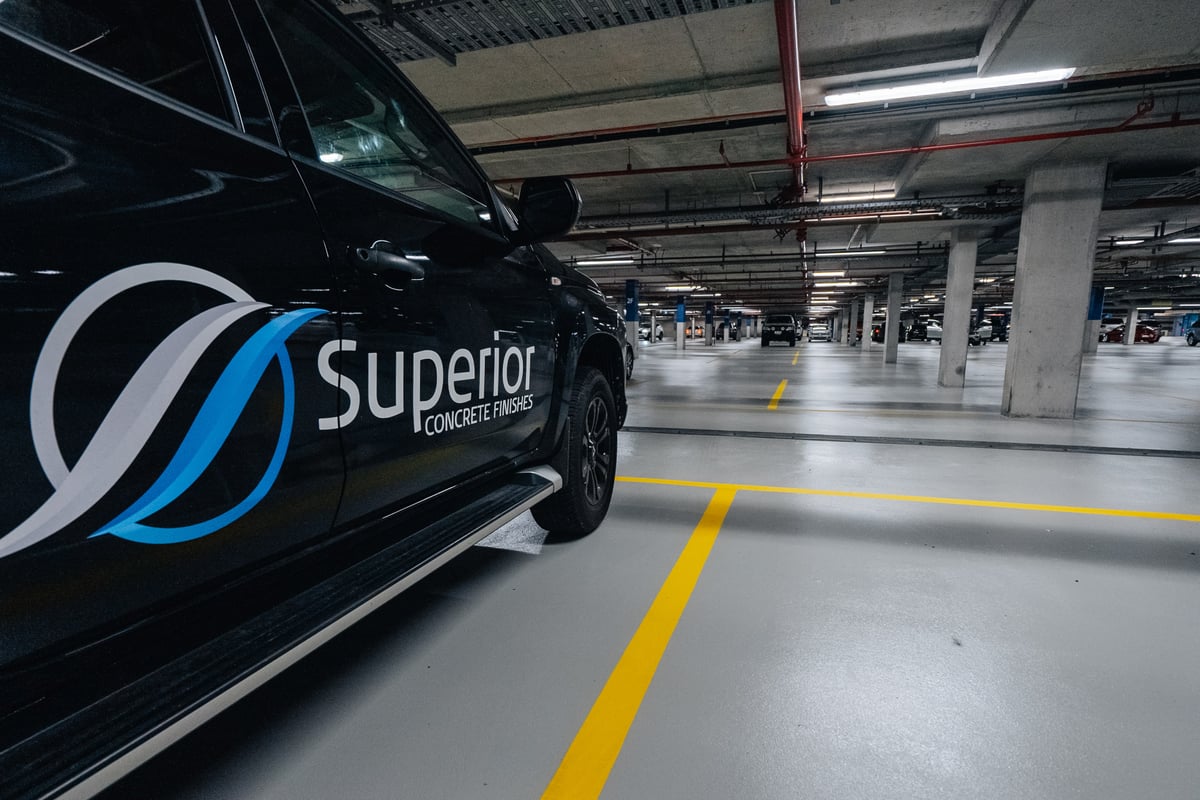
The experienced team at Superior Concrete Finishes provides Epoxy Flooring solutions specifically engineered for the demanding requirements of commercial and industrial warehouse environments throughout South East Queensland.
Application-Specific Considerations
Food distribution warehouses benefit from antimicrobial epoxy additives that inhibit bacterial growth, while facilities storing flammable materials may require static-dissipative formulations that prevent spark generation. Understanding these nuanced requirements ensures the installed system performs optimally for its intended use.
The substrate condition and moisture characteristics of existing concrete slabs determine which primer and epoxy formulations will bond successfully. Older warehouses with questionable moisture vapour transmission rates may require moisture mitigation systems before epoxy installation proceeds.
Environmental and Sustainability Factors
Modern warehouse floor epoxy formulations increasingly incorporate sustainable practices and materials that reduce environmental impact without compromising performance. Low-VOC and zero-VOC systems eliminate the solvent emissions associated with traditional epoxy products, improving indoor air quality during and after installation.
The extended service life of epoxy systems reduces the environmental burden of frequent floor replacement that generates construction waste and consumes virgin materials. Protecting the concrete substrate through epoxy application preserves this energy-intensive material that represents significant embodied carbon.
Energy efficiency improvements from the reflective properties of epoxy floors reduce lighting requirements, contributing to decreased electricity consumption and operational costs. Some facilities report lighting energy reductions of 20-30% after installing high-gloss epoxy flooring systems.
Sustainable Installation Practices
- Use of recycled content in certain epoxy formulations
- Water-based systems that eliminate solvent emissions
- Minimal waste generation through precise material calculation
- Long service life reducing replacement frequency
- Local sourcing of materials to minimize transportation impacts
Warehouse operators pursuing green building certifications find that properly specified warehouse floor epoxy contributes to multiple sustainability criteria while delivering the durability and performance industrial operations demand.
Quality Assurance and Professional Installation Standards
The gap between successful warehouse floor epoxy installations and premature failures often traces directly to contractor expertise and quality control procedures. Selecting qualified commercial flooring contractors with demonstrated warehouse experience significantly influences project outcomes.
Licensing and insurance requirements in Queensland mandate that commercial flooring contractors hold current QBCC licensing and comprehensive insurance coverage. These credentials provide essential protection for building owners and ensure contractors meet minimum competency standards.
Experienced contractors conduct thorough pre-installation assessments examining concrete condition, moisture levels, structural integrity, and environmental factors that impact installation success. This due diligence identifies potential issues before materials are applied, preventing costly failures that compromise both performance and budget.
Our portfolio of completed warehouse projects demonstrates the consistent quality outcomes achievable when installations follow industry best practices and manufacturer specifications.
Installation Quality Indicators
- Comprehensive moisture testing documentation
- Detailed substrate preparation procedures
- Climate monitoring during installation
- Proper material mixing ratios and pot life management
- Adequate cure times before facility use resumes
Professional installers understand that cutting corners during preparation or rushing cure times to minimize downtime ultimately leads to system failures requiring complete removal and reinstallation at far greater expense than doing the job properly initially.
Customisation Options for Operational Requirements
Warehouse floor epoxy systems offer extensive customisation possibilities that enhance functionality beyond basic floor protection. Colour-coding different zones improves warehouse organization and material flow efficiency, while custom logos and branding elements create professional appearances for client-facing facilities.
Texture variations accommodate different traction requirements across the warehouse footprint. Loading dock areas exposed to weather may require aggressive slip resistance, while interior aisles perform better with smoother finishes that facilitate equipment movement and cleaning.
The seamless nature of epoxy installations eliminates joints where debris accumulates and bacteria harbour, particularly important for warehouses handling food products or pharmaceuticals. This monolithic surface extends wall-to-wall and can incorporate cove base details that simplify cleaning and enhance hygiene.
Warehouse floor epoxy delivers the durability, safety, and cost-effectiveness that industrial facilities require for long-term operational success. From chemical resistance to enhanced workplace safety and minimal maintenance demands, epoxy systems provide comprehensive solutions for demanding warehouse environments. Superior Concrete Finishes brings decades of commercial flooring expertise to warehouse projects throughout South East Queensland, delivering QBCC-licensed installation quality backed by comprehensive insurance coverage. Contact Superior Concrete Finishes to discuss how our warehouse floor epoxy solutions can protect and enhance your industrial facility.

Joshua Miller has over 15 years of experience in the commercial concrete flooring industry, specialising in epoxy flooring systems and polished concrete solutions for warehouses, factories, retail spaces and commercial developments. Joshua and his team work closely with builders, property owners and facility managers across South East Queensland to deliver durable, cost-effective commercial flooring systems for warehouses, industrial facilities, commercial kitchens, retail stores and large commercial developments.
Major builders and organisations Josh has led projects on include McNab, Hutchinson Builders, IKEA, Queensland Rail, University of Queensland, ADCO, Tomkins Commercial, Bunnings, OfficeWorks, Spotlight, and Anaconda.
If you're planning a project and need advice on the best commercial concrete flooring solution, contact Josh or one of the team at Superior Concrete Finishes.
-
 info@superiorconcretefinishes.com.au
-
1300 789 740
-
Connect with Josh on
LinkedIn


 Connect with Josh on